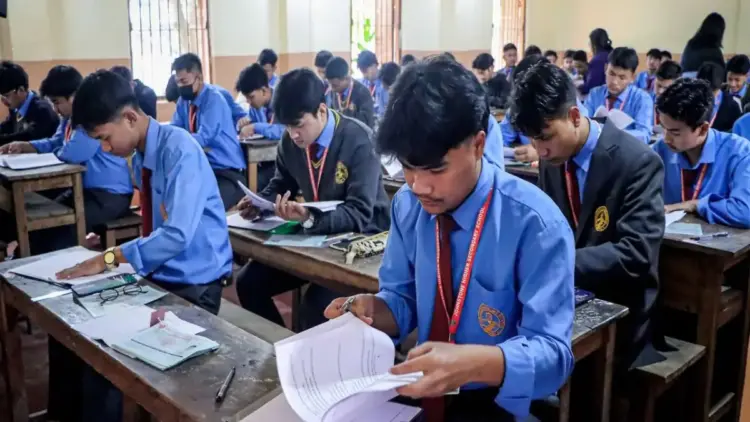
New Delhi: The Central Board of Secondary Education (CBSE) has officially announced the schedule for practical examinations, project assessments, and internal assessments for Class 10 and Class 12 students in winter-bound regions for the upcoming 2026-27 academic session. This crucial announcement, detailed in a circular issued on November 5th, sets the stage for students to demonstrate their practical skills and understanding during a critical phase of their academic journey. The designated examination period for these assessments will span from November 9th to December 19th, 2026, a timeframe meticulously chosen to accommodate the unique climatic challenges faced by schools in these regions.
The strategic scheduling is a direct response to the operational realities of winter-bound institutions, which typically face prolonged closures during the harshest winter months. By conducting these assessments earlier in the academic year, the CBSE aims to ensure that students do not miss out on vital evaluation opportunities, thereby safeguarding their academic progress and readiness for the board examinations. Students appearing for the CBSE Board Exams in 2027 are strongly advised to maintain a vigilant watch over this revised practical exam schedule and to proactively engage with their respective schools for precise, subject-wise dates. This proactive approach will be paramount in navigating the assessment process smoothly and efficiently.
Navigating the New Academic Landscape: Key Guidelines for Winter-Bound Schools
In its directive to winter-bound schools, the CBSE has emphasized a series of stringent guidelines designed to uphold the integrity and fairness of the assessment process. Foremost among these is the mandate for schools to meticulously finalize the list of eligible candidates prior to the commencement of practical exams, project assessments, and internal assessments. This preparatory step is crucial for ensuring that only students who have met the requisite criteria and whose names were duly submitted through the online List of Candidates (LOC) portal are permitted to participate in these evaluations. This rigorous verification process serves as a bulwark against any potential discrepancies and upholds the principle of merit-based evaluation.
The CBSE has also clarified the procedure for Class 10 internal assessments, stating unequivocally that these will be conducted only once. Schools are therefore tasked with completing these assessments and uploading the marks for all eligible candidates within the stipulated timeframe. This singular assessment window underscores the importance of timely execution and accurate record-keeping.
Furthermore, the Board has instructed schools to establish direct communication channels with their concerned CBSE Regional Offices for the appointment of external examiners and observers, where deemed necessary. This collaborative approach aims to inject an additional layer of objectivity and oversight into the assessment process, ensuring that evaluations are conducted in a standardized and impartial manner across different institutions. The CBSE’s emphasis on completing practical examinations, project assessments, and internal assessments within the designated timeframe is a clear indicator of its commitment to maintaining academic momentum. Moreover, the directive that Class 12 practical exam answer books must be dispatched to the concerned CBSE Regional Offices as per instructions highlights the meticulous logistical planning involved in the board’s examination system.
Enhancing Transparency: The Shift Towards Multi-Shift Practical Examinations
In a significant move to bolster transparency and ensure a fair and equitable assessment environment, the CBSE has mandated that schools accommodating more than 30 students per subject will be required to conduct practical examinations and project assessments in multiple sessions. Depending on the available laboratory infrastructure, these sessions will be organized in two or three batches per day. This strategic implementation of shifts is designed to prevent overcrowding, allow for more focused supervision by examiners, and mitigate the risk of any form of malpractice or unfair advantage. By distributing students across multiple sessions, the CBSE aims to create a more controlled and observable examination setting, thereby enhancing the overall credibility of the assessment outcomes.
It is imperative to note that this revised schedule and the associated guidelines are exclusively for schools situated in winter-bound regions. The CBSE has assured that a separate circular will be issued for institutions operating under the regular academic calendar. This forthcoming circular will contain specific instructions pertaining to their practical exams, project assessments, and internal assessments, ensuring that all schools are adequately informed and prepared according to their unique operational contexts.
The advisory for students and parents to maintain close contact with their respective schools for detailed, subject-wise practical exam timetables and any further instructions cannot be overstated. This direct line of communication is the most reliable source of information and will empower students to prepare effectively and approach their assessments with confidence.
The Rationale Behind the Early Assessment Window: Addressing Climatic Realities
The decision to schedule practical examinations and assessments for winter-bound schools between November 9th and December 19th, 2026, is a well-considered response to the environmental realities of these regions. Schools located in areas prone to heavy snowfall and extreme cold often face prolonged closures during the peak winter months, typically from December or January through February or March. If practical examinations were to be scheduled during this period, it would invariably lead to significant disruptions, potential cancellations, and a considerable disadvantage for students.
By front-loading these assessments, the CBSE ensures that students have the opportunity to complete these vital components of their curriculum before the onset of severe winter conditions. This proactive approach not only prevents academic disruption but also allows students to focus on their theory preparations for the main board examinations with greater peace of mind. The extended window of over a month provides flexibility for schools to manage their schedules, accommodate their student populations, and ensure a thorough assessment without undue pressure.
Implications for Students and Stakeholders: A Call for Proactive Engagement
The implications of this revised timetable are far-reaching for all stakeholders involved. For students, it signifies a clear roadmap for their practical assessments, enabling them to plan their study schedules accordingly. Early preparation for practicals, including understanding experimental procedures, data analysis, and report writing, becomes even more critical. Students should actively seek clarification from their teachers regarding the specific requirements for each subject and practice their skills diligently.
Parents play a crucial role in supporting their children during this period. They are encouraged to stay informed about the school’s schedule and to ensure that their children have access to necessary resources for preparation. Open communication with the school administration can help address any concerns or queries promptly.
For school administrators and faculty, the onus is on efficient planning and execution. This includes ensuring that laboratory equipment is in good working order, that all necessary materials are available, and that the examination process is conducted smoothly and transparently, adhering strictly to the CBSE guidelines. The responsibility of coordinating with CBSE Regional Offices for external examiners and observers also falls within their purview, requiring timely action and clear communication.
The CBSE’s emphasis on multi-shift examinations for larger batches highlights the need for schools to invest in adequate invigilation and supervision to maintain the integrity of the process. This might require additional faculty involvement and careful logistical planning to ensure that each session is conducted without compromising on the quality of assessment or the security of the examination.
Looking Ahead: A Commitment to Fair and Accessible Education
The CBSE’s proactive approach in issuing this specialized timetable for winter-bound schools underscores its commitment to providing a fair and accessible educational environment for all students, irrespective of their geographical location or the climatic challenges they may face. This timely announcement serves as a testament to the Board’s continuous efforts to adapt its examination processes to the diverse needs of the Indian education system.
As the academic year progresses, students, parents, and educators are urged to remain vigilant and to leverage the information provided by their respective schools. The success of this assessment cycle hinges on the collective effort and proactive engagement of all stakeholders, ensuring that the 2027 CBSE Board Examinations are approached with a solid foundation of practical knowledge and preparedness. The move towards enhanced transparency and structured assessment processes reflects the CBSE’s dedication to fostering a robust and reliable examination system that empowers students to showcase their true potential.