GUWAHATI, ASSAM — In the dense, humid undergrowth of the Kamrup (Rural) district, where the canopy of ancient sal trees filters the pre-monsoon light, a unique biological and cultural phenomenon unfolds every April. For the Rabha community, an Indigenous group living along the forest fringes of western Assam, the emergence of a large, dark, and formidable arachnid does not signal a cause for alarm, but rather the arrival of a highly anticipated seasonal delicacy.
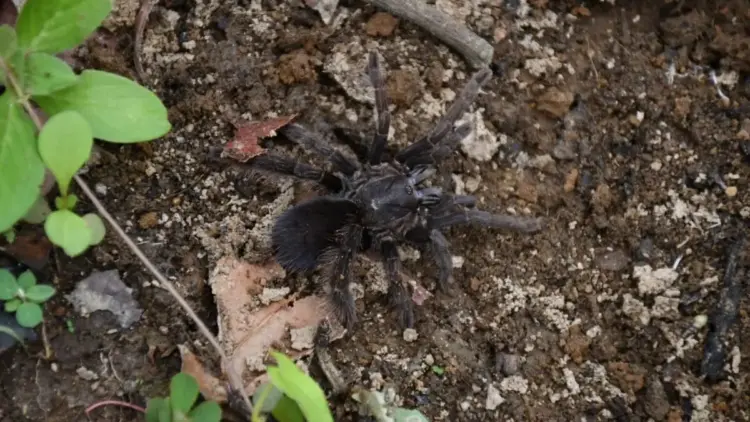
A landmark study recently published in the Proceedings of the Zoological Society has brought formal scientific attention to a practice that has existed for centuries: the traditional consumption of the Indian black earth tiger spider (Lyrognathus crotalus). Locally known as bhaluk makara, this endemic tarantula is at the heart of a complex intersection between Indigenous knowledge, food security, and biodiversity.
Main Facts: An Endemic Species and an Indigenous Heritage
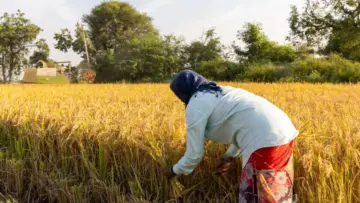
The Rabha people, also known as the Ravas, are one of the prominent Indigenous tribes of Northeast India. While they are primarily settled in the Goalpara and Kamrup districts of Assam, their ancestral footprint extends into Meghalaya and West Bengal. Their lives are deeply intertwined with the rhythms of the forest, a relationship that is reflected in their diverse diet of wild edible plants, fish, and insects.
The focus of the recent scientific inquiry is the Lyrognathus crotalus, a burrowing tarantula first described by Western science in 1895. Despite its early taxonomic classification, the cultural significance of the spider to the Rabha people remained largely undocumented in academic literature until now.
According to the research team—comprising Jyotiprakash Boro, Kuldeep Bora, Chandramita Boro, and Samir Terdalkar—the consumption of these spiders is not merely a matter of sustenance but is a deeply embedded cultural marker. The spiders are collected during a specific window from April to June, a period when the community observes them to be at their most abundant.

Chronology: The Seasonal Cycle of the Spider Hunt
The tradition of the bhaluk makara hunt follows a strict seasonal and lunar-adjacent calendar. The fieldwork, conducted between April and June 2025, revealed a systematic approach to foraging that has been refined over generations.
The Foraging Window
The primary collection occurs during the pre-monsoon months. During this time, community members organize foraging trips into the forest fringes, typically occurring three to four days a month. These trips are timed with the spiders’ peak activity periods, though occasional collections happen year-round if a burrow is spotted during other forest activities.
The Search and Extraction
The hunt begins in the "sal" (Shorea robusta) forests. Collectors, ranging from young men to experienced elders, scan the forest floor for the tarantula’s distinctive home. The L. crotalus constructs simple, tubular, flare-mouthed burrows. Adult females, in particular, create J-shaped tunnels lined with silk that terminate in an enlarged living chamber.
Once a burrow is identified, the extraction is a delicate art. Collectors use one of two primary methods:
- Manual Excavation: Carefully digging around the burrow to reach the chamber without crushing the inhabitant.
- The Provocation Method: Inserting a slender wooden stick into the burrow to irritate the spider, encouraging it to emerge at the entrance where it can be safely captured.
A successful outing can yield between 20 and 30 spiders per collector, which are then brought back to the village to be shared among family and friends.

Preparation and Consumption
The culinary transition from forest predator to seasonal delicacy involves a specific cleaning and cooking process. The spiders are first washed and soaked repeatedly in hot water—a step likely intended to remove debris and potentially soften the chitinous exoskeleton.
The spiders are then fried in mustard oil, seasoned simply with salt and garlic powder. According to the study, the spider is consumed whole. It is traditionally served alongside locally prepared rice beer (jou), creating a communal dining experience that reinforces social bonds within the village.
Supporting Data: Ethnobotany and Regional Context
The consumption of the black earth tiger spider does not exist in a vacuum. It is part of a broader "food basket" that characterizes the Rabha community’s sophisticated understanding of their ecosystem.
A Diverse Diet
A 2024 ethnobotanical study conducted in the Goalpara district highlighted that the Rabhas utilize at least 51 species of wild edible plants. While agriculture is their primary occupation, the collection of forest resources provides vital micronutrients and variety. The bhaluk makara serves as a seasonal protein supplement, filling a niche in the pre-monsoon period when other food sources might be transitioning.
Comparative Traditions in the Northeast
The Rabhas are not the only community in Northeast India with an arachnid-inclusive diet. The researchers point to a study published earlier in 2025 documenting the consumption of orb-weaver spiders (Nephila pilipes and Trichonephila clavata) among the Naga communities in Nagaland.

In Nagaland, these spiders, known as siyankyü in the Lotha Naga language, are harvested in October and November. Unlike the burrowing tarantulas of Assam, these orb-weavers are praised for their "creamy, nutty flavour" and are often cooked with fermented bamboo shoots or sumac. This suggests a widespread, albeit localized, tradition of entomophagy (the eating of insects and arachnids) across the Indo-Burma biodiversity hotspot.
Perspectives: Voices from the Community and the Lab
The study relied heavily on interviews with 34 community members in Mouman village, providing a platform for Indigenous voices to explain the importance of the practice.
The Elder’s View
For Bhupen Rabha, a village elder, the spider is a link to the past. "The traditional consumption of the spider is a longstanding cultural practice that has been passed down orally from generation to generation," he told researchers. "It was regularly collected and eaten by our parents and grandparents as a seasonal delicacy."
The Youth’s Perspective
Contrary to many traditional practices that fade with modernization, the bhaluk makara hunt remains popular among the younger generation. Ashok Rabha, a collector in his early 20s, views the hunt as a social event. "For us, the spiders are both a local delicacy and a kind of rite of passage. We enjoy going out together, finding the burrows and sharing the experience."
The Scientific Stance
Jyotiprakash Boro, a wildlife biologist and research scholar at Fergusson College, Pune, emphasizes that while the practice is culturally rich, scientific data is still catching up. "The extent of harvesting remains unclear, as are its abundance and the potential conservation implications," Boro noted. He clarified that while the community perceives the population as stable, independent scientific population assessments have yet to be conducted.

Implications: Conservation, Nutrition, and the Path Forward
The documentation of the Rabha community’s relationship with Lyrognathus crotalus opens several avenues for future research and raises critical questions regarding conservation and health.
1. The Question of Sustainability
Tarantulas are biologically vulnerable. Many species are characterized by slow growth rates, late sexual maturity, and a limited geographic range. In other parts of India, species like the Neoheterophrictus spiders have faced population declines due to the illegal pet trade.
While the Rabha’s harvest is for local consumption rather than commercial export, the ecological impact of removing 20–30 adult spiders per trip during the breeding season remains unknown. The researchers argue that a formal population survey is essential to ensure that this cultural tradition does not inadvertently lead to the extinction of the species.
2. Nutritional and Medicinal Potential
Currently, the "nutritious" status of the bhaluk makara is based on local perception rather than laboratory analysis. The study found no reported medicinal uses for the spider, but its protein and mineral content could provide insights into Indigenous health and resilience. Systematic nutritional testing is a recommended next step for researchers.
3. Preserving Indigenous Knowledge
Perhaps the most significant implication is the preservation of "traditional ecological knowledge" (TEK). As habitats change due to climate change and infrastructure development, the oral traditions of the Rabha people provide a historical baseline for the region’s biodiversity.

The study concludes that the consumption of the Indian black earth tiger spider is a testament to the Rabha community’s deep-rooted connection with their environment. However, to protect both the tradition and the species, a collaborative approach between scientists and Indigenous leaders is required.
As the pre-monsoon rains begin to fall over the Kamrup district, the Rabha youth will once again head into the sal forests. Their goal is the bhaluk makara, but their journey continues a story as old as the forest itself—a story that science is only just beginning to read.
References and Further Reading:
- Boro, J., et al. (2025). "First Record on the Traditional Consumption of the Indian Black Earth Tiger Spider Lyrognathus crotalus Among the Rabha Tribe." Proceedings of the Zoological Society.
- Mozhui, L., et al. (2025). "Ethno-entomophagy of Orb-weaver Spiders in Nagaland." Frontiers in Sustainable Food Systems.
- Ethnobotanical Study of Goalpara District (2024). ResearchGate.