The Western Ghats, a majestic mountain range stretching along India’s western coast, is recognized globally as one of the world’s eight "hottest hotspots" of biological diversity. This UNESCO World Heritage site is home to thousands of species of flora and fauna, many of which are found nowhere else on Earth. However, a silent and often overlooked pollutant is beginning to seep into these pristine corridors: Artificial Light at Night (ALAN).
A comprehensive new study has shed light—quite literally—on the extent to which human-induced illumination is penetrating the protected areas (PAs) of Kerala. From the diffuse "skyglow" of distant cities to the bright glare of religious shrines nestled deep within the forest, the study reveals that the sanctity of the night is being compromised, with potentially devastating consequences for the region’s delicate ecosystems.
Main Facts: The Encroachment of Artificial Light
The research, led by Haripriya S. and published in the journal Biological Conservation, offers a granular look at how 21 protected areas in Kerala are faring against the rising tide of light pollution. Using a combination of high-resolution satellite data from 2024 and infrastructure mapping from OpenStreetMap, the researchers analyzed the "light footprint" both within the boundaries of these reserves and in the surrounding landscapes.
The study’s primary findings indicate that no protected area is truly isolated from the effects of modern lighting. Even the most remote sections of the Western Ghats are experiencing some degree of ALAN, either through direct illumination or atmospheric scattering. The study categorized the surrounding areas into five distinct buffer zones, ranging from 0 km to 30 km, to understand how light travels from human settlements into the heart of the forest.
Perhaps the most striking revelation of the study is the identification of the primary drivers of light within these protected zones. While urban expansion and road networks are the usual suspects in global light pollution studies, this research found a unique cultural driver within Kerala’s forests: the density of places of worship. Within the boundaries of the protected areas, shrines, temples, and other religious sites were found to be the strongest predictors of high light levels.
Chronology of the Research and Methodology
The study comes at a time when global conservationists are increasingly sounding the alarm over "the end of night." For decades, conservation efforts in the Western Ghats focused on habitat fragmentation, poaching, and climate change. It is only in the last few years that the ecological community has begun to quantify the impact of the "photopollution" that accompanies India’s rapid rural electrification and infrastructure development.
Phase 1: Data Collection (Early 2024)
The researchers utilized satellite-derived night-time light data. This technology measures the radiance emitted from the Earth’s surface, capturing both the intense "point sources" of light (like streetlamps) and the broader "skyglow" created when light reflects off moisture and dust in the atmosphere.
Phase 2: Spatial Mapping
Using OpenStreetMap, the team mapped out human infrastructure across Kerala. This included roads, tourism facilities, activity centers, and places of worship. By overlaying this data with the satellite light maps, they could correlate specific types of human activity with specific levels of light pollution.
Phase 3: Zonal Analysis
To understand the "spillover effect," the researchers examined light exposure in concentric circles around the 21 protected areas. These zones (0-2 km, 2-5 km, 5-10 km, 10-20 km, and 20-30 km) allowed them to see how far the influence of a city or a major highway extends into the wilderness.
Supporting Data: Mapping the Glow
The data reveals a complex landscape of light. The intensity of ALAN was not uniform across all 21 reserves, showing significant variation based on geography and proximity to Kerala’s densely populated midlands and coastal plains.
The Periyar Case Study
Periyar Tiger Reserve West emerged as a focal point of concern. According to the satellite data, this area recorded the highest average and maximum light levels among all the reserves studied. As one of India’s most prominent tiger reserves and a major hub for eco-tourism, the intersection of conservation and human activity at Periyar creates a "bright spot" that may interfere with the very wildlife the park aims to protect.
The Distance Factor
The study found a non-linear relationship between distance and light levels. While one might expect light to fade steadily as one moves away from a city, the researchers found that light levels were significantly higher in areas more than 5 km from the protected area boundaries.

Interestingly, the highest contribution of light was found in the 10-20 km zone, followed closely by the 20-30 km zone. This suggests that the "skyglow" from major urban centers and industrial hubs located dozens of kilometers away is a major contributor to the illumination of the Western Ghats. This "landscape-level" exposure means that protecting a forest from light requires more than just turning off the lights at the park gate; it requires regional planning.
Predictors of Light: Inside vs. Outside
- Inside Protected Areas: The density of places of worship was the most significant predictor. Many of these sites host annual festivals involving high-intensity decorative lighting or maintain permanent security and ceremonial lights that stay on throughout the night.
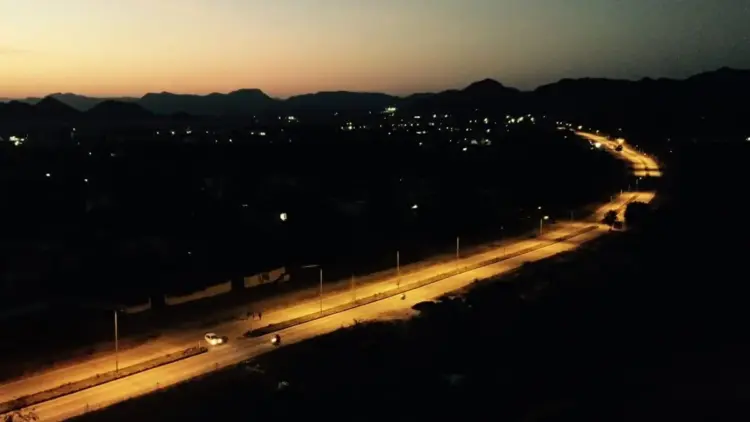
- Outside Protected Areas: Road density and "places of interest" (such as hotels, markets, and tourism hubs) were the primary drivers. The expansion of Kerala’s road network, often involving bright LED streetlighting, acts as a luminous net surrounding the forest patches.
Official Responses and Researcher Perspectives
The lead author of the study, Haripriya S., emphasized that this research is just the beginning of a necessary shift in how we view environmental protection. "We found ALAN to be closely related to places of worship with high levels of artificial light and illumination at night," she noted, highlighting the need for a culturally sensitive but scientifically grounded approach to managing light.
While official government responses from the Kerala Forest Department are often focused on man-animal conflict and forest fires, this study provides a new metric for "habitat quality." Conservationists argue that "darkness" should be treated as a natural resource, much like clean water or air.
The researchers expressed a desire to expand this work in the future. The current study establishes where the light is; the next step is to observe how specific species in the Western Ghats are reacting. The author intends to look further into the subject to add to the burgeoning field of "scotobiology"—the study of biology as it relates to darkness.
Ecological Implications: The High Cost of a Bright Night
The enrichment of this study lies in understanding the biological "why." Why does it matter if a tiger reserve is a little brighter at night? The ecological implications of ALAN are profound and multi-faceted, affecting almost every level of the food chain.
1. Disruption of Predator-Prey Dynamics
Many of the Western Ghats’ apex predators, such as leopards and tigers, are nocturnal or crepuscular (active at dawn and dusk). They rely on the cover of darkness to hunt. Increased light gives prey species a visual advantage, potentially making it harder for predators to secure a kill. Conversely, for some species, "light traps" can occur where insects are drawn to lights, attracting small mammals and birds, which in turn attracts larger predators into human-dominated areas, increasing the risk of human-wildlife conflict.
2. The "Vacuum Cleaner Effect" on Insects
The Western Ghats are home to an incredible array of nocturnal insects, including rare moths and beetles. Artificial lights act as a "vacuum cleaner," drawing insects away from their natural habitats. This leads to exhaustion, increased predation, and a failure to reproduce. Since insects are the primary pollinators for many forest trees and the base of the food web for birds and bats, their decline has a "bottom-up" effect on the entire ecosystem.
3. Amphibians and the Mating Chorus
Kerala is world-renowned for its endemic frog species, many of which were discovered only in the last decade. Frogs are highly sensitive to light. ALAN can suppress the nocturnal "chorus" that males use to attract mates. If the forest is too bright, frogs may stay silent to avoid detection by predators, leading to lower reproductive rates and potential population collapses.
4. Navigational Confusion
Migratory birds and even certain species of mammals use celestial cues—the moon and stars—to navigate. The "skyglow" identified in the study can wash out these celestial markers, leading animals to become disoriented. This is particularly dangerous for birds, which may collide with illuminated infrastructure or veer off their migration paths.
5. Melatonin and Circadian Rhythms
Just like humans, animals rely on the production of melatonin to regulate their internal clocks. Constant exposure to ALAN suppresses melatonin, leading to sleep deprivation, increased stress levels, and weakened immune systems in wildlife.
The Path Forward: Towards a "Dark Sky" Policy
The findings of this study suggest that current conservation strategies in the Western Ghats must be updated to include light management. Several potential interventions could mitigate the impact of ALAN:
- Directional Shielding: Ensuring that lights in tourism facilities and places of worship are shielded so that light is directed only where it is needed (downwards) and does not spill into the sky or the forest.
- Spectral Tuning: Using warm-colored LEDs (amber or red tones) instead of bright blue-white lights. Blue light scatters more easily in the atmosphere and has a more significant biological impact on animals.
- Dark Sky Zones: Establishing "Dark Sky Reserves" within the core areas of the Western Ghats where all artificial lighting is strictly prohibited.
- Buffer Zone Regulations: Working with local panchayats (village councils) to implement "curfew" hours for decorative lighting in areas within 10 km of a protected area.
As Kerala continues to develop, the challenge will be to balance the needs of human communities—including their cultural and religious expressions—with the biological necessity of darkness. The study by Haripriya S. serves as a vital wake-up call: to save the Western Ghats, we must first learn to respect the night.