

3 min read | Jun 3, 2026 05:17 PM IST
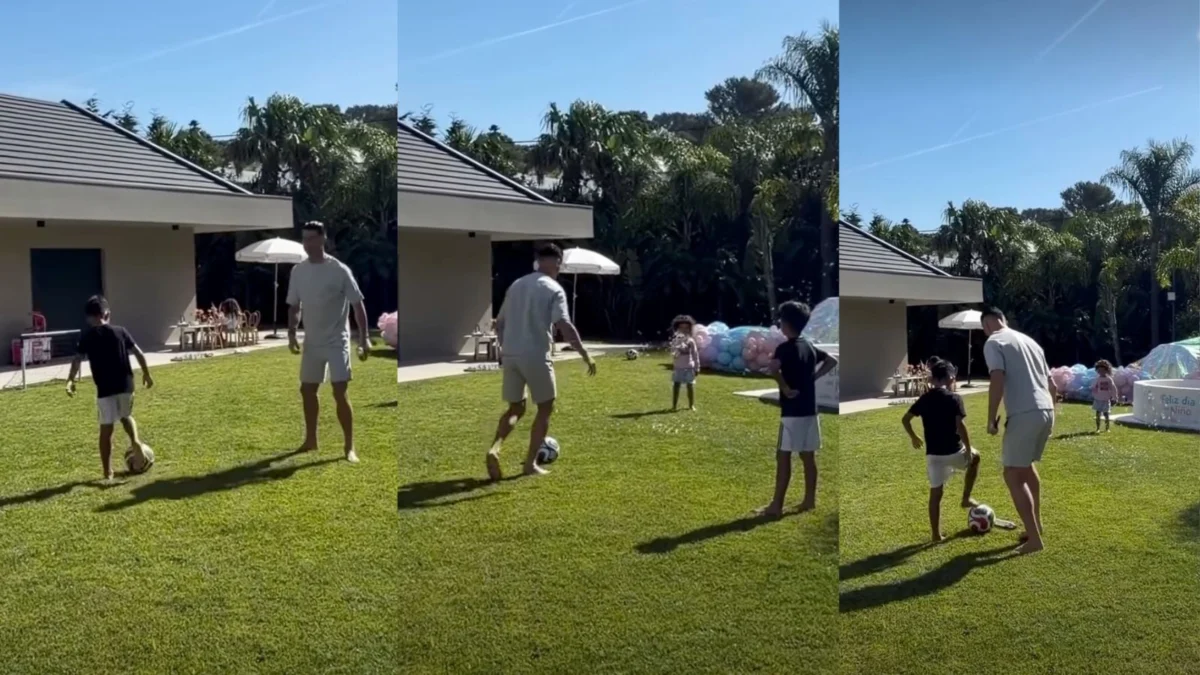
The unparalleled saga of Cristiano Ronaldo continues to captivate the global football fraternity as the Portuguese legend, at 41 years old, embarks on the unprecedented journey towards his sixth FIFA World Cup. A recent heartwarming glimpse into his personal life, shared by partner Georgina Rodríguez, showcased Ronaldo imparting the wisdom of his iconic "Ronaldo Chop" to his son Mateo, a poignant moment that transcends mere football instruction, symbolizing the enduring legacy and the potential passing of the torch within the world’s most popular sport.
This intimate family scene unfolds against the backdrop of an intense national team training camp, where Ronaldo, despite his advanced years in a physically demanding sport, remains the undisputed focal point. His inclusion in the squad for the 2026 FIFA World Cup, hosted across the United States, Canada, and Mexico, has been vehemently defended by head coach Roberto Martínez, who insists that Ronaldo’s presence is based purely on his current formidable form and an undiminished hunger for success, rather than a mere nod to his illustrious past. As Portugal prepares for its crucial warm-up fixtures and the subsequent transatlantic journey, the world watches with bated breath, eager to witness the final chapter of a living legend’s World Cup odyssey.
Main Facts: A Legend’s Last Dance and a Family Affair
At the venerable age of 41 years and nearly four months, Cristiano Ronaldo stands on the cusp of an extraordinary achievement: participating in his sixth FIFA World Cup. This remarkable feat not only underscores his unparalleled longevity and dedication to the beautiful game but also places him in an exclusive pantheon of athletes who have defied the conventional limits of sporting careers. His participation in the 2026 tournament would cement his status as the player with the most World Cup appearances, a testament to his enduring physical prowess and mental fortitude.
The recent viral video, shared by Georgina Rodríguez, offered a rare and intimate look into Ronaldo’s life off the pitch. Dressed casually and barefoot, the five-time Ballon d’Or winner was captured patiently demonstrating his signature "Ronaldo Chop" – a quick, deceptive feint designed to bamboozle defenders – to his son Mateo. The interaction was more than just a playful father-son moment; it was a masterclass in miniature. Ronaldo meticulously explained the nuances of the move, offering precise feedback on timing, body positioning, and crucially, how to anticipate and react to an opponent’s movements. This interaction highlights not only his role as a loving father but also his innate ability to teach and inspire, even within the confines of his own home. The "Ronaldo Chop" has been a cornerstone of his attacking arsenal for over a decade, a move that embodies his blend of technical skill, agility, and tactical intelligence.
For the Portugal national team, Ronaldo’s presence continues to be a central fact. Despite the emergence of a new generation of incredibly talented Portuguese players, his experience, leadership, and undeniable goal-scoring threat remain invaluable. Head coach Roberto Martínez has been unequivocal in his assessment, emphasizing that Ronaldo’s selection is a testament to his current performance levels, having scored an impressive 25 goals in his last 30 international appearances. This assertion directly counters any narrative suggesting his inclusion is merely sentimental, instead highlighting his continued relevance as a top-tier international footballer. The upcoming World Cup in the USA, Canada, and Mexico thus represents a unique juncture: the potential swansong for a footballing titan, deeply intertwined with the aspirations of a highly gifted Portuguese squad aiming for ultimate glory.
Chronology: From European Glory to World Cup Preparations
The road to the 2026 FIFA World Cup for Cristiano Ronaldo and the Portuguese national team has been a tapestry woven with personal milestones, collective successes, and meticulous preparation. The period leading up to the current training camp reflects a blend of individual brilliance and strategic team building.
The Recent Past:
Ronaldo’s club career, particularly his move to Al-Nassr in Saudi Arabia, marked a significant shift in his professional journey. While geographically distant from European football’s traditional strongholds, his performances there have demonstrated his continued ability to find the back of the net consistently, maintaining the sharp edge of his goal-scoring instincts. This consistent output at club level has been crucial in proving his ongoing physical readiness and match fitness, directly supporting Coach Martínez’s decision for his national team inclusion. Portugal’s qualification campaign for the 2026 World Cup was navigated with characteristic efficiency, showcasing a blend of experienced stalwarts and burgeoning young talent. The team’s strong performances in the qualifiers set a positive tone for the tournament ahead, building confidence and cohesion.
Current Events: The Training Camp Unfolds:
The focus shifted sharply to national team duties as Portugal convened its preliminary World Cup training camp at the City of Football in Oeiras. The week began on a Monday, with 23 players immediately immersing themselves in rigorous drills and tactical sessions under the watchful eye of Coach Martínez and his staff. This initial phase of training is critical for building camaraderie, refining strategies, and assessing player form.
A notable aspect of the early camp was the planned absence of four key players: Nuno Mendes, João Neves, Vitinha, and Gonçalo Ramos. These four, all representing Paris Saint-Germain, had earned a well-deserved rest following an intense club season that saw them clinch back-to-back European titles with the Parisian giants. Their club success, though celebrated, meant a slightly delayed integration into the national squad, allowing them crucial recovery time. They are scheduled to report to the national camp on June 6, bringing with them the winning mentality and high-level experience gained from their recent continental triumphs.
Upcoming Schedule: Warm-ups and Transatlantic Journey:
The training camp culminates in a series of vital warm-up matches designed to fine-tune the squad ahead of the main tournament. The first friendly fixture is scheduled for June 6, the same day the PSG quartet joins the squad, as Portugal faces Chile at the historic National Stadium in Jamor. This match will serve as an initial litmus test, allowing Martínez to experiment with formations and player combinations. Four days later, on June 10, Portugal will play their second friendly against Nigeria in Leiria, providing another opportunity to assess readiness and build match fitness. These two fixtures are strategically important, offering different challenges and allowing the coaching staff to finalize their tactical approaches and starting XI considerations. Following these crucial preparatory games, the entire squad is set to fly to the United States on June 12, marking their official arrival in the host nation and the final countdown to their 2026 FIFA World Cup campaign.
Supporting Data: Ronaldo’s Unprecedented Records and Enduring Influence
Cristiano Ronaldo’s career is a statistical marvel, a testament to his relentless pursuit of excellence and an almost superhuman ability to maintain peak performance levels for an extended period. His journey to a sixth World Cup is buttressed by a litany of records that underscore his unique place in football history.
International Records:
At 41, Ronaldo holds the world record for the most international caps, with an astounding 226 appearances for Portugal. This surpasses any other player in history, highlighting his unparalleled consistency and unwavering commitment to his national team over more than two decades. Furthermore, he is the all-time leading male international goalscorer, having netted an incredible 143 goals for Portugal. To put this into perspective, his closest active rival, Lionel Messi, stands at 116 international goals. Ronaldo’s statistical dominance extends beyond mere numbers; it reflects his profound impact on Portugal’s footballing landscape, guiding them to major trophies like the UEFA European Championship in 2016 and the inaugural UEFA Nations League in 2019. His continued goal-scoring prowess is further evidenced by his 25 goals in his last 30 international games, a remarkable return for any player, let alone one in the twilight of his career. These goals haven’t been mere padding; many have been crucial strikes in qualifying campaigns and competitive fixtures, demonstrating his ongoing ability to deliver in high-pressure situations.
Longevity and World Cup History:
Ronaldo’s sixth World Cup appearance will set a new benchmark, potentially making him the sole record holder. He previously shared the record of five World Cup appearances with legendary figures like Antonio Carbajal (Mexico), Lothar Matthäus (Germany), Rafael Márquez (Mexico), and Gianluigi Buffon (Italy). His participation in 2026 will break this tie, firmly placing him in a category of his own. His status as the oldest outfield player at this tournament, at 41 years and nearly four months, is another testament to his remarkable physical conditioning and dedication. This age-defying feat is a testament to modern sports science, personalized training regimes, stringent dietary controls, and an unyielding mental resolve. Ronaldo’s commitment to these aspects has allowed him to defy the typical career trajectory of professional footballers, extending his elite-level performance well into his forties.
The "Ronaldo Chop": A Signature Move:
The "Ronaldo Chop," the move he taught his son Mateo, is more than just a trick; it’s a fundamental element of his attacking play. It involves a sudden, sharp change of direction, typically executed by planting one foot firmly and using the inside or outside of the other foot to quickly shift the ball past a defender. This move, often coupled with his explosive acceleration, has allowed him to create space, beat defenders, and unleash shots or crosses throughout his career. It embodies his blend of raw athletic power and refined technical skill, a hallmark of his playmaking ability.
Portugal’s Squad Depth:
Beyond Ronaldo, the Portuguese squad boasts an enviable depth of talent. Players like Bruno Fernandes, Bernardo Silva, João Félix, Rafael Leão, Rúben Dias, and the aforementioned PSG quartet represent a formidable blend of creativity, defensive solidity, and attacking flair. Coach Roberto Martínez inherits a team rich in individual quality, capable of competing with the very best. This confluence of an experienced legend and a vibrant, in-form generation creates a compelling narrative for Portugal’s World Cup ambitions. The team’s FIFA ranking and recent form in international competitions further solidify their status as serious contenders for the coveted trophy.
Official Responses: Martínez’s Unwavering Support and Strategic Messaging
The inclusion of Cristiano Ronaldo in Portugal’s 2026 FIFA World Cup squad, particularly given his age, has inevitably generated considerable discussion. However, head coach Roberto Martínez has been resolute in his defense of the decision, offering clear and compelling justifications that underscore Ronaldo’s meritocratic selection and his continued value to the national team. Martínez’s statements serve not only to explain his rationale but also to manage media expectations and foster a unified team environment.
Martínez’s Explicit Endorsement:
In his interactions with journalists, Coach Martínez did not mince words when addressing the perceived controversy surrounding Ronaldo’s age. "He scored 25 goals in his last 30 international games," Martínez stated emphatically. This direct statistical reference is crucial. It immediately shifts the focus from sentimental narratives to tangible, recent performance data. By highlighting Ronaldo’s consistent goal-scoring record for the national team, Martínez unequivocally demonstrates that the player’s selection is based on current form and output, rather than solely on past glories or iconic status. This factual backing provides a robust argument against any suggestion that Ronaldo is merely present for a "farewell tour."
Martínez further elaborated on his conviction, asserting, "It is not right to say he is only in the squad for what he has done and not for what he is today." This statement directly addresses and refutes the prevailing skepticism, emphasizing Ronaldo’s contemporary relevance and his ongoing capacity to contribute at the highest level of international football. The coach’s message is clear: Ronaldo is not a passenger; he is an active, vital component of the squad with a genuine role to play.
The "Hunger" and "Example" Narrative:
Beyond statistics, Martínez also highlighted Ronaldo’s intangible qualities, which he believes are equally, if not more, important. "The hunger he has, the will to live the next day trying to improve – he is an example," Martínez proclaimed. This insight into Ronaldo’s mindset reveals the driving force behind his extraordinary longevity. It speaks to an insatiable desire for self-improvement and a relentless competitive spirit that continues to inspire. For younger players in the squad, having a living legend who still exhibits such dedication and passion serves as a powerful motivational force. Ronaldo, in this context, is not just a player but a mentor and a benchmark for professionalism and ambition.
Strategic Implications of Martínez’s Stance:
Martínez’s unwavering support for Ronaldo is a carefully calibrated strategic move. Firstly, it provides clarity and removes any ambiguity regarding the star player’s role, thus minimizing potential distractions for the team. Secondly, it sends a strong message of unity and belief to the squad, demonstrating that every player, regardless of age or stature, is selected based on merit and contribution. Thirdly, it empowers Ronaldo himself, reaffirming his importance and giving him the confidence to perform without the added pressure of justifying his presence. The message resonated throughout the press conference and beyond: Cristiano Ronaldo is in the Portugal squad for the 2026 World Cup because he is still good enough, still hungry, and still an invaluable asset to the team’s ambitions.
Implications: Legacy, Team Dynamics, and Global Football Impact
Cristiano Ronaldo’s participation in a sixth FIFA World Cup carries profound implications, not only for his personal legacy and the immediate prospects of the Portuguese national team but also for the broader landscape of global football. His journey is a testament to human endurance, dedication, and the evolving nature of athletic careers.
For Cristiano Ronaldo’s Legacy:
This World Cup represents the ultimate opportunity for Ronaldo to further solidify his unparalleled legacy. Participating in six World Cups is an achievement that few, if any, will likely match in the foreseeable future. It transcends mere statistics, speaking to a career defined by an unwavering commitment to excellence. Should Portugal perform well, or even clinch the coveted trophy, it would be the crowning glory for a player who has won everything else at club and continental international level. Regardless of the outcome, this tournament will be remembered as the "last dance" of a footballing titan, offering a final opportunity to witness his genius on the grandest stage. It reinforces his narrative as an athlete who pushed the boundaries of what is possible, inspiring future generations to strive for greater longevity and sustained performance.
For the Portugal National Team’s Dynamics and Ambitions:
Ronaldo’s presence, even at 41, inevitably shapes the team dynamics and tactical considerations for Coach Roberto Martínez. While his raw pace might have diminished, his tactical intelligence, aerial prowess, and penalty box instincts remain formidable. Martínez will need to expertly integrate Ronaldo into a squad teeming with vibrant, younger talent like João Félix, Rafael Leão, Bruno Fernandes, and Bernardo Silva. The challenge lies in leveraging Ronaldo’s experience and goal-scoring threat without stifling the creative freedom and attacking momentum of the younger generation. His role might evolve from being the primary goalscorer in every match to a more specialized one, perhaps as a super-sub or a strategic starter in specific fixtures.
His leadership, however, will be invaluable. Having a figure of Ronaldo’s stature in the dressing room can be a double-edged sword: immense inspiration for some, but potentially an overshadowing presence for others. Martínez’s firm statements about Ronaldo’s merit-based inclusion are crucial in mitigating any potential internal friction and fostering a collective, winning mentality. For a team with genuine aspirations to win the World Cup, Ronaldo provides a unique blend of big-game experience and a relentless winning mentality that can be contagious. This tournament offers Portugal a potent mix of seasoned wisdom and youthful exuberance, potentially creating their strongest World Cup challenge in decades.
For Global Football:
Ronaldo’s continued presence at the pinnacle of the sport carries significant implications for global football. Firstly, it fuels the ongoing debate about age versus performance in professional sports. His success demonstrates that with optimal training, recovery, and mental resilience, athletes can extend their careers at an elite level far beyond traditional expectations. This could lead to a re-evaluation of career trajectories and player development strategies across academies and professional clubs worldwide.
Secondly, the enduring appeal of iconic players like Ronaldo continues to drive interest and engagement in football globally. His "last dance" narrative will undoubtedly generate immense media attention, drawing in viewers and fans from all corners of the world, further boosting the commercial and cultural footprint of the FIFA World Cup.
Finally, Ronaldo serves as a powerful symbol of inspiration. His journey from humble beginnings to global superstardom, his relentless work ethic, and his ability to defy the odds, provide a compelling narrative for aspiring athletes everywhere. His participation in the 2026 World Cup will not just be a sporting event; it will be a cultural moment, celebrating the career of a truly generational talent and reminding us of the enduring power of passion, perseverance, and an unyielding will to succeed. As he teaches his son Mateo the "Ronaldo Chop," he is, in essence, passing on more than just a football move; he is passing on a philosophy of life and sport that has defined an era.
