

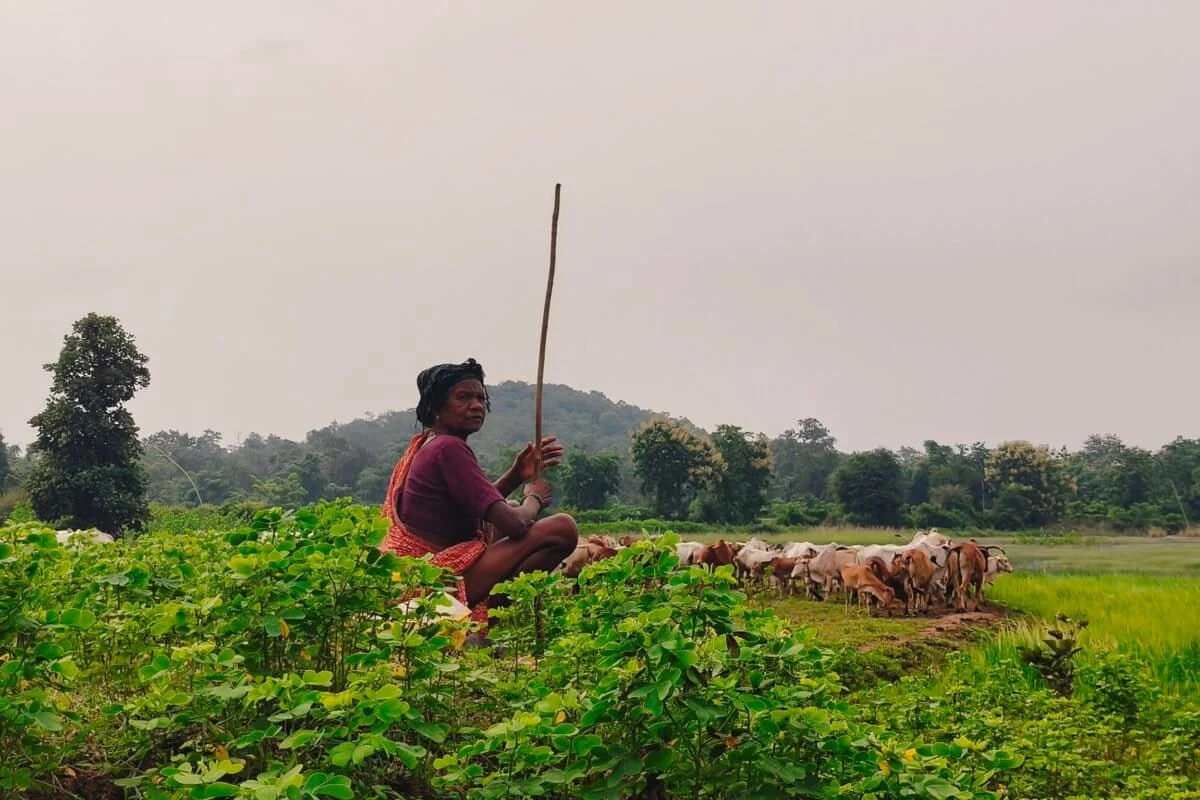
MUMBAI — On October 2, a date historically synonymous with social reform and grassroots empowerment in India, the state of Maharashtra will embark on a transformative legislative journey. The state government is set to begin the formal issuance of Women Farmers Certificates (WFCs) under the recently enacted Maharashtra Women Farmer’s Empowerment Act 2026. This move marks a seismic shift in India’s agrarian policy, decoupling the legal identity of a "farmer" from the traditional requirement of land ownership.
For decades, millions of women who till the soil, manage livestock, and sustain the nation’s food systems have remained "invisible" in the eyes of the law. By providing formal recognition to women engaged in agriculture and allied activities—regardless of whether their names appear on land titles—Maharashtra is setting a national precedent that addresses the deep-seated gender disparities in rural India.
The Core Mandate: Redefining the ‘Farmer’
The primary objective of the Women Farmer’s Empowerment Act 2026 is to bridge the gap between labor and identity. Historically, the term "farmer" (Kisan) has been legally synonymous with "landowner." Since land titles in India are overwhelmingly held by men, women—who perform the lion’s share of agricultural labor—have been classified merely as "agricultural laborers" or "unpaid family workers."
The WFC changes this paradigm. It provides a legal document that recognizes a woman’s status as a farmer based on her actual work in crop husbandry, animal husbandry, poultry, fisheries, agroforestry, vermiculture, or primary processing. This recognition is not merely symbolic; it is a functional "passport" to the state’s agricultural ecosystem.
Key Provisions of the Act
The legislation is comprehensive, establishing a robust infrastructure to ensure that recognition translates into tangible benefits:
![Maharashtra formally recognises women farmers regardless of land ownership [Commentary]](https://imgs.mongabay.com/wp-content/uploads/sites/30/2026/09/01002543/IMG_20260924_221913_Mahesh-Maske-1200x800.jpg)
- Women Farmer Empowerment Cell: A dedicated state-level body to streamline policy and address grievances.
- State Level Monitoring Committee: An oversight body to track the implementation and effectiveness of the Act.
- The Women Farmers’ Database: A digital repository that integrates with existing state records but remains independent of land-ownership requirements.
- District and Block Assistance Officers: Specialized personnel stationed at the local level to help women navigate the bureaucracy of obtaining certificates and accessing entitlements.
A Chronology of Change: From Vision to Legislation
The path to the 2026 Act was characterized by an unprecedented level of political will and a rapid legislative timeline. The journey began in September 2025, when leadership from the M.S. Swaminathan Research Foundation (MSSRF) met with Maharashtra’s leadership, including Deputy Chief Minister Devendra Fadnavis, to highlight the systemic exclusion of women from agricultural benefits.
The 10-Month Sprint
Following that initial meeting, the Government of Maharashtra signed a Memorandum of Understanding (MoU) with MSSRF to draft a framework for empowerment. The process was notable for its speed and inclusivity:
- September 2025: Conceptualization and partnership formation.
- January 2026: Launch of state-wide consultations. Meetings were held in Mumbai, followed by regional clusters in Pune, Chhatrapati Sambhajinagar, and Nagpur. These sessions included not just bureaucrats and lawyers, but the women farmers themselves.
- Spring 2026: Technical advisory groups and the Vidhi Centre for Legal Policy refined the draft Bill based on grassroots feedback.
- July 2, 2026: The Bill was tabled during the monsoon session. It achieved a rare feat in modern politics: unanimous passage in both the Legislative Assembly and the Legislative Council.
- October 2, 2026: Official commencement of certificate issuance.
This ten-month progression from a proposal to a law serves as a masterclass in "fast-track" social legislation, proving that bureaucratic hurdles can be cleared when there is a clear consensus on social justice.
Supporting Data: The ‘Feminization’ of the Agrarian Crisis
The urgency behind this Act is rooted in a phenomenon social scientists call the "feminization of agriculture." As rural men increasingly migrate to urban centers for non-farm employment, the burden of maintaining India’s farms has fallen squarely on women.
The Statistical Disconnect
According to the Periodic Labour Force Survey (PLFS), women now constitute nearly 60% of the national agricultural workforce. However, their agency does not match their labor.
![Maharashtra formally recognises women farmers regardless of land ownership [Commentary]](https://imgs.mongabay.com/wp-content/uploads/sites/30/2026/09/26113827/Potato_harvest_in_Himachal_Pradesh_India_2011-768x512.jpg)
- National Level: While women do 60% of the work, they hold less than 15% of land titles.
- Maharashtra Context: In rural Maharashtra, 82% of the female workforce is engaged in agriculture, yet they hold only 15.5% of operational farmland.
This "land-identity trap" has historically barred women from accessing essential services. Most government schemes—including the PM-KISAN direct benefit transfer, crop insurance (Pradhan Mantri Fasal Bima Yojana), and subsidized irrigation—require a farmer ID linked to land records. Without the WFC, these women were ineligible for the very tools they needed to survive the agrarian crisis.
Lessons from Vidarbha
The Act draws heavily from successful pilot projects in Vidarbha, a region long plagued by farmer suicides and agrarian distress. The MSSRF’s work in Wardha and Yavatmal districts under the Mahila Kisan Sashaktikaran Pariyojana (MKSP) demonstrated that when women are organized into "Samitis" (collectives) and given technical training, farm productivity increases and household resilience improves. The 2026 Act essentially scales these localized successes into a state-wide legal mandate.
Official Responses and Grassroots Voices
The legislation was shaped by a series of high-stakes consultations where women farmers voiced the indignities of their "invisible" status.
Dr. Soumya Swaminathan, Chair of the MSSRF, has been a vocal advocate for this shift. "A farmer is also a woman working in the field," she noted in her analysis of the Act. "For too long, the image of a farmer has been that of a man… Recognition alone is not the same as ownership, but delinking identity from land is the crucial first step."
Feedback from the Field
During the regional consultations in early 2026, women farmers highlighted several specific barriers that the Act now seeks to dismantle:
![Maharashtra formally recognises women farmers regardless of land ownership [Commentary]](https://imgs.mongabay.com/wp-content/uploads/sites/30/2026/09/01002851/IMG20260908140958-768x512.jpg)
- Digital Exclusion: Many complained that Agristack, the government’s digital database, was inaccessible to them because it pulled data exclusively from land records.
- Credit Barriers: Without a "Farmer" status, women were forced to take personal loans at high interest rates rather than agricultural loans or Kisan Credit Cards (KCC) which offer subsidized rates.
- Subsidies: Access to solar pumps and livestock insurance was often denied because the applicant could not prove they were a "farmer" in the legal sense.
Government officials have responded by ensuring the Act includes provisions to lower interest rates for credit taken in women’s names and incentivizing families through the Lakshmi Mukti Yojna to add women’s names to family land records.
Implications: Beyond Recognition to Transformation
The issuance of the Women Farmers Certificates is expected to have far-reaching implications for India’s economy, social fabric, and climate resilience.
1. Economic Empowerment and Credit Access
By holding a WFC, a woman can finally walk into a bank or a cooperative society and demand agricultural credit. This reduces reliance on predatory moneylenders and allows women to invest in better seeds, fertilizers, and machinery. It also facilitates the growth of Farmer Producer Organizations (FPOs) led by women, allowing them to bypass middlemen in the mandis (markets) and secure better prices for their produce.
2. Climate Resilience and Adaptation
Climate change has made agriculture increasingly volatile. Women are often the first to feel the impact of droughts and heatwaves, yet they are also the primary keepers of traditional knowledge regarding seed conservation and resource management. The Act provides a pathway for women to receive formal training in climate-resilient farming. When scientific knowledge is merged with women’s lived experience, the result is a more sustainable food system.
3. Social Status and Gender Justice
The psychological impact of the WFC cannot be overstated. In a patriarchal society, being recognized as an "owner of the craft" rather than a "helper" changes the power dynamics within the household. It gives women negotiating power. As the Act is implemented, it is expected to encourage the "joint titling" of land, as families realize that having a recognized "woman farmer" in the house opens doors to more government subsidies and benefits.
![Maharashtra formally recognises women farmers regardless of land ownership [Commentary]](https://imgs.mongabay.com/wp-content/uploads/sites/30/2026/10/01090819/IMG20260904113755_Mahesh-Maske-768x512.jpg)
4. A Template for the Nation
Maharashtra’s bold move puts pressure on other agrarian states—such as Uttar Pradesh, Punjab, and Andhra Pradesh—to follow suit. If the WFC model proves successful in increasing the uptake of government schemes and improving rural incomes, it could lead to a central amendment of the National Policy for Farmers.
The Road Ahead: Challenges in Implementation
While the passage of the Act is a victory, the real test lies in its execution. Experts point out that a certificate is only as good as the systems that accept it.
Institutional Acceptance: For the Act to succeed, every bank, insurance provider, and local mandi official must be trained to recognize the WFC as a valid document, equal in weight to a land title for the purposes of service delivery.
Awareness Campaigns: There is a massive task ahead in educating rural populations about the law. Many women may not even know they are eligible for the certificate or may face domestic pressure not to "assert" their identity.
The Land Question: Ultimately, while the WFC solves the identity crisis, it does not solve the ownership crisis. Real transformation will require gender-equitable land governance. The WFC is a bridge, but the destination remains the equitable distribution of land assets.
![Maharashtra formally recognises women farmers regardless of land ownership [Commentary]](https://imgs.mongabay.com/wp-content/uploads/sites/30/2026/09/01003312/IMG20260909112911-e1790795014625-768x512.jpg)
As Maharashtra prepares to issue the first batch of certificates this October, the eyes of the nation are on the state’s rural heartland. This is more than a policy shift; it is an attempt to rewrite the social contract of rural India, ensuring that those who feed the nation are finally seen, heard, and empowered.
Data Summary: Women in Maharashtra Agriculture (2026 Estimates)
- Total Rural Female Workforce: ~82% in Agriculture.
- Land Ownership: ~15.5%.
- Projected WFC Recipients (Phase 1): Over 5 lakh women.
- Key Regions of Focus: Vidarbha, Marathwada, and North Maharashtra.
