
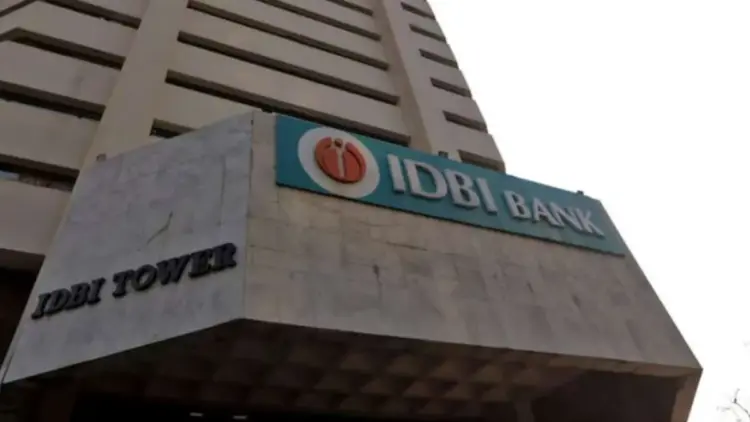
Mumbai, India – A landmark acquisition in India’s financial sector is drawing significant scrutiny, as Canadian investment giant Fairfax Financial Holdings moves to acquire a controlling stake in IDBI Bank. While the Rs 52,878 crore (approximately $5.6 billion) deal promises to reshape the landscape of Indian banking, a unique funding proposal has sparked a contentious debate, raising serious questions about corporate governance and the ethical use of institutional capital. At the heart of the matter lies a plan wherein IDBI Bank, post-acquisition, could potentially use its own funds to purchase three financial businesses currently owned by Fairfax, effectively reducing the cash outlay for the acquirer.
The proposed transaction, which sees Fairfax securing 60.72% of IDBI Bank from the Indian government and state-owned insurer LIC at a price of Rs 81 per share, is touted by Fairfax Chairman Prem Watsa as a "once-in-a-lifetime opportunity." However, the unconventional funding mechanism, detailed in recent investor calls and reports, has ignited a firestorm of queries from financial analysts, minority shareholders, and regulatory observers alike. The central dilemma is stark: could IDBI Bank’s robust capital reserves inadvertently become a source of financing for its new owner’s acquisition?
The Core of the Contention: IDBI’s Capital and Fairfax’s Assets
The controversy stems from Fairfax’s stated intention for IDBI Bank to acquire three specific financial entities from Fairfax’s portfolio: Go Digit General Insurance, Go Digit Life Insurance, and IIFL Capital. According to Prem Watsa, IDBI Bank possesses "excess capital" that could be deployed for these purchases. "So the way it works is there’s excess capital at IDBI Bank. And so they’ll just pay cash… we see them paying cash at the time of the deal at market prices," Watsa elaborated in an investor call, suggesting a straightforward transaction post-takeover.
Fairfax President Peter Clarke further quantified this proposed arrangement, stating that the three businesses combined could contribute approximately $3 billion towards the overall $5.6 billion needed for the IDBI acquisition. "The contribution of Digit Insurance, including the Life operations and IIFL Capital… For those 3 companies, that’s approximately $3 billion on its own," Clarke stated. This $3 billion figure, roughly equivalent to Rs 28,300 crore based on the deal’s exchange rate, represents a staggering 54% of the total Rs 52,878 crore Fairfax is slated to pay for IDBI Bank. While Fairfax frames this as a strategic integration to create a unified financial services powerhouse, critics are quick to point out the optics: a significant portion of the acquisition cost could potentially be recouped by Fairfax through IDBI Bank’s own balance sheet.
Chronology of the Deal and Fairfax’s Rationale
The discussions surrounding Fairfax’s acquisition of IDBI Bank have been ongoing, culminating in the recent agreements to divest the majority stake held by the government and LIC. Fairfax’s bid was a significant step in India’s broader privatization drive, aiming to unlock value from state-owned assets and infuse private sector efficiency.
Key Statements and Justifications:
- Initial Acquisition Intent: Fairfax, known for its long-term value investing philosophy, identified IDBI Bank as a strategic asset, particularly given its vast customer base and recovery trajectory.
- Unveiling the Funding Plan: The specifics of the asset purchase by IDBI Bank from Fairfax emerged during subsequent investor interactions, particularly a Business World report and investor calls where Prem Watsa detailed the "excess capital" concept.
- Strategic Integration Vision: Fairfax has articulated a vision of integrating these entities with IDBI Bank to create a "unified financial services company that can offer a one-stop solution for the financial needs of Indians." The idea is that Go Digit’s insurance products could be cross-sold to IDBI customers, and IIFL Capital could add its broking capabilities, creating a synergistic ecosystem.
- Emphasis on Independence: Interestingly, Watsa also clarified that despite the proposed consolidation, the individual entities would largely retain their operational independence. "We have never believed in synergies," he noted, adding that IDBI’s current CEO, Rakesh Sharma, would continue, while Go Digit and IIFL Capital would operate "pretty well independently." This nuanced stance aims to address concerns about forced integration, yet it doesn’t fully allay questions about the financial mechanics.
- Regulatory Approvals: Fairfax has consistently underscored that the proposed asset purchases are subject to necessary approvals from various regulatory bodies, including the Reserve Bank of India (RBI), the Securities and Exchange Board of India (SEBI), and for the insurance entities, the Insurance Regulatory and Development Authority of India (IRDAI).
This chronology highlights a clear sequence: first, the acquisition of control over IDBI Bank, followed by the proposed internal capital deployment by the newly controlled bank to acquire assets from its new parent. This sequence is precisely what triggers the governance concerns.
Supporting Data: IDBI’s Financial Strength and the Price Tag
To understand the context of "excess capital," it’s crucial to examine IDBI Bank’s recent financial performance and the sheer scale of the proposed transactions.
IDBI Bank’s Capital Position:
IDBI Bank has indeed undergone a remarkable turnaround. Once burdened by substantial non-performing assets (NPAs) and heavy losses, it required significant capital infusions from the government and LIC between 2016 and 2020. Prem Watsa himself acknowledged this history, stating the bank "got into trouble in the 2016 to 2020 time period, with cumulative losses of approximately USD 6.4 billion financed by LIC and the Government of India."
However, through stringent reforms and capital support, the bank has significantly de-risked its balance sheet and strengthened its financial standing. As of September 30, 2026, IDBI Bank boasted a Capital Adequacy Ratio (CAR) of 27.10%. This figure is substantially higher than the regulatory requirement of 11.5%, indicating a robust financial cushion. Watsa lauded IDBI as "financially very strong with capital adequacy of 27%," viewing its high capitalization as a key attraction. He even hinted at future dividends, stating, "They’re very well capitalized. And so that flows to us."
While a high CAR signifies strong financial health and the ability to absorb potential losses, it does not automatically translate into an equivalent amount of readily available cash for large-scale acquisitions. A bank’s capital is a complex mix of equity, reserves, and other instruments, much of which is deployed in lending, investments, and other operational assets. Deploying a significant portion of this capital for buying other businesses requires careful consideration of liquidity, strategic fit, and regulatory compliance.
The Financial Magnitude of the Proposed Asset Purchases:
The proposed $3 billion (Rs 28,300 crore) acquisition of Go Digit General, Go Digit Life, and IIFL Capital by IDBI Bank represents a massive transaction. This amount is over half of Fairfax’s $5.6 billion outlay for the controlling stake in IDBI itself. This financial interplay is what fundamentally underpins the concerns:
- Fairfax’s Reduced Exposure: If IDBI Bank buys these assets, Fairfax effectively reduces its net cash outflow for the IDBI acquisition. For every dollar IDBI pays for Fairfax’s assets, Fairfax theoretically needs less of its own capital to fund the original takeover.
- IDBI’s Capital Deployment: While IDBI would receive assets in return, the sheer scale of the proposed cash outflow could impact the bank’s future lending capacity, internal growth initiatives, or ability to distribute dividends, despite its high CAR.
Official Responses and Lingering Questions
Fairfax has put forward its rationale, but the proposed structure has opened a Pandora’s Box of questions for regulators, minority shareholders, and market participants.
1. The Conflict of Interest Quandary
The most pressing concern is the inherent potential for a conflict of interest. Fairfax, as the incoming controlling shareholder of IDBI Bank, would be on both sides of the transaction – selling its assets to a company it now controls. This raises fundamental questions about whether the deal would be truly arms-length and in the best interest of IDBI Bank and all its shareholders, not just the new majority owner.
2. The Challenge of Fair Valuation
Fairfax Chairman Prem Watsa stated that IDBI would acquire the businesses at their "respective market prices." However, a significant component of the proposed deal, Go Digit Life Insurance, is not a publicly listed entity. This means there is no readily available "market price" determined by public trading.
- Who decides the value? For an unlisted entity like Go Digit Life, the valuation would rely on internal assessments, independent appraisals, or a combination thereof. The absence of a public market price makes the valuation process opaque and susceptible to potential manipulation if not rigorously overseen by independent experts.
- Transparency: As of now, no independent valuation of the three businesses has been made public in the reviewed materials. This lack of transparency fuels skepticism and calls for robust, third-party assessments to ensure IDBI Bank pays a fair and equitable price.
3. Minority Shareholder Rights and Influence
Post-acquisition, the Indian government and LIC will collectively retain a substantial minority stake of approximately 34% in IDBI Bank. However, under the proposed arrangement, they are expected to relinquish their "special rights" over the bank and withdraw their nominees from IDBI’s board. This effectively means Fairfax will wield decisive control, even with a significant minority shareholder presence.
- A Voice in Major Decisions? This raises a critical question: Will the government and LIC, as substantial minority shareholders, have a meaningful say or veto power when IDBI Bank decides on such a colossal transaction as buying Fairfax’s businesses? Without board representation or special rights, their ability to influence or scrutinize the deal could be severely curtailed, potentially leaving their interests vulnerable.
4. Regulatory Hurdles: RBI’s Investment Limits
The Reserve Bank of India (RBI) has stringent regulations governing how much a bank can invest in other companies, particularly subsidiaries or financial services entities. These rules are designed to prevent banks from excessive risk-taking, asset concentration, and potential conflicts of interest.
- The 2025 Norms: Under the RBI’s 2025 guidelines, a bank generally cannot invest more than 10% of its paid-up capital and reserves in a single subsidiary or financial services company. The total investment in such entities cannot normally exceed 20% of its paid-up capital and reserves.
- The $3 Billion Question: Given Fairfax’s estimated $3 billion valuation for the three businesses (around Rs 28,300 crore), there are significant questions about whether IDBI Bank can legally make such large investments within these prescribed limits. IDBI’s existing investments would also count towards these caps.
- Structure and Waivers: The final answer will heavily depend on how the deal is structured and whether any special dispensations or approvals are granted by the RBI. Regulators will need to meticulously examine if the proposed acquisitions align with prudential norms and do not expose IDBI Bank to undue risk or capital strain.
5. IDBI’s Operational Capacity and Liquidity
While IDBI Bank boasts a high Capital Adequacy Ratio, large cash outflows can still impact its operational liquidity and ability to fund its core banking activities, such as lending. Will the acquisition of these Fairfax entities tie up capital that could otherwise be used for expanding its loan book, investing in technology, or strengthening its branch network? Despite having "excess capital" on paper, the practical implications of such a significant deployment need rigorous analysis to ensure it doesn’t hinder IDBI’s organic growth or future financial stability.
Implications and Future Outlook
The Fairfax-IDBI deal, and particularly its controversial funding mechanism, carries significant implications for India’s financial sector and its ongoing privatization efforts.
Increased Regulatory Scrutiny
The high-profile nature of the transaction and the unique funding proposal guarantee intense scrutiny from India’s financial regulators – RBI, SEBI, and IRDAI. Their role will be crucial in ensuring the deal adheres to all legal frameworks, corporate governance standards, and prudential norms. Any perceived leniency or lack of transparency could undermine public trust in the regulatory system. The approval process for the asset purchases is expected to be thorough and potentially protracted.
Precedent for Future Privatizations
India is keen on privatizing more state-owned enterprises. How this deal is structured and approved will set an important precedent. A transaction perceived as lacking transparency or fairness, especially concerning the use of the acquired entity’s capital, could deter future investors or complicate subsequent privatization efforts. It underscores the need for crystal-clear terms and impeccable corporate governance in such large-scale transfers of ownership.
Market Perception and Investor Confidence
The questions surrounding the deal could influence market perception. While Fairfax is a respected global investor, the optics of IDBI’s capital potentially funding a significant portion of its own takeover could lead to concerns about shareholder value erosion and corporate ethics. This could impact investor confidence not just in IDBI Bank but potentially in other Indian financial entities undergoing ownership changes.
The Path Ahead: Uncertainty and Approvals
Fairfax has acknowledged that the proposed arrangement for IDBI to buy its businesses is "not final" and could still change. They have also stated that the IDBI takeover could proceed even if one or both of these proposed business purchases do not materialize. This introduces an element of uncertainty into the final structure of the deal.
The coming months will likely see intensive negotiations, detailed financial modeling, and rigorous regulatory reviews. The onus will be on Fairfax to demonstrate that any asset purchases by IDBI Bank are executed at genuinely fair market prices, are strategically beneficial to IDBI, and fully comply with all regulatory requirements, especially the RBI’s investment limits. Furthermore, addressing the concerns of minority shareholders, particularly the government and LIC, about their diminishing influence will be critical.
Conclusion: A Test of Corporate Governance
At its core, the Fairfax-IDBI transaction presents a critical test of corporate governance standards in India. Fairfax is undoubtedly making a substantial investment in IDBI Bank, signaling confidence in its future. However, the proposal for IDBI to use its "excess capital" to acquire assets from its new controlling shareholder introduces a complexity that demands utmost transparency, independent oversight, and strict adherence to regulatory guidelines.
The simple question remains paramount: If Fairfax takes control of IDBI, and then IDBI uses its own money to buy businesses owned by Fairfax, is Fairfax effectively using the bank’s own capital to fund a significant portion of its takeover? The answer, as it unfolds through regulatory approvals and final agreements, will not only define the future trajectory of IDBI Bank but also cast a long shadow over the principles of corporate ethics and financial transparency in India’s dynamic economic landscape.