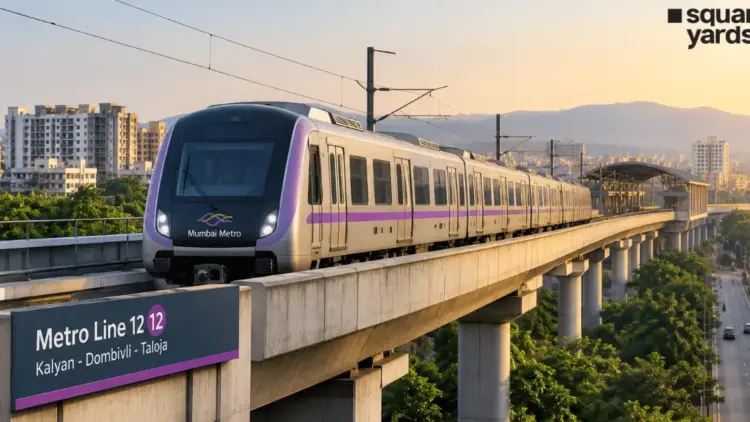
The landscape of the Mumbai Metropolitan Region (MMR) is undergoing a seismic shift in connectivity. As the city’s traditional boundaries expand outward, the Maharashtra government has doubled down on its commitment to bridging the gap between the satellite cities of Kalyan, Dombivli, and Navi Mumbai. The recent approval of the 18.4-km Metro Line 12A extension, coupled with the ongoing progress of the foundational Metro Line 12 (the Orange Line), represents a pivotal moment in regional urban planning. This infrastructure overhaul is designed not just to move people, but to catalyze economic growth, redefine real estate markets, and integrate industrial corridors that have long remained underserved by rapid transit.
1. Main Facts: Defining the Orange Line Corridor
Mumbai Metro Line 12 is envisioned as a critical north-south artery for the eastern periphery of the MMR. Often referred to as the Orange Line, this project is an extension of the Metro Line 5 (Thane-Bhiwandi-Kalyan), effectively creating a continuous transit loop that connects Thane to the heart of Navi Mumbai.
Project Overview and Technical Specifications
The primary corridor of Metro Line 12 spans approximately 23.57 kilometers, featuring a fully elevated structure to navigate the dense urban and industrial topographies of the region. With an estimated project cost of Rs 5,865 crore, the line is a high-priority venture for the Mumbai Metropolitan Region Development Authority (MMRDA).
| Project Feature | Technical and Operational Details |
|---|---|
| Metro Corridor | Kalyan to Taloja |
| Official Designation | Orange Line, Metro Line 12 |
| Total Length | ~23.57 km (Line 12) + 18.4 km (Line 12A Extension) |
| Number of Stations | 19 (All Elevated) |
| Estimated Project Cost | Rs 5,865 Crore |
| Construction Commencement | March 2024 |
| Target Commissioning | 2028 |
| Key Interchange Points | Kalyan, Hedutane, and Amandoot |
| Depot Location | Nilje |
| Primary Objective | Seamless integration of Kalyan-Dombivli with Navi Mumbai |
The Metro Line 12A Extension
The newly approved 18.4-km extension, dubbed Metro Line 12A, is designed to enhance the reach of the original plan. By connecting Manpada-Katai Naka to Taloja via Kalyan Phata, the government aims to create a more robust "web" of connectivity. This extension is particularly significant because it incorporates integrated elevated roads and flyovers along the Kalyan-Shilphata corridor, addressing the chronic traffic congestion that plagues road commuters in this industrial belt.
2. Chronology: From Blueprint to Breaking Ground
The journey of Metro Line 12 reflects the evolving priorities of the Maharashtra state government and the MMRDA.
- 2018–2020: Conceptualization and Initial Surveys: The need for a dedicated rail link between Kalyan and Taloja was identified as part of the Comprehensive Transportation Study (CTS) for the MMR. Initial Detailed Project Reports (DPRs) were drafted to link the residential hubs of Dombivli with the industrial zones of Navi Mumbai.
- 2022–2023: Financial Approvals and Tendering: The project received formal administrative approval. The funding model, involving state contributions and loans from international multilateral agencies, was finalized.
- March 2024: Official Commencement: Construction activities officially began. Piling work and utility shifting commenced at various points between Kalyan and Dombivli.
- Late 2024: The 12A Extension Approval: Recognizing the rapid pace of development along the Kalyan-Shilphata road, the Maharashtra government approved the 18.4-km extension (12A) to further integrate the network.
- 2025–2027 (Projected): Structural Phase: Completion of the elevated viaducts and station skeletons.
- 2028 (Targeted): Commissioning: The line is expected to open for public use, significantly reducing travel time between Kalyan and Navi Mumbai from over 90 minutes (by road) to approximately 45 minutes.
3. Supporting Data: Real Estate and Socio-Economic Impact
The "Metro Effect" is already visible in the property markets along the proposed route. Investors and homebuyers are increasingly looking toward the Kalyan-Dombivli-Taloja belt as an affordable alternative to the saturated markets of Mumbai and Thane.
Market Insights: Eastern MMR Real Estate Trends
Data from Square Yards Research indicates a steady appreciation in property values since the announcement of the Metro project.
| Locality/Micromarket | Average Price (per sq. ft.) | Key Developers in the Region |
|---|---|---|
| Kalyan | Rs 8,500 – 11,000 | Lodha, JP Infra, Godrej Properties |
| Dombivli East | Rs 9,000 – 11,000 | Lodha, Runwal, Rustomjee |
| Dombivli West | Rs 9,000 – 12,000 | Lodha, Patel RPL, Om Developers |
| Turbhe | Rs 20,000 – 28,000 | Arihant, Kamdhenu, Goodwill |
| Taloja | Rs 9,000 – 12,000 | Arihant, Gami Group, Paradise Group |
Regional Connectivity Breakdown
The route serves a diverse mix of economic zones:
- Industrial Powerhouses: Dombivli MIDC and Taloja Industrial Estate are two of the largest manufacturing hubs in the state. The Metro will provide a reliable transit option for thousands of blue-collar and white-collar employees who currently rely on overcrowded buses or private transport.
- The Kalyan Growth Center: Located near Nilje, this planned urban expansion zone is set to become a hub for commercial offices and high-density residential complexes. The Metro depot at Nilje ensures that this area remains the operational heart of the line.
- Emerging Residential Belts: Areas like Pisavali Gaon, Golavali, and Hedutane, which were previously considered "remote," are now seeing a surge in township projects.
4. Official Responses and Strategic Vision
Government officials and urban planners have emphasized that Metro Line 12 is not an isolated project but a component of a larger "Multi-Modal Integration" strategy.
The MMRDA’s Stance:
Representatives from the MMRDA have noted that the Orange Line is essential for "de-densifying" the existing Central Railway suburban line. By providing an alternative route for those traveling from the northeast (Kalyan) to the south (Navi Mumbai), the Metro will alleviate the pressure on the interchange at Thane station.
State Government Vision:
The Maharashtra state leadership has highlighted the 12A extension as a "double-engine" development. By integrating flyovers with the Metro pillars along the Shilphata stretch, the government is tackling both public transit and private vehicle congestion simultaneously. This "integrated corridor" approach is being hailed as a blueprint for future infrastructure projects in the MMR.
Interchange Synergy:
Planners have focused heavily on the "Amandoot" station, which serves as the handshake point between the Mumbai Metro and the Navi Mumbai Metro (Line 1). This connection is vital for providing commuters with access to the Belapur-Kharghar-Taloja circuit, effectively linking the CBD of Navi Mumbai to the residential heart of Kalyan.
5. Implications: A Future-Ready MMR
The long-term implications of Metro Line 12 and 12A extend far beyond simple transportation.
Economic De-centralization
Historically, Mumbai’s economy has been centralized around the South Mumbai and BKC hubs. The Metro Line 12 corridor supports the "Live-Work-Play" model in the eastern suburbs. With better connectivity, more corporations are expected to set up satellite offices in Kalyan and Dombivli, leveraging the lower real estate costs and the availability of a skilled local workforce.
Environmental and Traffic Relief
The Kalyan-Shilphata road is notorious for heavy vehicular traffic, particularly heavy-duty trucks moving toward the JNPT port. The introduction of an elevated Metro and integrated flyovers will significantly reduce the carbon footprint of the region by encouraging a shift from private vehicles to electric-powered mass transit.
Social Integration
The corridor links diverse socio-economic pockets—from the wholesale markets of Kalyan to the high-tech industrial units of Taloja. This integration fosters a more inclusive urban environment, where residents of developing "Gaothan" areas like Vadavli and Waklan gain equal access to the opportunities available in the larger urban centers.
Real Estate Appreciation
Analysts predict a 15–20% surge in property prices as the project nears its 2028 completion date. The "Transit-Oriented Development" (TOD) policy, which allows for higher FSI (Floor Space Index) near Metro stations, is expected to result in more vertical growth and modern amenities in these suburban pockets.
Conclusion
The approval of Metro Line 12A and the steady progress of the Orange Line mark a transformative era for the Eastern Mumbai Metropolitan Region. By weaving together the industrial might of Taloja, the commercial heritage of Kalyan, and the residential potential of Dombivli, the Maharashtra government is laying the tracks for a more balanced and accessible megacity. For the millions of residents in these corridors, the project promises more than just a shorter commute; it promises a fundamental improvement in the quality of urban life. As the 2028 deadline approaches, all eyes remain on this 42-kilometer network, the new backbone of the MMR.
Disclaimer: Real estate prices and project timelines are based on current market trends and official announcements. Actual figures may vary based on market conditions and construction progress.