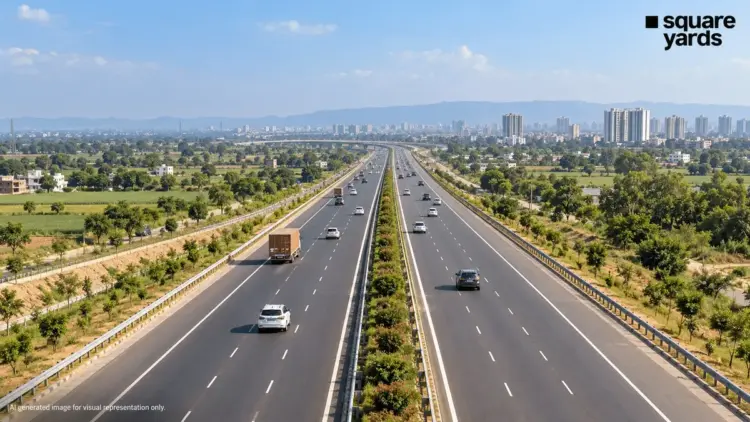
The landscape of North Indian infrastructure is undergoing a seismic shift, with the Ambala–Mohali section of the Ambala–Chandigarh Greenfield Expressway emerging as a cornerstone of regional development. This 30-kilometer, six-lane stretch is more than just a road; it is a strategic intervention designed to dismantle one of the most persistent bottlenecks in the National Capital Region (NCR) to Punjab corridor. By bypassing the perennially congested urban clusters of Zirakpur and Dera Bassi, the expressway promises to redefine the travel dynamics between Delhi and the Tricity (Chandigarh, Mohali, and Panchkula).
As of late 2024, the project stands at a critical juncture, with stakeholders in the real estate, logistics, and infrastructure sectors closely monitoring its progress. While the primary objective is to shave nearly an hour off the Delhi–Chandigarh commute, the secondary impacts—ranging from land value appreciation to the decentralization of industrial hubs—are expected to be felt for decades.
Main Facts: Deconstructing the 30-KM Greenfield Stretch
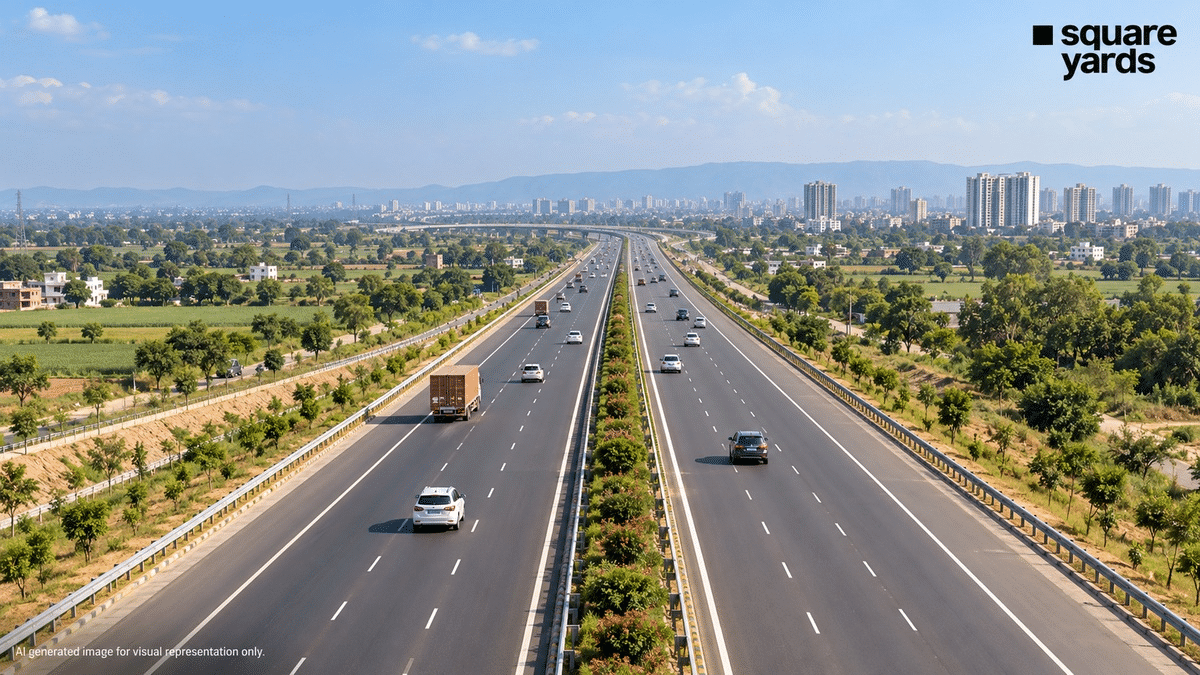
The Ambala–Mohali Expressway is a high-speed corridor designed to provide a seamless transition for commuters entering the Tricity from the south. Unlike "brownfield" projects that involve widening existing roads, this "greenfield" project is built on entirely new land, allowing for optimized engineering, fewer curves, and controlled access points.
Key Project Specifications
- Total Length: Approximately 30 kilometers.
- Configuration: Six-lane divided carriageway with provisions for future expansion.
- Route Alignment: Starts from the Ambala side and terminates at the IT City Chowk in Mohali.
- Bypass Functionality: The route is specifically designed to circumvent the heavy traffic of Dera Bassi and the Zirakpur "bottleneck," where local and long-distance traffic currently merge, causing significant delays.
- Connectivity: The stretch links directly with the already operational 31-km Mohali IT City–Kurali Expressway, effectively creating a high-speed bypass for the entire Mohali-Chandigarh region.
The 50-Minute Advantage
Current estimates suggest that the operationalization of this stretch will reduce the travel time between Delhi and Chandigarh by 40 to 50 minutes. For a journey that typically takes between four and five hours depending on traffic at the Shambhu border and Zirakpur, this represents a nearly 20% increase in efficiency. For business travelers and the logistics industry, this time saving translates into significant fuel and operational cost reductions.
Chronology: From Blueprint to Bitumen
The development of the Ambala–Mohali Expressway is part of a larger national vision to enhance the Bharatmala Pariyojana’s objectives of improving freight and passenger movement across India.
Phase 1: Identifying the Bottleneck
For over a decade, the stretch between Ambala and Chandigarh has been a point of frustration. The rapid urbanization of Zirakpur turned the existing highway into a "city road," where long-haul trucks were forced to compete with local commuters, shoppers, and school buses. The National Highways Authority of India (NHAI) identified the need for a greenfield alignment to separate through-traffic from local traffic.
Phase 2: Land Acquisition and Planning
The project gained momentum as the Greater Mohali Area Development Authority (GMADA) and NHAI synchronized their efforts. Land acquisition was a complex process, involving several villages in the Ambala and Mohali districts. Concurrent with the expressway planning, GMADA initiated notifications for land acquisition for the expansion of Aerocity and the development of the "Aerotropolis" project, a massive urban pocket near the Chandigarh International Airport.
Phase 3: Integration with the Kurali Stretch
A pivotal moment in the project’s chronology was the completion of the 31-km Mohali IT City–Kurali Expressway. This existing road set the stage for the Ambala–Mohali link. Once joined, these two sections will allow travelers coming from Delhi to reach Kurali (and subsequently the hills of Himachal Pradesh or northern Punjab) without ever entering the congested streets of Chandigarh or Mohali.
Current Status
While construction has reached advanced stages, the NHAI has maintained a cautious stance regarding the official opening date. Sources indicate that while the physical structure is largely complete, finishing touches on interchanges, tolling systems, and safety barriers are ongoing.
Supporting Data: Economic and Infrastructure Synergy
The success of the expressway is inextricably linked to the surrounding infrastructure. The data suggests that the "IT City Chowk" is not merely a terminus but a gateway to a burgeoning economic zone.
The Mohali IT Hub
Mohali has emerged as a formidable rival to Gurugram and Noida in the North Indian IT landscape. The IT City, located at the end of the new expressway stretch, houses major players and startups alike.
- Employment Data: Estimates suggest that the Mohali IT City and surrounding industrial sectors employ over 50,000 professionals, a number expected to double as connectivity improves.
- The Airport Factor: The Chandigarh International Airport (located in Mohali) is less than 10 minutes from the IT City Chowk. The expressway provides a direct, high-speed link for passengers traveling from Ambala, Kurukshetra, and even parts of Western UP to the airport.
Urban Expansion: Aerocity and Aerotropolis
GMADA’s master plan revolves around the expressway. The Aerotropolis project, spanning over 1,600 acres, is being developed to accommodate the residential and commercial overflow from Chandigarh. The proximity to the Ambala–Mohali stretch makes these pockets prime real estate for those looking for "transit-oriented development."
Official Responses and Institutional Oversight
The project involves a multi-agency collaboration, primarily between the NHAI and the Government of Punjab (via GMADA).
NHAI Perspective
The National Highways Authority of India has emphasized that this project is a "priority corridor." While they have not officially announced a ribbon-cutting date in recent public briefings, the focus remains on ensuring that the expressway meets the highest safety standards. NHAI officials have noted that the project will utilize advanced traffic management systems (ATMS) to monitor vehicle flow and incidents in real-time.
GMADA’s Strategic Role
The Greater Mohali Area Development Authority has been vocal about the expressway’s role in its "Master Plan 2031." By facilitating the land for Aerocity and Aerotropolis, GMADA is positioning Mohali as the "New Chandigarh" in more than just name. Official statements suggest that the authority is focusing on ensuring that local road links (feeder roads) are robust enough to handle the traffic exiting the expressway at IT City Chowk.
Environmental and Safety Compliance
Officials have also addressed concerns regarding drainage and environmental impact. The expressway includes several underpasses for local farmers and wildlife, ensuring that the "greenfield" nature of the project does not entirely sever local connectivity for rural communities.
Implications: Real Estate, Logistics, and the Future of the Tricity
The most significant impact of the Ambala–Mohali Expressway will be felt in the real estate markets of the "peripheral" towns. However, experts warn against speculative bubbles, noting that real growth will be tied to infrastructure delivery rather than just the road itself.
1. The Mohali-Airport Belt: The Primary Beneficiary
Areas around IT City and Aerocity are expected to see the most immediate benefit. Improved road access makes these locations viable for high-end residential projects and corporate headquarters. The ease of access to the airport and the rest of the Tricity creates a "hub-and-spoke" model where the expressway serves as the primary artery.
2. Zirakpur and Dera Bassi: A Paradigm Shift
For years, Zirakpur’s real estate was driven by its location on the highway. With the expressway diverting through-traffic, Zirakpur may experience a "de-cluttering." While some local businesses dependent on highway stopovers might see a dip, the overall quality of life for residents is likely to improve as noise and air pollution from heavy trucks decrease. This could pivot Zirakpur from a "transit town" to a more settled, premium residential suburb.
3. The Emergence of Kurali and Lalru
Kurali and Lalru have long been considered the "outskirts." However, with the expressway linking them directly to Ambala and Delhi, these areas are becoming attractive to industrial and logistics companies.
- Warehousing: The logistics sector is eyeing Lalru and Kurali for large-scale warehousing, given the easy access to the six-lane corridor.
- Affordable Housing: As prices in Mohali and Chandigarh skyrocket, Kurali offers a more affordable entry point for first-time homebuyers who can now justify the commute thanks to the reduced travel time.
4. Broader Economic Impact: The "Tricity+ Cluster"
The expressway effectively expands the boundaries of the Tricity. What was once a 30-minute drive from the city center is now being pulled into the urban fold. This "Tricity+ Cluster" will likely see a surge in institutional investments, including private universities, multi-specialty hospitals, and regional shopping malls, all positioned along the expressway’s access points.
Conclusion: A Road to Managed Growth
The Ambala–Mohali Greenfield Expressway is a testament to the power of strategic infrastructure. By bypassing congestion and linking key economic zones like the Mohali IT City and the International Airport, it does more than just move cars—it moves the economy.
However, the long-term success of this corridor will depend on more than just the asphalt. It will require the synchronized development of local civic infrastructure, the consistent growth of the IT and industrial sectors, and the timely completion of the Aerotropolis and Aerocity expansions. For commuters, the 50-minute time saving is a welcome relief; for the region, it is the beginning of a new chapter in urban evolution. As the NHAI nears the final stages of this project, the eyes of North India remain fixed on IT City Chowk, waiting for the gates to open on a faster, more connected future.