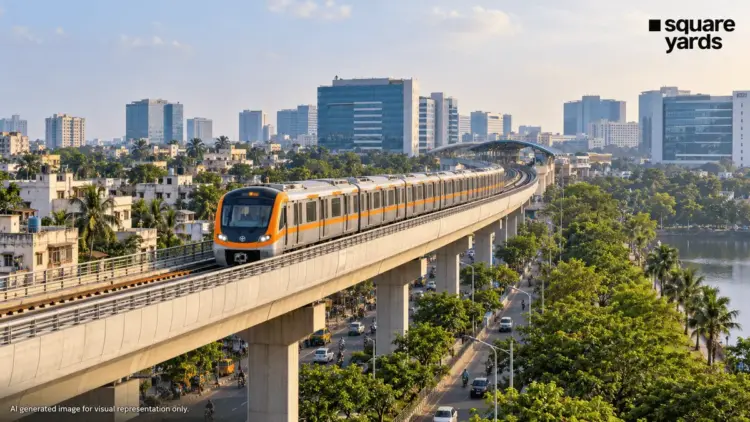
KOLKATA – In a significant move to bolster the city’s transit infrastructure, the Kolkata Metro Railway has set an ambitious target of December 2026 to commence commercial passenger services on the crucial 4.5-km stretch between Beleghata and the IT Center (Salt Lake Sector V). This extension, a pivotal segment of the Orange Line (Kavi Subhash–Jai Hind Bimanbandar corridor), promises to redefine the daily commute for thousands of professionals and residents by linking the southern residential fringes directly to the state’s primary information technology hub.
As of late 2026, the project has entered its critical testing phase, with trial runs beginning in October. While the December 2026 target remains the internal goal, officials emphasize that the final commissioning is contingent upon rigorous safety assessments and the mandatory clearance from the Commissioner of Railway Safety (CRS).
1. Project Overview: The Strategic 4.5-Kilometer Link
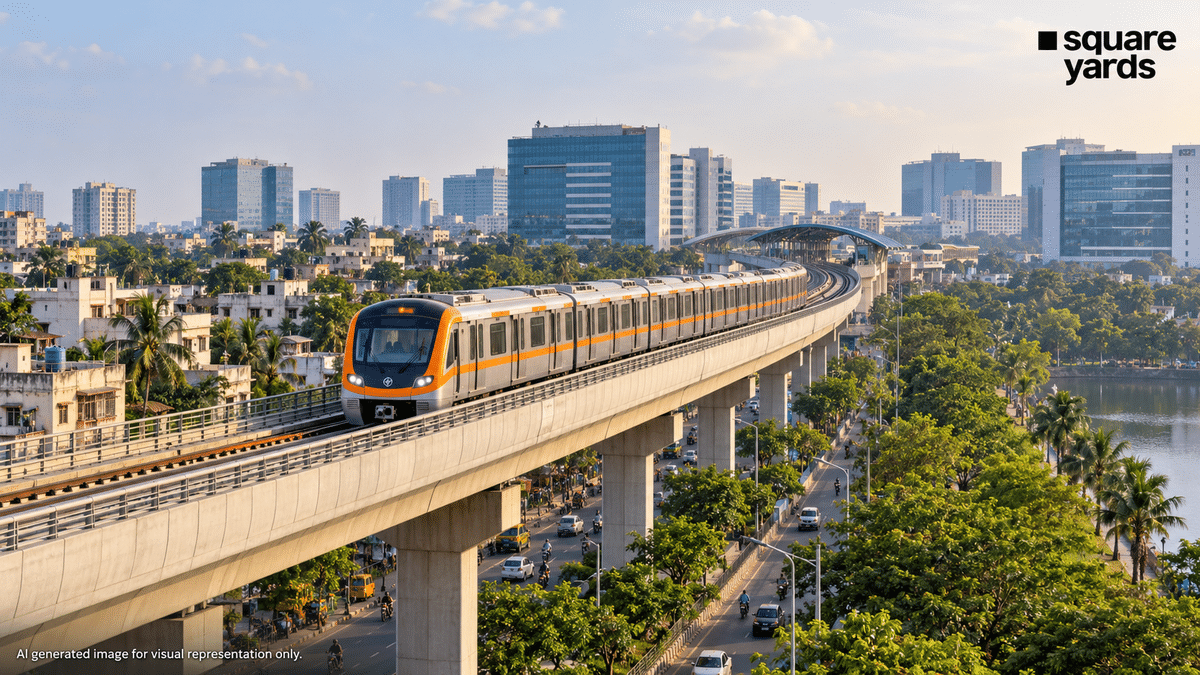
The Beleghata to IT Center section represents the next phase of the Orange Line’s phased rollout. Currently, the line operates on a truncated route between Kavi Subhash (New Garia) and Beleghata. The upcoming 4.5-km extension is designed to bridge the gap between the existing service and the bustling commercial district of Salt Lake Sector V.
The New Stations
The extension will introduce three strategically located stations to the Kolkata Metro map:
- Gour Kishore Ghosh (Chingrighata): Located at one of the city’s busiest and most traffic-congested intersections, this station is expected to provide immense relief to commuters who currently navigate the bottlenecks of the EM Bypass.
- Nalban: Serving the recreational and upcoming commercial zones near the wetlands, this station offers a transit point for those heading toward the eastern fringes of the city.
- IT Center (Sector V): The terminal point of this specific stretch, this station serves as the heart of Kolkata’s tech industry. Crucially, it acts as an interchange point with the Green Line (East-West Metro), allowing passengers to transition toward Sealdah, Esplanade, and Howrah Maidan.
Technical Specifications
| Project Detail | Information |
|---|---|
| Metro Line | Orange Line (Line 6) |
| Corridor | Kavi Subhash – Jai Hind Bimanbandar (Airport) |
| Extension Length | Approx. 4.5 km |
| Key Interchange | Green Line at Salt Lake Sector V |
| Current Phase | Post-Trial Run Testing (as of October 2026) |
| Target Launch | December 2026 (Subject to CRS clearance) |
2. A Chronology of Progress: From Vision to Trial Runs
The development of the Orange Line has been a multi-year endeavor marked by complex land acquisition hurdles and engineering challenges, particularly along the Eastern Metropolitan (EM Bypass) corridor.
- Early Phases: The project was envisioned to provide a high-speed peripheral link around the city, connecting the southern suburbs to the international airport.
- Operational Milestone (2023-2024): The first phase, connecting Kavi Subhash to Hemanta Mukhopadhyay (Ruby Crossing) and subsequently extending to Beleghata, provided a proof-of-concept for the line.
- The 2026 Push: Throughout the early months of 2026, civil construction and track laying for the Beleghata–IT Center stretch were expedited. By the third quarter, electrification and signaling systems were integrated.
- October 2026 (Trial Commencement): The first rakes moved on the new tracks in October 2026. These trials are essential for checking "oscillation"—the physical behavior of the train at various speeds—and ensuring that the third-rail power supply and automated signaling are synchronized.
- The Final Stretch (December 2026): The window for December 2026 is tight. Following internal trials, the Metro Railway must invite the Commissioner of Railway Safety for a thorough inspection of passenger amenities, emergency protocols, and structural integrity.
3. Supporting Data: The Real Estate and Economic Impact
The extension of the Metro is rarely just about transportation; it is a catalyst for urban transformation. Data from Square Yards Research indicates that the areas connected by the Orange Line are already seeing shifts in market sentiment, though the impact varies significantly by locality.
Property Price Snapshot (September 2026)
As the metro project nears completion, asking prices in the vicinity reflect the perceived "connectivity premium."
- Beleghata (Approx. ₹9,450 psf): Once considered a traditional residential enclave, Beleghata has seen a steady rise in interest due to its proximity to both the EM Bypass and the new metro link. It serves as a mid-to-high-tier residential option for those who want to stay close to the city center while having metro access to the IT hubs.
- New Garia (Approx. ₹5,200 – ₹5,250 psf): This area remains one of the most affordable entry points for middle-class homebuyers. Its status as a "mega-hub" (connecting the Blue Line, Orange Line, and Eastern Railway) makes it a high-volume residential market.
- EM Bypass (Approx. ₹13,400 – ₹13,750 psf): The bypass corridor continues to command premium rates, catering to luxury segments. The metro adds a layer of convenience, but the high price point is driven primarily by the luxury infrastructure and premium lifestyle projects in the area.
- Salt Lake Sector V (Approx. ₹11,450 psf for Apartments; ₹10,250 psf for Offices): Sector V is unique as it maintains high demand for both commercial and residential spaces. The metro link is expected to stabilize office rentals and increase the appeal of "walk-to-work" or "short-commute" residential units.
The Connectivity Multiplier
The real value of the Beleghata–IT Center stretch lies in the Interchange Factor. By connecting the Orange Line to the Green Line at Sector V, the Metro Railway is effectively linking the southern suburbs (New Garia/Garia) to the western transport hubs (Howrah Station) via a single transfer. This creates a "network effect" where the utility of each individual line increases exponentially as they intersect.
4. Official Responses and Operational Outlook
While the Metro Railway authorities are optimistic about the December 2026 target, their official stance remains one of "cautious readiness." A spokesperson for the Metro noted that the priority remains safety over speed.
"The commencement of trial runs in October 2026 was a major milestone. We are currently analyzing the data from these runs to ensure that all parameters meet the stringent standards required for passenger safety. While we are targeting a year-end opening, the final date will be determined only after the Commissioner of Railway Safety provides a fit-for-operation certificate," an official stated.
Engineering experts from Rail Vikas Nigam Limited (RVNL), the implementing agency, have highlighted that the Gour Kishore Ghosh station presented specific engineering challenges due to its elevation and the density of the surrounding Chingrighata area. The completion of this station is seen as a "crowning achievement" for the engineering teams involved.
5. Implications: A Changing Urban Landscape
The opening of this 4.5-km stretch is expected to have far-reaching implications for Kolkata’s urban planning and socio-economic fabric.
De-congestion of the EM Bypass
The EM Bypass is the city’s most vital north-south artery, but it is perpetually plagued by traffic congestion. The Beleghata–IT Center metro link will offer a viable alternative for thousands of office-goers who currently rely on private cars, app-cabs, and buses. A reduction in vehicular traffic could lead to lower carbon emissions and shorter travel times for those still using the road.
Rental Market Dynamics
Real estate analysts predict a surge in rental demand in areas like Beleghata and New Garia. As Sector V becomes more accessible, young professionals may prefer living in these residential pockets where the cost of living is slightly lower than in the heart of Salt Lake, provided the metro offers a reliable 15-to-20-minute commute.
The "Last-Mile" Challenge
Despite the excitement, experts warn that the success of the extension depends on "last-mile connectivity." The impact on property prices and commuter ease will be limited if there are no efficient feeder services (autos, e-rickshaws, or feeder buses) from the stations to the deep interiors of residential neighborhoods.
Looking Toward the Future: The Airport Connection
It is important to note that the Beleghata–IT Center stretch is a mid-point in a larger journey. The ultimate goal of the Orange Line is to reach the Netaji Subhash Chandra Bose International Airport (Jai Hind Bimanbandar). While the current extension stops at the IT Center, work is simultaneously progressing on the New Town and Rajarhat stretches. Once the entire corridor is operational, it will create a seamless transit loop around Kolkata’s eastern boundary, fundamentally changing how the city moves.
Conclusion
The December 2026 target for the Beleghata–IT Center metro extension represents a beacon of hope for Kolkata’s infrastructure. By linking the southern residential heartlands to the technological pulse of Sector V, the Metro Railway is doing more than just laying tracks; it is building a bridge to a more efficient, connected, and economically vibrant future. While the real estate market watches with anticipation, the true victory will be for the daily commuter, for whom the "Chingrighata crawl" may soon become a thing of the past.