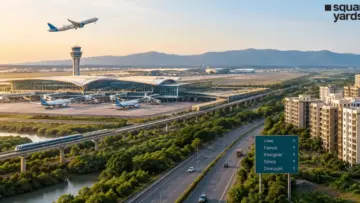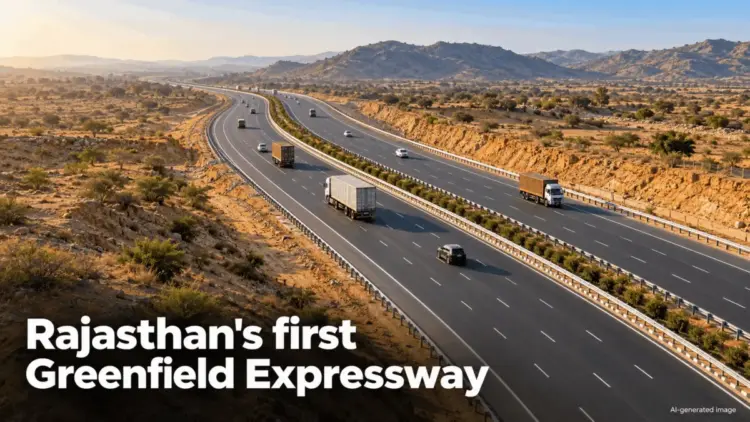
Infrastructure development is often cited as the backbone of economic transformation. In the Indian context, the proximity of a region to high-speed corridors often dictates its socio-economic trajectory. Rajasthan, a state traditionally known for its heritage and tourism, is now pivoting toward a future defined by industrial connectivity and rapid transit. At the heart of this transition is the state’s first greenfield expressway—the Kotputli–Kishangarh corridor.
As the Rajasthan government prepares to invite bids for this ambitious project in late 2026, the landscape for investors, homebuyers, and logistics giants is shifting. This project is not merely a road; it is a strategic intervention designed to bypass congestion, unlock land value, and create a new economic geography in Central Rajasthan.
1. Main Facts: The Blueprint of the Kotputli–Kishangarh Corridor
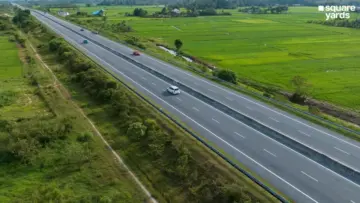
The Kotputli–Kishangarh Expressway is the flagship project among nine proposed greenfield corridors intended to modernize Rajasthan’s road network. Unlike "brownfield" projects, which involve upgrading existing roads, "greenfield" expressways are built on entirely new alignments through undeveloped land. This allows for straighter routes, higher speed limits, and planned urban clusters.
Project Specifications
- Total Length: Approximately 181 kilometers.
- Estimated Cost: Rs 6,906 crore (Rs 69.06 billion).
- Land Requirement: Approximately 1,679 hectares across multiple districts.
- Starting Point: Near Kotputli, serving as a gateway for traffic coming from Delhi and the northern National Capital Region (NCR).
- Terminus: Near Kishangarh, connecting with National Highway 48 (NH-48) and NH-448, facilitating travel toward Ajmer, Udaipur, and Ahmedabad.
- Travel Time Impact: The project aims to reduce the travel time between Kotputli and Kishangarh from the current four hours to just two hours, effectively halving the transit duration.
The expressway is designed to serve as a high-capacity alternative to the heavily congested NH-48. By diverting long-distance freight and passenger traffic away from the existing highway, the state hopes to reduce accidents, lower carbon emissions from idling vehicles, and improve the overall efficiency of the Delhi-Mumbai industrial corridor.
2. Chronology: From Vision to Implementation
The journey of the Kotputli–Kishangarh Expressway is part of a broader state-wide infrastructure overhaul. Understanding the timeline is crucial for stakeholders to gauge the project’s momentum.
- February 2024: The Rajasthan State Budget proposes an ambitious plan to develop nine expressways covering a total of 2,756 kilometers. This marks the formal initiation of the "Expressway Era" for the state.
- Mid-2024: The Rajasthan State Road Development and Construction Corporation (RSRDC) begins identifying priority corridors. The Kotputli–Kishangarh and Beawar–Bharatpur stretches are fast-tracked due to their high commercial potential.
- Late 2024: Financial approvals for land acquisition are secured. The RSRDC approves a borrowing limit of Rs 43.98 billion specifically for land procurement for the first two major corridors.
- 2025 (Projected): Finalization of Detailed Project Reports (DPR), environmental impact assessments, and the commencement of the land acquisition process across 50+ villages in the Jaipur and Ajmer districts.
- November 2026: The official target for inviting global and domestic bids for the construction of the Kotputli–Kishangarh corridor.
- 2030 Target: The state government aims to complete at least five of the nine proposed expressways, including this corridor, by the end of the decade.
3. Supporting Data: Financials and Market Dynamics
The viability of the Kotputli–Kishangarh Expressway is backed by significant financial commitments and a clear demand-supply gap in the surrounding real estate markets.
Financial Breakdown
The project involves a massive capital outlay. The Rs 6,906 crore estimate covers construction, while a separate pool of Rs 43.98 billion (shared with the Beawar–Bharatpur project) is dedicated to land acquisition. This high ratio of land-to-construction cost reflects the rising value of acreage in the Jaipur-Ajmer belt.
Real Estate Demand (Insights from Square Yards Data)
Data suggests that market interest is already peaking in the "nodes" or interchanges of the proposed route:
- Kotputli: There is a significant appetite for independent houses. Buyer interest is concentrated in the Rs 50 lakh to Rs 2 crore price bracket. However, the listed supply currently only meets about 33% of this demand, indicating a potential surge in prices once construction begins.
- Jobner: This micro-market is dominated by plot seekers. Demand is highest for small-ticket plots priced below Rs 50 lakh. Supply currently stands at 88% of demand, suggesting a more balanced but rapidly tightening market.
- The "Gap" Factor: In many areas along the 181-km stretch, there is a "supply vacuum." Investors are looking for plotted developments, but institutional supply remains thin, leading to speculative pricing in the unorganized sector.
Logistics and Transit Efficiency
The reduction in travel time from 4 hours to 2 hours is not just a convenience; it represents a 50% increase in fuel efficiency for freight carriers and a significant reduction in vehicle wear and tear. For the marble and stone industries of Kishangarh and Makrana, this translates to lower "per-ton-mile" transport costs.
4. Official Responses and Governance
The Rajasthan government, through the RSRDC and the Public Works Department (PWD), has emphasized that this project is a "cornerstone" of the state’s 2030 economic vision.
Officials have noted that the expressway is being designed with "Integrated Transit-Oriented Development" (ITOD) in mind. This means the government isn’t just building a road; they are planning for industrial hubs, warehousing zones, and smart cities at key interchanges.
Environmental and Social Governance:
An environmental clearance filing for the corridor highlights its role as a "decongestion tool." By moving heavy traffic out of the Jaipur metropolitan bypass and onto the greenfield route, the state expects a measurable improvement in the air quality of Jaipur city. Furthermore, the government has signaled a commitment to a "fair compensation" model for land acquisition to avoid the legal bottlenecks that have plagued previous infrastructure projects.
5. Implications: Who Wins and What Changes?
The Kotputli–Kishangarh Expressway will have a ripple effect across various sectors.
For Real Estate and Homebuyers
The "Gurugram Model" of high-rise luxury apartments is unlikely to replicate here immediately. Instead, the focus will be on plotted developments and budget housing.
- Interchanges as Anchors: The real value will not be along the length of the road (where access is restricted) but at the interchanges (Jobner, Chomu, Phulera). These will become the new "suburban centers" of Rajasthan.
- Affordability: For middle-income families in Jaipur, these areas offer a chance to own land at a fraction of the cost of city prices, with the expressway providing a 30-minute commute to the city’s periphery.
For Logistics and Industrial Growth
This corridor is a game-changer for "Just-in-Time" delivery models.
- Warehousing Hubs: Kotputli is poised to become a major warehousing hub for the Delhi-Mumbai route.
- Specialized Trade: Kishangarh (Marble), Makrana (Stone), and the textile units of the region will gain direct, high-speed access to northern markets.
For Tourism and Pilgrimage
Rajasthan’s religious tourism circuit—specifically the Khatu Shyam Ji temple and the Ajmer Sharif Dargah—will see a boost. Improved connectivity allows for "day-trip" tourism from Delhi-NCR, which was previously difficult due to the four-hour grind on NH-48.
For Renters and Local Labor
During the construction phase (2026–2030), there will be a surge in demand for temporary housing for contractors and laborers. Long-term rental demand will only stabilize if the industrial hubs at the interchanges materialize, creating permanent jobs.
6. Challenges and Potential Roadblocks
While the outlook is optimistic, several factors could derail the timeline or the ROI for investors.
- Land Acquisition Hurdles: The project involves over 13,000 families across 50 villages. In India, land acquisition is notoriously complex. Any dispute over compensation rates could lead to litigation, potentially pushing the 2030 completion date further back.
- Speculative Bubbles: Real estate prices in areas like Jobner and Chomu are already rising based on the "announcement effect." Investors risk "paying tomorrow’s prices today." If the project stalls, these investors could see their capital locked in stagnant assets for years.
- Infrastructure Lag: An expressway is only as good as its feeder roads. If the state does not simultaneously upgrade the local roads connecting the interchanges to the nearby towns, the "last-mile" bottleneck will negate the time savings of the expressway.
- Bidding Delays: As seen with the Jalore–Jhalawar expressway (announced in early 2024 but still largely on paper), the transition from "budget proposal" to "groundbreaking" is fraught with administrative delays.
Conclusion: A Strategic Bet on Connectivity
The Kotputli–Kishangarh Greenfield Expressway represents a fundamental shift in how Rajasthan views its geography. By creating a dedicated corridor for high-speed transit, the state is attempting to de-link its economic growth from the congested arteries of the past.
For the savvy investor or homebuyer, the message is clear: the opportunity lies in the nodes, not the road. The towns of Kotputli, Jobner, and Kishangarh are no longer just stops on a map; they are the future anchors of a modernized Rajasthan. However, success in this corridor requires patience. This is a "marathon" investment—a 5-to-10-year play that depends on the state’s ability to turn a ribbon of asphalt into a corridor of commerce.
As the bidding process approaches in 2026, all eyes will be on Rajasthan to see if it can deliver on its promise of a faster, more connected future.