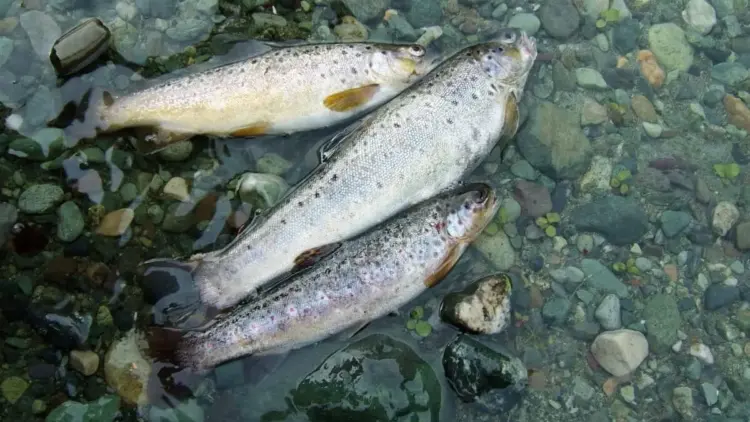
NAINITAL, UTTARAKHAND — On the morning of April 27, 2026, a team of scientists from Kumaun University’s Department of Zoology stood on the banks of Naini Lake, carrying the weight of a decades-long ecological hope. They released the first batch of captive-bred snow trout fingerlings (Schizothorax richardsonii) into a specially designed experimental cage. For the local community, these fish—known as Asela—are more than just aquatic fauna; they are a cultural symbol of the pristine Himalayan waters that once defined the Kumaon region.
However, the hope was short-lived. Within weeks, the project meant to revive a species listed as "Vulnerable" on the IUCN Red List since 2010 began to falter. High mortality rates, failing infrastructure, and a rapidly warming lake have turned this ambitious reintroduction program into a cautionary tale about the limits of human intervention in a collapsing ecosystem.
Main Facts: A Bold Experiment Meets a Harsh Reality
The reintroduction of the snow trout is a cornerstone of a larger initiative to restore native biodiversity in the high-altitude lakes of Uttarakhand. The project, led by Kumaun University, utilized advanced aquaculture techniques to bridge the gap between laboratory success and wild survival.
The Breeding Program
The scientists employed two primary technologies:

- Biofloc Technology: A system that enhances water quality by balancing carbon and nitrogen, allowing for high-density fish farming with minimal water exchange.
- Recirculating Aquaculture Systems (RAS): A high-tech filtration method that recycles water within the tanks, maintaining strict control over temperature and oxygen levels.
Through these methods, roughly 350 fingerlings were successfully lab-bred over two phases. By June 2026, the program expanded beyond Naini Lake to include three other major water bodies: Bhimtal, Sattal, and Naukuchiatal.
The Mortality Crisis
Despite the controlled environment of the laboratory, the transition to the wild was catastrophic. Official reports from the program staff indicate that more than half of the fingerlings in Naini Lake died shortly after release. In Bhimtal, the situation was equally grim. An official stationed at the Naini Lake aeration facility, speaking on the condition of anonymity, provided a more harrowing estimate: "I cannot point to the exact cause, but more than 80% of the fingerlings are already dead."
The tragedy raises a fundamental question: Can a reintroduction program succeed when the very environment that drove the species to local extinction remains unchanged?
Chronology: The Decline and Attempted Rise of the Asela
To understand the current crisis, one must look back at the ecological trajectory of the Kumaon lakes over the last half-century.

- The 1980s: The Golden Era. Snow trout were the dominant species in the Kumaon region, thriving in the cold, oxygen-rich waters of Naini, Bhimtal, and beyond.
- 1990–2010: The Collapse. Rapid urbanization, untreated sewage discharge, and the introduction of exotic species like the common carp led to a steep decline. By 2010, the IUCN officially listed the species as Vulnerable. In Naini Lake, the fish was considered locally extinct for nearly thirty years.
- 2007: Life Support Begins. Oxygen levels in Naini Lake dropped so low that the government installed 30 aerator pipes to prevent mass fish kills—effectively putting the lake on a "ventilator."
- 2019: Infrastructure Failure. A major pipe burst in the aeration system. Despite warnings from technical experts, the system was never fully repaired.
- April 2026: The Reintroduction. Kumaun University begins releasing lab-bred trout into cages.
- June 2026: The Mass Die-off. Reports of high mortality emerge across all experimental sites.
Supporting Data: An Ecosystem Under Siege
The failure of the reintroduction program is not a mystery of biology, but a consequence of measurable environmental degradation.
The Temperature Barrier
As a cold-water species, the snow trout requires water temperatures between 8°C and 22°C to survive and reproduce. However, data from the Directorate of Coldwater Fisheries Research (DCFR) shows that Naini Lake’s surface temperatures now consistently exceed 25°C during the summer months.
In July 2026, Ashutosh Mishra, head of the Department of Aquatic Environment Management at G.B. Pant University, recorded a peak temperature of 27°C. "If the water stays at this temperature for more than eight hours, snow trout might stop feeding entirely," Mishra noted. This 5-degree deviation from the trout’s thermal comfort zone is a direct result of both climate change and increased sediment load.
The Oxygen Deficit
The lake’s reliance on artificial aeration is a testament to its poor health. Vishal Singh, Executive Director of the Centre for Ecology, Development and Research (CEDAR), describes Naini Lake as "behaving more like an aquarium than a living water body." Without the 30 aerator pipes, the dissolved oxygen levels would plummet below the threshold required for any native species to survive.

The Competitive Edge of Exotic Species
Biological stressors have further marginalized the snow trout. The common carp, introduced during the British era, is a hardy, resilient fish that thrives in the very conditions—warmer, polluted, and still water—that kill the trout. The carp aggressively competes for food and spawning territory. Suresh Chandra of the DCFR was blunt in his assessment: "As long as common carp occupy the lake, snow trout survival in Naini Lake appears impossible."
Official Responses: Optimism vs. Skepticism
The crisis has revealed a significant rift between academic proponents of the program and field experts.
The Academic Stance:
Harish Chandra Bisht, the professor leading the breeding program at Kumaun University, maintains a posture of "ecological adaptation." While acknowledging the mortality rates, he argues that some loss is inevitable in any reintroduction effort. "The lake’s condition has improved enough to be suitable," Bisht stated, focusing on the department’s plan to release the remaining fish into open water by October 2026.
The Technical Warning:
Conversely, Harpinder Veer Singh Randhawa, whose company manages the lake’s aeration, points to systemic neglect. He revealed that a proposal to overhaul the failing aeration pipes was submitted to the government over a year ago, but funds remain blocked. Without this infrastructure, the "ventilator" keeping the trout alive is itself failing.

The Administrative Silence:
When requested for water quality data that is sent monthly to the Lake Development Authority (LDA), the agency declined to comment or release the findings. Manish Kumar Singh, the newly appointed secretary of the LDA, pivoted to broader policy, stating that all town activities fall under the Uttarakhand Action Plan on Climate Change (UAPCC).
Implications: Can We Reclaim a Lost Habitat?
The struggle of the snow trout is a microcosm of a global conservation dilemma: the "reintroduction trap." This occurs when scientists focus on the biology of a species (breeding and releasing) while the underlying causes of its extinction (pollution and climate change) remain unaddressed.
The Habitat Mismatch
A critical point raised by limnologists is that the snow trout is fundamentally a river fish. It evolved to thrive in the flowing, snow-fed waters of the Bhagirathi and Alaknanda. Forcing the species to adapt to a stagnant, warming lake—already burdened by urban runoff—may be an ecological impossibility.
The Urban Drainage Crisis
The drying up of recharge sources like Sukhtal Lake—the primary "lung" and water feeder for Naini Lake—due to unplanned construction and encroachment has disrupted the natural drainage system. This leads to a higher concentration of pollutants and silt in the main lake, further elevating water temperatures and reducing the depth of the habitat.

The Road Ahead
For a reintroduction program to be considered successful, the species must not only survive but also establish a self-replicating population. For the snow trout, this takes at least three years of growth to reach sexual maturity. Given that the current batch is facing an 80% mortality rate within the first three months, the path to a self-sustaining population looks increasingly narrow.
As the Himalayan region continues to warm at a rate higher than the global average, the "Asela" stands as a bio-indicator of a dying ecosystem. The scientists at Kumaun University may be able to breed the fish in a lab, but unless the lakes of Uttarakhand are treated as living ecosystems rather than urban drainage basins, the snow trout may be destined to remain a ghost of the Himalayas.
The ultimate test will come in 2029. If no naturally spawned snow trout are found in Naini Lake by then, the current program may go down in history not as a revival, but as an expensive and tragic farewell to a native icon.