

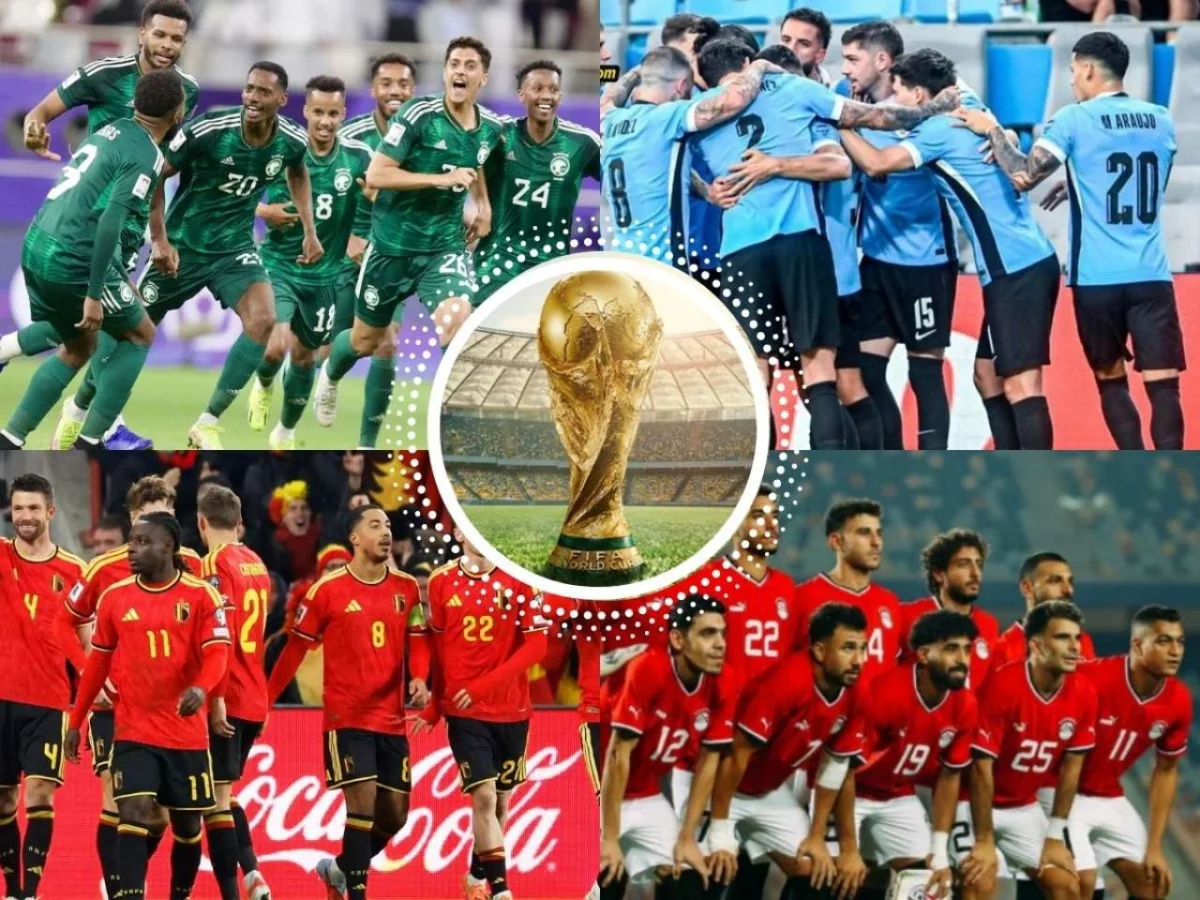
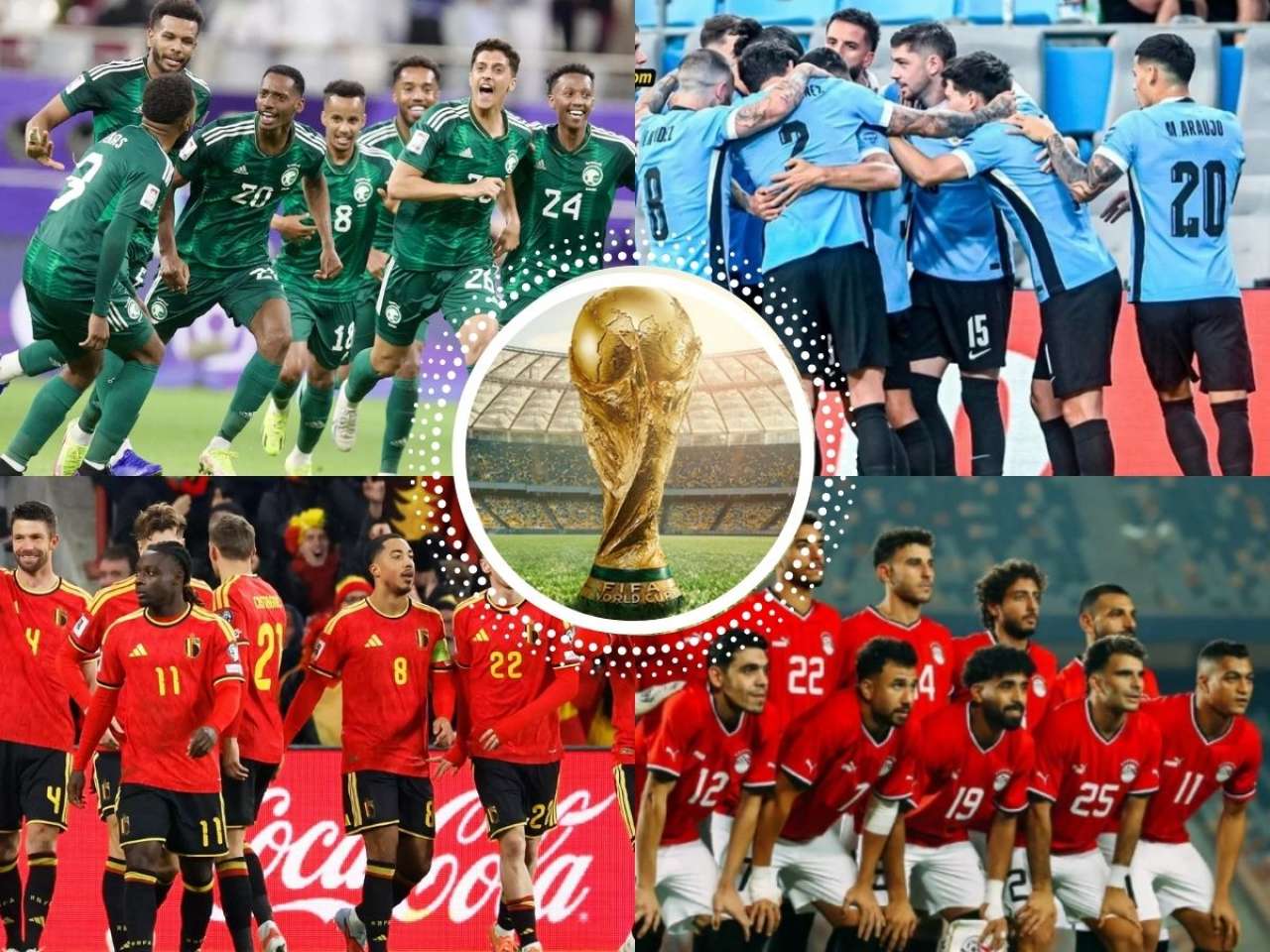
The footballing world is poised for an electrifying start to the FIFA World Cup 2026 as two monumental group-stage clashes are scheduled to captivate audiences worldwide. On Tuesday, June 16, the prestigious tournament will feature a compelling encounter between Saudi Arabia and two-time champions Uruguay in Group H, followed by a high-stakes showdown between the star-studded Belgium squad and the determined Pharaohs of Egypt in Group G. These early fixtures promise not only thrilling football but also crucial insights into the ambitions and tactical prowess of nations vying for global supremacy.
As the biggest sporting spectacle on the planet gets underway, fans are eagerly anticipating the drama, passion, and unforgettable moments that only the FIFA World Cup can deliver. With expanded participation and a North American tri-nation host (Canada, Mexico, and USA), the 2026 edition is set to be bigger and more inclusive than ever before. These opening matches represent a vital opportunity for all four teams to lay down an early marker, build momentum, and gain a psychological edge in their respective groups.
Main Facts: A Dual Kick-Off to World Cup Aspirations
The FIFA World Cup 2026 will plunge into action with a double bill of captivating matches on June 16, each carrying significant weight for the teams involved. The day’s schedule features a clash of styles and ambitions, promising intense competition from the very first whistle.
Saudi Arabia vs. Uruguay – Group H Battle in Miami:
The first of these highly anticipated encounters will see Saudi Arabia face off against the formidable South American giants, Uruguay. This Group H fixture is slated for June 16 at 3:30 AM IST (Indian Standard Time), corresponding to a prime-time evening kick-off in the host city of Miami, USA. The iconic Miami Stadium will serve as the battleground for what promises to be a fascinating tactical duel. Saudi Arabia, making their seventh appearance and third consecutive participation in the World Cup, will be looking to surprise the South Americans. Uruguay, with a rich history including two World Cup titles, arrives with a potent squad featuring top-tier talents like Federico Valverde, Darwin Núñez, and Rodrigo Bentancur, ready to stamp their authority on Group H.
)
Belgium vs. Egypt – Group G Showdown in Seattle:
Hours earlier, at 12:30 AM IST on June 16, the focus will shift to the majestic Seattle Stadium in the USA, where Belgium will lock horns with Egypt in a critical Group G match. Belgium, often touted for its "Golden Generation," will be making its 15th World Cup appearance and aims to surpass its impressive third-place finish from the 2018 tournament. Led by stalwarts such as Kevin De Bruyne, Romelu Lukaku, and Thibaut Courtois, the Red Devils are determined to start strong. Egypt, making a return to the global stage after missing the 2022 edition, will be spearheaded by their talismanic captain, Mohamed Salah. The Pharaohs, having qualified with an unbeaten record, are eager to make a powerful statement and demonstrate their capabilities against one of Europe’s footballing powerhouses, relying on key players like Omar Marmoush and Trezeguet alongside Salah.
These matches are not just about three points; they are about setting the tone for the entire tournament campaign, building confidence, and asserting dominance in highly competitive groups. For Indian fans, both games will be available for live streaming on the Zee5 app and platform (with a subscription), and telecast live on Unite8 Sports 1, Unite8 Sports 1 HD, Unite8 Sports 2, and Unite8 Sports 2 HD television channels, ensuring comprehensive coverage of these thrilling contests.

Chronology: The Anticipated Build-Up to Kick-Off
While the matches themselves are still a few days away, the lead-up to these pivotal World Cup fixtures follows a meticulous, almost ceremonial, chronology for the teams and host cities. Every step, from arrival to final warm-ups, is precisely planned to ensure peak performance and a seamless experience for players and fans alike.
Pre-Match Preparations (Days Leading Up):
Weeks before the tournament, participating nations establish their base camps across the host countries. For Saudi Arabia, Uruguay, Belgium, and Egypt, this period is critical for acclimatization, final tactical refinements, and team bonding. Coaches will oversee intensive training sessions, focusing on set-piece drills, defensive organization, attacking patterns, and player fitness. Medical teams will monitor player health rigorously, ensuring no last-minute injuries disrupt the squads. Press conferences featuring coaches and key players will become a daily occurrence, with media probing for insights into team strategies, player morale, and expectations. These public engagements serve to build anticipation and offer a glimpse into the teams’ collective mindset. The host cities, Miami and Seattle, will be abuzz with preparations, from securing stadiums and training facilities to managing fan zones and logistical challenges for the influx of international visitors.
)
Match Day Sequence (June 16 – Local Time):
On the day of the match, the chronology becomes even more granular.
- Morning/Afternoon: Players typically engage in light team activities, tactical briefings, and individual rest. Coaches deliver their final instructions, emphasizing key opponents and strategic game plans. The mood within the camps is a mix of nervous energy and focused determination.
- Hours Before Kick-off: Teams depart their hotels, escorted by security, making their way to the respective stadiums. The journey itself is a psychological transition from preparation to performance. Upon arrival, players will inspect the pitch, familiarize themselves with the locker rooms, and undergo pre-match medical checks.
- Warm-ups (Approx. 60-30 minutes before kick-off): Both teams will emerge onto the field for their official warm-up routines. This period is crucial for muscle activation, light drills, and getting a feel for the stadium atmosphere. Goalkeepers will perform specialized training, while outfield players will engage in passing drills, short sprints, and shooting practice.
- National Anthems and Kick-off: The moment of truth arrives as players line up for the national anthems, a powerful display of patriotism and unity. The roar of the crowd, the flash of cameras, and the sheer weight of expectation create an electric atmosphere. Following the coin toss, the referee’s whistle signals the start of the match, unleashing months of preparation onto the global stage.
Post-Match Proceedings:
Immediately after the final whistle, the chronology shifts to recovery and analysis. Players undergo cool-down routines and receive medical attention. Coaches hold initial debriefs, and players often participate in post-match interviews, offering their immediate reactions. For the losing team, it’s a moment of reflection and regrouping, while the winning side celebrates but quickly shifts focus to the next challenge. The results are instantly disseminated globally, impacting group standings and shaping the narrative of the tournament’s early stages. This intricate sequence underscores the immense planning and precision involved in executing a FIFA World Cup fixture.
)
Supporting Data: Deep Dives into Teams, Venues, and Group Dynamics
The FIFA World Cup 2026 promises a rich tapestry of footballing narratives, and these two opening fixtures are emblematic of the diverse strengths and ambitions present in the tournament. A closer look at the teams, their histories, key players, and the host venues provides valuable context for the anticipated clashes.
Team Profiles and World Cup Journeys:
Saudi Arabia (Group H): The Green Falcons’ Quest for Progression
)
- World Cup History: This marks Saudi Arabia’s seventh appearance at the FIFA World Cup and their third consecutive participation, highlighting a sustained presence on the global stage. Their most memorable run came in 1994, reaching the Round of 16, but subsequent campaigns have largely seen them exit at the group stage.
- Recent Form & Qualification: The Green Falcons often demonstrate tactical discipline and resilience, characteristics honed through a challenging Asian qualification process. They are known for their organized defensive setup and ability to launch swift counter-attacks, often leveraging the technical proficiency of their domestic league players.
- Key Players: While a full squad list isn’t available for 2026, Saudi Arabia typically relies on a collective effort. Midfielders who can dictate tempo and wingers with pace are crucial. Their coach will emphasize team cohesion and exploiting any defensive vulnerabilities of their opponents. The Asian side will be hoping to replicate their historic 2-1 victory over Argentina in the 2022 World Cup, proving their capability to upset giants.
- Tactical Outlook: Expect Saudi Arabia to play a compact, disciplined game, prioritizing defensive solidity against a potent Uruguay attack. Their strategy will likely involve absorbing pressure and looking for opportunities to break quickly, leveraging any set-piece situations.
Uruguay (Group H): La Celeste’s Enduring Legacy
- World Cup History: Uruguay boasts one of the most storied histories in World Cup football, being two-time champions (1930, 1950). This will be their 15th World Cup appearance, underscoring their consistent pedigree. Known for their "Garra Charrúa" – a unique blend of grit, passion, and fighting spirit – Uruguay consistently punches above its weight.
- Recent Form & Qualification: Uruguay navigated a demanding CONMEBOL qualification, showcasing a mix of experienced veterans and exciting young talents. They typically exhibit a robust defense, a combative midfield, and clinical finishing up front.
- Key Players:
- Federico Valverde (Midfield): A powerhouse from Real Madrid, Valverde brings relentless energy, defensive tenacity, powerful long-range shooting, and excellent distribution. He is the engine of Uruguay’s midfield.
- Darwin Núñez (Forward): The Liverpool striker offers blistering pace, physicality, and a keen eye for goal. His movement off the ball and ability to stretch defenses will be vital.
- Rodrigo Bentancur (Midfield): The Tottenham Hotspur midfielder provides composure, intelligent passing, and strong defensive contributions, linking defense to attack seamlessly.
- Defensive Pillars: Veterans like José María Giménez and Ronald Araújo are expected to anchor a formidable defense, providing leadership and aerial prowess.
- Tactical Outlook: Uruguay under their current coaching setup often employs a dynamic 4-3-3 or 4-4-2 formation, focusing on winning midfield battles, quick transitions, and exploiting the individual brilliance of their attackers. Their physical presence and set-piece threat will be significant.
Belgium (Group G): The Golden Generation’s Last Dance?
)
- World Cup History: This marks Belgium’s 15th World Cup appearance. The "Golden Generation" reached its peak with a third-place finish in 2018 but suffered a disappointing group stage exit in 2022. This tournament presents potentially one of the final opportunities for many of their star players to lift the coveted trophy.
- Recent Form & Qualification: Belgium typically dominates their European qualification campaigns, showcasing fluid attacking football and a strong defensive spine. Their challenge often lies in translating individual brilliance into collective tournament success.
- Key Players:
- Kevin De Bruyne (Midfield): The Manchester City maestro is arguably one of the best midfielders in the world, known for his unparalleled vision, pinpoint passing, exquisite crosses, and powerful shots. He is Belgium’s chief playmaker.
- Romelu Lukaku (Forward): A powerful and prolific striker, Lukaku provides a focal point in attack, capable of holding up play, running in behind, and clinical finishing. His physical presence is a constant threat.
- Thibaut Courtois (Goalkeeper): One of the world’s premier goalkeepers, Courtois brings an imposing presence, exceptional shot-stopping abilities, and commanding aerial presence. He is a vital last line of defense.
- Other Talents: Players like Leandro Trossard, Jérémy Doku, and Youri Tielemans add depth, pace, and creativity.
- Tactical Outlook: Belgium traditionally plays an attacking 3-4-3 or 4-3-3 formation, aiming to control possession, create numerical advantages in wide areas, and unleash De Bruyne’s creativity. Their tactical challenge against Egypt will be to break down a potentially stubborn defense.
Egypt (Group G): The Pharaohs’ Resurgence
- World Cup History: Egypt’s World Cup appearances have been sporadic, making this return to the global stage particularly significant after missing the 2022 edition. Their previous participations include 1934, 1990, and 2018. They are a force in African football, with a strong record in the Africa Cup of Nations.
- Recent Form & Qualification: The Pharaohs qualified through an impressive unbeaten run, demonstrating a newfound resilience and tactical cohesion. Their success is often built on a solid defensive foundation and the individual brilliance of their attacking talents.
- Key Players:
- Mohamed Salah (Forward/Winger): The Liverpool superstar is the undisputed captain and talisman. His blistering pace, dribbling skills, clinical finishing, and ability to create chances make him one of the most dangerous players in world football. Egypt’s hopes largely rest on his shoulders.
- Omar Marmoush (Forward): A versatile forward who offers pace, directness, and an eye for goal.
- Trézéguet (Winger): Known for his work rate, dribbling, and ability to score crucial goals from wide positions.
- Defensive Structure: Expect Egypt to be well-organized defensively, with a strong emphasis on denying space and hitting opponents on the counter.
- Tactical Outlook: Egypt will likely adopt a pragmatic approach, potentially a 4-3-3 or 4-2-3-1 formation, focusing on defensive solidity and exploiting Salah’s incredible speed and skill on the counter-attack. Neutralizing Belgium’s midfield and denying De Bruyne space will be paramount.
Host Venues: State-of-the-Art Arenas for Global Spectacle
Miami Stadium, Miami, USA (Saudi Arabia vs. Uruguay):
Miami, a vibrant international hub, is an ideal host city for the World Cup. The stadium, likely a renovated or purpose-built venue, will boast a significant capacity, designed to host major sporting events. Its location in South Florida ensures a unique blend of tropical climate and passionate fan base, including a large Latin American community that will undoubtedly rally behind Uruguay. The modern facilities will provide an unparalleled experience for both players and spectators. The climate, characterized by heat and humidity, could be a factor, particularly for teams not accustomed to such conditions.
)
Seattle Stadium, Seattle, USA (Belgium vs. Egypt):
Seattle, known for its dynamic tech industry and picturesque natural surroundings, offers a contrasting backdrop. The stadium, with its impressive capacity and modern amenities, will provide a fantastic atmosphere. Seattle’s passionate soccer culture, home to a successful MLS franchise, guarantees an enthusiastic crowd. The cooler, temperate climate of the Pacific Northwest might offer a different playing environment compared to Miami, potentially suiting European teams more. Both venues are equipped with cutting-edge technology for broadcasting and fan engagement, underscoring the USA’s capability as a premier host.
Group Dynamics: Early Stakes and Road to the Knockouts
Group H (Saudi Arabia, Uruguay, and other unconfirmed teams):
This group immediately presents a fascinating dynamic. Uruguay, as two-time champions and a consistently strong footballing nation, will be the favorites. Their opening match against Saudi Arabia is crucial. A win for Uruguay would set them on a clear path to the knockout stages, while a draw or loss would immediately put them under pressure. For Saudi Arabia, any points gained against a team of Uruguay’s caliber would be a massive boost, dramatically improving their chances of progressing beyond the group stage – a rare feat for the Green Falcons. The other teams in the group will be watching this match intently, understanding that its outcome could significantly influence their own qualification strategies.
)
Group G (Belgium, Egypt, and other unconfirmed teams):
Group G promises to be equally competitive. Belgium, with its "Golden Generation" seeking a final triumph, will be under immense pressure to perform from the outset. Their clash with Egypt is a stern test. A dominant win would reaffirm their status as contenders, while a slip-up could reignite doubts that have plagued them in previous tournaments. Egypt, fueled by Salah’s brilliance and a resilient team spirit, sees this match as an opportunity to announce their return. A positive result against Belgium would be a huge statement of intent, significantly boosting their chances of advancing from a group that is likely to feature other strong contenders. The tactical battle between Belgium’s creative midfield and Egypt’s disciplined defense will be a highlight.
These opening matches are not just isolated events; they are foundational moments that will ripple through the tournament, shaping narratives, building rivalries, and setting the stage for the dramatic journey to the FIFA World Cup 2026 final.
)
Official Responses: Voices from the Camps and Beyond
While specific quotes for a future event are speculative, journalistic reporting often anticipates the likely sentiments and official statements from key stakeholders. These anticipated responses highlight the high stakes and professional approach surrounding a World Cup.
Coaches’ Anticipated Remarks:
Ahead of such crucial opening fixtures, coaches are expected to project confidence, tactical readiness, and profound respect for their opponents.
)
- Uruguay’s Head Coach (e.g., Marcelo Bielsa, if still at the helm): "We respect Saudi Arabia immensely. They are a disciplined team with a clear plan, as we saw in 2022. Our focus is on executing our game, utilizing our strengths, and bringing the intensity that ‘Garra Charrúa’ demands. Every point is vital in this tournament, and we are prepared for a challenging start."
- Saudi Arabia’s Head Coach: "This is the World Cup, and there are no easy games. Uruguay is a world-class opponent with a rich history. We have prepared meticulously, and our players are determined to show what Saudi football is capable of. We believe in our system and our collective spirit. We aim to compete fiercely and make our nation proud."
- Belgium’s Head Coach (e.g., Domenico Tedesco): "Egypt, with Mohamed Salah, presents a significant challenge. They are well-organized and dangerous on the counter. We know the expectations on us, and we are ready to embrace them. Our objective is to start with a strong performance, demonstrate our quality, and secure three points to build momentum in a tough group."
- Egypt’s Head Coach: "Facing Belgium is a fantastic opportunity for us to show the world the progress Egyptian football has made. We have immense respect for their quality, but we also have faith in our players, particularly with a leader like Mohamed Salah. We will be disciplined, organized, and look to exploit our opportunities. We are here to compete, not just participate."
Players’ Perspectives:
Players, especially captains and key figures, are expected to voice their excitement, readiness, and collective ambition.
- Federico Valverde (Uruguay): "The World Cup is the pinnacle. We’ve worked incredibly hard for this moment. Starting against Saudi Arabia, we know it won’t be easy, but we are united and ready to fight for every ball. Our goal is to begin our campaign strongly and show our quality."
- Mohamed Salah (Egypt): "It’s an honor to represent Egypt on this stage again. We have a great team spirit, and we are determined to make our mark. Belgium is a top team, but we believe in ourselves. We want to make our fans proud and show the world what we can achieve."
- Kevin De Bruyne (Belgium): "Every World Cup is a new chapter. We learned from 2022, and we are hungrier than ever. The first game against Egypt is crucial to set the tone. We need to be sharp, focused, and play our game to get the desired result."
FIFA and Host City Statements:
Officials from FIFA and the host cities will likely emphasize the grandeur of the event, the readiness of the infrastructure, and the global unity that football fosters.
)
- FIFA Representative: "We are thrilled to kick off the FIFA World Cup 2026 with such compelling matchups. These games exemplify the global appeal and competitive spirit of our tournament. We anticipate a fantastic atmosphere in Miami and Seattle, showcasing the incredible passion for football in North America."
- Miami/Seattle Host City Organizers: "Our cities are proud to welcome the world for these momentous matches. We have worked tirelessly to ensure everything is perfect for the teams and the fans. We look forward to a celebration of football and culture, creating unforgettable memories for everyone."
These anticipated statements underscore the collective dedication, strategic thinking, and shared excitement that permeates every aspect of the FIFA World Cup.
Implications: Setting the Tone for a Global Spectacle
The opening matches of any major tournament carry immense weight, and the Saudi Arabia vs. Uruguay and Belgium vs. Egypt clashes in the FIFA World Cup 2026 are no exception. Their outcomes will ripple through the tournament, influencing group dynamics, team morale, and the narratives that unfold over the coming weeks.
)
Immediate Implications for Group Standings and Qualification:
- Momentum and Confidence: A win in the opening match provides an invaluable psychological boost. For Uruguay and Belgium, favorites in their respective groups, three points would instantly build momentum, reduce pressure, and allow them to approach subsequent matches with greater confidence. Conversely, a loss or draw could trigger early doubts and intensify scrutiny.
- Early Group Dominance: For the winners, an early victory positions them favorably at the top of their group. This can be crucial for securing a top-two spot and potentially avoiding stronger opponents in the Round of 16. For Saudi Arabia and Egypt, securing points against higher-ranked opponents would be a monumental step towards breaking out of the group stage, an outcome that would electrify their fan bases.
- Pressure on the Losing Side: A defeat in the first game immediately puts immense pressure on the losing team. They would face a "must-win" scenario in their next fixture, with their tournament hopes hanging precariously. This added pressure can either galvanize a team or lead to further struggles.
- Goal Difference: In tight groups, goal difference can be a tie-breaker. A convincing win, especially with multiple goals, could prove vital later in the group stage.
Long-term Tournament Implications:
- Narrative Shaping: The results of these matches will shape the early narratives of the tournament. Will Uruguay and Belgium confirm their status as contenders? Will Saudi Arabia or Egypt emerge as dark horses? These early stories capture public imagination and set the tone for the competition.
- Tactical Adjustments: Coaches will analyze these opening performances rigorously. Strong showings might reinforce existing strategies, while weaknesses exposed could lead to significant tactical adjustments for future games, potentially altering formations, player selections, or defensive approaches.
- Impact on Group Rivals: The other teams in Group H and Group G will be closely watching these matches. The results will influence their own tactical plans, as they gauge the strengths and weaknesses of their upcoming opponents and assess the points required for qualification.
Broader Impact: National Pride, Football Development, and Economic Benefits:
- National Pride: For all four nations, participation in the World Cup is a source of immense national pride. Positive results can unite a country, inspire younger generations, and boost national morale. For nations like Saudi Arabia and Egypt, success on this global stage can significantly elevate the profile of their domestic leagues and attract greater investment in youth football development.
- Economic Impact on Host Cities: Beyond the pitch, these matches bring substantial economic benefits to Miami and Seattle. Tourism, hospitality, and local businesses will thrive from the influx of international fans. The World Cup provides a global platform for these cities, showcasing their culture, infrastructure, and capacity to host mega-events.
- Global Fan Engagement: These high-profile matches draw billions of viewers worldwide, fostering a sense of global community and shared passion for football. They ignite conversations, debates, and celebrations, cementing the World Cup’s status as a unique cultural phenomenon.
In essence, the initial encounters between Saudi Arabia and Uruguay, and Belgium and Egypt, are far more than just 90-minute contests. They are the initial brushstrokes on the vast canvas of the FIFA World Cup 2026, setting in motion a cascade of events that will ultimately culminate in the crowning of the world champions. The stakes are incredibly high, promising an unforgettable start to football’s grandest spectacle.
