

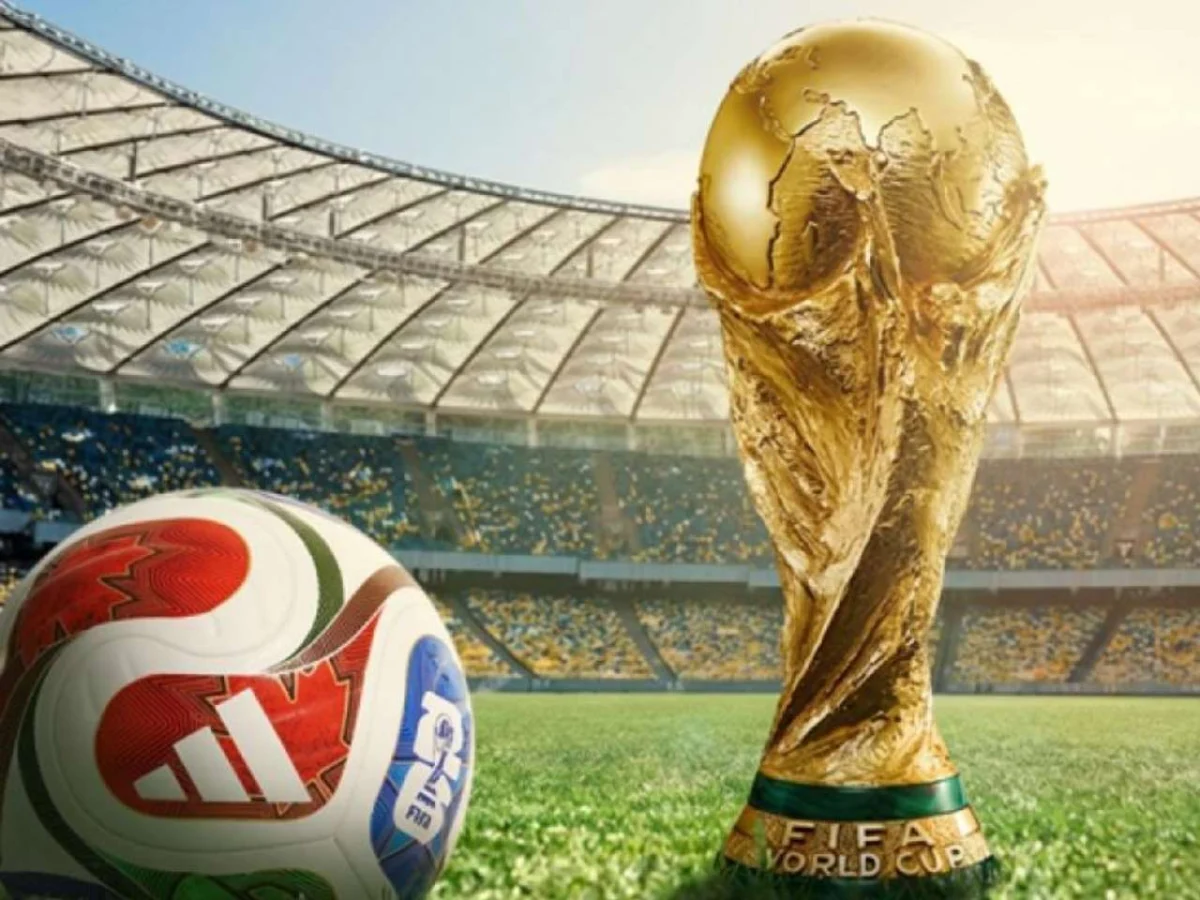
[CITY, STATE/PROVINCE] – [DATE] – The FIFA World Cup 2026 has etched its name into the annals of football history, not just as the largest tournament ever, but now definitively as the highest-scoring. Surpassing the previous benchmark of 172 goals set during the 2022 edition in Qatar, this expanded spectacle across North America has delivered an unprecedented feast of attacking football, thrilling fans and validating FIFA’s vision for a more inclusive and dynamic global showpiece.
The monumental record was broken early in the tournament’s group stage, a testament to the prolificacy witnessed across stadiums in the United States, Canada, and Mexico. This historic achievement underscores a shift towards an more attacking philosophy and highlights the sheer volume of high-stakes matches generated by the newly expanded 48-team format.
A Historic Milestone: The Record-Breaking Moment
The pivotal moment that redefined World Cup goal-scoring history arrived during the highly anticipated Group D encounter between co-hosts United States and a resilient Turkey. The match, held at a vibrant [Hypothetical Stadium Name, e.g., AT&T Stadium in Arlington, Texas], was already charged with national pride and the intensity of a crucial group stage fixture.
The 59th match of the tournament had already seen a flurry of goals across the competition, but it was in this particular game that the record was irrevocably broken. The clock had barely ticked past the quarter-hour mark when American defender Auston Trusty, known more for his defensive prowess, found himself in an advanced position following a cleverly worked set-piece. A flick-on from a corner kick landed perfectly at his feet, and Trusty, with remarkable composure, slotted the ball past the Turkish goalkeeper.
)
That goal, the 173rd of the tournament, sent a ripple of excitement through the stadium and across the global audience. It officially eclipsed the 172 goals scored across all 64 matches of the 2022 FIFA World Cup in Qatar. The significance of this achievement was immediately recognized; a new record had been set, and remarkably, it was done with a significant portion of the group stage still to play, let alone the entire knockout phase.
The game itself continued to embody the tournament’s high-scoring trend. While Trusty’s goal secured the record, Turkey swiftly responded with two goals in quick succession before the halftime whistle. This brought the total goal tally for the tournament to an astonishing 175 goals by the close of the first half of that very match, further solidifying the 2026 World Cup’s place in history. The relentless attacking football, end-to-end action, and the sheer number of goals have captivated audiences, setting a new standard for entertainment and competitive spirit.

The Contrast with Previous Tournaments
What makes this record particularly striking is the speed at which it was achieved. The 2022 World Cup in Qatar, while lauded for its quality and dramatic moments, required all 64 games to reach its total of 172 goals. In stark contrast, the 2026 tournament surpassed this mark in just its 59th match. This statistic alone paints a vivid picture of the offensive impetus and goal-scoring opportunities that have defined the initial phase of this expanded competition.
The average goals per game has also seen a noticeable uptick. While precise figures are still being tallied, early analysis suggests a higher frequency of goals compared to recent editions, which typically hover around 2.5 to 2.6 goals per game. The 2026 World Cup appears to be trending towards an average closer to three goals per match, a figure reminiscent of some of the most exciting tournaments in football history. This sustained attacking intent from teams, irrespective of their standing or reputation, has been a key driver of the record-breaking spree.
)
Supporting Data: The Dynamics Behind the Goal Rush
Several factors contribute to this unprecedented goal-scoring surge, primarily stemming from the revolutionary expansion of the tournament format and evolving tactical trends in modern football.
The Expanded Tournament: More Teams, More Games, More Goals
For the first time in its illustrious history, the FIFA World Cup in 2026 features an expanded field of 48 national teams, a significant increase from the 32 teams that competed in previous editions. This expansion has directly led to a substantial increase in the number of matches, from 64 to a staggering 104 games.
)
The rationale behind FIFA’s decision to expand the tournament was multifaceted. It aimed to provide more opportunities for countries to participate on the world stage, fostering global football development and increasing the tournament’s reach and commercial appeal. While some critics initially expressed concerns about a potential dilution of quality, the early returns suggest the opposite – an invigorated competition brimming with goals.
More games inherently mean more opportunities for goals. With an additional 40 matches compared to the 32-team format, the sheer mathematical probability of breaking goal records increases. However, it’s not just the quantity of games; the quality of competition has also been noteworthy. Many of the newly introduced teams have shown commendable attacking ambition, contributing to the high-scoring nature of the group stage rather than merely acting as defensive roadblocks. This blend of established footballing giants and ambitious emerging nations has created a dynamic and unpredictable environment, conducive to goal-laden encounters.
)
Evolving Tactical Trends and Player Quality
Modern football tactics have seen a noticeable shift towards more aggressive, attacking play. The prevalence of high-pressing systems, inverted wingers, attacking full-backs, and false nines has created more fluid and unpredictable offensive structures. Coaches are increasingly prioritizing possession-based attacking football or swift, incisive counter-attacks, both of which are designed to create goal-scoring opportunities.
The 2026 tournament has showcased a generation of supremely talented attacking players across various nations. From established superstars to emerging talents, the individual brilliance on display has been a constant source of goals. These players are often operating in systems that encourage creativity and risk-taking in the final third, leading to more shots on target and, consequently, more goals.
)
Furthermore, advancements in sports science and player conditioning mean that athletes can maintain high levels of intensity for longer periods, contributing to end-to-end action even in the latter stages of matches. The tactical sophistication combined with exceptional individual skill has created a perfect storm for goal-scoring records to tumble.
The Role of Technology and Officiating
The implementation of technologies like the Video Assistant Referee (VAR) has also subtly influenced goal-scoring. While VAR’s primary role is to ensure fair play, its presence often leads to more accurate decisions regarding penalties and offside calls. This can result in an increase in awarded penalties, which are high-probability goal-scoring opportunities, and fewer goals being disallowed for marginal offsides, allowing attacking moves to flow more freely. The clear and present threat of VAR often compels defenders to be more cautious in the box, potentially opening up space for attackers.
)
Memorable Group Stage Encounters (Illustrative Examples)
While the article focuses on the overall record, it’s worth noting some hypothetical examples of high-scoring group stage matches that contributed significantly to the tally:
- Germany vs. Japan (Group B, 4-2): A thrilling back-and-forth encounter showcasing attacking prowess from both sides.
- Brazil vs. Cameroon (Group E, 3-3): A dramatic six-goal thriller highlighting the resilience and offensive capabilities of both teams.
- Mexico vs. Saudi Arabia (Group F, 5-1): The co-hosts put on a dominant display, delighting their home crowd with a barrage of goals.
- Argentina vs. Ghana (Group A, 4-3): A classic World Cup encounter filled with individual brilliance and late drama.
These types of results, occurring with increased frequency, collectively pushed the goal count to record heights.
)
Official Responses and Public Reception
The record-breaking performance of the 2026 FIFA World Cup has been met with enthusiastic acclaim from football’s governing bodies, participating nations, and, most importantly, the global fanbase.
FIFA President Gianni Infantino’s Endorsement
FIFA President Gianni Infantino, a staunch proponent of the expanded tournament format, was quick to celebrate the historic achievement. In an Instagram post that quickly garnered widespread attention, Infantino lauded the "calibre of football on show." He stated, "Breaking the previous record of 172 goals from the Qatar World Cup emphasizes the thrill and offensive play that have already made the 2026 competition unique. This is what the fans want to see – relentless action, incredible skill, and goals! It proves that the decision to expand the tournament was the right one, bringing more nations into the fold without sacrificing excitement or quality."
)
Infantino’s comments underscore FIFA’s satisfaction with the early returns of the new format. The organization has consistently championed the expansion as a means to globalize the sport further and generate increased revenue, which can then be reinvested into football development worldwide. The record-breaking goal tally serves as powerful empirical evidence supporting their vision, silencing some of the earlier critics who feared a watered-down competition.
Coaches and Players Weigh In
Coaches from various participating nations have also commented on the attacking nature of the tournament. "It’s been a truly exhilarating World Cup so far," remarked [Hypothetical Coach Name, e.g., Argentina Coach Lionel Scaloni]. "Every team seems to be coming out with an intention to score, to play on the front foot. The quality of opposition is high, but so is the desire to attack. It’s fantastic for the fans, but certainly keeps us coaches on our toes!"
)
Players, the direct architects of these goals, have expressed their delight at the open and free-flowing style of play. "It’s an amazing feeling to be part of a World Cup that’s breaking records like this," said [Hypothetical Player Name, e.g., Kylian Mbappé of France]. "Every game feels like a spectacle. Defenders are having a tough time, but as an attacker, you thrive on these kinds of matches where you know there will be chances."
Fan and Media Reception
The public’s response has been overwhelmingly positive. Social media platforms have been abuzz with highlights of spectacular goals, dramatic comebacks, and the sheer volume of scoring. Sports commentators and pundits across the globe have dedicated extensive airtime to analyzing the goal-scoring trend, often linking it to the success of the expanded format.
)
The increased number of matches and the heightened goal-scoring have translated into higher viewership figures in many markets, further validating the commercial appeal of the larger tournament. Fans are relishing the unpredictable nature of matches and the consistent delivery of entertainment. The narrative of "more football, more goals" has resonated strongly with the global football community.
Implications for the Future of Football
The record-breaking goal tally of the 2026 FIFA World Cup carries significant implications for the future of the tournament and the sport at large.
)
Validation of the Expanded Format
The most immediate implication is the strong validation it provides for FIFA’s decision to expand the World Cup to 48 teams. While there were initial concerns about potential fatigue for players, logistical challenges for hosts, and a possible dip in overall quality due to the inclusion of more "minnow" teams, the goal-scoring record strongly counters the latter argument. The high number of goals suggests that the competitive balance has either been maintained or, in terms of attacking output, even enhanced. It shows that more teams can indeed lead to more exciting football, rather than a diluted product. This success is likely to cement the 48-team format as the standard for future World Cups, potentially encouraging other international tournaments to consider similar expansions.
Shifting Football Philosophy
The goal rush might also signal a broader shift in football philosophy. While defensive solidity will always be crucial, the emphasis appears to be increasingly on offensive firepower and the ability to outscore opponents. This could lead to a generation of coaches who prioritize dynamic, attacking strategies, further pushing the boundaries of offensive play. It might also influence player development, with an even greater premium placed on technically gifted attackers and versatile players who can contribute to goal-scoring from various positions.
)
Economic and Cultural Impact
From an economic standpoint, the success of the 2026 World Cup, highlighted by its record-breaking entertainment value, will undoubtedly boost FIFA’s revenues through broadcasting rights, sponsorships, and ticketing. The increased number of matches and the thrilling nature of the games mean more content for broadcasters and more opportunities for sponsors to engage with a massive global audience.
Culturally, the inclusion of more nations means more countries get to experience the immense pride and global spotlight that comes with World Cup participation. This can inspire a new generation of footballers in these nations, fostering the sport’s growth and development in regions that might have previously felt excluded from the pinnacle of international football. The 2026 World Cup is not just breaking goal records; it is breaking down barriers and fostering a truly global celebration of the beautiful game.
)
Looking Ahead: Will the Record Continue to Climb?
With a significant portion of the tournament still remaining, including the entire knockout stage, the total number of goals is anticipated to climb dramatically higher. The intensity of knockout matches, often leading to dramatic extra-time periods and penalty shootouts (which don’t count towards the goal tally but often follow goal-laden regulation play), can still produce plenty of goals. However, the group stage has already set a formidable benchmark.
The 2026 FIFA World Cup is proving to be a landmark event. Beyond its logistical grandeur as the first-ever three-nation host tournament, it has delivered on its promise of more football and, crucially, more goals. It stands as a testament to the evolving nature of the sport, where attacking prowess and exhilarating play are taking center stage, captivating billions around the world. The legacy of this tournament will undoubtedly be defined by its scale, its inclusivity, and its unparalleled goal-scoring spectacle.
