The Indian commercial vehicle landscape is on the cusp of a silent revolution. Force Motors, a name synonymous with the ubiquity of the "Traveller" van in school fleets, ambulance services, and corporate transport, has officially set a definitive timeline for its transition into the electric era. Managing Director Prasan Firodia has confirmed that the much-anticipated Force Traveller Electric Vehicle (EV) is slated for a commercial launch in the first quarter of 2027.
This announcement marks a pivotal moment for the Pune-based automaker, which first hinted at its electric ambitions half a decade ago. With a massive ₹3,000 crore investment commitment and a multi-pronged strategy covering electrification, hybridization, and digitization, Force Motors is positioning itself not just as a manufacturer of vans, but as a leader in sustainable urban mobility.
Main Facts: The Electrification of an Icon
The core of Force Motors’ electric strategy revolves around the T1N monocoque platform. Unlike traditional body-on-frame commercial vehicles, the monocoque construction offers significant advantages in weight reduction, structural rigidity, and ride quality—factors that are critical for maximizing the efficiency of an electric powertrain.
Key Specifications of the e-Traveller Smart Citibus
While several variants are expected, the company has already provided a glimpse into the "Smart Citibus" variant, which serves as a technical benchmark for the platform:

- Battery Capacity: A 70 kWh lithium-ion battery pack designed for high energy density and longevity.
- Performance: The vehicle features an 18% gradability, ensuring it can handle the flyovers and steep inclines common in Indian urban topographies.
- Dimensions: A wheelbase of 3,350 mm and an overall length of 5,415 mm.
- Capacity: A 14+D (14 passengers plus driver) seating configuration.
- Interior Comfort: A standing height of 1.8 meters, allowing for easy movement within the cabin, complemented by full air conditioning and an electrically operated jack-knife door.
- Technology Integration: The vehicle will be equipped with internal and external cameras, GPS tracking for fleet management, and advanced telematics.
The Urbania EV
Following the launch of the Traveller EV, Force Motors plans to introduce an electric version of the Urbania—its more premium, world-class van platform. The Urbania EV is expected to follow the Traveller EV within a few months, targeting the luxury tourism and executive shuttle segments where refinement and zero-emission operations are becoming increasingly prioritized.
Chronology: From Concept to 2027 Reality
The journey to the 2027 launch has been a steady progression of engineering milestones and strategic patience.
2020: The Genesis
Force Motors first showcased the T1N platform at the Auto Expo 2020. It was hailed as India’s first ground-up modular monocoque platform for vans, designed from the outset to accommodate Internal Combustion Engines (ICE), Electric, and even Hydrogen powertrains. However, the global pandemic and the subsequent supply chain disruptions necessitated a recalibration of the launch timelines.
2021–2024: Development and Testing
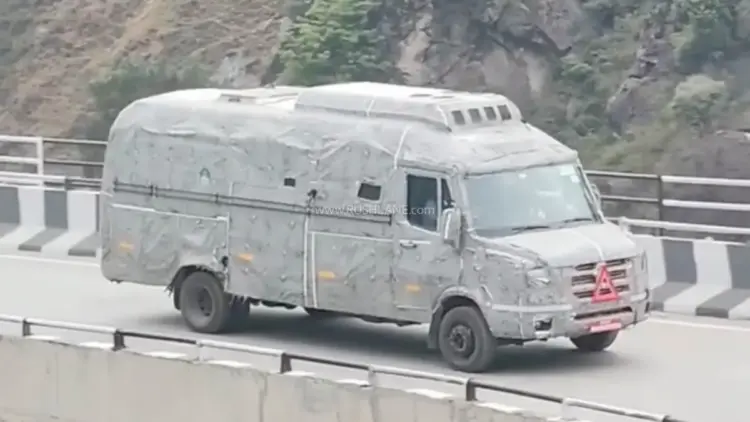
During this period, Force Motors focused on the rigorous "Indianization" of EV components. This involved testing battery thermal management systems in extreme temperatures—from the heat of Rajasthan to the humidity of coastal regions. Spy shots of the Traveller EV testing on public roads became increasingly common, signaling that the platform was moving from the laboratory to real-world validation.

2025–2026: Homologation and Final Refinement
Currently, the Traveller EV platform has completed its primary development phase. The company is now engaged in the final testing and homologation process with the Automotive Research Association of India (ARAI). This stage is crucial for ensuring the vehicle meets all safety and performance standards required for Indian road certification.
Q1 2027: The Commercial Debut
The launch window is now officially set between January 2027 and March 2027. This timing allows Force Motors to enter the market when the charging infrastructure for commercial vehicles is expected to be more robust, supported by various state and central government initiatives.
Supporting Data: The ₹3,000 Crore Investment
Force Motors is not merely "dipping its toes" into electrification; it is undergoing a fundamental shift in its industrial DNA. The company has pledged an investment of ₹3,000 crores to be deployed over the next few years. This capital is earmarked for four critical pillars:
- Engineering and R&D: Developing indigenous power electronics and optimizing motor efficiency specifically for heavy-duty cycles.
- Electrification and Hybridization: While the immediate focus is on Battery Electric Vehicles (BEVs), the company is also exploring hybrid driveline technology to bridge the gap for long-distance applications where charging infrastructure remains a challenge.
- Digitization: Upgrading manufacturing plants with Industry 4.0 standards and integrating sophisticated software into the vehicles for better fleet diagnostics.
- Capacity Expansion: To accommodate the simultaneous production of ICE and EV variants of the Traveller and Urbania, the company is expanding its manufacturing footprint to ensure it can meet projected domestic and export demand.
Official Responses: Insights from Leadership
Managing Director Prasan Firodia has been vocal about the company’s pragmatic approach to the EV transition. He emphasizes that while the consumer SUV and small car segments are seeing rapid adoption, the commercial vehicle sector requires a more calculated move.

"The development process of the Traveller EV platform is complete," Firodia confirmed, noting that the focus is now on ensuring the platform is versatile enough to spawn multiple applications. He highlighted that the electric platform would not be limited to passenger transport but would also serve as a base for "special application vehicles," most notably electric ambulances.
Firodia also pointed out that the adoption of electric mobility in larger commercial vehicles will be gradual. He identified school buses, employee transportation, and intracity ambulances as the "low-hanging fruit"—applications where fixed routes and overnight charging at depots make EVs a highly viable and cost-effective alternative to diesel.
Implications: A New Era for Indian Mobility
The launch of the Force Traveller EV and Urbania EV carries significant implications for various stakeholders in the Indian ecosystem.
Environmental Impact
The Traveller is the backbone of urban transit in many Indian cities. By transitioning these high-mileage vehicles to electric, Force Motors will contribute significantly to reducing localized air pollution. For instance, an electric school bus or an intracity ambulance produces zero tailpipe emissions, which is vital for the health of children and patients.

Economic Viability and TCO
While the initial acquisition cost of an electric van will be higher than its diesel counterpart, the Total Cost of Ownership (TCO) is expected to be significantly lower. Reduced fuel costs and lower maintenance requirements (fewer moving parts compared to an internal combustion engine) will allow fleet operators to see a return on investment within 3 to 5 years, depending on daily mileage.
Market Competition
Force Motors’ move sets a challenge for other players in the commercial space, such as Tata Motors and Ashok Leyland. While others have focused on large buses or small cargo trucks, Force Motors is targeting the "mid-size" van segment—a niche it has dominated for decades. By offering a monocoque electric solution, they provide a level of refinement that ladder-frame competitors may find difficult to match.
Infrastructure Challenges
The success of the 2027 launch will depend heavily on the availability of DC fast-charging stations capable of handling 70 kWh+ batteries. Force Motors is likely to work with charging infrastructure providers to offer "depot-based" charging solutions for its corporate and school bus clients.
Conclusion
Force Motors is navigating a period of profound transformation. The commitment to a Q1 2027 launch for the Traveller EV demonstrates a balance between innovation and industrial readiness. By leveraging the proven T1N platform and backing it with a ₹3,000 crore investment, the company is ensuring that its most iconic brand remains relevant in a zero-emission future.

As the industry moves closer to 2027, the focus will shift from spy shots and prototypes to the actual performance of these vehicles on Indian streets. If Force Motors can deliver the reliability the Traveller is known for, coupled with the efficiency of an electric drivetrain, it will likely maintain its stranglehold on the Indian van market for decades to come.