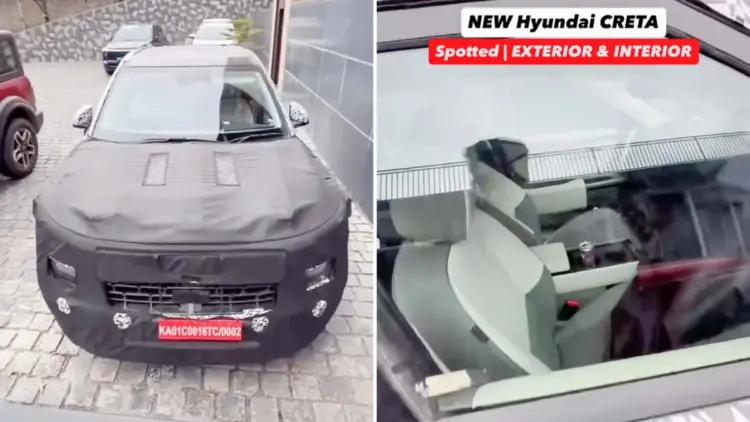
The Indian automotive landscape is bracing for a seismic shift in the mid-size SUV segment. As Hyundai India continues to dominate the charts with its current portfolio, recent spy shots have emerged, providing an unprecedented look at the next-generation Hyundai Creta. Positioned as a more premium, technologically advanced, and physically larger successor to the current model, the upcoming Creta (expected around 2027) signals Hyundai’s intent to redefine the benchmarks of the C-SUV category.
The catalyst for this upmarket migration is the recent introduction of the Hyundai Bayon. Launched at an introductory price of Rs 10 lakh (ex-showroom), the Bayon now serves as the entry point into Hyundai’s SUV family, effectively freeing the Creta from its "entry-level" constraints. This strategic breathing room allows Hyundai to push the Creta further into the premium territory, equipping it with features and dimensions that were previously reserved for the luxury segments.
1. Main Facts: A New Benchmark for the Mid-Size Segment
The latest intelligence gathered from heavily camouflaged test mules reveals a vehicle that has grown significantly in stature. The next-generation Creta is not merely a facelift; it is a ground-up reimagining of the nameplate based on the Global K3 platform, which it will share with the latest iteration of the Kia Seltos.
Key Highlights from the Spy Shots:
- Dimensions: Noticeably larger proportions with a longer wheelbase, promising superior cabin space and a more commanding road presence.
- The "Pleos" Infotainment System: A revolutionary dual-screen setup featuring the new "Pleos" software, which promises a more intuitive and faster user interface than the current BlueLink system.
- Premium Cabin Amenities: The introduction of "Electric Boss Mode," rear wireless charging, and ventilated seats for both front and rear occupants.
- Safety Leap: A Level-2 Pro ADAS suite, incorporating a more sophisticated array of sensors and cameras for semi-autonomous driving capabilities.
- Powertrain Diversity: The continuation of the 1.5L engine trio (Petrol, Turbo-Petrol, and Diesel) with the highly anticipated addition of a Strong Hybrid variant.
2. Chronology: The Journey of an Icon
To understand the significance of the next-generation Creta, one must look at the trajectory of the nameplate in India:

- 2015 – The Debut: Hyundai launches the first-generation Creta, essentially creating the premium mid-size SUV segment in India. It quickly becomes the "Gold Standard" for its balance of features and reliability.
- 2020 – The Radical Redesign: The second-generation Creta is launched with a polarizing "Sensuous Sportiness" design language. Despite the initial debate over its looks, it becomes a runaway success, consistently topping sales charts.
- 2024 – The Mid-Life Refresh: Hyundai introduces a significant facelift with a more squared-off, muscular front fascia and a tech-heavy interior, incorporating Level-2 ADAS for the first time.
- Late 2024 – The Bayon Factor: The launch of the Hyundai Bayon at the Rs 10 lakh mark creates a strategic opening. Hyundai begins testing the next-generation Creta (the subject of the current spy shots) to fill the premium gap above the Bayon.
- 2027 (Projected) – The Next Generation: The all-new Creta is expected to make its global and Indian debut, transitioning to the K3 platform and introducing hybrid technology.
3. Supporting Data: Inside the "Pleos" Cockpit and Beyond
The spy shots offer a tantalizing glimpse into a cabin that prioritizes "Digital Minimalism" and high-end comfort. While much of the dashboard remains under wraps, several key elements have been identified.
The Digital Revolution
The centerpiece of the new interior is the integrated dual-screen housing. Unlike the current floating units, the next-gen Creta features a more seamless "Pleos" infotainment screen. Industry insiders suggest that the Pleos system represents a generational leap in telematics, offering over-the-air (OTA) updates that can modify vehicle performance parameters, not just maps and media.
Color Palette and Materiality
The test mules feature a sophisticated Off-White and Grey dual-tone color scheme. This palette extends across the seat upholstery, door trims, and the redesigned center console. The use of lighter colors is a deliberate move to enhance the sense of "airiness" and space within the cabin, further distancing the Creta from its more rugged competitors.
The "Boss Mode" and Rear Comfort
In a segment-first for electric operation, the next-gen Creta will feature "Electric Boss Mode." This allows the rear-left passenger to electrically adjust the front passenger seat for maximum legroom. While the upcoming Tata Sierra is expected to offer a similar feature, it is rumored to be a manual adjustment, giving Hyundai a technological edge.

| Interior Feature Comparison: | Feature | Current Creta (2024) | Next-Gen Creta (2027) |
|---|---|---|---|
| Infotainment | 10.25-inch BlueLink | 12.3-inch Pleos System | |
| Front Seats | Ventilated (Driver/Passenger) | Ventilated + Electric Adjustment | |
| Rear Seats | Reclining (Manual) | Reclining (Electric) + Ventilation | |
| Connectivity | Wireless CP/AA | Advanced Telematics + Rear Wireless Charging | |
| Sound System | 8-Speaker Bose | Next-Gen Premium Audio Setup |
4. Official Context and Industry Response
While Hyundai Motor India Limited (HMIL) has not officially commented on the specific details of the 2027 Creta, their recent product launches provide a clear roadmap. The company’s focus has shifted toward "Premiumization."
The launch of the Bayon and the update to the Alcazar suggest that Hyundai is no longer competing solely on price but on the "equipment list density." A Hyundai spokesperson recently noted at a different event that the Indian consumer is increasingly moving toward higher-spec trims, with over 60% of Creta buyers opting for variants equipped with a sunroof and advanced connectivity.
Industry analysts suggest that the move to the Global K3 platform is a strategic necessity. This platform is lighter, stiffer, and specifically designed to house both Internal Combustion Engines (ICE) and hybrid batteries without compromising cabin space. This flexibility is crucial as India moves toward stricter CAFÉ (Corporate Average Fuel Efficiency) norms.
5. Technical Specifications: Powertrains and Performance
The next-generation Creta will likely retain its versatility by offering the most comprehensive powertrain lineup in its class.

The ICE Lineup:
- 1.5L MPi Petrol: The reliable naturally aspirated workhorse, likely paired with a 6-speed manual or an iVT (CVT).
- 1.5L GDi Turbo Petrol: For the performance enthusiasts, producing roughly 160 PS and 253 Nm of torque, mated to a 7-speed DCT.
- 1.5L CRDi Diesel: Despite the industry shift away from diesel, Hyundai remains committed to the oil-burner for its long-distance efficiency, likely paired with a 6-speed MT or Torque Converter AT.
The Game Changer: Strong Hybrid
Perhaps the most significant addition will be the Strong Hybrid powertrain. This system is expected to rival the efficiency of the Maruti Suzuki Grand Vitara and Toyota Hyryder. By combining a petrol engine with a high-capacity battery and electric motor, the Creta Hybrid could offer a fuel efficiency figure exceeding 25 km/l, making it an attractive proposition for urban commuters.
Exterior Design Cues:
The spy shots reveal a "clamshell" bonnet design, a feature usually seen on Range Rovers and premium SUVs, which provides a cleaner, more seamless look to the front end. The vehicle also sports large, geometrically designed alloy wheels that fill the arches more effectively than the current 17-inch units.
6. Implications: What This Means for the Indian Market
The emergence of the next-gen Creta has several far-reaching implications for the Indian automotive sector:
1. Price Bracket Expansion
With the Bayon covering the Rs 10-15 lakh range, the next-gen Creta is expected to start around Rs 13 lakh and go up to Rs 22-24 lakh for the Strong Hybrid and top-tier Turbo variants. This pushes the Creta into the territory currently occupied by the Mahindra XUV700 and the Tata Safari.

2. The Tech Arms Race
By introducing the Pleos system and Level-2 Pro ADAS, Hyundai is forcing competitors like Volkswagen (Taigun) and Skoda (Kushaq) to upgrade their aging infotainment and safety suites. The "fattest brochure" strategy continues to be Hyundai’s primary weapon.
3. Sustainability vs. Choice
While many manufacturers are ditching diesel, Hyundai’s decision to offer Petrol, Turbo-Petrol, Diesel, and Hybrid ensures they capture every sub-segment of the market. This "Power of Choice" strategy is likely to keep the Creta at the top of the sales charts.
4. Space and Comfort as Luxury
The increase in dimensions and the inclusion of rear-seat ventilation and "Boss Mode" signal a shift in target demographics. Hyundai is no longer just targeting young families; they are aiming for the chauffeur-driven executive who wants a compact yet luxurious footprint for city navigation.
Conclusion
The next-generation Hyundai Creta is shaping up to be more than just a replacement for a successful model. It is a statement of intent from a brand that refuses to cede its leadership position. By leveraging the new Global K3 platform and embracing a more premium interior philosophy, the 2027 Creta aims to bridge the gap between mass-market SUVs and luxury crossovers. As more details emerge from the testing phase, one thing is certain: the "King of SUVs" is preparing for a very sophisticated coronation.