The Indian automotive landscape witnessed a landmark moment in October 2026 as the commercial vehicle (CV) retail segment achieved its highest-ever sales volume for the month of October. According to the latest data released by the Federation of Automobile Dealers Associations (FADA), the industry navigated a complex macroeconomic environment to post robust figures, signaling a period of intense activity in infrastructure, logistics, and industrial expansion.
With total retail sales reaching 1,15,140 units, the sector demonstrated a resilient growth trajectory, marking a 2.29% year-on-year (YoY) increase compared to the 1,12,561 units sold in October 2025. Perhaps more impressively, the month-on-month (MoM) performance saw a double-digit surge of 11.19%, rising from 1,03,557 units in September 2026. This performance underscores the pivotal role of the CV segment as the "wheels of the economy," reflecting broader trends in India’s domestic consumption and industrial output.
A Chronological Perspective: From Festive Push to Year-to-Date Dominance
The record-breaking performance in October 2026 is not an isolated event but rather the culmination of a strengthening trend observed throughout the fiscal year. To understand the significance of these numbers, one must look at the year-to-date (YTD) performance. Between April and October 2026, total CV retail sales reached 7,02,405 units. This represents a significant 18.17% growth over the 5,94,384 units recorded during the same seven-month period in 2025.
The progression from September to October 2026 highlights the typical "festive season" tailwinds that assist the Indian automotive market. However, the 11.19% MoM jump suggests that the growth was driven by more than just seasonal sentiment; it points toward a frantic pace of fleet renewals and capacity expansion by logistics players ahead of the year-end peak in construction and mining activities.
Segmental Analysis: The Divergence of LCVs and Heavy Machinery
A closer examination of the data reveals a fascinating divergence within the CV sub-categories. The market is currently experiencing a "K-shaped" recovery or growth pattern, where heavy-duty segments are thriving while the entry-level distribution segments face headwinds.

The Decline of Light Commercial Vehicles (LCVs)
Light Commercial Vehicles, typically used for "last-mile" delivery and rural transport, saw a surprising decline. Sales in this category dropped by 9.57% YoY, falling to 69,148 units. Analysts suggest this dip may be attributed to a saturated last-mile market and a slight cooling in rural demand, where the transition to electric three-wheelers may also be cannibalizing some of the traditional LCV market share.
The Surge in Medium and Heavy Commercial Vehicles (MCVs & HCVs)
In stark contrast, the heavy-duty segments posted stellar numbers:
- Medium Commercial Vehicles (MCVs): Registered a 21.16% YoY growth, reaching 9,042 units.
- Heavy Commercial Vehicles (HCVs): The star performers of the month, HCVs recorded a robust 28.95% growth.
This surge in heavier tonnage vehicles is a direct reflection of the government’s sustained focus on "Gati Shakti" initiatives, national highway construction, and a revitalized mining sector. Large-scale infrastructure projects require the heavy-duty hauling capabilities that only HCVs can provide, making them a reliable barometer for the health of the nation’s core industries.
The Rise of Specialized Vehicles
The ‘Others’ category, though small in absolute volume, nearly doubled its performance. Recording 71 units compared to 36 in October 2025 (a 97.22% increase), this segment includes specialized machinery and niche transport solutions, indicating a maturing market that is diversifying into highly specific industrial applications.
Supporting Data: Fuel Mix and Geographic Trends
The October 2026 data also provides a window into the evolving technological preferences of Indian fleet operators.

Diesel Remains the Undisputed King
Despite the global and domestic push toward green energy, diesel continues to be the primary lifeblood of the Indian trucking industry. In October 2026, diesel-powered vehicles accounted for a staggering 81.40% of total retail sales. The high torque requirements for long-haul transport and the established refueling infrastructure across the country make diesel the most pragmatic choice for fleet owners.
The Alternative Fuel Landscape
- CNG/LPG: These models held an 11.31% market share, primarily concentrated in the LCV and MCV segments in urban clusters where gas availability is high.
- Electric Vehicles (EVs): The EV segment in commercial vehicles is slowly but surely gaining ground, capturing a 4.29% share. This is largely driven by e-commerce companies committing to "green" last-mile delivery.
- Petrol/Ethanol & Hybrids: Petrol and ethanol models accounted for 2.97%, while hybrids remained a marginal player at 0.03%.
Urban vs. Rural Dynamics
The geographic spread of sales highlights a growing divide. Urban markets showed healthy appetite, with sales increasing by 6.51% YoY and a massive 15.47% MoM. Conversely, rural markets experienced a 2.29% YoY decline, despite a 6.51% MoM improvement. The relative stagnation in rural demand is a point of concern for manufacturers who rely heavily on small-truck sales in the hinterlands.
Manufacturer Performance: Winners and Losers
The competitive landscape of the Indian CV market saw some shifts in October 2026, with most major Original Equipment Manufacturers (OEMs) gaining ground, while a few industry giants faced unexpected contractions.
Tata Motors: Consolidating Leadership
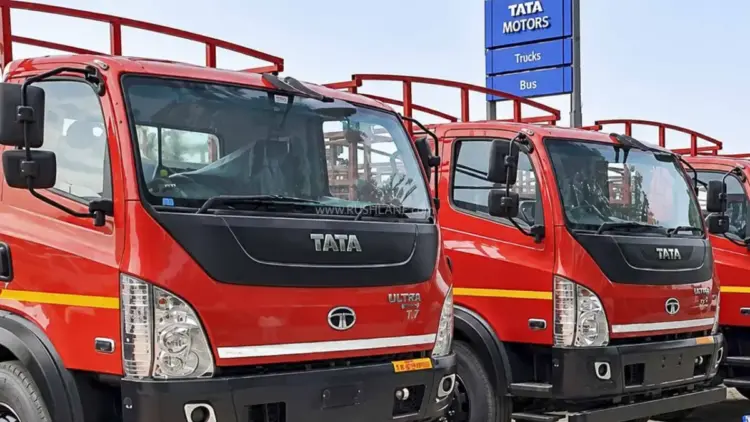
Tata Motors continues to dominate the Indian roads. With 39,914 units sold, the company commanded a 34.67% market share. Their diverse portfolio, ranging from the Ace to the Prima range, allowed them to capture demand across both the struggling LCV and the booming HCV segments.
Mahindra & Mahindra: A Rare Dip
Mahindra, usually a titan in the LCV and pickup segment, saw its retail sales slide to 31,500 units, down from 38,602 units in October 2025. This decline in volume resulted in a reduction of market share to 27.36%. The downturn in the LCV segment overall appears to have hit Mahindra harder than its peers.

Ashok Leyland: Strong Momentum
The Chennai-based manufacturer, Ashok Leyland, reported a strong performance with 20,774 units sold, up from 17,797 units a year ago. This brought their market share to 18.04%, driven largely by their strong presence in the MCV and HCV bus and truck segments.
VECV and Others
- VE Commercial Vehicles (VECV): The Volvo-Eicher joint venture secured the fourth spot with 9,603 units, a significant jump from 7,935 units in the previous year, taking their market share to 8.34%.
- Maruti Suzuki: Known for its "Super Carry" in the mini-truck segment, Maruti saw a decline to 5,041 units from 6,147 units YoY, mirroring the broader LCV slump.
- Force Motors & Daimler: Both companies posted gains, with Force Motors reaching 2,363 units and Daimler (BharatBenz) recording 2,205 units.
Official Responses and Industry Outlook
The Federation of Automobile Dealers Associations (FADA) has expressed a cautiously optimistic outlook for the remainder of the fiscal year. In their official commentary, FADA noted that the "highest-ever October" figures are a testament to the underlying strength of the Indian economy.
According to FADA, dealers across the country are anticipating "healthy demand" over the next three months (November 2026 – January 2027). This optimism is rooted in three primary drivers:
- Infrastructure Spending: Continued government allocation for road and bridge projects.
- Mining Activity: Increased demand for coal and minerals to power the industrial sector.
- E-commerce Logistics: The ongoing shift toward online shopping, which necessitates a robust and modern delivery fleet.
Industry experts also point toward the "replacement cycle" as a key factor. Many trucks purchased during the 2018-2019 peak are now reaching the end of their optimal operational life, prompting large fleet operators to upgrade to newer, more fuel-efficient, and technologically advanced models.
Implications for the Indian Economy
The record-breaking CV sales in October 2026 carry significant implications for the broader Indian economy. As a "leading indicator," a rise in commercial vehicle sales—particularly in the heavy-duty segment—usually precedes an uptick in industrial production and GDP growth.

1. Logistics Efficiency: The shift toward higher-tonnage trucks (HCVs) suggests that the Indian logistics sector is becoming more efficient, moving more goods per trip and reducing the overall cost of logistics, which has historically been higher in India compared to developed economies.
2. Employment Generation: The growth in the CV sector has a multiplier effect on employment. From drivers and mechanics to warehouse staff and body-builders, the ecosystem surrounding 1.15 lakh new vehicles sold in a single month provides a substantial boost to the labor market.
3. The Energy Transition: While diesel remains dominant, the 4.29% share for EVs is a critical milestone. It suggests that the "proof of concept" phase for electric trucks is nearing completion, and we may see an exponential rise in EV adoption as charging infrastructure improves along major freight corridors.
4. Rural Resilience Check: The slight decline in rural YoY sales serves as a warning sign for policymakers. It indicates that while the industrial and urban sectors are booming, the rural economy may require targeted interventions—perhaps in the form of agricultural support or rural infrastructure projects—to bring its CV demand back in line with urban growth.
Conclusion
October 2026 will be remembered as a month of milestones for the Indian commercial vehicle industry. By crossing the 1.15 lakh unit mark, the sector has proven its ability to overcome localized challenges and capitalize on national-level growth drivers. While the decline in LCVs and the rural market provides a sobering reminder of the work still to be done, the explosive growth in heavy-duty vehicles and the steady rise of Tata Motors and Ashok Leyland paint a picture of a nation on the move. As we head into the final quarter of the fiscal year, all eyes will be on whether this momentum can be sustained to set a new annual record for 2026-2027.