The Indian automotive landscape is undergoing a seismic shift as electrification moves from a niche alternative to a mainstream powerhouse. October 2026 has emerged as a landmark month for the Electric Passenger Vehicle (e-PV) segment, signaling a definitive transition in consumer preference and industrial capability. According to the latest retail data, the month saw a staggering 76.47% year-on-year (YoY) growth, with total registrations reaching 37,049 units.
This surge is not merely a seasonal spike but part of a consistent upward trajectory. When compared to the 36,108 units recorded in September 2026, the market showed a 2.61% month-on-month (MoM) improvement, demonstrating resilience even after the initial peak of the festive season. As infrastructure improves and the "range anxiety" of previous years fades into the background, the competition among manufacturers has intensified, with homegrown giants, global disruptors, and luxury stalwarts all vying for a piece of the electrified pie.
The Dominance of Tata Motors: A First-Mover Advantage Sustained
Tata Motors remains the undisputed titan of the Indian EV space. In October 2026, the company registered 14,669 units, capturing a significant portion of the total market share. This figure represents a massive 77.61% YoY increase compared to the 8,259 units sold in October 2025.
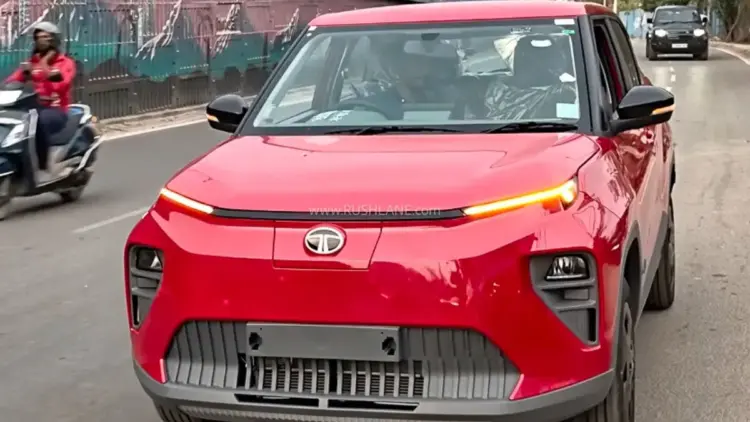
The success of Tata Motors can be attributed to its "multi-layered" product strategy. The launch of the 2026 Tata Punch EV Facelift has been a pivotal moment for the brand, offering premium features in a compact, accessible SUV format. By refreshing its existing lineup and maintaining a robust charging network (Tata Power EZ Charge), the company has built a level of brand trust that competitors are finding difficult to breach.

However, it wasn’t all upward movement for the Mumbai-based manufacturer. On a month-on-month basis, Tata saw a marginal decline of 0.82% from September’s 14,791 units. Analysts suggest this is a minor correction following a heavy push in the early festive weeks, rather than a cooling of demand.
Mahindra and JSW MG Motor: The Battle for the Second Spot
While Tata leads the pack, the race for the second position has become a high-stakes duel between Mahindra & Mahindra and JSW MG Motor.
Mahindra’s Aggressive Expansion
Mahindra secured the second position in October 2026 with 8,538 units sold. This represents an impressive 85.65% YoY growth over the 4,599 units sold in the same month last year. Unlike Tata’s marginal MoM dip, Mahindra recorded a healthy 9.74% growth over September 2026. Mahindra’s "Born Electric" (BE) platform and the continued popularity of the XUV400 and its successors have allowed the brand to capitalize on the growing demand for electric SUVs.
JSW MG Motor’s Steady Climb
JSW MG Motor maintained its reputation as a serious contender, ranking third with 5,939 units. The company achieved growth on both fronts: a 10.80% YoY increase and a 13.30% MoM surge. The joint venture between JSW and MG has clearly paid off, providing the capital and local insight needed to scale operations. Their focus on high-tech interiors and competitive pricing for the Comet and ZS EV models continues to resonate with urban commuters.

The Rise of the Disruptors: VinFast and Tesla
October 2026 will be remembered as the month when international disruptors truly began to shake the Indian establishment.
VinFast’s Extraordinary Growth
Perhaps the most startling data point in the October report is the performance of VinFast. The Vietnamese automaker, which entered the Indian market approximately 15 months ago, registered 2,571 units. This represents a staggering 1,710.56% YoY increase from the 142 units sold in October 2025. While its MoM sales dipped by 13.26% from September’s 2,964 units, the overall trajectory suggests that VinFast has successfully navigated the complexities of the Indian market, likely aided by its localized manufacturing and aggressive entry-level pricing.
Tesla’s Flat but Formidable Presence
Tesla, the global face of EVs, recorded 291 units in October 2026. While this number is small compared to Tata, it represents a 627.50% YoY increase from the 40 units sold in October 2025. Interestingly, Tesla’s MoM sales remained flat, suggesting a stabilized niche following its official entry into the subcontinent. Tesla’s presence serves more as a brand halo for the industry, pushing local manufacturers to upgrade their technology and performance standards.
Mainstream Giants Pivot: Maruti Suzuki, Kia, and Hyundai
The "Big Three" of the traditional Internal Combustion Engine (ICE) segment are now firmly in the EV race, though their strategies vary.

- Kia India: Kia reported a healthy growth of 1,395 units, an 85.50% YoY increase. With a 10.54% MoM improvement, Kia is successfully positioning itself as a premium EV alternative, bridging the gap between mass-market models and luxury offerings.
- Maruti Suzuki: The leader of the ICE segment is taking a calculated approach to electrification. Maruti recorded 1,200 electric car sales in October 2026, a modest 8.70% MoM increase. While currently lower in volume than its rivals, Maruti’s vast service network remains its "ace in the hole" as it prepares to flood the market with more affordable EV options in 2027.
- Hyundai Motor India: Hyundai sold 760 units, a 42.32% YoY growth. However, the company faced a 4.04% MoM decline. Hyundai is expected to bounce back shortly with the launch of a new sub-4m electric SUV specifically designed for Indian conditions, which could drastically alter its market standing.
Luxury EV Segment: BMW Leads While Mercedes Falters
The luxury segment is witnessing a divergence in fortunes. BMW India has established itself as the leader in the luxury EV space, with 462 units sold in October 2026—a 26.58% YoY growth. Despite a 7.97% MoM decline, BMW’s diverse portfolio, ranging from the i4 to the iX, has given it a significant edge.
In contrast, Mercedes-Benz suffered a notable setback. Sales for its electric lineup fell by 48.76% YoY and 50.40% MoM, settling at just 62 units. Industry experts attribute this to a combination of high base effects from previous launches and a product lifecycle gap. Meanwhile, Volvo continues to grow steadily, with 37 units sold, marking a 60.87% YoY increase.
Supporting Data: Sales Breakdown at a Glance
| Manufacturer | Oct 2026 Sales | Oct 2025 Sales | YoY Growth (%) | Sept 2026 Sales | MoM Growth (%) |
|---|---|---|---|---|---|
| Tata Motors | 14,669 | 8,259 | 77.61% | 14,791 | -0.82% |
| Mahindra | 8,538 | 4,599 | 85.65% | 7,780 | 9.74% |
| JSW MG Motor | 5,939 | 5,360 | 10.80% | 5,242 | 13.30% |
| VinFast | 2,571 | 142 | 1710.56% | 2,964 | -13.26% |
| Kia India | 1,395 | 752 | 85.50% | 1,262 | 10.54% |
| Maruti Suzuki | 1,200 | N/A | N/A | 1,104 | 8.70% |
| Hyundai | 760 | 534 | 42.32% | 792 | -4.04% |
| BYD India | 737 | 708 | 4.10% | 836 | -11.84% |
| BMW India | 462 | 365 | 26.58% | 502 | -7.97% |
| Tesla | 291 | 40 | 627.50% | 291 | 0.00% |
Official Responses and Industry Sentiment
While official statements from the "Big Three" (Tata, Mahindra, MG) emphasized their commitment to the "Make in India" initiative, industry analysts have provided a more nuanced perspective.
A senior analyst from a leading automotive consultancy noted: "The October 2026 figures are a testament to the fact that EVs are no longer a secondary choice for Indian households. The 76% YoY growth is fueled by better product availability and a massive expansion in public charging infrastructure. However, the MoM fluctuations seen in brands like VinFast and Hyundai suggest that the market is becoming highly sensitive to new launches and promotional cycles."

BYD India, despite a slight MoM decline, remains optimistic. A company spokesperson hinted at the upcoming launch of the luxury Denza brand in India, stating, "Our focus is moving toward the high-end MPV and luxury segments, where we believe the next wave of electrification will take place."
Implications for the Future: Infrastructure and Competition
The data from October 2026 carries several profound implications for the final quarter of the year and the start of 2027:
- Infrastructure Must Keep Pace: With nearly 40,000 new electric cars hitting the road every month, the pressure on the national charging grid is immense. The success of the next phase of adoption depends on the rapid rollout of DC fast chargers along national highways.
- Price Wars are Imminent: The entry of VinFast and the gradual ramp-up of Maruti Suzuki suggest that a price war in the ₹10 lakh to ₹15 lakh segment is inevitable. This will likely benefit the consumer but squeeze the margins of manufacturers.
- Localization is Key: The brands showing the most consistent growth (Tata, Mahindra) are those with the highest levels of component localization. As government subsidies evolve, localizing battery pack assembly will be the difference between profit and loss.
- The Luxury Shift: The decline in Mercedes-Benz sales versus the rise of BMW suggests that luxury buyers are looking for "tech-forward" and "performance-oriented" EVs rather than just traditional luxury badges.
Conclusion
The October 2026 retail sales figures confirm that the electric vehicle sector is the primary engine of growth for the Indian automotive industry. With a YoY growth rate of 76.47%, the transition is moving faster than many predicted even two years ago. While Tata Motors remains the king of the mountain, the aggressive moves by Mahindra, the disruptive growth of VinFast, and the impending arrival of more affordable models from Maruti and Hyundai ensure that the battle for India’s electric future is only just beginning. For the Indian consumer, the message is clear: the future is electric, and the choices have never been better.