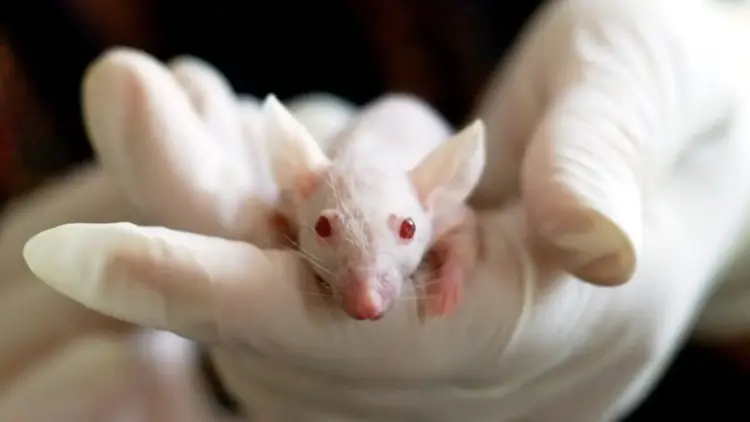
As the public comment window remains open until November 5, 2026, the scientific community and animal welfare advocates are locked in a struggle over the future of pre-clinical research in India.
1. Main Facts: A Paradigm Shift in Oversight
The draft 2026 Rules represent a departure from the centralized oversight model that has defined Indian laboratory ethics since the late 1990s. At the heart of the controversy is the decentralization of the approval process for experiments.
Under current regulations, the Committee for the Control and Supervision of Experiments on Animals (CCSEA)—a central statutory body—must approve any experiment involving animals higher than rodents on the phylogenetic scale. This includes dogs, monkeys, cattle, and horses. The draft rules, however, propose a tiered system based on the "severity" of the procedure rather than the species involved.
Key changes include:

- Empowering Institutional Animal Ethics Committees (IAECs): Local committees within universities and private labs would be granted the authority to approve "mild" and "moderate" experiments on all animal species.
- Severity-Based Categorization: Experiments are now classified as "mild," "moderate," "severe," or "non-recovery."
- Access to Wild and Stray Animals: The draft removes the absolute prohibition on using stray dogs, feral animals, and wild-caught species, provided "scientific justification" or permission from a "competent authority" is obtained.
- Commercial Sourcing: The rules suggest that livestock for experimentation could be procured from open markets or non-registered establishments with local committee approval, potentially fueling a commercial trade in research animals.
2. Chronology: The Evolution of India’s Animal Research Laws
To understand the gravity of the 2026 draft, one must look at the legislative trajectory of animal welfare in India over the last sixty years.
- 1960: The Prevention of Cruelty to Animals Act is passed, establishing the legal framework for animal welfare and the eventual creation of the Animal Welfare Board of India.
- 1968: The Experiments on Animals (Control and Supervision) Rules are introduced, providing the first specific guidelines for laboratory animal treatment, emphasizing "humanity" and "minimal numbers."
- 1998: The Breeding of and Experiments on Animals (Control and Supervision) Rules are enacted. This was a landmark moment that centralized power within the CCSEA, requiring strict registration of all breeding and testing facilities.
- 2022: The CCSEA issues a controversial circular allowing stray dogs to be used in clinical vaccine trials.
- October 2023: Following intense pressure from activists and legal challenges, the CCSEA withdraws the stray dog circular, citing a lack of formulated protocols for such trials.
- 2023: In a parallel development, the government amends the New Drugs and Clinical Trials Rules, explicitly allowing non-animal methods like organ-on-chip and 3D bioprinting for drug safety studies.
- September 30, 2026: The Ministry of Fisheries, Animal Husbandry and Dairying releases the draft 2026 Rules, which many see as a reversal of the progress made toward non-animal alternatives.
3. Supporting Data: The Subjectivity of "Severity" and the Conflict of Interest
Critics argue that the draft’s reliance on "severity" levels is dangerously subjective. According to the draft, "mild" experiments cause short-term pain, while "moderate" experiments may cause impairment of well-being. However, Surat Parvatam, Senior Program Director at Humane World for Animals India, points out a significant flaw in this logic.
"The draft rules list inducing tumors or solitary isolation as being of a ‘moderate’ nature," Parvatam notes. "These categorizations appear to be based on human perceptions of severity and may not reflect the actual physiological and psychological trauma experienced by the animal."
The Conflict of Interest Issue
A major point of contention is the composition of the IAECs. Under the 2026 draft, five out of the nine members of an institutional committee would be from the institute itself. This creates a potential "echo chamber" where the desire for research funding and academic prestige could outweigh the ethical considerations of animal suffering. By allowing these local committees to approve experiments on primates and dogs—provided the lab labels them "moderate"—the CCSEA essentially loses its role as an independent watchdog.
The Scientific Risk of Wild/Stray Sourcing
The scientific community has also raised concerns regarding the reliability of data derived from stray or wild animals. Laboratory-bred animals are prized for their "genetic consistency" and known medical histories.

- Genetic Noise: Stray animals have diverse genetic backgrounds that can introduce "noise" into data, making it difficult to determine if a drug reaction is due to the chemical or the animal’s unique biology.
- Medical Variables: Unknown exposure to pathogens in the wild or on the streets can skew the results of immunological or toxicological studies.
4. Official Responses: Activists vs. The Market
The backlash from animal rights groups has been swift and severe. PETA India has labeled the draft "backward," arguing that at a time when the world is moving toward "New Approach Methods" (NAMs), India is making it easier to use animals in painful ways.
In a formal statement, PETA emphasized: "The government should be strengthening the use of scientifically advanced non-animal approaches… rather than weakening existing safeguards or creating new avenues for animal experimentation."
Rapid Response, a network of animal welfare professionals, has drafted a formal objection letter, arguing that the "usefulness" of an experiment should not be the sole metric for approval. They advocate for a mandatory "alternatives search," where researchers must prove that no non-animal method exists before being granted permission to use a living subject.
The Economic Counter-Argument
While activists focus on ethics, the government’s push for "streamlining" is likely driven by the burgeoning Contract Research Organization (CRO) market.
- Market Value: The Indian preclinical CRO market was estimated at $183.3 million in 2023.
- Growth Projections: The industry is expected to grow at a compound annual growth rate (CAGR) of 11.4% through 2030.
- Drivers: Low operating costs, a large pool of skilled human resources, and the global trend of outsourcing R&D to India have made the country a hub for pre-clinical trials.
Proponents of the rules argue that the CCSEA’s centralized approval process has become a bottleneck, delaying vital medical research and driving pharmaceutical companies to conduct trials in countries with more "flexible" regulations.

5. Implications: The Future of Ethics and Science in India
The adoption of the 2026 Rules could have far-reaching consequences for India’s international standing in the scientific community and its domestic animal welfare standards.
Ethical Implications
If the rules are passed in their current form, India may see a surge in experiments on dogs, monkeys, and cats that were previously restricted. The inclusion of "non-recovery" experiments—where an animal is operated on under general anesthesia and euthanized before waking up—raises profound questions about the value of life versus the value of data.
Scientific Credibility
There is a risk that data produced under a decentralized, less rigorous oversight system may face scrutiny from international regulators like the US FDA or the European Medicines Agency (EMA). If the ethical standards of the source data are questioned, Indian pharmaceutical exports could face new hurdles.
The Paradox of Progress
Perhaps the most striking implication is the internal contradiction within Indian policy. In 2023, India was hailed for amending its drug trial rules to include organ-on-chip technology, signaling a shift toward 21st-century science. The 2026 draft, by contrast, seems to lean back into 20th-century methodologies by expanding animal access.
Conclusion
The draft Prevention of Cruelty to Animals Rules, 2026, represents a crossroads. One path leads toward a highly efficient, market-friendly research environment that prioritizes speed and decentralization. The other path, advocated by welfare groups, demands a future where animals are phased out of laboratories in favor of more accurate, human-relevant technologies.

As the November 5 deadline for public comment approaches, the Indian government faces a difficult choice: to listen to the rising tide of ethical concern or to clear the path for an industry poised for explosive growth. The decision will define India’s moral and scientific character for decades to come.