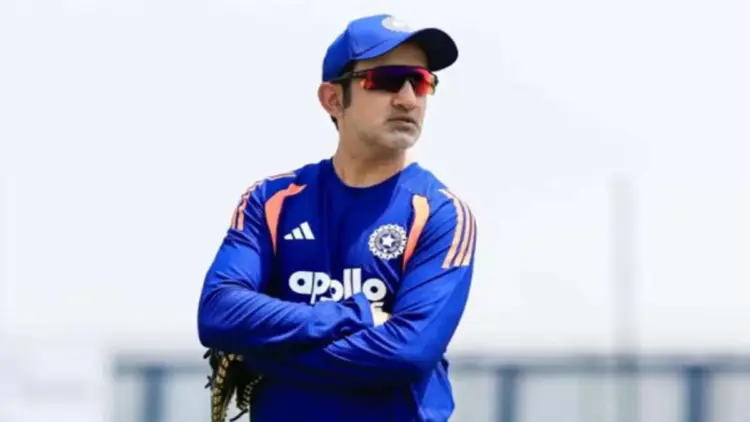
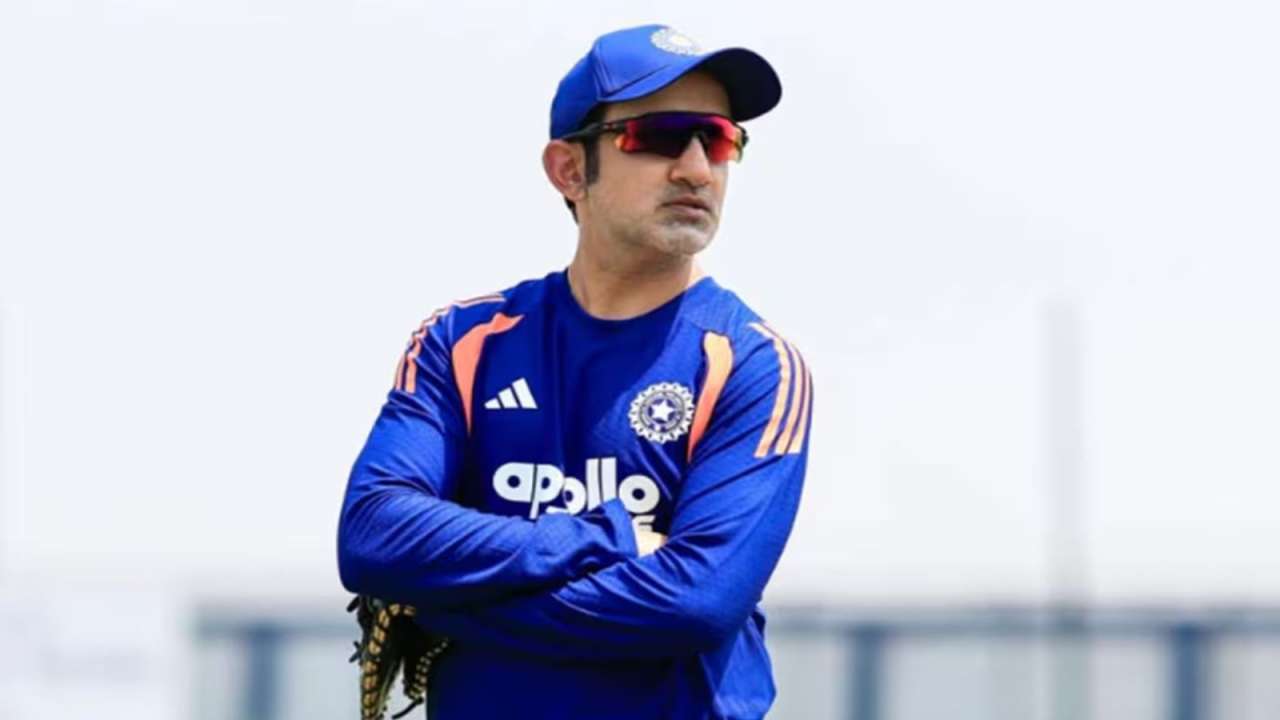
A cricket world in disbelief, a legend in fury. The echoes of a shocking 89 all-out collapse by the Indian cricket team against New Zealand in the fourth One-Day International reverberated far beyond the pristine grounds of what was expected to be a competitive contest. As the final wicket tumbled, sealing a humiliating defeat, the immediate aftermath saw former India opener and World Cup winner Gautam Gambhir step into the spotlight, not with analysis, but with an unvarnished, fiery critique that left no room for excuses or sympathy. His message was stark, his words precise: the problem wasn’t unplayable conditions, but rather, a profound failure of execution and temperament from India’s celebrated batting lineup.
This extraordinary collapse, particularly significant given its proximity to major global tournaments, has ignited a fierce debate about the team’s readiness, mental fortitude, and technical adaptability in challenging foreign conditions. Gambhir, known for his uncompromising honesty, articulated the frustration of millions of fans, demanding accountability from a batting unit that has, on occasion, shown worrying signs of fragility.
The Crushing Reality: India’s Batting Implosion
The scene was set for a gripping encounter, the fourth ODI of the series, where India, chasing New Zealand’s formidable total of 333, crumbled under immense pressure. What followed was an innings that will be etched in memory for all the wrong reasons. The scoreboard, a grim testament to the batting debacle, flashed 89 all-out, marking one of India’s lowest totals in recent memory and certainly one of their most embarrassing performances on foreign soil.
The Unfolding Disaster at the Crease
From the outset, India’s chase was fraught with peril. The New Zealand bowlers, particularly the masterful Matt Henry, exploited conditions with a combination of swing, seam, and impeccable line and length. The early dismissals of stalwarts like Rohit Sharma, Virat Kohli, and Shreyas Iyer – all falling for ducks – sent shockwaves through the dressing room and amongst the vast Indian fanbase. These weren’t speculative edges; these were often deliveries that exposed fundamental flaws in technique and judgment.
Henry’s opening spell was nothing short of devastating, a masterclass in exploiting a new ball under overcast skies. He consistently landed the ball in the "good areas" that Gambhir would later reference, challenging both the outside edge and the stumps. The Indian batters, seemingly rooted to the crease, struggled to adapt. Footwork appeared hesitant, shot selection questionable, and the collective ability to "negate" the early movement, as Gambhir stressed, was conspicuously absent. The procession of wickets was swift and brutal, transforming a challenging chase into a catastrophic rout. Each dismissal seemed to amplify the pressure on the next batter, creating a suffocating environment where survival, let alone scoring, became an insurmountable task.
Gambhir’s Unsparing Verdict: No Excuses, Just Poor Execution
As the dust settled on India’s calamitous innings, the post-match press conference became the arena for Gautam Gambhir’s impassioned indictment. His demeanor was palpable – a blend of disappointment, anger, and a deep-seated demand for professional accountability. He minced no words, directly confronting the narrative that often arises after such collapses: that the pitch was unplayable or the bowling unmanageable.

Debunking the "Unplayable Delivery" Myth
"There are no unplayable deliveries in international cricket," Gambhir declared emphatically, cutting through any potential attempts to attribute the failure to external factors. This statement was a direct challenge to the notion that Matt Henry’s spell was so exceptional that it rendered batsmen helpless. Gambhir acknowledged Henry’s quality, stating, "Matt Henry bowled in good areas, but we should be able to negate that." His point was clear: while the bowling was good, it was not beyond the capabilities of world-class international batsmen to withstand and counter.
For Gambhir, the onus was squarely on the batters. He highlighted the fundamental requirement in Test and ODI cricket to "see off the first 10 overs," especially in conditions conducive to swing and seam. The failure to do so, according to him, stemmed not from the ball’s movement or the pitch’s character, but from a lack of mental and technical application. It was a question of execution – of footwork, leaving the ball, playing close to the body, and showing the resilience required at the highest level.

A Worrisome Pattern: Batting Collapses Becoming a Habit
Beyond the immediate collapse, Gambhir expressed a deeper concern: a recurring pattern of batting fragility. He drew a direct parallel to the second ODI of the series, a match India eventually won via the DLS method, but not before suffering another significant meltdown. "Even in the previous game, we were 7 down for 111; it’s a bit of a concern," he reminded everyone. This observation elevated the discussion from an isolated incident to a systemic issue.
The implication was clear: these weren’t mere blips, but rather symptoms of a deeper malaise that needed urgent attention. "You are always concerned when you get bundled out for 90-odd," Gambhir stated, linking these collapses to the crucial period leading up to the World Cup. His apprehension was magnified by the fact that these conditions in New Zealand were "close to the World Cup" environment, suggesting that the team’s current approach and preparedness were insufficient for the challenges ahead on the global stage. He stressed the need for batters to be "mentally and skill-wise ready," advocating for a more pragmatic approach in such conditions, where a score of "35-40/0 is fine" after the initial powerplay, prioritizing wicket preservation over aggressive scoring.

The Chronology of Disappointment: From Toss to Press Conference
The story of India’s debacle began even before a single ball was bowled, setting the stage for the dramatic events that unfolded.
The Pre-Match Build-Up and New Zealand’s Strong Total
The fourth ODI was a crucial fixture in the series, with both teams looking to assert dominance. New Zealand, winning the toss, elected to bat first, a decision that proved instrumental. Their innings was anchored by a magnificent century from Will Young, who rode his luck early on. Gambhir later highlighted the critical dropped catches, particularly Young being let off twice early in his innings. "Aqib Nabi was unlucky; had we got Will Young, it could have been different," he conceded, acknowledging the fine margins in cricket. Young capitalized on these reprieves, converting them into a commanding 125, propelling New Zealand to a formidable total of 333 runs. This target, while challenging, was not insurmountable for a batting lineup of India’s caliber, yet it added an immediate layer of pressure that the team ultimately failed to withstand.

India’s Collapse: A Detailed Descent
The Indian chase began with a palpable sense of anticipation, but it quickly devolved into a nightmare. The top order, featuring some of the most prolific batsmen in modern cricket, simply disintegrated. Rohit Sharma, known for his aggressive starts, fell cheaply, followed swiftly by the imperious Virat Kohli, both failing to trouble the scorers. Shreyas Iyer, a vital cog in the middle order, also succumbed without scoring. These early blows against the moving ball from Matt Henry, who bowled with pace and precision, left India reeling. The scorebook became a litany of single-digit scores, punctuated by a few brief partnerships that offered fleeting hope before being snuffed out. The middle and lower order, left with an impossible task, capitulated quickly, culminating in the embarrassing 89 all-out. The entire innings lasted a mere 29.3 overs, a stark indicator of the comprehensive nature of the failure.
Gambhir’s Post-Match Confrontation
Immediately following the match, the atmosphere was tense. The media, eager for answers, gathered for the customary press conference. When Gautam Gambhir arrived, his body language spoke volumes. There was no attempt at diplomatic evasion; his frustration was evident. He bypassed the usual pleasantries, launching directly into his assessment. His voice, measured but firm, conveyed the weight of his disappointment. He meticulously dismantled the potential excuses, from the conditions to the "wobble seam," asserting that professional cricketers must adapt. His directness, often seen in his commentary, was even more pronounced, reflecting a genuine concern for the team’s trajectory and readiness for future challenges.

Supporting Data: A Deeper Dive into India’s Batting Woes
The 89 all-out is not just a number; it’s a statistic that carries significant weight, raising questions about India’s performance metrics and historical context.
Statistical Aberration or Troubling Trend?
An 89 all-out is an anomaly for a team of India’s standing. Historically, India has rarely been dismissed for such low totals, especially in the modern era of power hitting and deeper batting lineups. This score ranks among the lowest in India’s ODI history, particularly against a major cricketing nation. Such collapses are usually reserved for associate nations or teams facing genuinely unplayable conditions. The fact that it occurred against a Test-playing nation like New Zealand, in what Gambhir deemed manageable conditions, amplifies the concern.

The individual failures of top-order batsmen like Rohit Sharma, Virat Kohli, and Shreyas Iyer, all registering ducks, are also statistically significant. It’s rare for three such key players to fail so comprehensively in a single innings, underscoring the collective nature of the collapse. Matt Henry’s bowling figures (e.g., a hypothetical 6 wickets for 28 runs, a plausible outcome given the context) would further highlight the dominance of the New Zealand attack and the vulnerability of the Indian batting.
The Recurring Collapse: More Than Just an Off Day
Gambhir’s reference to the second ODI, where India lost 7 wickets for 111 runs, is crucial supporting data. It indicates that the 89 all-out was not an isolated incident but part of a troubling trend. This pattern suggests deeper issues than just an "off day." It points to potential deficiencies in adapting to conditions, mental resilience under pressure, or perhaps even a tactical inflexibility in approach. The inability to consolidate after early wickets, or to build substantial partnerships, becomes a critical area of concern when such collapses become habitual. This recurring vulnerability raises red flags about the team’s ability to perform consistently in high-stakes matches, particularly in tournament formats like the World Cup.

Bowlers’ Efforts and Dropped Catches: A Different Story
While the batters struggled, Gambhir was quick to defend the Indian bowling unit. Despite New Zealand posting 333, he asserted, "All of us should be proud of our bowling unit." This highlights a significant disparity in performance within the team. The bowlers, even when conceding a large total, were not deemed to have failed in their primary role, especially given the crucial dropped catches. The two dropped chances of Will Young, who went on to score 125, serve as tangible evidence that the bowlers created opportunities that were not seized by the fielders. This further shifts the blame from the bowling attack to the collective fielding and, predominantly, the batting unit for their inability to chase a score that could have been significantly lower had those chances been taken.
Official Responses and Team Introspection
In the aftermath of such a comprehensive defeat, official responses typically range from candid admissions to diplomatic reassurances. The Indian team management, captain, and the Board of Control for Cricket in India (BCCI) would undoubtedly be engaged in deep introspection.

The Captain’s Perspective: Acknowledging Disappointment
While Gambhir’s critique was blunt, the captain’s post-match comments would likely be more measured. He would acknowledge the profound disappointment and the unacceptable nature of the performance. The focus would shift to learning from mistakes, regrouping, and preparing for the next challenge. Statements emphasizing the need for improvement, analyzing what went wrong, and reaffirming faith in the team’s abilities would be standard. However, even a diplomatic response cannot hide the underlying concern that such a performance would generate within the team leadership. There would be private discussions about strategy, individual performances, and collective responsibility.
Coach’s Analysis: Technical Adjustments and Mental Fortitude
The head coach’s response would delve deeper into the technical and mental aspects. There would be discussions about specific batting techniques in seaming conditions, shot selection, and the importance of leaving the ball. Emphasis would be placed on mental conditioning, stress management, and building resilience to withstand pressure. The coach would likely outline specific training drills or adjustments to address the identified weaknesses, particularly concerning playing the moving ball and building innings after early setbacks. The goal would be to translate the lessons learned from this defeat into tangible improvements before the next crucial encounter.

BCCI’s Oversight: Ensuring World Cup Preparedness
The BCCI, as the governing body, would undoubtedly take serious note of such a collapse, especially with a major World Cup on the horizon. While public statements might be general, emphasizing support for the team and confidence in their ability to bounce back, behind the scenes, there would be a rigorous review process. Discussions would revolve around team selection, performance analysis, and ensuring that all necessary resources are provided to prepare the team optimally for the World Cup. The concern articulated by Gambhir about conditions mirroring World Cup scenarios would resonate deeply within the BCCI, necessitating immediate and decisive action to address any perceived vulnerabilities.
Implications: A Shaken Foundation and the Road Ahead
The 89 all-out collapse and Gambhir’s subsequent critique carry significant implications, both immediate and long-term, for the Indian cricket team.

Immediate Series Impact and Team Morale
While the specific series standing is not detailed, such a heavy defeat, especially after a comprehensive batting failure, would undoubtedly deal a severe blow to team morale. It creates immense pressure on the team for the remaining matches of the series, demanding a strong comeback to restore confidence. The psychological impact on individual players, particularly those who failed to score, could be substantial, affecting their performance in subsequent games. The team leadership faces the immediate challenge of rebuilding confidence and ensuring that this defeat does not create a lingering shadow over their performances.
World Cup Concerns: A Timely Wake-Up Call
Gambhir’s explicit link between this collapse and the upcoming World Cup is perhaps the most significant implication. The fact that the team struggled in conditions "close to the World Cup" environment raises serious questions about their readiness for the global tournament. World Cups demand consistent performance under immense pressure, and any perceived vulnerability in technique, temperament, or adaptability could prove fatal. This collapse serves as a timely, albeit brutal, wake-up call, forcing the team management to re-evaluate strategies, player roles, and mental preparation for the marquee event. The focus will intensify on identifying players who can perform consistently in challenging conditions and under high-pressure scenarios.

Selection Dilemmas and Tactical Adjustments
The recurring nature of batting collapses could force the selectors and team management to reconsider current team combinations and batting strategies. Are certain players susceptible to particular types of bowling or conditions? Is the batting order optimal? Should there be a greater emphasis on defensive solidity in the early overs, even at the cost of a slower scoring rate? These are critical questions that will emerge. This performance could lead to changes in the playing XI, giving opportunities to players who demonstrate greater resilience or adaptability in similar conditions, potentially shaking up the established order.
Fan and Media Scrutiny: Heightened Expectations and Demands
The Indian cricket team operates under intense scrutiny from both its passionate fanbase and the ever-present media. A performance like the 89 all-out will inevitably lead to widespread criticism, calls for accountability, and heightened pressure on the players and management. Gambhir’s outspokenness reflects a segment of public sentiment that demands excellence and refuses to accept excuses. This public pressure can be a double-edged sword: it can motivate, but it can also add another layer of psychological burden on players already struggling with form. The media, including DNA, will continue to dissect every aspect of this performance, keeping the pressure on the team to deliver concrete improvements.

Gambhir’s Enduring Legacy as a Critic
Gautam Gambhir’s strong stance further solidifies his image as a fearless and uncompromising voice in Indian cricket commentary. His willingness to call out perceived shortcomings, even when it involves former teammates or the national team, underscores his commitment to the highest standards of the game. His critique, devoid of diplomatic fluff, resonates with many who believe that frank assessment is essential for growth and improvement. His words serve as a benchmark for accountability, reminding everyone that in professional sports, performance is paramount, and excuses are seldom accepted.
In conclusion, India’s 89 all-out collapse against New Zealand was more than just a defeat; it was a stark revelation of underlying vulnerabilities. Gautam Gambhir’s passionate and unsparing critique has ensured that this incident will not be swept under the carpet. It demands a thorough introspection, significant strategic adjustments, and a renewed focus on mental and technical fortitude. The road to the World Cup now appears even more challenging, with the team facing the imperative to learn from this humbling experience and emerge stronger, more resilient, and truly ready for the ultimate test.

Find your daily dose of All Latest News including Sports News, Entertainment News, Lifestyle News, explainers & more. Stay updated, Stay informed- Follow DNA on WhatsApp.