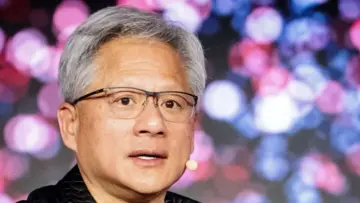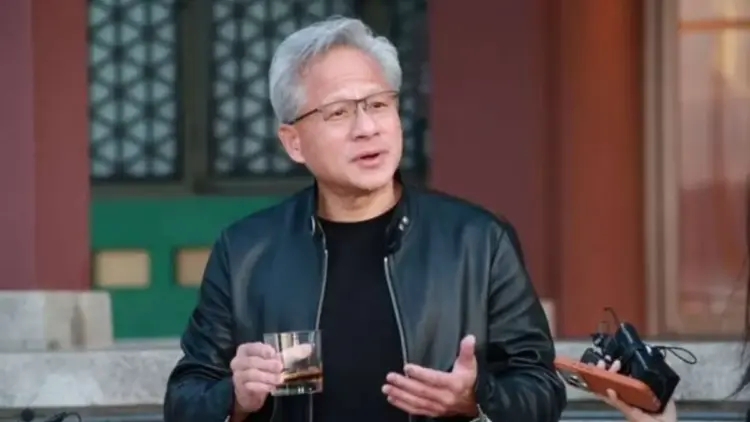
SANTA CLARA, CA – November 13, 2026 – Nvidia, the undisputed titan of the artificial intelligence (AI) chip industry, finds itself at a pivotal juncture as its visionary co-founder and long-serving CEO, Jensen Huang, has abruptly resigned, effective November 12. His departure, after an extraordinary 33-year tenure, has sent ripples across the global technology landscape, initiating an intensive search for a permanent successor to lead a company positioned at the very epicenter of the AI revolution.
The board of directors has moved swiftly to appoint Chief Financial Officer Colette Kress as interim CEO, ensuring operational continuity while a comprehensive evaluation of both internal and external candidates is underway. The transition comes amidst unprecedented growth for Nvidia, but also burgeoning complexities ranging from geopolitical trade restrictions to intense competition and the ethical scrutiny surrounding AI development. The individual chosen to fill Huang’s formidable shoes will inherit a company with immense potential, but also a demanding set of challenges.
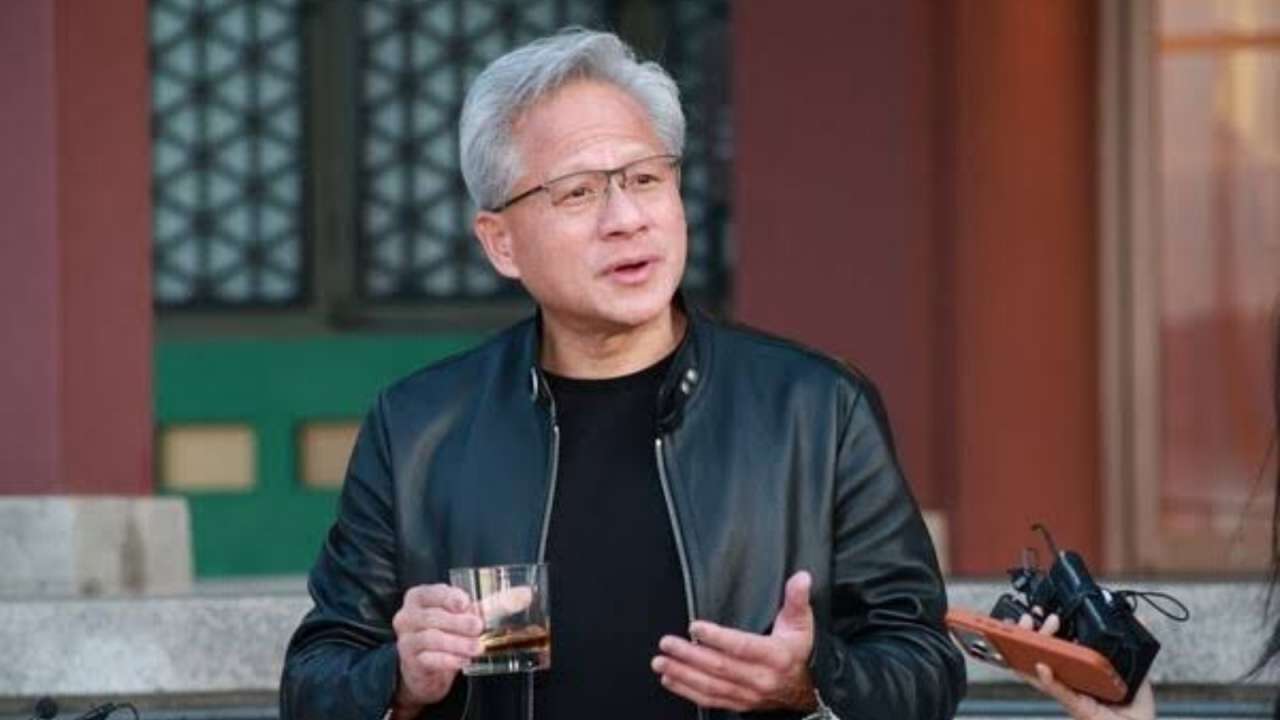
Jensen Huang’s Legacy: A Visionary’s 33-Year Odyssey
Jensen Huang’s resignation marks the end of an era defined by audacious vision and relentless innovation. Co-founding Nvidia in 1993 with Chris Malachowsky and Curtis Priem, Huang steered the company from a fledgling startup into a technological powerhouse. His early gamble on the Graphics Processing Unit (GPU) as more than just a gaming accessory but a parallel processing engine laid the groundwork for a revolution that would extend far beyond visual computing.
The Birth of the GPU and CUDA: Nvidia’s initial success was built on its prowess in 3D graphics, with products like the Riva 128 and GeForce series dominating the PC gaming market. However, it was Huang’s foresight in recognizing the broader applications of the GPU’s parallel processing capabilities that truly set Nvidia apart. In 2006, the introduction of CUDA (Compute Unified Device Architecture) transformed GPUs into general-purpose parallel processors, allowing developers to harness their power for complex computations. This was a watershed moment, quietly enabling breakthroughs in scientific research, data analytics, and eventually, artificial intelligence.
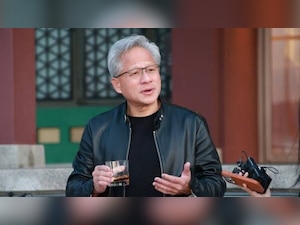
The AI Pivot: As machine learning and deep learning began to gain traction in the early 2010s, Huang instinctively understood that the GPU was the perfect engine for training complex neural networks. Nvidia aggressively pivoted, investing heavily in software, developer tools, and specialized hardware tailored for AI workloads. This strategic shift transformed Nvidia from a graphics card company into the indispensable infrastructure provider for the AI boom. Under Huang’s leadership, Nvidia’s market capitalization soared, frequently surpassing trillion-dollar valuations, cementing its status as one of the world’s most valuable and influential technology companies. His iconic black leather jacket became synonymous with the company’s bold, innovative, and often rebellious spirit.
The Resignation and Immediate Aftermath
Jensen Huang’s departure was announced on November 12, effective immediately, catching many in the industry by surprise. While the board’s official statement emphasized a smooth transition and continuity of operations, the abruptness of the exit, coupled with reports citing "scrutiny over his private life" as a factor, has fueled speculation. Details surrounding the nature of this scrutiny remain undisclosed, adhering to a professional and discreet approach by the company.

The board, in its statement, underscored its confidence in Nvidia’s robust leadership team and product roadmap. "Nvidia’s operations and groundbreaking product development will continue without interruption," the statement affirmed. "The board is fully committed to identifying a permanent successor who can build upon Jensen’s extraordinary legacy and guide Nvidia through its next phase of innovation and growth."
Colette Kress, a seasoned veteran with Nvidia since 2013 and a highly respected Chief Financial Officer, has stepped into the role of interim CEO. Her appointment provides stability at the helm, leveraging her deep understanding of Nvidia’s financial health, strategic planning, and overall business operations during this critical transition period.

Nvidia’s AI Imperium: A Throne Awaiting
The next CEO will step into a role of immense power and responsibility, inheriting a company that is not merely participating in the AI boom, but actively defining it. Nvidia’s dominance in high-performance computing and AI accelerators is virtually unparalleled.
Market Dominance and Financial Prowess: Nvidia’s H100 and A100 GPUs are the workhorses of AI data centers globally, powering everything from large language models (LLMs) to scientific simulations. The company’s unique CUDA software platform creates a formidable moat, making it incredibly difficult for competitors to dislodge its ecosystem. This dominance has translated into staggering financial performance, with record-breaking revenues and profits in recent quarters, consistently exceeding analyst expectations. Nvidia’s financial health provides a strong foundation, but also sets a high bar for sustained growth.

Strategic Importance in the Global AI Race: Beyond its financial metrics, Nvidia holds a strategic position in the geopolitical landscape. Its technology is considered critical national infrastructure, central to the AI ambitions of nations worldwide. This importance, however, comes with significant challenges, particularly export restrictions imposed by governments seeking to control the flow of advanced AI technology to certain regions. Navigating these complex geopolitical currents will be a top priority for the new leader.
Future Growth Vectors: Nvidia’s growth trajectory is not limited to data center GPUs. The company is aggressively expanding into new markets, including:

- Omniverse: A platform for building and operating metaverse applications and digital twins.
- Automotive: Developing AI platforms for autonomous vehicles and in-car infotainment.
- Robotics: Providing hardware and software for intelligent robots.
- Networking: Offering high-speed interconnects crucial for massive AI workloads.
The next CEO must not only maintain Nvidia’s leadership in core AI infrastructure but also effectively execute on these diverse and high-potential growth initiatives.
The Contenders: A Deep Dive into the Succession Race
The search for Jensen Huang’s permanent successor has reportedly drawn a diverse array of prominent figures from across the technology world. The board is said to be weighing a complex mix of internal continuity, external fresh perspectives, and a proven track record of managing hyperscale growth and innovation. The reported list of candidates includes both long-time Nvidia executives and titans from other tech giants.

Internal Candidates: The Guardians of Nvidia’s Culture
1. Colette Kress (Interim CEO, Chief Financial Officer, Nvidia):
- Profile: Kress joined Nvidia in 2013 from Cisco Systems and Microsoft, bringing extensive experience in finance and operations within the tech sector. As CFO, she has been instrumental in navigating Nvidia’s rapid growth and financial strategy, playing a key role in investor relations and strategic decision-making. Her appointment as interim CEO underscores the board’s confidence in her leadership capabilities and deep understanding of Nvidia’s business.
- Strengths: Unmatched institutional knowledge, strong financial acumen, proven leadership within Nvidia, and a steady hand during transition. Her tenure as interim CEO gives her a unique advantage to demonstrate her capabilities.
- Challenges: While a strong operational leader, the CEO role demands a visionary technologist, a quality often attributed to Huang. The question will be whether she can articulate and execute a long-term technological vision on par with her financial and operational prowess.
2. Ian Buck (VP Hyperscale and High-Performance Computing, Architect of CUDA, Nvidia):

- Profile: Ian Buck is a technical luminary within Nvidia, widely credited as the architect of CUDA, the platform that unlocked the GPU’s potential for general-purpose computing and ultimately for AI. He joined Nvidia in 2004 and has been central to the company’s most significant technological advancements, leading its hyperscale and HPC initiatives.
- Strengths: Deep technical expertise, direct lineage to Nvidia’s core innovation (CUDA), respected by engineers and the developer community, embodies Nvidia’s engineering-first culture. He represents continuity in technological vision.
- Challenges: Primarily a technologist, the CEO role requires extensive experience in global business strategy, sales, marketing, and navigating complex geopolitical and regulatory landscapes, areas where his public profile is less defined compared to pure business leaders.
External Powerhouses: Indian-Origin Executives in the Race
Reuters has highlighted three Indian-origin executives as prominent external candidates, reflecting the growing influence of this talent pool in global technology leadership.
3. Sanjay Mehrotra (CEO, Micron Technology):

- Profile: Mehrotra is currently the CEO of Micron Technology, a leading memory and storage solutions provider. Prior to Micron, he co-founded and served as CEO of SanDisk Corporation, guiding it to become a global leader in flash memory before its acquisition by Western Digital. His career spans over four decades in the semiconductor industry, with deep expertise in memory, storage, and chip manufacturing.
- Strengths: Proven CEO experience at a major semiconductor company, deep understanding of chip manufacturing and supply chain complexities (critical for Nvidia), strong operational background, and experience managing large, global teams. His memory expertise is increasingly relevant as AI demands more sophisticated memory solutions.
- Challenges: While a semiconductor veteran, his background is primarily in memory, not the cutting-edge GPU and AI accelerator design that is Nvidia’s core. Adapting to Nvidia’s unique software-hardware co-design philosophy and developer ecosystem might be a learning curve.
4. Nikesh Arora (CEO, Palo Alto Networks):
- Profile: Arora is the CEO of Palo Alto Networks, a global cybersecurity leader. Before this, he was a high-profile executive at Google, serving as Chief Business Officer and playing a crucial role in expanding Google’s global operations and revenue streams. He also held senior roles at SoftBank Group, overseeing its internet and media portfolio.
- Strengths: Extensive experience in scaling global businesses, strong background in software and cloud services (increasingly important for Nvidia’s platforms), deep understanding of enterprise markets, and a proven track record of driving growth and strategic partnerships. His experience in cybersecurity is relevant for AI security concerns.
- Challenges: Lacks direct semiconductor design or manufacturing experience, which is foundational to Nvidia. His expertise lies more in software, services, and business development rather than core hardware innovation.
5. Thomas Kurian (CEO, Google Cloud):

- Profile: Kurian leads Google Cloud, one of the fastest-growing enterprise cloud platforms. Before taking the helm at Google Cloud, he spent 22 years at Oracle, rising to President of Product Development and overseeing a vast portfolio of software and hardware products. He is known for his enterprise focus and ability to drive significant market share growth.
- Strengths: Extensive experience in enterprise software and cloud infrastructure, which aligns with Nvidia’s strategy to sell into data centers and provide AI platforms. His background at Oracle gives him a deep understanding of complex enterprise solutions and product development at scale. He has successfully driven significant growth at Google Cloud.
- Challenges: Similar to Arora, his background is more software and cloud-centric than deeply rooted in semiconductor design or the specific nuances of GPU architecture and the CUDA ecosystem. Integrating into Nvidia’s hardware-first culture could be a challenge.
Other Prominent Tech Leaders in the Mix
The reported list also includes other industry heavyweights, each bringing a unique set of skills and experiences to the table.
6. Rene Haas (CEO, Arm Holdings; Former Nvidia Executive):

- Profile: Haas is currently the CEO of Arm Holdings, the dominant chip design firm whose architecture powers billions of devices. Crucially, Haas was a senior executive at Nvidia for seven years, leading its computing products business, before joining Arm. His return to Nvidia would be a homecoming.
- Strengths: Deep familiarity with Nvidia’s culture and operations, extensive experience in semiconductor IP and ecosystem management (Arm’s core business), and proven CEO experience at a critical industry player. He understands both hardware and the licensing model, which is increasingly relevant.
- Challenges: Having left Nvidia, he might be seen as an external candidate, potentially disrupting internal succession plans. His current role at Arm is also highly significant, making a move complex.
7. Lisa Su (CEO, Advanced Micro Devices – AMD):
- Profile: Dr. Lisa Su is the highly acclaimed CEO of AMD, Nvidia’s primary competitor in GPUs and CPUs. Under her leadership, AMD has orchestrated a remarkable turnaround, significantly growing market share and innovation, particularly in high-performance computing and data center segments.
- Strengths: Unparalleled experience as CEO of a direct competitor, deep technical background (PhD in Electrical Engineering), proven ability to innovate and execute in the semiconductor industry, and a track record of successful product launches and market share gains against Nvidia.
- Challenges: The highly competitive nature of the relationship between Nvidia and AMD makes this an extremely unlikely scenario. While a brilliant leader, the conflict of interest and potential for intellectual property concerns would be insurmountable. This name is likely mentioned more for its ‘dream candidate’ appeal rather than realistic possibility.
8. Pat Gelsinger (CEO, Intel Corporation):

- Profile: Gelsinger is currently the CEO of Intel, another semiconductor giant and Nvidia competitor. He is a long-time Intel veteran, having spent 30 years there before serving as CEO of VMware and then returning to lead Intel’s turnaround.
- Strengths: Extensive experience as CEO of a major semiconductor company, deep technical roots (including an engineering background), and experience leading large-scale corporate turnarounds.
- Challenges: Like Lisa Su, he leads a direct competitor, making a transition highly improbable. Intel’s own strategic challenges and his commitment to its turnaround also make this an unlikely move. (Note: The original source incorrectly stated "ex-Intel CEO"; he is the current CEO.)
9. Johny Srouji (Senior Vice President of Hardware Technologies, Apple Inc.):
- Profile: Srouji leads Apple’s hardware technologies division, overseeing the development of custom silicon like the A-series chips for iPhones and iPads, and the M-series chips for Macs. He is a master of integrated circuit design and execution, known for delivering groundbreaking chips that define Apple’s product differentiation.
- Strengths: Exceptional expertise in custom chip design and integration, proven track record of innovation at the highest level, and experience managing vast engineering teams for highly complex products. He understands the full stack from design to manufacturing.
- Challenges: Apple’s culture is notoriously insular, and executives rarely leave for competitors. His expertise is also tailored to Apple’s integrated ecosystem, which differs from Nvidia’s broad ecosystem play.
10. Tim Cook (CEO, Apple Inc.):

- Profile: The current CEO of Apple, Cook successfully transitioned the company beyond Steve Jobs’ era, focusing on operational excellence, supply chain mastery, and expanding Apple’s services business.
- Strengths: Unparalleled experience leading the world’s most valuable company, mastery of global supply chains, brand management, and operational efficiency.
- Challenges: This is widely considered a highly improbable "dream candidate" mention. Cook is deeply entrenched at Apple, and his operational and supply chain focus, while valuable, doesn’t directly align with Nvidia’s core identity as a hardware and AI innovation leader in the same way Huang’s did.
The Challenges Ahead for Nvidia’s Next CEO
Finding a successor will be an arduous task, not just because of Huang’s immense legacy, but because of the complex landscape the new CEO must navigate.
1. Managing Hyper-Growth and Scaling: Nvidia is experiencing exponential demand for its AI products. The next CEO must effectively scale production, supply chains, and talent acquisition while maintaining product quality and innovation. This includes managing relationships with foundries like TSMC and ensuring sufficient capacity.

2. Intense Competition: While Nvidia currently dominates, competitors like AMD are aggressively developing their own AI accelerators. Intel is also making renewed efforts in this space, and hyperscalers like Google, Amazon, and Microsoft are designing custom AI chips, posing an existential threat to Nvidia’s market share. The new CEO must maintain Nvidia’s technological lead through continuous innovation.
3. Geopolitical Headwinds and Export Restrictions: Governments, particularly the U.S. and China, are increasingly weaponizing technology. Export restrictions on advanced AI chips to certain countries are a major challenge for Nvidia, impacting its revenue streams and requiring careful strategic maneuvering to comply with regulations while maintaining market access where possible.

4. Scrutiny of AI Investments and Ethics: As AI becomes more powerful and pervasive, ethical concerns, regulatory oversight, and public scrutiny are intensifying. The next CEO will need to lead Nvidia in a way that addresses these concerns, promoting responsible AI development and engaging constructively with policymakers worldwide.
5. Maintaining Innovation Culture: Huang fostered a culture of relentless innovation and risk-taking. The new CEO must preserve this spirit while bringing their own leadership style, ensuring that Nvidia remains at the forefront of technological advancement.

The Board’s Deliberation: A Strategic Imperative
Nvidia’s board faces one of its most critical decisions. The choice of CEO will signal the company’s strategic direction for the next decade. The criteria for selection will likely include:
- Visionary Leadership: The ability to articulate and execute a compelling long-term technological and business vision for the AI era.
- Operational Excellence: Proven capability to manage a complex, global, high-growth semiconductor and software enterprise.
- Technological Acumen: A deep understanding of AI, high-performance computing, and semiconductor design.
- Strategic Navigator: Experience in handling geopolitical complexities, competitive pressures, and regulatory landscapes.
- Cultural Fit: An individual who can inspire Nvidia’s highly talented workforce and maintain its innovative spirit.
The board’s careful evaluation will consider internal candidates for their continuity and understanding of Nvidia’s DNA, while external candidates might bring fresh perspectives and diverse experiences critical for navigating future challenges.

Implications for the AI Industry and Beyond
Jensen Huang’s departure marks a significant moment, not just for Nvidia, but for the entire technology ecosystem. His singular vision has profoundly shaped the trajectory of AI. The transition to new leadership will be closely watched by investors, competitors, and customers alike.
For Nvidia, the immediate challenge will be to maintain investor confidence and ensure a seamless handover. For the broader AI industry, the choice of Nvidia’s next leader could influence the pace and direction of innovation, potentially impacting competition, partnerships, and the very architecture of future AI systems. The individual who takes the helm will not merely lead a company; they will inherit the stewardship of a critical component of humanity’s technological future.