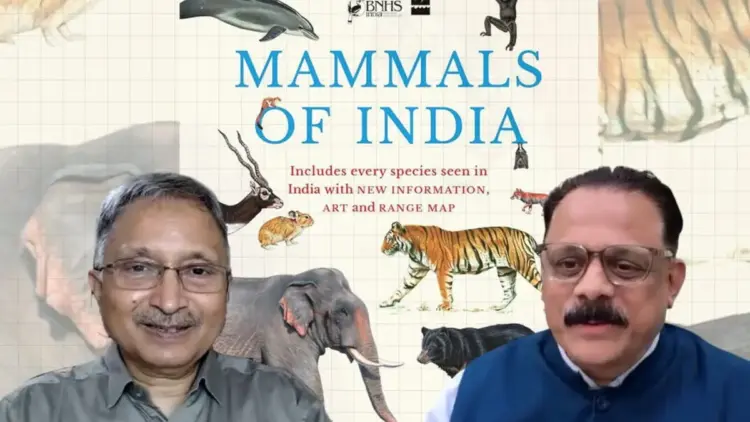
The publication of Mammals of India, a comprehensive new volume by the Bombay Natural History Society (BNHS) in collaboration with HarperCollins Publishers India, marks a watershed moment for Indian zoology. Authored by the late Dr. A.J.T. Johnsingh and Dr. P.O. Nameer, the book serves as both a scientific compendium and a poignant tribute to Dr. Johnsingh, a titan of Indian wildlife biology who passed away in early 2024, just prior to the book’s release. This ambitious work seeks to bridge the gap between rigorous academic research and the burgeoning public interest in India’s natural world, offering an exhaustive look at the evolutionary history and current status of the nation’s diverse mammalian fauna.
Main Facts: A Definitive Guide to India’s Faunal Wealth
The newly released Mammals of India is not merely a field guide; it is an encyclopedic narrative of the biological evolution of the Indian subcontinent. India, a landmass characterized by its extraordinary geological journey, hosts a mammalian diversity that is almost unparalleled for a country of its size. The book documents over 400 species, ranging from the charismatic megafauna like the Bengal tiger and the Asian elephant to the cryptic and often overlooked species of shrews, bats, and rodents that form the backbone of the ecosystem.
The primary objective of the authors, Dr. A.J.T. Johnsingh and Dr. P.O. Nameer, was to create a resource that serves two masters: the seasoned wildlife researcher and the curious layperson. In a landscape where scientific literature is often siloed behind paywalls or dense jargon, Mammals of India translates complex evolutionary biology and ecological data into an accessible format.
The book’s publication comes at a critical juncture. As India grapples with rapid urbanization and the escalating impacts of climate change, the need for a documented baseline of its biodiversity has never been more urgent. The collaboration between the BNHS—India’s oldest conservation NGO—and HarperCollins ensures that this wealth of knowledge reaches a global audience, cementing India’s position as a focal point for international conservation efforts.
Chronology: From Gondwana to the Modern Anthropocene
To understand the mammals of India, one must understand the "rafting" of the Indian plate. The chronology of the subcontinent’s mammalian assembly is a saga spanning over 100 million years, a timeline that the book meticulously reconstructs.
The Great Drift (100 Million to 50 Million Years Ago)
The story begins with the breakup of the supercontinent Gondwana. India, once nestled against Africa and Madagascar, broke away and began a northward journey across the Tethys Ocean. During this period of isolation, which lasted tens of millions of years, India acted as a "biotic ferry," carrying ancient lineages of flora and fauna. It was during this isolation that unique evolutionary paths were forged, though many of these early lineages were later influenced by the eventual collision with the mainland.
The Himalayan Collision (50 Million Years Ago)
Around 50 million years ago, the Indian plate collided with the Eurasian landmass. This cataclysmic event was not a single moment but a "staggered" process of joining. As Dr. P.O. Nameer notes, this led to multiple stages of connections and disconnections. These land bridges allowed for a "faunal exchange"—mammals from Eurasia migrated south into the Indian peninsula, while some Indian lineages moved north. The rising Himalayas created a formidable barrier that would eventually dictate the climate and biology of the entire region.
The Birth of the Monsoon (20 Million Years Ago to Present)
As the Himalayas reached heights that could intercept moisture-laden winds, the South Asian monsoon system was born. This climatic shift transformed the subcontinent, creating a mosaic of habitats—from the rain-drenched Western Ghats to the arid Thar Desert. This environmental heterogeneity is the primary reason why India supports such a vast array of mammalian life today.
The Human Era and the 2018 Initiative
In more recent history, the project to compile this book began in 2018. Dr. Nameer recalls that the vision was to synthesize decades of field research into a single, authoritative volume. The timeline reached a bittersweet conclusion in 2024; while the book was finalized, Dr. Johnsingh, the "father of Indian wildlife biology," passed away, leaving the final stages of publication to Dr. Nameer and the editorial teams at BNHS and HarperCollins.
Supporting Data: The Biological and Geological Blueprint
The diversity discussed in the book is supported by staggering biological data. India occupies only about 2.4% of the world’s land area but is home to nearly 8% of the world’s recorded species, including a significant portion of the world’s mammalian population.
Diversity Statistics
India is one of the few countries in the world to host "The Big Five" of the cat family (Tiger, Lion, Leopard, Snow Leopard, and Clouded Leopard). The book details the distribution and conservation status of these species, but it also delves into the data regarding India’s 100+ species of bats and 100+ species of rodents. These smaller mammals are vital indicators of ecosystem health, yet they receive a fraction of the research funding allocated to larger mammals.
The Role of the Himalayas and Western Ghats
The data presented by Nameer and Johnsingh highlights the importance of India’s two primary biodiversity hotspots. The Western Ghats, an older mountain range than the Himalayas, acts as an "evolutionary island," hosting endemic species like the Lion-tailed Macaque and the Nilgiri Tahr. Conversely, the Himalayas serve as a bridge between the Palearctic and Indo-Malayan realms, allowing for the presence of species like the Red Panda and the Himalayan Brown Bear.

Land Use Change
The authors provide sobering data on habitat loss. Much of the Indian peninsula was historically covered in continuous deciduous and evergreen forests. Today, human habitation and industrialization have fragmented these forests into isolated "islands" of green. This fragmentation is the leading cause of human-wildlife conflict, a theme that resonates throughout the book’s conservation chapters.
Official Responses and Expert Insights: A Tribute to Scholarship
In a recent conversation with Mongabay-India, Dr. P.O. Nameer, currently the Dean at the College of Forestry, Kerala Agricultural University, reflected on the arduous process of bringing this book to life.
"The idea," Dr. Nameer explained, "was to publish a book that is equally of importance to the wildlife researchers and non-expert readers. We wanted to tell the story of how India’s geological past shaped its present biological wealth."
Dr. Nameer emphasized that the book is a tribute to Dr. A.J.T. Johnsingh’s lifelong commitment to the field. Dr. Johnsingh was known for his "boots-on-the-ground" approach to conservation, often spending months in the field tracking tigers or studying the mahseer fish. His expertise provided the book with a level of practical insight that is often missing from purely academic texts.
Representatives from the Bombay Natural History Society (BNHS) stated that Mammals of India represents the organization’s core mission: "To promote the conservation of nature through information based on research." They noted that the book serves as a vital tool for policymakers, providing the scientific evidence needed to designate protected areas and wildlife corridors.
HarperCollins India also weighed in on the publication, noting that there is a growing market for high-quality natural history books in India. "Readers are looking for more than just pictures; they want to understand the ‘why’ and ‘how’ of our natural heritage," a spokesperson for the publisher noted.
Implications: The Future of Indian Mammalogy
The publication of Mammals of India has profound implications for the future of conservation and environmental policy in South Asia.
A Baseline for Conservation
As climate change shifts the ranges of various species—forcing mountain dwellers higher and coastal species inland—this book provides a definitive baseline. Without knowing exactly what species exist and where they are currently located, it is impossible to measure the rate of loss or the success of conservation interventions.
Bridging the Science-Society Gap
By making this information accessible to the public, the authors have empowered a new generation of "citizen scientists." When the public understands the unique evolutionary history of a species—such as the fact that the Indian Rhino is a survivor of a lineage that once roamed across much of Asia—they are more likely to support its protection.
Policy and Urban Planning
The insights regarding India’s "staggered" geological connections highlight the importance of wildlife corridors. As India continues to build infrastructure, the data in Mammals of India can inform the placement of eco-bridges and underpasses, ensuring that the ancient migratory routes of mammals are not permanently severed by highways and railways.
Honoring a Legacy
Finally, the book ensures that the work of Dr. A.J.T. Johnsingh will continue to influence the field for decades to come. His death in 2024 was a significant loss to the scientific community, but Mammals of India stands as a living testament to his vision of an India where humans and wildlife coexist through mutual understanding and scientific stewardship.
In conclusion, Mammals of India is more than a book; it is a comprehensive archive of a nation’s natural soul. It challenges the reader to look beyond the immediate beauty of India’s wildlife and appreciate the millions of years of geological upheaval, climatic shifts, and evolutionary resilience that have culminated in the spectacular mammalian diversity we see today. As Dr. Nameer and the late Dr. Johnsingh have shown, understanding this past is the only way to effectively safeguard the future.