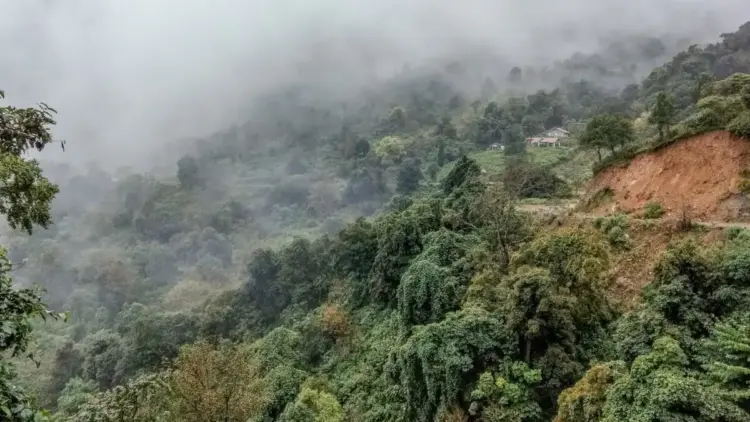
The global discourse on illegal wildlife trade is dominated by images of charismatic megafauna. The public and policymakers alike are frequently moved by reports of ivory poaching, the trafficking of pangolin scales, or the smuggling of exotic parrots. However, a profound and dangerous "plant blindness" persists in the conservation world—a systemic failure to recognize the scale and impact of the illegal trade in wild flora.
During the 2024 Indian Wildlife Ecology Conference (IWEC), a pivotal panel discussion highlighted this gap. While mammals and birds receive the lion’s share of funding and enforcement attention, more than 20% of all plant species assessed by the IUCN Red List are currently threatened with extinction. This risk level is comparable to that of mammals, yet the illegal extraction of plants remains largely unacknowledged and underreported.
In the remote forests of Northeast India, particularly in Nagaland and Arunachal Pradesh, this neglect has fueled a clandestine trade in medicinal herbs, most notably Paris polyphylla. This perennial herb, once a staple of local traditional medicine, has become the centerpiece of a high-stakes smuggling operation that threatens both the region’s biodiversity and the safety of its indigenous communities.

Main Facts: The Botany and Economy of a Threatened Herb
Paris polyphylla, known for its distinctive whorled leaves and spider-like flowers, is a perennial herb that thrives in the understory of high-altitude, old-growth temperate and subtropical forests across the Himalayas. It prefers the moist, shaded, and fertile soils found on steep mountain slopes. Beyond its aesthetic appeal, the plant’s rhizome (underground stem) is highly valued for its medicinal properties.
The Industrial Appetite
While indigenous communities in Northeast India have historically used Paris polyphylla to treat minor injuries and ailments, the current crisis is driven by external industrial demand. In China, the plant is a critical ingredient in large-scale traditional medicine production. As wild stocks in China and Nepal have dwindled due to over-harvesting, the botanical industry has turned its sights toward the relatively untouched forests of Northeast India.
A Shadow Economy
The trade operates within a "parallel economy" that bypasses formal financial systems. Local residents, often living in areas with limited economic opportunities, are recruited as collectors. These individuals navigate treacherous terrain to locate the plant, which is then sold to middlemen. These middlemen manage the logistics of moving the contraband across state and international borders, often laundering the wild-harvested plants into legal markets or smuggling them directly into Myanmar.

The Species at Risk
The IUCN Red List classifies Paris polyphylla as "Vulnerable," but researchers on the ground suggest the situation may be more dire. Because the plant is slow-growing—taking six to seven years to reach a harvestable size—the current rate of extraction is ecologically unsustainable. In many areas of Nagaland and Arunachal Pradesh, the plant has nearly disappeared, leading to fears of local extinction.
Chronology: From Traditional Use to Commercial Exploitation
The transformation of Paris polyphylla from a local remedy to an international contraband item has occurred rapidly over the last decade.
- Pre-2015: Traditional Stewardship: For generations, the plant was used sparingly by traditional healers and hunters. Knowledge of its therapeutic significance was localized, and the plant remained abundant in the high-altitude forests of the Northeast.
- 2015: The Commercial Surge: Large-scale collection began in earnest around 2015. Driven by rising prices in the international market, middlemen began offering cash to local villagers for every kilogram of dried rhizome. This period marked the shift from selective harvesting to "take whatever you get" strategies, where even immature plants were uprooted.
- 2018: Political Recognition: By 2018, the scale of the trade reached the floor of the Arunachal Pradesh Legislative Assembly. Ministers expressed concern over the "commercial farming" of the plant and reported that the trade was beginning to attract criminal elements, leading to instances of physical assault and murder in some districts.
- 2020: The Trade Peak: The trade reached its zenith around 2020. Prices for the rhizome doubled, prompting a "gold rush" mentality. Collectors took increasingly greater risks, venturing into inaccessible, steep slopes to find the last remaining clusters.
- 2021–Present: Depletion and Recovery Efforts: Following the peak, many sites reported the near-total disappearance of the species. However, a recent slowdown in trade—partly due to the exhaustion of easily accessible stocks—has allowed for a marginal recovery in some populations. This window of time has provided a crucial opportunity for communities to implement their own conservation regulations.
Supporting Data: The Logistics of Trafficking
The illegal trade of flora in Northeast India is supported by a sophisticated logistical network designed to evade detection.

The "Burma Bike" Network
In Nagaland, the movement of Paris polyphylla is facilitated by lightweight two-wheelers known as "Burma Bikes." These motorcycles are modified to handle the most treacherous mountain paths and are used to ferry consignments across the porous 1,600-kilometer India-Myanmar border. This border, characterized by difficult terrain and a "Free Movement Regime" for local tribes, makes monitoring nearly impossible for centralized enforcement agencies.
Market Vulnerabilities
- Price Volatility: Collectors have zero control over the market. Prices are dictated by middlemen based on demand in distant markets.
- Risk of Theft: Because the trade is illegal, consignments are often bought with borrowed money from local moneylenders. If a shipment is looted or seized, the middlemen and collectors face crippling debt, which often leads to retaliatory violence.
- Diversification: The trade is not limited to Paris polyphylla. Middlemen utilize the same networks to traffic:
- Himalayan Ginseng: Highly valued in traditional medicine.
- Orchids and Mushrooms: Sourced for ornamental and culinary markets.
- Insects: Specifically stink bugs (genus Coridius), which are being harvested in massive quantities for cross-border trade.
- Wildlife Products: Bear bile, pangolin scales, and musk pods are often moved alongside botanical contraband.
Official Responses and Legal Failures
The legal framework for protecting plants in India primarily rests on the Wild Life (Protection) Act, 1972, and international treaties like CITES (Convention on International Trade in Endangered Species of Wild Fauna and Flora). However, these "on-paper" protections have frequently failed in practice.
The Kuth Precedent
Conservationists point to the case of Saussurea costus (Kuth), a critically endangered medicinal plant. Despite being protected by national law since 1991 and international treaties since 1985, an investigation in 2001 found that large-scale illegal trade continued unabated. Systemic corruption and the exploitation of impoverished communities meant that the legal ban only served to drive the trade further underground, criminalizing the very people who lived alongside the species.

The Cultivation Dilemma
A common recommendation from policymakers is to legalize and encourage the cultivation of these plants to provide a legitimate income source. For Paris polyphylla, this has proven difficult:
- Biological Constraints: The plant’s slow growth cycle (6–7 years) makes it an unattractive investment for poor farmers who need annual returns.
- Lack of Incentives: There are currently no government-backed insurance or incentive schemes to protect farmers from the risks of a volatile, unknown international market.
- Market Competition: Wild-harvested plants are often preferred by buyers over cultivated ones, as they are perceived to have higher medicinal potency.
Implications: Ecological Fallout and the Path Forward
The disappearance of Paris polyphylla is not merely a botanical loss; it is an ecological disaster with cascading effects.
The Wildlife Pharmacy
Local residents have observed that the plant is a critical resource for forest fauna. Mammals like deer consume the leaves and stems, while birds such as the tragopan and monal eat the fruits. Rodents are known to dig up and consume the rhizomes. Some community members believe the plant provides "therapeutic benefits" to wildlife, and its loss has been linked by locals to an increase in diseases among forest animals.

Socio-Economic Instability
The illegal trade undermines local law and order. It creates a cycle of indebtedness to moneylenders and attracts criminal syndicates that use intimidation and extortion. When the trade moves through a village, it often leaves behind a trail of social friction and diminished natural heritage.
The Power of Community-Led Protection
The most promising development in the fight against "plant blindness" is coming from the ground up. In Nagaland, several villages have begun implementing their own regulations to control or ban the commercial collection of natural resources. These communities have realized that short-term financial gains from middlemen cannot compensate for the long-term loss of their biocultural heritage.
Conclusion: A Seat at the Table
The case of Paris polyphylla underscores the need for a paradigm shift in conservation strategy. Protecting the biodiversity of Northeast India requires more than just high-level policy or international listings. It requires:

- Source-Level Monitoring: Empowering local communities to act as stewards and monitors of their own forests.
- Integrated Enforcement: Recognizing that the trade in plants, insects, and mammals is often linked through the same criminal networks.
- Economic Alternatives: Providing viable, sustainable livelihoods that do not rely on the extraction of slow-growing, vulnerable species.
As the IWEC panel concluded, researchers, policymakers, and law enforcement must give local residents a "seat at the table." Without the active participation of the people who live in these forests, the silent trade in plants will continue until the forests are empty, and the "plant blindness" of the world will only be cured by the sight of an irreversible extinction. The recent recovery of some P. polyphylla populations offers a rare second chance—one that must be seized before the "Burma Bikes" return for the final harvest.