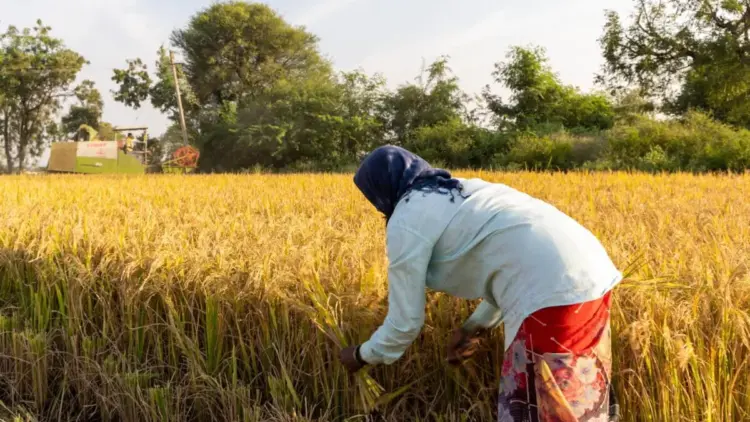
For Manoj Borah, a welfare officer at a sprawling tea garden in the Kamrup district of Assam, the rhythm of the harvest has fundamentally shifted. For decades, the primary challenge for tea garden workers was the intensity of the midday sun. Today, the enemy has become more insidious. It is no longer just the heat of the day that exhausts the laborers; it is the suffocating, humid warmth of the night that refuses to dissipate.
“While workers are used to daytime heat, the high temperature during the night is burning them out,” Borah explains. “It is difficult to rest at night, and this is taking a severe toll on their health. Without proper rest, it is difficult to go out and work in the fields the next day.”
The crisis in Kamrup is a microcosm of a national emergency. According to a landmark study recently published in the Journal of Geophysical Research (JGR) Atmospheres, a journal of the American Geophysical Union, India now accounts for more than half of the global rise in potential productivity loss due to extreme humid heat since the mid-1980s. As the planet warms, the combination of high temperatures and high humidity—often referred to as "wet-bulb" conditions—is pushing the human body to its physiological limits, threatening the livelihoods of millions and the backbone of the Indian economy.
Main Facts: India at the Epicenter of Global Heat Stress
The research highlights a sobering reality: India is the world’s most vulnerable nation regarding humid heat-related productivity declines. Since 1985, the intersection of rising temperatures and increased atmospheric moisture has created a "perfect storm" for outdoor laborers. Unlike dry heat, which allows the body to cool itself through the evaporation of sweat, humid heat renders this biological cooling mechanism ineffective.
Key findings from the study include:

- Global Dominance of Loss: India’s contribution to the global increase in potential occupational productivity loss is disproportionately high, exceeding 50% of the total global rise.
- The ENSO Connection: Humid heat stress is inextricably linked to the El Niño-Southern Oscillation (ENSO). This natural cycle of warming and cooling in the Pacific Ocean dictates moisture and temperature patterns in South Asia.
- Predictability as a Shield: Because ENSO can be forecasted months in advance, researchers believe humid heat stress and its subsequent impact on productivity can be predicted up to six months ahead.
- The 33°C Threshold: When the wet-bulb temperature (WBT) exceeds 33°C, the environment becomes hazardous for sustained physical activity, leading to heat stroke or long-term organ damage.
Subodh Kumar Saha, a scientist at the Indian Institute of Tropical Meteorology (IITM), Pune, and the paper’s corresponding author, warns that the stakes are life and death. “Outdoor workers in agriculture or industry are advised to stop their vocation during extreme humid heat, as continued exposure can lead to severe medical conditions like heat stroke and even death,” Saha notes.
Chronology: The Decades-Long Intensification of Heat
The current crisis did not emerge overnight; it is the result of a steady, accelerating trend that began in the late 20th century.
The 1980s and 1990s: The Baseline Shifts
In the mid-1980s, while heatwaves were a known phenomenon in India, they were largely characterized by "dry heat" in the plains. However, data shows that from 1985 onwards, the "potential productivity loss"—a metric multiplying hours of dangerous heat by the number of people working—began a steady climb. During this period, humid heat was largely confined to coastal regions.
2000–2020: The Great Acceleration
After the turn of the millennium, the frequency and intensity of humid heat events spiked. Research published in the International Journal of Climatology indicates that daily maximum wet-bulb temperatures along India’s coasts rose significantly between 1981 and 2020, with a marked intensification after the year 2000. The East Coast, in particular, saw a sharp rise in these conditions during the pre-monsoon months of April to June.
The Present Day: Expanding Durations
In regions like Northeast India, the very nature of heatwaves has changed. Professor B.N. Goswami of Gauhati University, a co-author of the JGR Atmospheres study, points out a dramatic shift in duration. “In the Northeast, the average length of heat stress used to be around five days in the 1940s and 1950s. Now the average length has increased to 10 days, and sometimes it extends to 20 days,” Goswami explains. This prolonged exposure prevents the human body from ever fully recovering, creating a compounding effect on health.

Supporting Data: The Science of the "Wet Bulb"
To understand why humid heat is so much more dangerous than dry heat, one must look at the physics of human thermoregulation. The body cools itself by sweating; as sweat evaporates from the skin, it carries heat away. However, as humidity rises, the air becomes saturated with moisture, leaving no room for sweat to evaporate.
The Metric of Danger
Scientists use the "Wet-Bulb Temperature" (WBT) to measure this risk. Imagine a thermometer wrapped in a wet cloth. In dry air, evaporation cools the bulb significantly. In 100% humidity, no evaporation occurs, and the wet-bulb temperature equals the actual air temperature.
- 31°C WBT: The threshold where physical labor becomes strenuous and dangerous.
- 33°C WBT: The critical safety limit for most healthy adults performing outdoor work.
- 35°C WBT: The theoretical limit of human survivability; at this point, even a healthy person sitting in the shade will eventually succumb to hyperthermia.
Nighttime: The Missing Recovery Window
One of the most significant findings of recent years is that humid heat persists into the night. While dry heat usually dissipates after sunset, humidity traps heat near the surface. Madhavan Nair Rajeevan, former Secretary of the Ministry of Earth Sciences, explains that while dry heat waves are a daytime phenomenon, "humid heat waves can occur during any part of the day." When nighttime temperatures remain high, the heart and kidneys are forced to work overtime to cool the body, leading to a slow, chronic decline in health that often goes unrecorded in official heat-mortality statistics.
Official Responses and Expert Insights
The scientific community is increasingly vocal about the need for a paradigm shift in how India manages heat. The traditional "Heat Action Plans" (HAPs) implemented by various states often rely on dry-bulb temperature triggers, which may fail to account for the lethal nature of humidity.
The Call for New Definitions
Professor Goswami emphasizes that India must develop its own localized metrics for heat stress. “Indian data on conditions of work and vulnerability should be used to define heat stress,” he argues. Currently, many standards are based on Western physiological models which may not accurately reflect the resilience or the specific environmental conditions of the Indian labor force.

The Forecasting Breakthrough
The link between ENSO and productivity loss offers a rare glimmer of hope for policymakers. Since the state of the Pacific Ocean can be monitored and predicted, the Indian government could theoretically issue "Seasonal Heat Outlooks" six months in advance. Subodh Kumar Saha underscores that this window allows for "adaptation planning, such as water resource management and climate-resilient agriculture."
Labor Adjustments
In the field, managers like Manoj Borah are already taking autonomous action. In Kamrup, work hours have been shifted to start at 5:00 AM, with the goal of ending all outdoor activity by noon. However, experts warn that such shifts are only a stopgap measure if the nights themselves remain too hot for workers to recuperate.
Implications: A Threat to the Demographic Dividend
The economic and social implications of this trend are profound. India’s "demographic dividend"—its large, young working population—is its greatest economic asset. However, if more than half of the global productivity loss due to humid heat is concentrated in India, that asset is under direct threat.
1. The Economic Toll
Agriculture and construction, which employ the vast majority of India’s informal workforce, are the sectors most at risk. If workers are forced to reduce their hours by 20–30% during peak heat months to avoid death, the ripple effects on food security and infrastructure development will be felt nationwide.
2. The Health Crisis: The "Silent Killer"
Because humid heat affects the heart and kidneys over time, many deaths are attributed to "natural causes" rather than heat stress. This leads to an underestimation of the crisis. Without robust medical intervention and "heat-literate" healthcare systems, the long-term burden of chronic kidney disease (CKD) among outdoor workers could skyrocket.

3. Urban Planning and Infrastructure
The study’s findings suggest a desperate need for "cooling infrastructure." This includes:
- Cool Roofs: Implementing reflective roofing in slums and low-income housing to lower indoor nighttime temperatures.
- Urban Greening: Increasing canopy cover to break up "urban heat islands."
- Public Shelters: Establishing climate-controlled rest areas for street vendors and delivery drivers.
4. Policy Reform
There is an urgent need for national labor laws to recognize humid heat as an occupational hazard. This could include mandatory "heat breaks," the provision of hydration salts, and insurance schemes for workers who lose income during extreme weather events.
As the climate continues to shift, the experience of the tea gardens in Assam serves as a warning for the rest of the country. The heat is no longer just a seasonal inconvenience; it is a structural transformation of the environment. With the ability to predict these cycles six months in advance, the question for India is no longer whether it can see the crisis coming, but whether it will act in time to protect those most vulnerable to it.