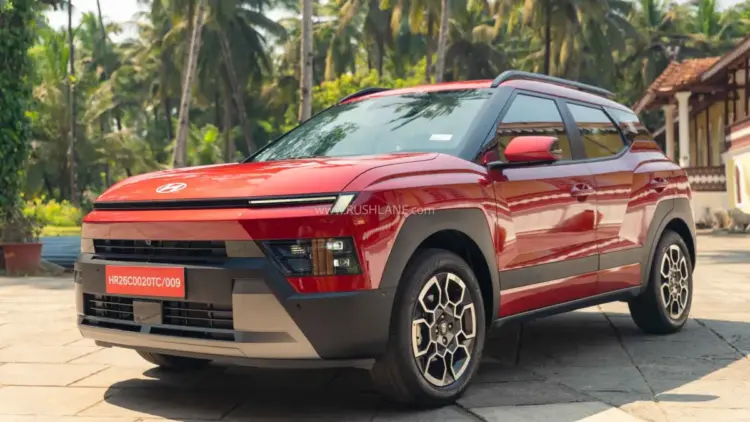
In the high-stakes arena of the Indian automotive market, October 2026 has emerged as a milestone month for Hyundai Motor India Limited (HMIL). The South Korean automaker, which has long held the position of India’s second-largest car manufacturer, reported a stellar performance that underscores its strategic pivot toward a more diverse SUV portfolio and advanced technological integration. With a total sales volume of 62,799 units, Hyundai achieved a significant double-digit growth of 16.74% year-on-year (YoY) and a robust month-on-month (MoM) increase of 9.85%.
This performance is particularly noteworthy as it reflects a market that is increasingly leaning toward premium features, safety, and electric mobility. The centerpiece of this success was the evergreen Hyundai Creta, which maintained its crown as the brand’s top seller, while the Hyundai Venue shattered previous records to post its highest-ever monthly sales figures. Furthermore, the debut of the new Hyundai Bayon added a fresh dimension to the company’s mid-size SUV strategy, signaling a new era of growth.
The Core Figures: A Snapshot of Success
The October 2026 sales data provides a comprehensive look at Hyundai’s current market health. To understand the scale of this achievement, one must look at the raw numbers:
- Total Sales (Oct 2026): 62,799 units.
- Year-on-Year Growth: 16.74% (Up from 53,792 units in Oct 2025).
- Month-on-Month Growth: 9.85% (Up from 57,166 units in Sept 2026).
- Net Volume Gain: 9,007 units YoY and 5,633 units MoM.
The data reveals that Hyundai’s growth is not merely organic but driven by specific high-performing models. The combination of the Venue and the newly introduced Bayon accounted for nearly 89% of the volume gain over the previous month, illustrating the massive impact of the sub-compact and crossover segments.
Chronology of Performance: Building Momentum Through 2026
The journey to this record-breaking October began with a calculated strategy implemented throughout the first three quarters of 2026. While the Indian automotive industry faced various headwinds, including fluctuating raw material costs and a transition toward stricter emission and safety standards, Hyundai focused on refreshing its core lineup.
In September 2026, Hyundai sold 57,166 units. While these were healthy numbers, the company was preparing for the festive season—a period traditionally characterized by high consumer spending in India. The introduction of the Bayon and the continued push for the Creta Electric (the EV variant of the popular SUV) were timed to coincide with this peak demand.
As October progressed, the market response exceeded expectations. The Venue, which has been a staple in the sub-four-meter SUV category, saw a sudden surge in interest. This was likely driven by a combination of aggressive festive marketing, improved supply chain efficiency, and perhaps a consumer shift away from traditional hatchbacks toward rugged, feature-rich compact SUVs. By the end of the month, the Venue had not just performed well; it had rewritten its own history with 13,017 units sold.

Deep Dive: Supporting Data and Model-Wise Analysis
The SUV Powerhouse: Creta and Venue
The Hyundai Creta continues to be the bedrock of the company’s Indian operations. In October 2026, the Creta (including its Electric variant) sold 17,955 units. While this was a slight 2.32% dip compared to the 18,381 units sold in October 2025, it represented a 1.69% increase from September 2026. The Creta alone accounted for 28.59% of Hyundai’s total sales for the month. The slight YoY dip is largely attributed to internal cannibalization from the new Bayon and the shifting preference toward the EV variant, which is still scaling up production.
The Venue, however, was the undisputed star of the month. Its tally of 13,017 units represented a 10.90% YoY growth and a 13.53% MoM increase. With a gain of 1,551 units over September, it showed the strongest incremental growth among established models. Together, the Creta and Venue formed a formidable duo, representing nearly 50% of the brand’s total monthly volume.
The Entry-Level and Compact Segments: Exter and Aura
The Hyundai Exter, the brand’s youngest micro-SUV, continued its upward trajectory. It recorded 8,509 units in October 2026, a massive 35.19% increase over the 6,294 units sold in the same month the previous year. This YoY gain of 2,215 units was the largest volume jump for any single model in the lineup compared to 2025.
In the sedan segment, the Aura proved that there is still a significant market for compact three-box cars. It sold 7,349 units, marking a 26.38% YoY increase. Although it saw a minor 2.40% slip from September’s 7,530 units, its performance remains a vital component of Hyundai’s fleet, particularly in the fleet and young family demographics.
Hatchbacks: The i20 and Grand i10 Nios
While SUVs dominate the headlines, Hyundai’s hatchbacks showed surprising resilience. The i20, often cited as the gold standard for premium hatchbacks in India, recorded 5,528 units. This was a 37.41% YoY increase—the highest percentage growth in the entire October lineup. Close behind was the Grand i10 Nios with 5,458 units, maintaining steady performance with a 4.36% MoM increase.
The Bayon’s Debut
October 2026 marked the official entry of the Hyundai Bayon into the sales charts. Positioned as a tech-heavy, safety-focused crossover, the Bayon sold 3,449 units in its debut month. This immediate impact gave it a 5.49% market share within the brand’s internal portfolio. The Bayon is central to Hyundai’s "Mid-size SUV Offensive," where the company aims to reach an annual sales target of 2.5 lakh units in this specific segment by combining the volumes of the Creta and the Bayon.
Official Responses and Strategic Outlook
While official quotes from the boardroom emphasize "customer-centric innovation," the numbers speak to a broader strategic shift. Hyundai’s leadership has clearly pivoted toward a "High-Value, High-Tech" model. The discontinuation of the Tucson in the Indian market suggests a consolidation of the premium segment, focusing instead on localized high-volume products like the Creta and the upcoming localized EV platforms.

Industry analysts suggest that Hyundai’s success in October 2026 is a result of their "Power of Choice" strategy. By offering petrol, diesel, CNG (in models like Exter and Aura), and Electric (Creta EV and Ioniq 5) powertrains, they have insulated themselves against the volatility of any single fuel type.
The focus on the Bayon is particularly telling. By targeting a younger, tech-savvy demographic that might find the Venue too small and the Creta too conventional, Hyundai is effectively "filling the gaps" in the Rs 10 lakh to Rs 18 lakh price bracket.
Market Implications: What This Means for the Competition
Hyundai’s 16.74% YoY growth sends a strong signal to its primary competitors, Maruti Suzuki and Tata Motors. While Maruti continues to dominate the entry-level segment, Hyundai is successfully defending and expanding its territory in the mid-size SUV and premium hatchback spaces.
- The SUV-ification of India: With nearly 70% of its sales coming from SUVs and crossovers (Creta, Venue, Exter, Bayon, Alcazar), Hyundai is leading the charge in the industry’s transition away from traditional hatchbacks.
- The Premiumization Trend: The high growth of the i20 (37.41%) and the steady performance of the Creta indicate that Indian consumers are willing to pay more for better features, safety ratings, and brand prestige.
- The EV Transition: Although the Ioniq 5 sold only one unit in October (likely due to its niche positioning and high price point), the integration of the Creta Electric into the main sales figures suggests that Hyundai is successfully mainstreaming electric mobility.
- Portfolio Rationalization: The exit of the Tucson and the struggle of the Verna (down 5.95% YoY) and Alcazar (down 39.79% YoY) show that even a giant like Hyundai is not immune to changing tastes. The decline of the Alcazar, in particular, suggests that the three-row SUV segment is becoming hyper-competitive, with rivals like the Mahindra XUV700 and Tata Safari putting pressure on older platforms.
Conclusion
Hyundai Motor India’s October 2026 performance is a masterclass in product lifecycle management and market timing. By leveraging the legendary brand equity of the Creta, capitalizing on the renewed vigor of the Venue, and successfully launching the Bayon, the company has set a high bar for the remainder of the fiscal year.
As the company marches toward its goal of 2.5 lakh annual mid-size SUV sales, the focus will undoubtedly remain on maintaining this momentum. With six models selling over 5,000 units and seven models over 3,000 units, Hyundai has created a balanced and resilient portfolio that is well-equipped to handle the evolving demands of the Indian motorist. The road ahead looks promising, paved with high-tech features, diverse powertrain options, and an unwavering focus on the SUV segments that now define the Indian automotive landscape.