By [Journalist Name/Agency]
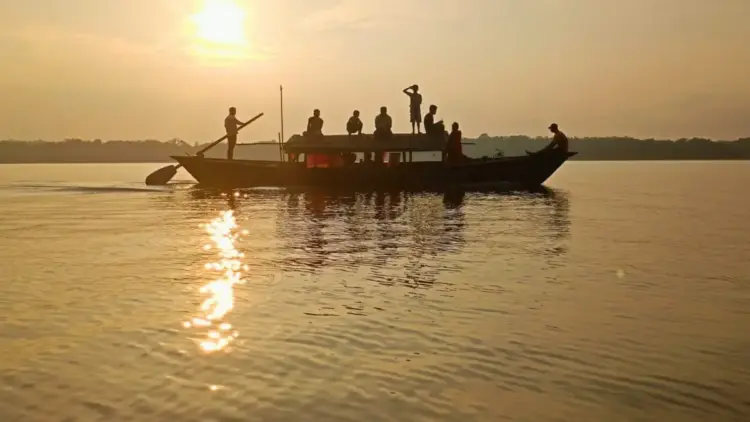
As the mid-November chill begins to settle over the Barak Valley in southern Assam, Arup Das stands on the edge of his homestead in Dargarbond, gazing across the vast, shimmering expanse of Son Beel. Just eight weeks prior, this entire landscape was a monolithic sheet of water, a seasonal inland sea that defines life in the region. Now, as the waters retreat into the deeper channels, the land reveals a muddy, nutrient-rich underbelly.
For Das, this is the signal to release his flock of Nageshwari ducks. They waddle into the marshes to forage for snails, insects, and aquatic plants—a natural harvest left behind by the receding flood. This rhythmic dance between inundation and retreat is the heartbeat of Son Beel, the largest wetland in Assam. However, as climate change alters the timing of the rains and human-induced pressures choke the wetland’s arteries, this ancient cycle is beginning to falter, leaving more than 50,000 people suspended between tradition and an uncertain future.
Main Facts: A System in Flux
Son Beel is not merely a static body of water; it is a dynamic freshwater ecosystem characterized by dramatic seasonal shifts. During the monsoon, it expands to cover thousands of hectares, turning the surrounding lowlands into a productive aquatic habitat. In the dry season, it contracts, exposing fertile substrates for cultivation.

“A wetland is not simply a body of water,” explains Tapati Das, an ecologist and head of the Department of Ecology and Environmental Science at Assam University. “It is a system of inundation and retreat, of channels and marshes, which naturally replenishes a landscape in cycles. The recession concentrates organisms in remaining pools and prepares the ground for terrestrial plants. It is part of how the wetland functions.”
This cycle is the foundation of the local economy, shaping fish habitats and determining when land becomes available for "Boro" (winter) rice. Yet, the system is under siege. A combination of climatic factors—such as erratic rainfall and rising temperatures—and non-climatic stressors—including siltation, overexploitation of fish, and pollution—is shrinking the wetland’s core. While some residents, like Arup Das, have found success through integrated farming, a significant portion of the population remains highly vulnerable to the ecological collapse of the beel.
Chronology of Change: From Tradition to Adaptation (2014–2025)
The story of adaptation in the villages surrounding Son Beel is one of trial, error, and gradual evolution.
2014–2018: The Initial Pivot
Arup Das began his journey toward livelihood diversification in 2014. Coming from a traditional farming background, he initially invested in cattle. By 2018, his herd had grown to 20 cows. However, he soon realized that in a region where almost every household kept cattle, the local market for milk was saturated. The high cost of maintenance began to outweigh the returns. Recognizing the need for a more integrated approach, he pivoted toward poultry and specialized duck rearing.

2018–2020: The Rise of Integrated Farming
In 2018, veterinarians from Khanapara Veterinary College introduced Das to the Nageshwari duck, a hardy local breed well-suited to the wetland environment. With technical support from the Krishi Vigyan Kendra (KVK), Das developed a registered business by 2020. His farm became a model of "integrated farming," where duck droppings provide nutrients for fish ponds, and the birds forage freely in the wetland, reducing feed costs.
2020–2025: Ecological Warning Signs
While individual farmers adapted, the wetland itself began showing signs of rapid deterioration. Between 2015 and 2024, satellite imagery revealed a startling trend: the perennial deep-water core of Son Beel—the "refuge" where fish survive the dry months—halved in size, shrinking from 0.66 square kilometers to just 0.33 square kilometers. By 2025, researchers noted that the summers in Assam were becoming longer and more intense, complicating sensitive operations like egg incubation, which requires a steady 37°C—a temperature difficult to maintain under traditional tin roofs during heatwaves.
Supporting Data: The Science of Vulnerability
The challenges facing Son Beel are documented in a series of recent socio-ecological studies that highlight a widening gap between those who can adapt and those who cannot.
The Livelihood Gap
According to Pulakabha Chowdhury, head of the KVK in Sribhumi district, only about 5% of local farmers have successfully adopted livelihood diversification. The barriers are primarily financial and geographical:

- Land Constraints: Integrated farming requires space for fishponds and poultry sheds; many marginal farmers own only small fragments of land.
- Capital Risk: An incubator or a herd of livestock requires significant upfront investment.
- Awareness: Chowdhury estimates that only 10% to 15% of farmers are aware of alternative crops or modern aquaculture techniques.
Declining Biodiversity and Siltation
The fishery department’s records from 2020-21 showed an annual fish production of 824,000 kg. While this sounds substantial, traditional fishers report a sharp decline in high-value species. Varieties such as Chapila (Gudusia chapra), Basa (Eutropiichthys vacha), and Pabda (Ompok pabda) are becoming increasingly rare.
A 2019 review identified the primary culprit: siltation. The Singla River, which feeds Son Beel, carries sediment from the Mizo Hills. This sediment is entering the basin faster than the Kachua River can carry it out. As the basin fills with silt, the water table drops, and the exposed lake beds are quickly colonized by invasive water hyacinth (Eichhornia crassipes) or converted into rice paddies, further reducing the wetland’s aquatic volume.
Socio-Ecological Risk Mapping
A December 2025 study interviewed 160 households across 16 villages. It found that villages like Krishna Nagar and Bhairab Nagar exhibit "high socio-ecological vulnerability." Unlike Dargarbond, these communities have limited access to education and infrastructure, making them far more susceptible to the "hailstorms, severe flooding, and declining income" that have characterized the last decade.
Official Responses: Infrastructure vs. Ecology
The government’s approach to Son Beel is currently a tale of two priorities: economic development and ecological restoration.

The Tourism and Energy Push
The Assam state government has signaled a strong interest in the commercial potential of the wetland. Current plans include significant investments in tourism infrastructure and a proposed floating solar power project. While these initiatives promise revenue, ecologists worry they may further stress the delicate environment. Raman Das, a traditional fisher, notes that motorboats used by tourists already disturb fish breeding and contribute to plastic pollution.
The "SWIFT" Omission
The state recently launched the "Sustainable Wetland and Integrated Fisheries Transformation" (SWIFT) project, backed by the Asian Development Bank (ADB). The project aims to restore wetlands across Assam. However, in a surprising omission, Son Beel—the state’s largest wetland—was not included in the initial packages. Himangshu Talukdar, District Project Director of ADB-SWIFT, confirmed that no project component has yet been approved for Son Beel, leaving the region to rely on smaller-scale local interventions.
The Call for Data
From a scientific perspective, the official response is seen as incomplete. Tapati Das argues that before any major infrastructure—like floating solar—is installed, there must be a comprehensive baseline study. "We need a clear picture of how it changes through the seasons," she says. "That means measuring water levels, sediment deposits, and water quality over a full year and comparing it with historical records."
Implications: The Future of the Floodplain
The trajectory of Son Beel serves as a microcosm for the challenges facing freshwater wetlands globally. As the "hydrological sponges" of the landscape contract, the implications extend far beyond the borders of the villages.

1. The Risk of Internal Collapse
The halving of the perennial water core suggests an "internal collapse" of the ecosystem. If the deep-water refuges disappear entirely, the natural restocking of fish during the monsoon will cease, effectively ending the traditional fishing industry that supports thousands of families.
2. The Adaptation Trap
While integrated farming is a solution for some, it can create an "adaptation trap" for the poorest. Farmers who cannot afford to diversify are forced into "quick return" crops like seedless tomatoes or intensive Boro rice. While these provide immediate cash, they often require heavy chemical inputs that leach back into the wetland, further deteriorating the water quality and killing off the very fish populations the community depends on.
3. The Need for "Eco-centric" Development
The current focus on tourism and solar power represents a "top-down" economic approach. Experts suggest that for Son Beel to survive, development must be "eco-centric." This includes desilting the main channels, controlling invasive species, and providing subsidies for integrated farming models like Arup Das’s, which work with the wetland’s natural cycles rather than against them.
As Arup Das prepares his incubator for the next batch of 1,000 ducklings, he remains cautiously optimistic. He has seen the water come and go for decades, but he knows the rhythm is changing. "The summers are getting longer," he says, a simple observation that carries the weight of a changing climate. For the 50,000 souls of Son Beel, the challenge is no longer just surviving the flood—it is surviving the disappearance of the water itself.