In the emerald heart of Madhya Pradesh’s Bandhavgarh Tiger Reserve, a silent revolution has been unfolding over the last decade. The Indian Gaur (Bos gaurus), the world’s largest species of wild cattle, has reclaimed a landscape where it had once vanished. Decades after its local extinction, the "Indian Bison" is now thriving, signaling a rare success story in the complex world of wildlife reintroduction. However, beneath the surface of this demographic triumph lies a narrative of shrinking habitats, invasive flora, and a precarious coexistence with humanity.
Main Facts: The Titan of the Indian Wilderness
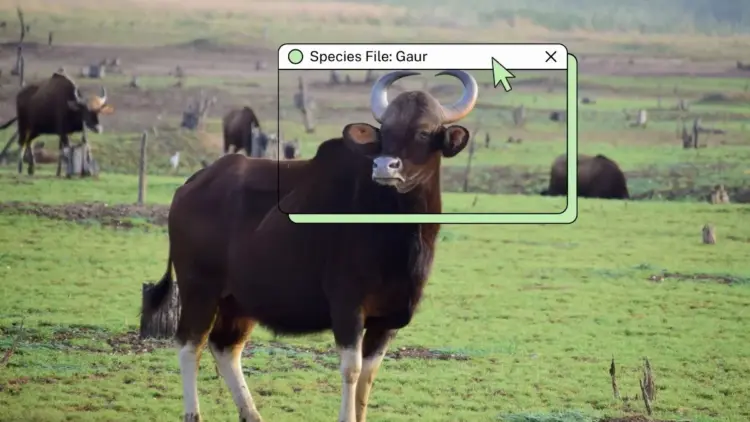
The Gaur is a creature of superlative proportions. As the largest extant bovine, adult bulls can stand up to two meters at the shoulder and weigh as much as 1,500 kilograms—roughly the weight of a mid-sized passenger car. Despite their intimidating bulk and formidable, upward-curving horns, these animals are known for their surprisingly shy and docile temperament.
Physical characteristics of the Gaur are striking. Males possess dark, near-black coats that glisten with health, while females and juveniles exhibit a lighter reddish-brown hue. Both sexes sport distinctive "white socks"—white or tan fur on their lower legs—and a prominent muscular hump on the shoulders, which is most pronounced in dominant males.
India is the global stronghold for this species. It is estimated that between 13,000 and 30,000 gaurs remain worldwide, with a staggering 85% of that population residing within the Indian subcontinent. Their presence is so culturally and ecologically significant that they have been designated as the state animal for both Goa and Bihar. They inhabit a range of ecosystems, from the moist evergreen forests of the Western Ghats to the deciduous woodlands of Central India and the hilly terrains of the Northeast.
Chronology: From Extinction to Reintroduction in Bandhavgarh
The history of the Gaur in Bandhavgarh Tiger Reserve (BTR) is a tale of loss and redemption. By the late 20th century, the Gaur had completely disappeared from the reserve, victims of habitat degradation, disease transmission from domestic cattle, and poaching.
- The Period of Absence (1990s–2010): For nearly twenty years, the meadows of Bandhavgarh were devoid of their largest grazers. This absence created an ecological void, affecting the vegetation dynamics and the prey-predator balance within the park.
- The Reintroduction Phase (2011–2012): In a landmark conservation move, the Madhya Pradesh Forest Department, in collaboration with the Wildlife Institute of India, initiated a mass translocation project. A founder herd of approximately 40 gaurs was captured in Kanha Tiger Reserve and transported to Bandhavgarh.
- The Growth Decade (2012–2024): Following the reintroduction, the population began to stabilize and then grow. Monitoring through radio-collaring and ground patrols confirmed that the animals were breeding successfully in their new environment.
- Current Status (2024): Recent media reports and forest department surveys indicate that the population in Bandhavgarh has surged to over 220 individuals. This represents a more than five-fold increase in just over a decade, cementing the reserve’s status as a premier habitat for the species.
Supporting Data: An Ecosystem Engineer Under Threat
The Gaur is more than just a large herbivore; it is an "ecosystem engineer." By grazing on vast quantities of grass, bamboo, and various leaves, they prevent forests from becoming overly choked with undergrowth. Their movement helps till the soil, and their dung serves as a vital nutrient source, facilitating seed dispersal across the forest floor. Furthermore, they are a critical prey base for apex predators like the Bengal tiger, the Indian leopard, and the Asiatic wild dog (dhole).
However, data from across the country suggests that the Gaur is facing an uphill battle:
- Conservation Status: The IUCN Red List categorizes the Gaur as "Vulnerable." In India, it is afforded the highest level of legal protection under Schedule I of the Wildlife (Protection) Act, 1972, placing it on par with the tiger and the elephant.
- The Grassland Crisis: A significant threat to the Gaur is the loss of native grasslands. In reserves like Bandipur and the Nilgiris, native grasses are being replaced by invasive species such as Lantana camara and Chromolaena odorata. These woody shrubs are unpalatable to gaurs, effectively starving them out of their natural foraging grounds.
- Human-Wildlife Interface: As forests become fragmented by roads, tea estates, and coffee plantations, gaurs are increasingly forced into human-dominated landscapes. In the Western Ghats, this has led to a rise in crop-raiding incidents and accidental encounters that can turn fatal for both humans and animals.
Official Responses: Strategies for Management and Protection
The resurgence of the Gaur in Central India has prompted a dual response from wildlife officials: celebration of the population growth and a sober realization of the management challenges ahead.

The Madhya Pradesh Forest Department has emphasized that the success in Bandhavgarh was not merely about moving animals but about "sustained conservation efforts," including habitat restoration and the mitigation of cattle-borne diseases like Foot and Mouth Disease (FMD), which can decimate wild bovine populations.
T. Ramesh, a senior scientist at the Salim Ali Centre for Ornithology and Natural History (SACON), has highlighted the critical link between habitat quality and animal behavior. In a 2025 assessment, Ramesh noted, "Today, most of our grasslands have been taken over by invasive species, leaving little for the gaur to feed on. This forces them to move into interface areas or zones shared by both humans and wildlife, leading to conflicts."
In response to these findings, conservationists are calling for:
- Aggressive Invasive Species Management: Programs to uproot Lantana and restore native perennial grasses.
- Corridor Protection: Ensuring that fragmented forest patches remain connected so that gaur populations do not become genetically isolated.
- Community Engagement: In regions like Coonoor and Kotagiri, where gaurs are frequently seen wandering through tea estates and even town centers, local "Gaur Watch" programs are being discussed to help residents navigate the presence of these giants safely.
Implications: Adaptation and the Future of the Species
The most fascinating—and perhaps concerning—aspect of the Gaur’s current trajectory is its behavioral adaptation. In the Nilgiris and Kodagu, gaurs have begun to display nocturnal tendencies. Historically diurnal (active during the day), these populations have shifted their activity patterns to the night to avoid human interaction.
Conversely, in the hill stations of the Nilgiris, gaurs have become strangely habituated. In towns like Coonoor, they have largely shed their "shy" nature, grazing alongside roads and near residential buildings. While this may seem like a peaceful coexistence, it represents a breakdown of the natural boundary between the wild and the domestic, increasing the risk of disease transmission and conflict.
The Ecological Domino Effect
The implications of the Gaur’s survival extend far beyond the species itself. If the Gaur population declines due to habitat loss or invasive species, the impact on tiger populations could be catastrophic. As a primary prey species, the availability of Gaur is a major factor in the carrying capacity of India’s tiger reserves. A forest without enough grass cannot support gaurs; a forest without gaurs cannot support a healthy population of tigers.
Conclusion
The return of the Gaur to Bandhavgarh is a testament to the fact that extinction can be reversed with political will and scientific management. However, the "Gentle Giant" remains at a crossroads. The survival of the species in the 21st century will depend less on protecting the animals from poachers and more on protecting the very ground they walk on. Restoring India’s grasslands is no longer just a botanical concern; it is a fundamental requirement for the survival of the world’s largest wild cattle and the entire ecosystem they sustain.
As we look toward the future, the story of the Gaur serves as a reminder that conservation is not a one-time event, but a continuous commitment to maintaining the delicate balance between a developing nation and its wild heritage. The sight of a massive Gaur bull silhouetted against the morning mist of Bandhavgarh is a symbol of hope—but it is a hope that requires constant vigilance and habitat restoration to endure.