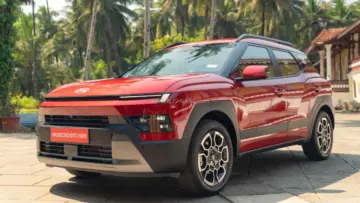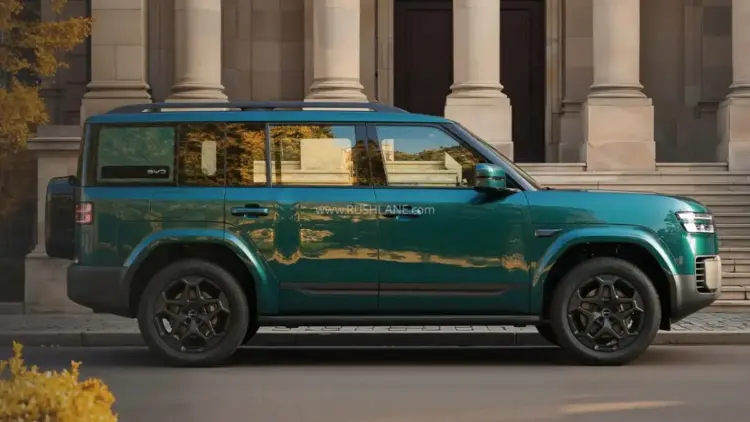
The global automotive landscape is currently witnessing a high-stakes legal confrontation between the storied British heritage of Jaguar Land Rover (JLR) and the meteoric rise of the Chinese electric vehicle titan, BYD. At the heart of this dispute lies the BYD Ti 7, a rugged SUV that JLR contends is a derivative imitation of its iconic Land Rover Defender.
In a significant development on November 11, 2026, the District Court of The Hague issued a preliminary ruling that represents a tactical setback for JLR. The court lifted a previously authorized seizure of internal records from BYD’s European offices, signaling a complex road ahead for Western manufacturers attempting to shield their design legacies from aggressive international competitors.
The Core Dispute: Design Rights and Reverse Engineering Allegations
The legal friction began in earnest when Jaguar Land Rover sought to protect the "visual DNA" of the Land Rover Defender, a vehicle that serves as the cornerstone of the brand’s rugged luxury identity. JLR’s legal team alleges that the BYD Ti 7 (known in China as the Fang Cheng Bao Bao 7) does more than just "take inspiration" from the Defender; they argue it incorporates specific design elements that constitute an infringement of EU design rights.
Furthermore, JLR raised the stakes by alleging that BYD may have engaged in reverse engineering. The British automaker suspects that BYD acquired and dismantled a Land Rover Defender to meticulously map its proportions and structural components to facilitate the development of the Ti 7. These allegations formed the basis for JLR’s request for an "evidence seizure" — a legal mechanism used to preserve documents and data before they can be altered or destroyed.
Chronology of the Legal Conflict
To understand the current state of the litigation, one must look at the rapid escalation of events over the past 14 months:
- September 2025: BYD launches the SUV in the Chinese domestic market under its specialized off-road sub-brand, Fang Cheng Bao, where it is marketed as the "Bao 7." The vehicle immediately draws international attention for its boxy silhouette and off-road styling, which many critics noted bore a striking resemblance to the Defender 110.
- August 2026: As BYD prepared for its European expansion, JLR moved pre-emptively. Utilizing Dutch law, which allows for the seizure of evidence in intellectual property cases, JLR obtained an ex-parte authorization (granted without the defendant’s prior knowledge). Court-appointed bailiffs raided BYD’s offices in Schiedam and Hoofddorp, Netherlands, seizing a vast array of digital and physical records.
- September – October 2026: BYD challenged the scope of the seizure in court. The Chinese automaker argued that the bailiffs had overstepped, collecting highly sensitive proprietary research and development (R&D) data, financial records, and launch strategies that were unrelated to the specific design infringement claims.
- November 11, 2026: The District Court of The Hague ruled in favor of BYD regarding the evidence. The judge determined that the records held by a court-appointed custodian were not essential for JLR to pursue its primary design claims.
The Court’s Mandate and Penalties
The November ruling was stern. JLR was ordered to instruct the custodian to destroy the seized records within 24 hours of the formal service of the ruling. Failure to comply with this directive carries a staggering penalty of €50,000 (approximately Rs 52 lakh) per hour, capped at a maximum of €500,000 (Rs 5.2 crore). Additionally, the court barred JLR from taking further enforcement actions under the original August authorization, with a separate €500,000 penalty attached to any breach of this stay.
Supporting Data: The Ti 7 vs. The Defender
The intensity of JLR’s legal response is underscored by the competitive threat the Ti 7 poses, particularly regarding its technical specifications and aggressive pricing.

Technical Specifications
The BYD Ti 7 is a sophisticated Plug-in Hybrid (PHEV) that utilizes BYD’s proprietary "Dual Mode" (DMO) off-road platform.
- Powertrain: A 1.5-litre turbocharged petrol engine paired with two high-output electric motors.
- Performance: A combined output of 300 kW (402 hp), enabling a 0–100 km/h sprint in just 4.8 seconds.
- Battery Technology: Equipped with a 35.6 kWh "Blade Battery," the Ti 7 boasts a claimed WLTP electric-only range of 119 km, significantly higher than many Western PHEV competitors.
- Capacity: A seven-seat configuration designed for family-oriented adventure.
The Pricing Chasm
Perhaps the most significant "threat" to JLR is the price point. In the United Kingdom, BYD has announced the following:
- BYD Ti 7 Excellence AWD: GBP 47,995 (approx. Rs 59.74 lakh).
- Land Rover Defender 110 P300e (PHEV): Listed at GBP 71,840 (approx. Rs 89.43 lakh).
With a price difference of GBP 23,845 (nearly Rs 30 lakh), BYD is positioning the Ti 7 not just as a competitor, but as a disruptive force that offers similar performance and aesthetic appeal for nearly two-thirds the cost of the British icon.
Official Responses and Judicial Reasoning
The Court’s Perspective
The Hague judge provided a nuanced rationale for lifting the seizure. A primary factor was the "readiness" of the case. The court noted that because BYD had not yet officially commenced sales of the Ti 7 within the European Union, JLR’s need for financial records to calculate "damages" was premature.
Furthermore, the judge ruled that JLR’s design infringement claims—which focus on the external visual appearance of the vehicle—could be argued using publicly available information and the physical vehicles themselves. Access to BYD’s internal R&D files was deemed an "excessive intrusion" into BYD’s trade secrets at this preliminary stage.
BYD’s Defense
BYD has consistently maintained that its designs are the result of its own robust R&D ecosystem. The company argued that the seizure was an attempt by a legacy competitor to hamper its market entry. BYD’s legal counsel emphasized that the records seized included sensitive information regarding future models and battery technologies that had no bearing on the Ti 7/Defender dispute.
JLR’s Stance
While JLR has not commented extensively on the specific loss of the seized evidence, a spokesperson reiterated the company’s commitment to protecting its intellectual property. JLR is continuing to pursue a multi-pronged legal strategy, including:

- An EU Design Rights claim in The Hague.
- Copyright and Unfair Competition claims in Rotterdam.
- Efforts to secure an injunction to block the sale of the Ti 7 across the European Union.
Broader Implications for the Automotive Industry
The JLR vs. BYD case is being closely watched by automotive executives and legal experts worldwide, as it sets a precedent for how "look-alike" disputes will be handled in the era of electrification.
1. The Difficulty of Protecting "Boxy" Designs
Historically, it has been difficult to trademark or protect purely functional or generic shapes. While the Defender has a very distinct silhouette, the court must decide where "industry standard rugged design" ends and "proprietary imitation" begins. JLR famously lost a UK court battle in 2020 to trademark the shape of the original Defender against Ineos (the Grenadier), a reminder that design protection is notoriously difficult to enforce.
2. The Netherlands as a Legal Hub
The choice of the Netherlands for this battle is strategic. Dutch courts are known for their efficiency in intellectual property cases and their ability to grant "cross-border" injunctions that can affect the entire European Union. If JLR eventually wins in Rotterdam or The Hague, it could effectively lock BYD out of one of the world’s most lucrative EV markets.
3. "China Speed" vs. Western IP Law
The speed at which BYD moved from a Chinese launch (Sept 2025) to a UK launch (Nov 2026) highlights the agility of Chinese manufacturers. Legacy automakers often take years to iterate designs, whereas BYD’s vertical integration allows them to move from concept to global export with unprecedented speed. This case serves as a warning that Western brands must be faster not only in innovation but also in their legal filings.
4. Consumer Sentiment
As the Ti 7 prepares for UK showroom arrivals in late 2026, the court of public opinion may differ from the court of law. For many consumers, the opportunity to own a 400-hp, tech-heavy SUV with "Defender vibes" for £24,000 less than the original is an attractive proposition, regardless of the legal origin of the door handles or roofline.
Conclusion
The lifting of the evidence seizure in The Hague is a tactical victory for BYD, ensuring that its internal R&D secrets remain confidential as it enters the European market. However, the war is far from over. With separate copyright and design right cases still pending, Jaguar Land Rover remains determined to prove that the Ti 7 is a "copycat."
As customer deliveries of the Ti 7 begin in January 2027, the automotive world will be watching to see if the legal system will act as a gatekeeper for heritage design, or if the market will simply move toward the most cost-effective alternative, regardless of its stylistic lineage.