MUMBAI – In a move that signals a tectonic shift in the Indian automotive landscape, Mahindra & Mahindra (M&M) has provided a comprehensive roadmap for its next generation of vehicles. Following the monumental debut of the multi-energy NU_IQ platform on August 15, 2025, the company’s Q2 FY27 earnings call has shed light on the production timelines, manufacturing scaling, and global export ambitions that will define the brand’s trajectory through 2031.
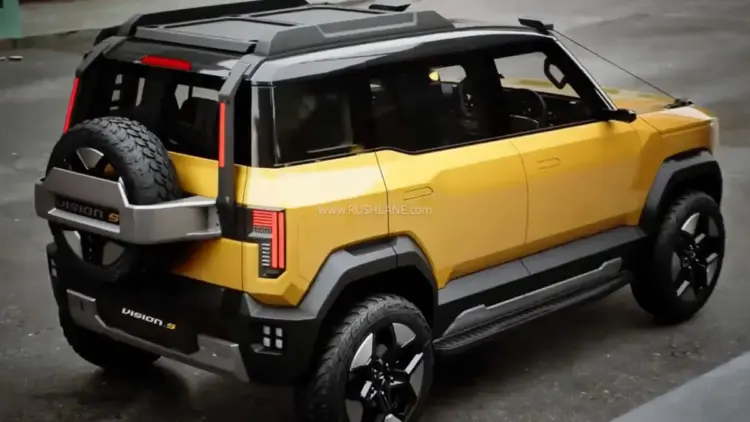
With the first production model—the Vision S—slated for a July 2027 launch, Mahindra is not just looking to maintain its dominance in the mid-size SUV space but is aggressively targeting the high-volume sub-4m segment, potentially leveraging its most iconic brand name: the Scorpio.
Main Facts: A Multi-Energy Future and Financial Fortitude
The Q2 FY27 earnings report paints a picture of a company operating at peak performance. Mahindra reported a consolidated revenue increase of 25% year-on-year (YoY), with a corresponding 25% rise in Profit After Tax (PAT). These figures are underpinned by an insatiable market appetite for Mahindra’s SUV and Light Commercial Vehicle (LCV) portfolios.
The NU_IQ Platform: The New Cornerstone
The centerpiece of Mahindra’s future strategy is the NU_IQ platform. Unveiled in 2025 alongside four concepts—Vision S, Vision T, Vision X, and Vision SXT—the NU_IQ is a "multi-energy" architecture. Unlike traditional platforms restricted to a single powertrain, NU_IQ is engineered to support Internal Combustion Engines (ICE), Battery Electric Vehicles (BEVs), and potentially hybrid or CNG (ZNG) configurations.
This flexibility allows Mahindra to hedge its bets against fluctuating fuel prices and varying rates of EV adoption across different Indian geographies. The company has confirmed that the first NU_IQ offering will debut in July 2027, followed by a disciplined "one SUV per year" launch strategy.
Dominating the Sub-4m Space
The most significant revelation from the earnings call is the positioning of the Vision S. Mahindra aims to take the "sought-after Scorpio name" into the sub-4m SUV segment. This is a high-stakes move; the sub-4m category is the most competitive in India, currently dominated by the Maruti Suzuki Brezza, Tata Nexon, and Hyundai Venue. By introducing a "Scorpio-class" vehicle into this space, Mahindra is attempting to democratize its premium rugged branding for a mass-market audience.

Chronology: From Concept Reveal to Production Reality
The journey of the NU_IQ platform is a masterclass in long-term industrial planning. To understand where Mahindra is going, one must look at the timeline of its development:
- August 15, 2025: Mahindra "stuns the world" at its annual Independence Day event by showcasing the NU_IQ platform and the four "Vision" concepts. This marked the official transition from the design phase to the pre-production testing phase.
- Late 2025 – Mid 2026: Testing of the Vision S commences. Spied mules on Indian roads suggest that Mahindra began real-world validation even before the public unveil, emphasizing a shortened time-to-market.
- Q2 FY27 (Current Period): Mahindra confirms robust financial health and announces the finalized production plan for the NU_IQ lineup.
- July 2027 (Projected): The production-spec Vision S (potentially the "Scorpio S" or "Scorpio Junior") is scheduled for its commercial launch.
- 2027 – 2031: Mahindra plans to roll out one new NU_IQ-based SUV every year, systematically filling every niche in the compact and mid-size SUV categories.
- Late 2027: Mahindra’s global expansion hits a milestone with the planned launch of the BE 6 and XEV 9e in the United Kingdom.
Supporting Data: Manufacturing Scale and Market Dynamics
Mahindra’s ambitions are backed by a massive capital expenditure plan and a significant ramp-up in manufacturing capacity. The company is currently operating in a "demand-surplus" environment where sales are capped only by how many units the factories can churn out.
Production Capacity Roadmap
To meet the expected demand for the NU_IQ series, Mahindra is implementing a tiered expansion strategy:
- Current Fiscal Year: Increasing monthly capacity from 68,000 units to 82,000 units.
- Intermediate Goal: Scaling toward 92,000 units per month.
- FY31 Vision: Reaching a staggering 132,000 units per month.
A dedicated production capacity of 10,000 units per month has been earmarked specifically for the initial rollout of the NU_IQ products, ensuring that the new "sub-4m Scorpio" does not suffer from the multi-year waiting periods that plagued the XUV700 and Scorpio-N at launch.
The Nagpur Mega-Plant
Central to this expansion is the new plant in Nagpur. Mahindra has committed to acquiring up to 2,000 acres of land, which will include a dedicated supplier park. This "ecosystem" approach is designed to reduce logistics costs and improve "Just-In-Time" manufacturing efficiency. The Nagpur facility is intended to double Mahindra’s current manufacturing footprint, making it the primary hub for the company’s future EV and multi-energy models.
EV Penetration and Portfolio Gaps
Despite the focus on ICE and multi-energy platforms, Mahindra’s electric vehicle (EV) segment remains a strong performer. EVs currently account for 12% of total SUV sales. The introduction of the ZNG (CNG) variants has also addressed a critical portfolio gap, allowing the company to compete in the "frugal performance" segment that has traditionally been the stronghold of Maruti Suzuki.

Official Responses: Navigating Macroeconomic Headwinds
During the earnings call, Mahindra executives were transparent about the challenges facing the automotive industry. While demand is at an all-time high—evidenced by historically low dealer stock levels—macroeconomic pressures are mounting.
Input Cost Inflation
Mahindra highlighted a sharp rise in the cost of raw materials, which could impact margins if not managed through pricing or efficiency:
- Steel: Up 17% YoY.
- Copper: Up 42% YoY.
- Rubber: Up 40% YoY.
Beyond raw materials, the company cited the ongoing RAM chip shortage and global logistics disruptions caused by geopolitical conflicts as persistent "pain points" that require constant supply chain agility.
The Global Mandate
On the topic of international expansion, Mahindra’s leadership reiterated the importance of the INGLO platform. "When the INGLO platform was first conceived, we had great global aspirations to take Indian engineering and manufacturing to a global scale," the company noted. The planned 2027 launch of the BE 6, XEV 9e, and eventually the BE 7 in the UK is seen as a litmus test for Mahindra’s ability to compete with established European and Chinese EV manufacturers.
Implications: What This Means for the Industry
The "NU_IQ strategy" carries profound implications for the Indian and global automotive markets.
1. The "Scorpio" Halo Effect
By bringing the Scorpio name to the sub-4m segment, Mahindra is leveraging "brand equity" in a way few other manufacturers can. For the Indian consumer, the Scorpio represents ruggedness and status. If Mahindra can deliver that DNA in a smaller, more affordable package with the Vision S, it could disrupt the market share of current leaders who focus more on "urban styling" than "rugged capability."

2. The End of "One Size Fits All" Platforms
The success of the NU_IQ multi-energy platform may force other manufacturers to reconsider their "EV-only" or "ICE-only" platform strategies. In a developing market like India, where charging infrastructure is inconsistent, the ability to offer the same vehicle model with different "hearts" (ICE, EV, or CNG) is a significant competitive advantage.
3. India as an Export Hub
The commitment to the UK market and the massive investment in the Nagpur plant suggest that Mahindra is positioning itself as a global export powerhouse. If the BE 6 and XEV 9e find success in the UK, it will validate Indian-engineered EVs on the world stage, potentially opening doors to other European and Oceanic markets.
4. Supply Chain Sovereignty
The creation of a 2,000-acre supplier park in Nagpur indicates a shift toward vertical integration. By bringing suppliers closer to the assembly line, Mahindra is insulating itself from global shipping delays and reducing the carbon footprint of its production process—a key requirement for ESG-conscious investors and international regulators.
Conclusion
Mahindra & Mahindra is no longer just a "tractor and rugged SUV" maker. The Q2 FY27 earnings call reveals a sophisticated, data-driven giant that is preparing for a decade of aggressive growth. With the NU_IQ platform serving as the foundation and the Vision S leading the charge into the high-volume segments, Mahindra is poised to redefine what an Indian automotive brand can achieve both at home and abroad. As the July 2027 launch approaches, the industry will be watching closely to see if the "Vision" concepts can truly translate into market-leading reality.