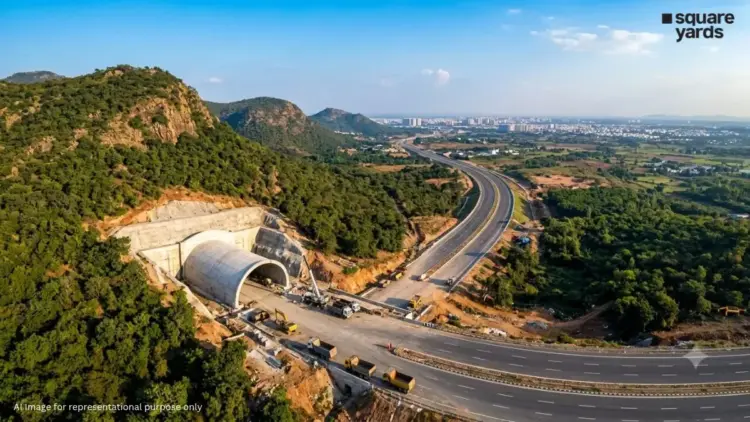
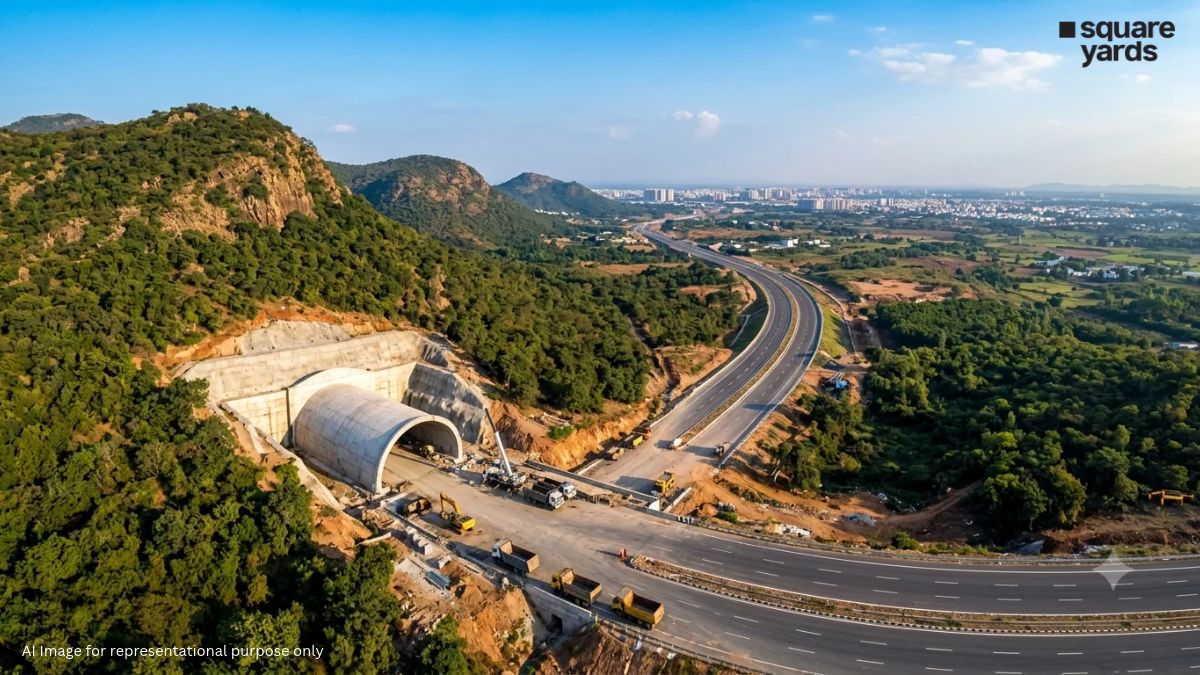
BENGALURU/VIJAYAWADA — In a landmark development for Southern India’s infrastructure landscape, the Ministry of Road Transport and Highways (MoRTH) has announced the successful completion of excavation work for a critical 3.68-kilometer tunnel section on the Bengaluru-Kadapa-Vijayawada Economic Corridor. This milestone, achieved in the rugged terrain between Porumamilla in the YSR Kadapa district and Sitaramapuram in the SPSR Nellore district, marks a pivotal step forward for one of the most ambitious road projects in the region.
The tunnel, part of the larger six-lane, access-controlled corridor, is designed to bypass some of the most challenging geographical bottlenecks in the Eastern Ghats. With a project cost of Rs 1,092.18 crore for this specific segment, the engineering feat is expected to redefine logistical efficiency between the technology hub of Bengaluru and the commercial nerve center of Vijayawada.
Main Facts: A Modern Engineering Feat
The Bengaluru-Kadapa-Vijayawada Economic Corridor is a Greenfield-centric project aimed at providing a high-speed link across the heart of Andhra Pradesh. The recently completed tunnel excavation is the centerpiece of Package 9 of the corridor.
Key Technical Specifications:
- Tunnel Length: 3.68 km.
- Location: Spanning the border of YSR Kadapa and SPSR Nellore districts (Porumamilla to Sitaramapuram).
- Investment: Rs 1,092.18 crore allocated for this specific tunnel package.
- Corridor Type: Six-lane, access-controlled expressway.
- Distance Reduction: The tunnel alone bypasses a circuitous 17-km stretch of hilly and forested roads, significantly flattening the gradient for heavy freight.
- Projected Completion: While excavation is complete, lining and final electrical/safety installations are slated for completion by mid-2027.
The tunnel is not merely a shortcut; it is a strategic bypass of the fragile forest ecosystems and steep ghat sections that have historically hindered heavy vehicle movement and increased the risk of accidents. By boring through the hills, the project minimizes the environmental footprint that a traditional surface road would have imposed on the forested landscape.
Chronology: The Path to the Breakthrough
The journey toward this milestone began as part of the Government of India’s broader vision to enhance "National High-Speed Corridors."
- Phase 1: Conceptualization and Bidding (2022-2023): The project was identified as a critical economic artery under the Bharatmala Pariyojana. Package 9, involving the complex tunnel work, was tendered with a focus on specialized engineering firms capable of handling the geological variability of the Nellore-Kadapa border.
- Phase 2: Commencement of Work (Early 2024): Groundbreaking for the tunnel began with sophisticated Boring Machines (TBMs) and controlled blasting techniques. The project faced early challenges due to the hard rock strata characteristic of the region.
- Phase 3: Progress Review (July 2026): Data released by MoRTH indicated that Andhra Pradesh had approximately 585 km of high-speed corridors under active construction, with the Bengaluru-Kadapa-Vijayawada stretch being a high-priority segment.
- Phase 4: Excavation Breakthrough (November 2026): Engineers achieved the final "breakthrough," connecting the two ends of the 3.68-km tunnel. This allows for the commencement of the final phase: paving, lighting, ventilation, and fire safety systems.
- Phase 5: Expected Operational Date (Mid-2027): The tunnel is expected to be fully commissioned and open to traffic, coinciding with the completion of adjacent road packages.
Supporting Data: Economic and Logistical Impact
The Bengaluru-Kadapa-Vijayawada Economic Corridor is more than just a road; it is a catalyst for regional GDP growth. The data surrounding the project highlights its transformative potential.
1. Travel Time and Distance
The overall corridor is expected to reduce the total driving distance between Bengaluru and Vijayawada by approximately 110 kilometers. Currently, the route via NH-44 and NH-16 is often congested and circuitous. The new expressway will shave off three to four hours of travel time for passenger vehicles and even more for heavy logistics, which currently struggle with the varying elevations of the existing state highways.
2. Industrial Connectivity
The corridor is strategically designed to link two of India’s major lifelines: NH-44 (Srinagar to Kanyakumari) and NH-16 (Kolkata to Chennai). By bridging these two, the corridor opens up the "hinterland" of Andhra Pradesh.
- Hindupur: Known for its industrial clusters, the corridor will provide faster access to the Bengaluru international airport.
- Kopparthi: The Mega Industrial Hub at Kopparthi in Kadapa is expected to be a primary beneficiary, allowing manufactured goods to reach markets in Karnataka and the ports of the East Coast with unprecedented speed.
3. Real Estate Dynamics
The infrastructure push has already begun reflecting in the residential real estate markets of Vijayawada and its peripheries. Data provided by Square Yards indicates a diversifying market as accessibility improves:
- Tadepalli: Averaging Rs 5,200 per sq. ft., this area is benefiting from its proximity to the administrative centers.
- Mangalagiri: A burgeoning hub with an average price of Rs 4,250 per sq. ft., attracting investors looking for long-term growth.
- Patamata: A premium residential pocket commanding Rs 6,050 per sq. ft., driven by established urban infrastructure.
Analysts suggest that as the corridor nears completion, these price points are likely to see an upward trajectory, particularly in areas that serve as entry points to the new expressway.
Official Responses: A Vision for Integrated Growth
The Ministry of Road Transport and Highways has lauded the engineering teams for maintaining the project timeline despite the geological complexities of the region.
In a statement following the tunnel breakthrough, officials noted: "The completion of the excavation on this 3.68-km section is a testament to India’s growing capability in executing complex subterranean infrastructure. This corridor is a vital component of the PM Gati Shakti National Master Plan, ensuring that industrial nodes are not just connected, but integrated into a seamless multimodal logistics network."
State government representatives from Andhra Pradesh also emphasized the project’s role in decentralizing development. By improving connectivity to the Rayalaseema region (Kadapa) and the coastal districts (Nellore and NTR/Vijayawada), the corridor is expected to attract fresh investments in the electronics, textiles, and agro-processing sectors.
Implications: Reshaping the Southern Peninsula
The completion of this tunnel and the eventual opening of the full corridor will have far-reaching implications across multiple sectors.
1. Logistical Revolution
For the logistics sector, the "Golden Triangle" of South India—comprising Bengaluru, Chennai, and Hyderabad—is being reinforced by this new diagonal link. The reduction in fuel consumption and vehicle wear and tear due to the flatter, shorter route will significantly lower the "Cost per Tonne-Kilometer," making Indian exports more competitive on the global stage.
2. Urbanization and the "Satellite City" Phenomenon
As travel time between Bengaluru and towns like Kadapa or Hindupur drops, we may see the rise of "satellite industrial townships." Professionals in the tech sector might find it feasible to manage operations across both states, while the workforce in Andhra Pradesh gains easier access to the job markets of Karnataka without the necessity of permanent migration.
3. Environmental Considerations
While the construction of large expressways often raises environmental concerns, the tunnel approach used in Package 9 is a mitigation strategy. By going through the mountain rather than around or over it, the project preserves the surface flora and fauna of the Eastern Ghats. Furthermore, the 110-km reduction in total travel distance will result in a massive cumulative reduction in carbon emissions from thousands of vehicles daily.
4. Real Estate and Quality of Life
For homebuyers, the corridor changes the "location" equation. Distance is increasingly measured in time rather than kilometers. The price disparity between Vijayawada’s central districts and its emerging outskirts like Mangalagiri is expected to narrow as high-speed connectivity makes "peripheral" living more viable for those working in the city center.
The Road Ahead
While the tunnel excavation is a cause for celebration, the broader Bengaluru-Kadapa-Vijayawada Economic Corridor still requires significant finishing work. With 585 km of high-speed corridors under construction across Andhra Pradesh as of mid-2026, the state is in the midst of an infrastructure renaissance.
The real test of the project will lie in the "last-mile" connectivity—how well the expressway integrates with local district roads and industrial feeder routes. However, the completion of the Porumamilla-Sitaramapuram tunnel removes one of the most significant physical hurdles in the project’s path.
As we move toward the mid-2027 completion target, the corridor stands as a symbol of modern India’s ability to bridge geographical divides, fostering a future where commerce and community are more connected than ever before. For the residents of Andhra Pradesh and Karnataka, the "road ahead" is looking shorter, faster, and significantly more prosperous.