

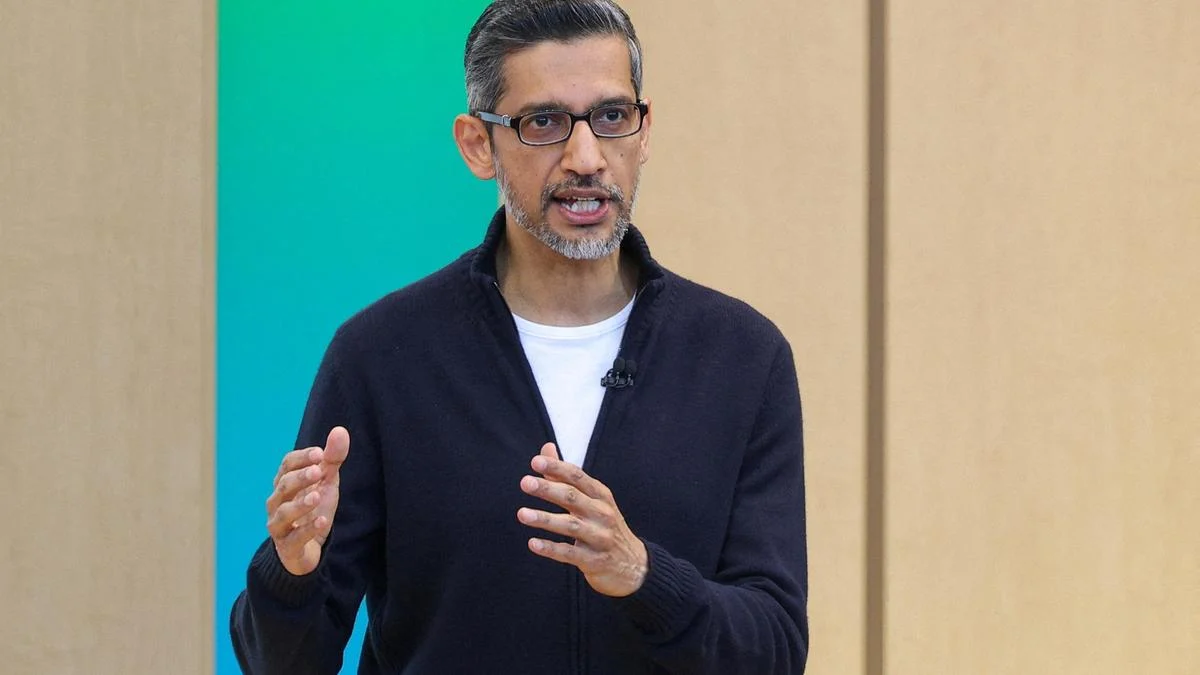
MOUNTAIN VIEW, CA – July 23, 2026 – Alphabet, Google’s parent company, announced a stellar second quarter for 2026, showcasing robust financial growth propelled by surging demand for its artificial intelligence infrastructure and solutions. CEO Sundar Pichai, addressing investors and analysts during the earnings call on Wednesday, July 22, 2026, championed the company’s "amazing" performance, underscoring the transformative power of its extensive AI investments. This wave of optimism, however, crests against a backdrop of rising concerns and investor anticipation surrounding the delayed release of a key AI model, Gemini 3.5 Pro.
The tech giant reported an impressive 24% year-over-year growth in Alphabet revenues, a testament to its diversified portfolio and strategic focus. Google Cloud, a significant driver of this expansion, recorded an even more remarkable 82% growth, directly attributed by the company’s quarterly reports to the burgeoning global demand for advanced AI capabilities. These figures paint a picture of a company firmly entrenched in the AI revolution, capitalizing on the widespread adoption of intelligent technologies across industries.
Yet, as the financial results spark enthusiasm, the tech community continues to scrutinize Google’s AI product roadmap, particularly following the unexpected postponement of Gemini 3.5 Pro. Originally anticipated to launch last month, this "frontier model" was poised to deliver next-generation AI coding abilities, drawing comparisons to leading offerings from formidable competitors like OpenAI and Anthropic. Despite these lingering questions, Mr. Pichai maintained a confident posture, deftly shifting focus to the broader, tangible value Google’s AI offerings are already delivering and hinting at an even more promising future with the upcoming Gemini 4.
A Quarter of Remarkable Growth and Strategic Pivots
Alphabet’s second-quarter earnings call was a masterclass in presenting strong financial results while strategically addressing market expectations. The 24% year-over-year revenue increase for the conglomerate, while not broken down into specific dollar figures in the immediate reports, signals a sustained period of expansion, far exceeding many analysts’ conservative projections. This growth reflects not only the resilience of Google’s core advertising business but also the increasing diversification and strength of its cloud computing and AI-driven services.
The standout performer was undeniably Google Cloud, which saw an astonishing 82% surge in revenues. This segment’s growth is particularly significant as it directly correlates with the global enterprise shift towards cloud-based infrastructure and the escalating need for AI-powered tools. Businesses worldwide are racing to integrate AI into their operations, from automating customer service and optimizing supply chains to developing sophisticated data analytics and predictive models. Google Cloud, with its robust infrastructure, specialized AI services, and dedicated talent, has positioned itself as a preferred partner in this digital transformation. The demand extends across various verticals, including financial services, healthcare, retail, and manufacturing, all seeking to leverage Google’s advanced machine learning platforms, data analytics solutions, and, crucially, its cutting-edge AI models for enterprise-grade applications.
Mr. Pichai seized the opportunity to articulate Google’s overarching AI strategy, emphasizing that the company’s investments in artificial intelligence are "redefining what’s possible across every part of our business." This statement encapsulates Google’s ambition to infuse AI into every product and service, from enhancing the utility of its ubiquitous Search engine and Workspace applications to powering complex solutions within Google Cloud and driving innovation in nascent areas like robotics and autonomous systems. The integration of AI is no longer a peripheral project but the central pillar of Google’s long-term growth strategy, promising to unlock new revenue streams and strengthen its competitive moat.
Chronology of AI Ambition: The Gemini Saga
The journey of Google’s advanced AI models, particularly the Gemini series, has been a closely watched narrative in the tech world. Gemini represents Google’s answer to the burgeoning field of multimodal AI, designed to understand and operate across various data types – text, images, audio, video, and code – with unprecedented sophistication.
The Promise of Gemini 3.5 Pro
Anticipation for Gemini 3.5 Pro had been building for months. Following the successful deployment of earlier Gemini iterations, industry experts, developers, and investors eagerly awaited the "Pro" version, specifically hoping for a significant leap in its AI coding capabilities. Rumors and internal leaks suggested that Gemini 3.5 Pro would rival, and potentially surpass, the code generation, debugging, and optimization features offered by models from leading competitors such as OpenAI’s GPT series and Anthropic’s Claude. In a world increasingly reliant on software, the ability of an AI to efficiently write, understand, and refine code is a game-changer, promising to accelerate development cycles, empower citizen developers, and unlock new paradigms in software engineering. For Google, a robust coding AI would solidify its position as a go-to platform for developers and enterprises seeking to leverage generative AI for their software needs.
The Unforeseen Delay and Market Reaction
However, the expected launch of Gemini 3.5 Pro, slated for the previous month, did not materialize. The delay, while not officially detailed with specific reasons, sparked a flurry of speculation among analysts and in tech circles. Common theories ranged from unforeseen technical complexities requiring further refinement, rigorous internal testing to ensure safety and ethical alignment, or a strategic recalibration to integrate even more advanced features before release. The highly competitive nature of the AI market means that even minor delays can have amplified effects on investor confidence and market perception. Investors, keenly aware of the rapid pace of innovation from rivals, began to voice concerns about whether Google was losing momentum in certain segments of the AI race, particularly in direct competition with the latest iterations from OpenAI, which has often been seen as setting the pace for "frontier model" releases.
Despite the market’s unease, Mr. Pichai took a proactive stance during the earnings call, directly addressing the concerns without dwelling on the specifics of the 3.5 Pro delay. Instead, he pivoted the discussion towards the future, hinting at the upcoming Gemini 4 model. "I feel people will be pleased," he reportedly stated, a brief but potent declaration designed to reassure stakeholders that Google’s long-term AI vision remains intact and that even more powerful innovations are on the horizon. This strategic communication aimed to temper short-term disappointment with the promise of future breakthroughs, reinforcing the company’s commitment to delivering cutting-edge AI.
Supporting Data: The Tangible Impact of Google’s AI
Beyond the strategic pronouncements, Google’s quarterly report provided compelling data points illustrating the real-world impact and widespread adoption of its AI technologies. These metrics serve as a powerful testament to the efficacy of Google’s "full stack approach" to AI, demonstrating how foundational models are being translated into tangible value for both consumers and enterprises.
One of the most striking statistics highlighted was the processing power of Gemini models, which now handle an astonishing 22 billion API tokens per minute. To put this into perspective, an API token is a unit of text (or part of a word) that large language models process. This immense throughput signifies the scale at which developers and businesses are integrating Gemini’s capabilities into their applications and workflows. It indicates a robust ecosystem where Gemini is actively being used for a myriad of tasks, from generating code and content to powering sophisticated chatbots and data analysis tools. The sheer volume of tokens processed underscores the underlying computational infrastructure required and Google’s ability to scale its AI services to meet unprecedented demand.
Equally impressive is the consumer adoption of the Gemini App, which has rapidly garnered 950 million monthly active users (MAU). This near-billion-user milestone demonstrates the profound impact Google’s consumer-facing AI features are having globally. The Gemini App, likely integrated across various Google products and services, empowers users with advanced conversational AI, intelligent assistance, and enhanced productivity features, embedding AI directly into their daily digital lives. This widespread usage not only validates Google’s AI strategy but also provides invaluable feedback and data for continuous model improvement, creating a virtuous cycle of innovation.
The report also detailed that Google’s popular AI features are driving significant "Search query growth." This is a critical indicator for Google, as Search remains its foundational business. By integrating AI more deeply into the Search experience, offering more relevant, contextual, and often generative answers, Google is enhancing user engagement and solidifying its dominance in information retrieval. Whether it’s complex queries requiring synthesis of multiple sources or visual searches powered by advanced image recognition, AI is making Search more intuitive and powerful, ensuring its continued relevance in an evolving digital landscape.

Furthermore, Mr. Pichai pointed to "strong demand for our security solutions" and specifically highlighted the new Gemini 3.5 Flash Cyber. This product exemplifies Google’s commitment to applying its AI prowess to critical enterprise needs. Gemini 3.5 Flash Cyber is described as delivering "highly cost-efficient performance at the frontier." In an era of escalating cyber threats, AI-powered security solutions are becoming indispensable for threat detection, incident response, and proactive defense. Flash Cyber likely leverages the speed and efficiency of the Gemini 3.5 Flash model – a lighter, faster version of Gemini – to provide rapid, intelligent analysis of security data, identifying anomalies and potential breaches with remarkable accuracy and at optimized operational costs for businesses. This signifies Google’s expansion of AI beyond generative text and code into specialized, high-value enterprise applications.
Official Responses and Strategic Messaging
Sundar Pichai’s address during the earnings call was a carefully calibrated blend of celebratory remarks and strategic reassurances. His "amazing" characterization of the second quarter was not merely a statement of financial success but also a declaration of Google’s renewed vigor and direction in the face of intense industry competition.
Pichai’s Confident Stance
Throughout his remarks, Mr. Pichai consistently framed Google’s AI investments as fundamental to the company’s future, emphasizing that they are "redefining what’s possible across every part of our business." This is a powerful narrative designed to convey that Google is not just participating in the AI race but is actively shaping its trajectory through foundational research, scalable infrastructure, and pervasive product integration. He sought to project an image of a company with a clear, long-term vision, unswayed by the immediate competitive pressures or product launch delays.
His defense of the company’s "frontier models" was particularly telling. While acknowledging the anticipation around Gemini 3.5 Pro, he strategically redirected attention to the broader portfolio of AI innovations and the value they are already generating. This approach allowed him to validate the public’s excitement for cutting-edge AI while simultaneously reinforcing Google’s commitment to a robust, long-term AI development strategy that prioritizes quality and impact.
Navigating Investor Concerns
The direct mention of Gemini 4 ("I feel people will be pleased") was a crucial element of Pichai’s messaging. It served as a forward-looking promise, a signal to investors and developers that the current delay is not indicative of a halt in innovation but rather a prelude to an even more significant release. This tactic aims to manage expectations, suggesting that the company is taking the necessary time to perfect its next-generation models, rather than rushing products to market. In a highly sensitive market, such assurances are vital for maintaining investor confidence and demonstrating a steady hand at the helm.
Ultimately, Pichai’s core message resonated in his concluding statement: "These outstanding results show that our differentiated, full stack approach to AI is delivering real, measurable value for consumers, customers, and our partners globally." This highlights several key aspects of Google’s strategy:
- Differentiated Approach: Implies unique capabilities, proprietary research, and distinct product offerings.
- Full Stack: Refers to Google’s control over the entire AI ecosystem, from foundational research (DeepMind, Transformer architecture), to hardware (TPUs), to platform services (Google Cloud AI), to end-user applications (Search, Workspace, Gemini App). This integrated approach allows for seamless development and deployment.
- Real, Measurable Value: Emphasizes that AI is not just hype but is generating concrete benefits, whether through increased productivity, enhanced user experience, or improved business outcomes.
This comprehensive narrative aims to solidify Google’s position as a leader in the AI landscape, capable of both groundbreaking innovation and widespread commercialization.
Broader Implications: The AI Race Intensifies
Google’s Q2 performance and its CEO’s statements illuminate the intensifying global AI race, a technological arms race with profound economic and societal implications. The stakes are incredibly high, as the company that can master "frontier AI models" is poised to reshape industries, redefine human-computer interaction, and potentially control significant portions of the digital economy.
The High Stakes of Frontier AI
"Frontier models" are at the bleeding edge of AI research, pushing the boundaries of what machine intelligence can achieve. They are characterized by their unprecedented scale, multimodal capabilities, and emergent properties that allow them to perform complex tasks with human-like proficiency. The competition to develop and deploy these models is fierce, involving a handful of well-funded tech giants and innovative startups. Google’s primary rivals in this domain include OpenAI (backed by Microsoft), Anthropic (with significant Amazon and Google investments), and increasingly, Meta. Each player is vying for talent, computational resources, proprietary data, and, ultimately, market dominance in foundational AI technologies.
The delay of Gemini 3.5 Pro, even if minor, underscores the immense technical challenges and ethical considerations involved in bringing these powerful models to market. Ensuring safety, mitigating biases, and preventing misuse are paramount, and the rigor required for such deployments can often extend timelines. Google’s pivot to Gemini 4 suggests a long-term strategic game, where perfecting the next iteration might be more beneficial than rushing an interim update.
Economic Ripple Effects
Alphabet’s robust Q2 results, particularly the astronomical growth in Google Cloud, signal a broader economic trend: the massive investment flowing into AI infrastructure and solutions. This is not just about tech companies developing AI; it’s about every industry seeking to integrate AI into its core operations. This demand fuels growth not only for cloud providers like Google but also for semiconductor manufacturers, data centers, and specialized AI service providers. The economic ripple effects are substantial, creating new jobs, stimulating innovation in ancillary industries, and potentially boosting global productivity.
Furthermore, the integration of AI into Google’s core Search product and the widespread adoption of the Gemini App indicate a paradigm shift in how users interact with digital information and tools. This transformation will continue to reshape advertising, content creation, and personal productivity, opening new avenues for commerce and communication.
The User and Enterprise Experience
For enterprises, Google’s AI offerings translate into enhanced efficiency, deeper insights, and new product development capabilities. Solutions like Gemini 3.5 Flash Cyber are critical for businesses facing an increasingly complex threat landscape, offering advanced protection at optimized costs. For everyday users, the rapid growth of the Gemini App and AI-driven improvements in Search mean more intuitive, personalized, and powerful digital experiences. The promise of AI, as articulated by Pichai, is to make technology more helpful and accessible, fundamentally improving how people live and work.
However, the rapid advancement of AI also brings forth ethical and regulatory questions. Concerns about data privacy, algorithmic bias, job displacement, and the potential for misuse of powerful AI models are growing. As Google and its peers continue to push the boundaries of AI, they will increasingly face scrutiny from governments, advocacy groups, and the public, necessitating a delicate balance between innovation and responsible development.
In conclusion, Google’s second quarter of 2026 demonstrates a powerful narrative of financial strength driven by its unwavering commitment to artificial intelligence. While the minor hiccup of the Gemini 3.5 Pro delay served as a moment of reflection for investors, Sundar Pichai’s confident messaging and the impressive metrics of AI adoption underscore Google’s strategic resilience. The company’s "full stack approach" to AI, encompassing foundational research, robust infrastructure, and pervasive product integration, positions it strongly in the ongoing global AI race. As Google continues to refine its "frontier models" and embed AI deeper into its ecosystem, the implications for consumers, enterprises, and the broader digital economy are set to be profound, cementing AI as not just a feature, but the very future of the tech giant.
