

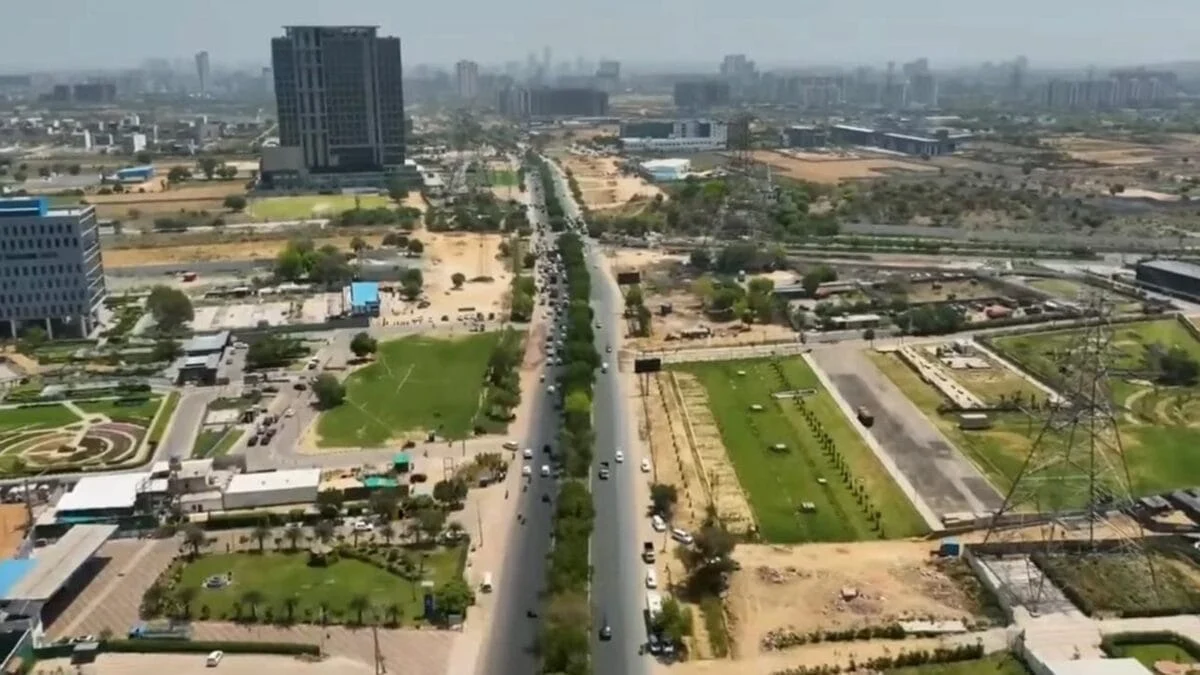
NEW DELHI – The landscape of Indian real estate has long been dominated by the meteoric rise of Gurugram, but within this sprawling millennium city, a new titan has emerged. The Southern Peripheral Road (SPR), once viewed as a secondary link road, has undergone a radical metamorphosis. According to the latest market reports, property prices along this 16-kilometer corridor have surged by a staggering 160% over the last five years, positioning it as the most significant growth engine in the National Capital Region (NCR).
This transformation is not merely a result of market speculation but is the byproduct of a multi-billion rupee infrastructure overhaul and a strategic shift by Tier-1 developers toward premium, self-sustaining urban ecosystems. As of June 2026, the SPR has transitioned from an emerging residential belt into a high-stakes investment destination, attracting affluent homebuyers and institutional investors alike.
Main Facts: The Statistical Surge of the SPR Corridor
The Southern Peripheral Road is a critical 16-km stretch that serves as the connective tissue between Golf Course Extension Road, Sohna Road, and National Highway 48 (NH-48). Its strategic location provides seamless access to the city’s primary commercial nerve centers, including Cyber City and Udyog Vihar, which has historically been a primary driver for residential demand.
However, recent data from industry giants such as Magicbricks and Square Yards reveals a trend that exceeds standard market growth. Key findings include:
- Five-Year Appreciation: Residential property values have appreciated by approximately 160% since 2021.
- Year-on-Year Growth: Average residential prices have seen an 18.4% increase in the last 12 months alone.
- Current Valuation: The average price per square foot now stands at approximately ₹16,249, a figure that rivals more established sectors in the city.
- Inventory Shift: There is a notable transition from mid-segment housing to luxury and "ultra-luxury" offerings, with several new launches priced well above the ₹20,000 per sq. ft. mark.
Beyond the numbers, the SPR is evolving into a "mixed-use urban corridor." This means the area is no longer just a collection of apartment complexes but a holistic environment where retail, healthcare, education, and Grade-A office spaces coexist.
Chronology: From Connectivity Route to Premium Hub
The evolution of the SPR can be categorized into three distinct phases over the last decade, each marked by a shift in policy and infrastructure commitment.
Phase 1: The Conceptual Era (2014–2018)
During this period, the SPR was primarily identified as a bypass to alleviate traffic on the internal roads of Gurugram. While the Haryana Shahari Vikas Pradhikaran (HSVP) had laid the groundwork, the area suffered from "infrastructure lag." Developers began acquiring land, but the lack of secondary services like proper drainage and street lighting kept prices relatively stagnant.
Phase 2: The Infrastructure Pivot (2019–2023)
The turning point came with the announcement of the elevated corridor and the integration of the SPR into the larger Gurugram Master Plan. The completion of several key flyovers and the widening of Sohna Road acted as a catalyst. During this phase, early investors began to see the potential for "connectivity-led appreciation." The post-pandemic real estate boom further accelerated this, as buyers sought larger homes in less congested areas.
Phase 3: The Premiumization Wave (2024–Present)
As of 2026, the corridor has entered its most lucrative phase. With the ₹755-crore elevated corridor between Vatika Chowk and NH-48 nearing its 2027 completion date, the SPR has shed its "emerging" tag. It is now a "mature" market characterized by high-entry barriers and the dominance of organized, national-level developers.
Supporting Data: The Multi-Billion Rupee Infrastructure Push
The primary driver behind the 160% price appreciation is a series of massive infrastructure projects currently underway. These projects are designed to solve the two biggest hurdles for any real estate micro-market: connectivity and livability.
1. The Elevated Corridor and Road Widening
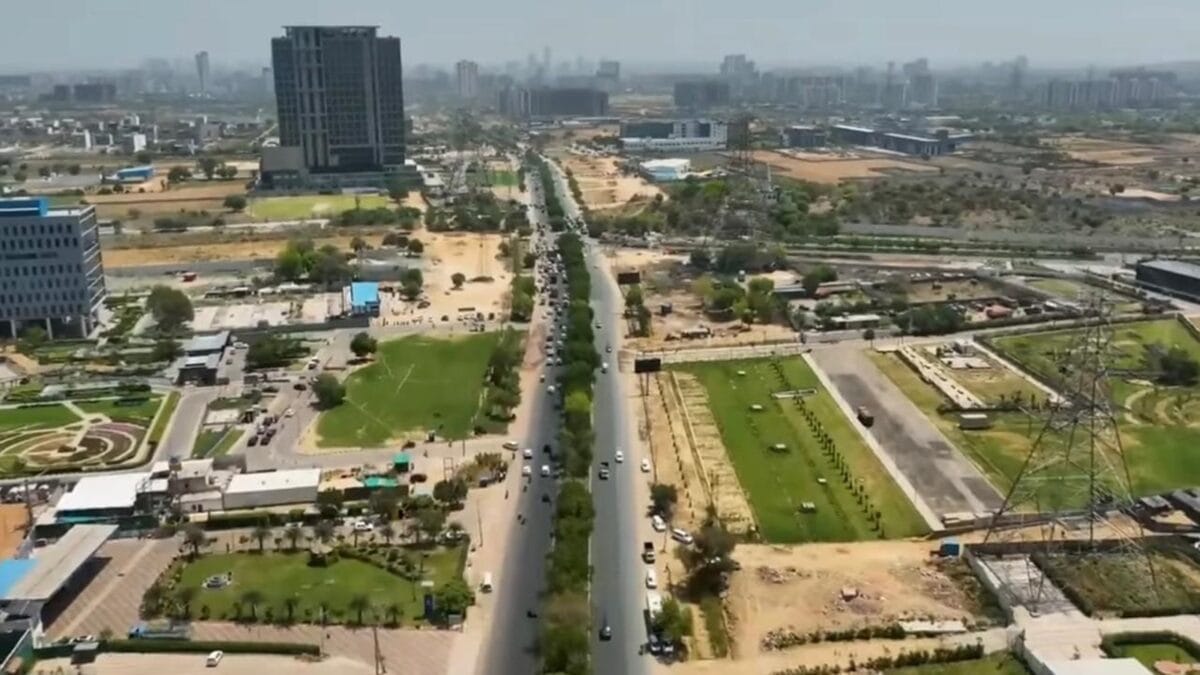
A cornerstone of the SPR’s growth is the ₹755-crore elevated corridor. This project, slated for completion by 2027, will allow commuters to bypass the heavy local traffic at Vatika Chowk, cutting travel time to NH-48 by more than 50%. Additionally, the eight-lane widening of the 6-km stretch between Vatika Chowk and Ghata Chowk is expected to transform the corridor into a world-class expressway.
2. The Metro Expansion (The Sector 56 to Pachgaon Line)
Connectivity is set to receive a massive boost through the proposed 36-km metro corridor. With an estimated investment of ₹8,500 crore, this line will feature 28 elevated stations. Crucially, it will link the SPR to the Dwarka Expressway and the Manesar industrial belt. This multi-modal connectivity is a rare feature in NCR real estate and is a primary reason for the sustained investor interest.
3. Civic Utilities and Stormwater Management
Historically, parts of Gurugram have faced issues with waterlogging. To address this, the government is completing a master stormwater drain between Vatika Chowk and NH-48 by June 2026. Combined with new service roads and pavement upgrades, these "under-the-surface" improvements are providing the necessary confidence for long-term residency.
4. The Greater Southern Peripheral Road (GSPR)
The GSPR is a visionary project that intends to extend the reach of the existing SPR even further. By creating a wider loop around the city, the GSPR will open up thousands of acres for new development, ensuring that the current SPR remains the "inner core" of a much larger, high-value urban zone.
Official Responses: Industry Leaders on the SPR Boom
The rapid appreciation has been met with optimism from the leadership of India’s top real estate firms, who view the SPR as the "next Golf Course Road."
Pradeep Kumar Aggarwal, Founder & Chairman of Signature Global (India) Ltd, emphasized the strategic importance of the area. "SPR has firmly established itself as one of Gurugram’s most dynamic growth corridors," Aggarwal stated. "The synergy between infrastructure development and rising demand for premium housing is unmistakable. Our significant development pipeline on SPR across both residential and commercial segments is a testament to our conviction in this corridor’s long-term potential."
Echoing this sentiment, Rahul Purohit, Co-founder & Chief Business Officer of Square Yards, highlighted the structural nature of the market. "What distinguishes SPR is the disciplined nature of supply and the dominance of organized developments," Purohit explained. "We are seeing a growing preference among affluent homebuyers for integrated, well-connected urban ecosystems. The 18.4% year-on-year increase in prices isn’t just a spike; it’s a reflection of infrastructure creation translating directly into market confidence."
Purohit further added that the SPR is likely to remain one of the most "resilient and high-potential real estate micro-markets" in the NCR for the foreseeable future.
The Developer Landscape: A Who’s Who of Real Estate
The sheer scale of developer participation on the SPR is a strong indicator of its premium status. Major players including DLF, Tata Housing, Godrej Properties, and Signature Global have all launched flagship projects in this zone.
- DLF and Tata: These giants have focused on high-end gated communities and luxury high-rises, catering to the upper-middle class and CXO-level professionals.
- Signature Global: By diversifying into both premium residential and high-street commercial segments, they are tapping into the "live-work-play" demand.
- Godrej: Their presence has brought a focus on sustainable, green-certified living, which is increasingly becoming a requirement for modern homebuyers.
The collective launch of thousands of units by these established brands has created a "cluster effect," where the quality of one project enhances the value of the entire neighborhood.
Implications: What 160% Growth Means for the Future
The massive appreciation of the SPR has several deep-seated implications for the Gurugram real estate market and the wider economy.
1. The Shift Toward an "Elite" Micro-Market
The SPR is no longer an option for the budget-conscious homebuyer. With prices crossing the ₹16,000 per sq. ft. threshold, the area is competing directly with the traditional luxury hubs of South Delhi and Golf Course Road. This shift suggests that Gurugram’s center of gravity is moving southward.
2. Economic Multiplier Effect
The infrastructure spending (totaling over ₹9,000 crore when including the metro and roads) creates a multiplier effect. Improved connectivity attracts corporate offices; corporate offices bring high-income employees; these employees demand premium housing and high-end retail. This cycle is currently in full swing along the SPR.
3. Long-Term Investment Stability
Unlike speculative bubbles, the growth in SPR is "infrastructure-led." Because the price rise is tied to tangible improvements like metro stations and eight-lane roads, the risk of a market correction is significantly lower. Investors are viewing SPR as a "safe haven" for capital appreciation.
4. Transformation into a Self-Sustaining City
The most significant implication is the birth of a "city within a city." With healthcare facilities, international schools, and luxury malls all under construction along the 16-km stretch, residents of the SPR will soon have little reason to travel to the older parts of Gurugram for their daily needs.
Conclusion
The Southern Peripheral Road has successfully transitioned from a mere connectivity project into the crown jewel of Gurugram’s real estate portfolio. A 160% appreciation in five years is a landmark achievement that underscores the power of planned infrastructure. As the elevated corridor nears completion and the metro project breaks ground, the SPR is poised to set new benchmarks for urban living in India. For the homebuyer, it offers a blend of modern luxury and convenience; for the investor, it remains a high-yield corridor with a horizon of growth that shows no signs of plateauing.
