

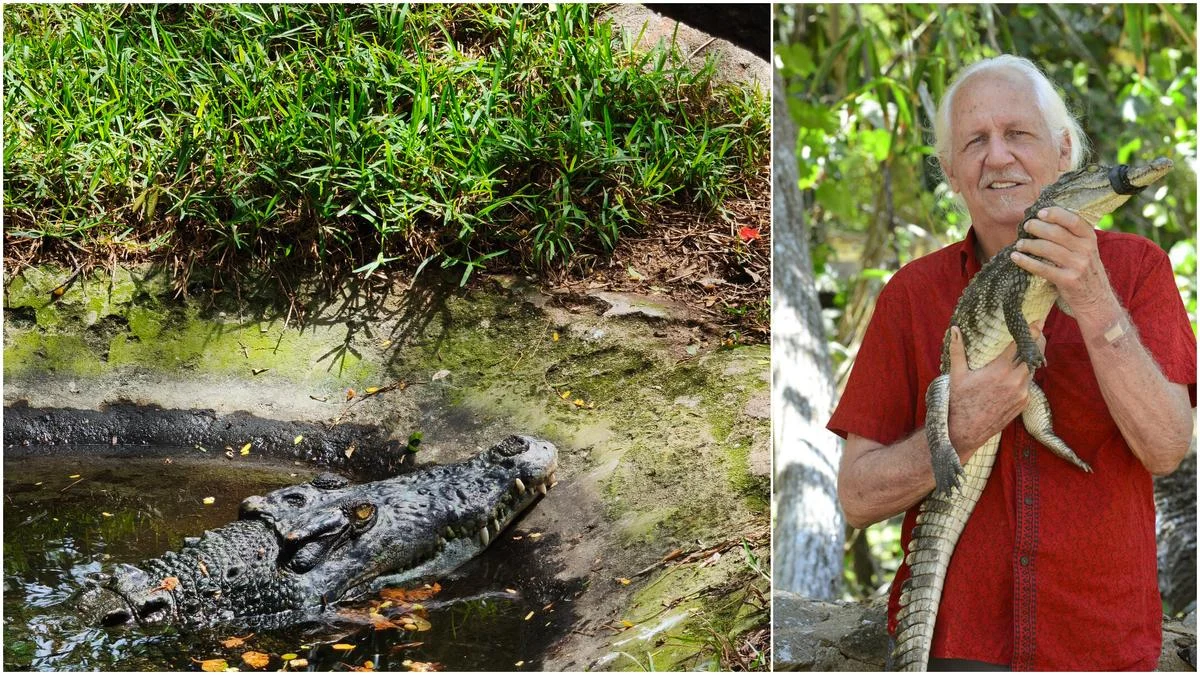
CHENNAI, India — In the late 1980s, on a stretch of the East Coast Road that was then little more than a desolate track through the scrublands of Tamil Nadu, a wooden box arrived at a fledgling institution. Inside was a gharial—one of the rarest and most distinctive crocodilians on Earth. For Zai Whitaker, co-founder of the Madras Crocodile Bank Trust (MCBT), the arrival was a moment of both trepidation and triumph.
“The gharial came in a box,” Whitaker recalls. “When the animal is released, you don’t know what it’s going to do. We were waiting and watching. Fortunately, it was very well behaved. It ran straight into the water, and since then there has been no looking back.”
Today, that single gharial has been joined by dozens more. As the Madras Crocodile Bank Trust celebrates its 50th anniversary, it stands not merely as a reptile zoo, but as a global powerhouse of herpetological research, conservation education, and social enterprise. From its humble beginnings funded by wedding gifts to its current status as a sanctuary for over 395 crocodiles and 32 reptile species, the MCBT’s journey is a testament to the power of vision in the face of ecological crisis.

Main Facts: A Hub for Reptilian Biodiversity
Located in Vadanamelli village, near the historic town of Mahabalipuram, the MCBT spans an eight-and-a-half-acre campus. While the "Croc Bank" is famous for its namesake inhabitants, its scope is far broader. The facility currently houses:
- 47 Gharials: A significant portion of the global captive population of this critically endangered, fish-eating crocodile.
- Three Indian Crocodilian Species: The Mugger (marsh crocodile), the Saltwater crocodile, and the Gharial.
- Diverse Reptilian Fauna: Including various species of turtles, tortoises, snakes, and lizards.
- Social and Scientific Wings: Including the Irula Snake Catchers’ Industrial Cooperative Society and the Andaman and Nicobar Environmental Team (ANET).
The institution is currently managed by a dedicated team of educators, researchers, and second-generation animal handlers who continue the work started by Romulus "Rom" Whitaker and Zai Whitaker in 1976.
Chronology: From a Truck Ride to a Global Institution
The genesis of the Croc Bank was born out of a desperate environmental emergency. By the 1960s, India’s crocodilian populations were in freefall, decimated by unregulated hunting for the skin trade and habitat loss. By the time the Indian Government enacted the Wildlife Protection Act in 1972, the three native species were on the brink of extinction.

1972: The Odisha Epiphany
The idea for a dedicated breeding facility came to Romulus Whitaker, already a noted herpetologist, during a grueling journey back from a crocodile survey in Odisha. Hitching a free ride on a truck, Whitaker wrote a letter to Zai, proposing a "croc-breeding facility" that could rewild animals in collaboration with the Forest Department. The plan was practical: the facility would charge for tickets to provide a modest income for the founders while serving a critical conservation need.
1976: The Founding
The Madras Crocodile Bank was formally established on August 26, 1976. The initial funding was a patchwork of personal sacrifice and family support. The couple used wedding gifts and sold personal belongings—including a valuable tape recorder—to secure the first plot of coastal land. At the time, land was purchased for approximately ₹5,000 per acre, a price that rose slightly as the seller noticed the founders’ infectious enthusiasm.
1980s – 1990s: Expansion of Scope
As the crocodile populations stabilized within the bank, the mission expanded. In 1990, the team established ANET to focus on the unique ecosystems of the Andaman and Nicobar Islands. Simultaneously, the Irula Snake Catchers’ Cooperative was formed. This was a landmark social intervention, providing the Irula tribe—traditional snake catchers whose livelihoods were destroyed by the ban on snakeskin—with a legal and life-saving profession: extracting venom for anti-venom production.

Supporting Data: The Science of Survival
The success of the MCBT is rooted in its rigorous approach to animal husbandry and field research. Unlike many traditional zoos, the Croc Bank functions as a "genetic bank."
Breeding and Rewilding
The primary goal has always been the replenishment of wild populations. The facility has pioneered captive breeding techniques for the Mugger and the Gharial, providing a "safety net" population that can be used for reintroduction programs when habitats are deemed safe.
Husbandry and Healthcare
Managing hundreds of apex predators requires specialized expertise. According to zoo educator Vaibhavi Bhardwaj, the health of reptiles is notoriously difficult to monitor because they are "masters of masking illness"—an evolutionary survival instinct.
"Our keepers are trained to observe small abnormalities in behavior every morning," Bhardwaj explains. The veterinary team constantly adjusts dietary supplements and conducts regular screenings for parasites to ensure the longevity of the residents.

Human-Wildlife Conflict Mitigation
One of the MCBT’s most vital modern contributions is the Snake Bite Mitigation Project. India suffers from one of the highest rates of snakebite mortality in the world. The MCBT’s research into venom potency, snake behavior, and community education is essential for reducing these fatalities.
Official Responses: The Human Element of Conservation
The leaders and staff of the MCBT emphasize that the institution’s strength lies in its people—those willing to embrace the "unlikely."
Zai Whitaker reflects on the early researchers, such as Jagannathan Vijaya and Satish Bhaskar, who laid the groundwork for turtle and gharial conservation in India. "We would tell them, ‘There are dacoits there, and you’ll spend the night sleeping on sandbanks with pythons.’ Their response was always, ‘Oh yeah, that’s great, I would love to do that.’"

This spirit persists in the current staff. G Gowrishankar, a second-generation animal handler, demonstrates a remarkable rapport with the animals. Observers often note that he "herds" the massive Mugger crocodiles with the ease of a shepherd tending to goats. This bond is built on decades of observation and a deep understanding of reptilian psychology.
Ganesh Muthiah, a trustee who began his journey as a volunteer, highlights the future-facing nature of the 50th-anniversary celebrations. "Rom is like our Indiana Jones," Muthiah says. To mark the milestone, Muthiah is embarking on a 15,000-kilometer journey across 20 Indian states over 120 days to launch the "Save the Reptiles" campaign.
Implications: The Next 50 Years of Reptile Advocacy
As the MCBT enters its sixth decade, the challenges facing India’s reptiles have shifted but not vanished. While the skin trade has been largely suppressed, the "modern dacoits" of habitat destruction—sand mining, river pollution, and climate change—pose existential threats to species like the gharial.

The "Keystone" Argument
A central pillar of the MCBT’s modern messaging is the role of reptiles as keystone species. Educators like Bhardwaj work to debunk the "cute and cuddly" bias in conservation. By explaining how crocodiles maintain the health of river ecosystems and how snakes control rodent populations that threaten food security, the MCBT is reframing reptiles as essential components of India’s ecological infrastructure.
Educational Evolution
The 50th-anniversary campaign aims to take the message of the Croc Bank far beyond the gates of the Chennai campus. By engaging in a massive cross-country road trip and hosting photography contests and school programs, the Trust seeks to foster a new generation of "reptile advocates."
A Model for Private Conservation
The MCBT serves as a blueprint for how private initiatives can complement state efforts. By combining tourism (ticket sales) with high-level research and social justice (the Irula cooperative), the Trust has created a sustainable model that has outlasted many government-funded projects.

As visitors walk through the shaded paths of the Vadanamelli campus, beneath trees planted by Rom and Zai half a century ago, the message remains clear. These animals may seem still, they may seem prehistoric, and they certainly aren’t "cuddly," but they are a vital part of India’s natural heritage.
"Time is, after all, relative," says Zai Whitaker, looking out over the hatchery. For the crocodiles of the Madras Crocodile Bank, time has been a journey from the brink of extinction to a secured, if still fragile, future.
Visitor Information
- Location: 4, East Coast Road, Vadanamelli Village, Mahabalipuram, Tamil Nadu.
- Operating Hours: Closed on Mondays.
- Entry Fees: ₹110 for adults; ₹50 for children.
- Current Campaign: 50th Anniversary "Save the Reptiles" National Tour.
