BARAMATI, MAHARASHTRA — In the semi-arid landscapes of the Pune district, the arrival of March usually signals a period of mounting anxiety for livestock farmers. As the heat intensifies, the lush residues of the monsoon-sown maize and sorghum vanish, leaving behind cracked earth and a desperate search for animal feed. However, a pioneering initiative by the ICAR-National Institute of Abiotic Stress Management (ICAR-NIASM) is rewriting this seasonal narrative of scarcity.
Known as the "CHARA Bank" (Climate Resilient Agroforestry for Animal fodder), this strategic intervention is turning underutilized field boundaries and degraded patches into perennial "fodder banks." By integrating deep-rooted trees, legumes, and grasses, the project is providing a blueprint for climate-resilient livestock farming in a region increasingly defined by water volatility.
Main Facts: A Crisis of Feed and Fortune
The livestock sector is a cornerstone of India’s rural economy, yet it faces a structural crisis: a chronic shortage of quality fodder. In Maharashtra, the statistics are particularly stark. According to 2020 estimates by the ICAR-Indian Grassland and Fodder Research Institute (IGFRI), the state faces a 31.3% deficit in dry fodder and a staggering 59.4% deficit in green fodder. Despite the critical role of livestock, fodder crops occupy a mere 3% of the state’s total cultivated area.

In Baramati, a survey of 60 livestock-keeping families conducted by ICAR-NIASM in early 2024 underscored the severity of the situation. Nearly 96% of farmers identified the lack of quality fodder as their primary challenge, while 87% reported acute scarcity during drought cycles. The reliance on seasonal crops like maize and sorghum creates a "hunger gap" during the summer months when irrigation is scarce.
The CHARA Bank project, supported by the National Bank for Agriculture and Rural Development (NABARD), seeks to bridge this gap. Rather than competing with food or cash crops for prime agricultural land, the initiative focuses on maximizing the productivity of marginal spaces—field bunds, fallow land, and degraded soil patches. By utilizing just 1,000 square meters (one-fourth of an acre), farmers can establish a perennial reserve that yields nutritious feed year-round.
Chronology: From Field Surveys to Digital Solutions
March 2024: Identifying the Vulnerability
The project began with an intensive diagnostic phase. Researchers from ICAR-NIASM documented the seasonal shifts in fodder sources. They found that during the kharif (monsoon) and rabi (winter) seasons, farmers relied almost exclusively on maize silage (88-90%). By summer, this shifted to sorghum (93%). When these ran out, farmers were forced to purchase expensive concentrates or crop residues, significantly eating into their profit margins.
Mid-2024: Development of the CHARA Models
Recognizing that no single solution fits every farm, scientists developed three distinct agroforestry models tailored to different soil types and land availability:

- The Multi-tier Model: Designed for field boundaries, utilizing vertical space.
- The Silvipasture Model: Integrating trees and grasses on degraded or fallow land.
- The Boundary Plantation Model: Specifically for field edges and bunds to ensure no loss of primary crop area.
Late 2024: Validation and Farmer Adoption
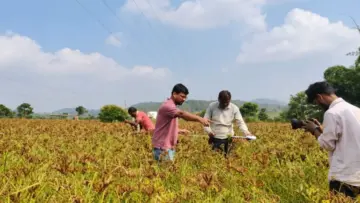
Long-term field trials were moved from research plots to the fields of 21 "lead farmers." These trials tested various tree densities and cutting heights for species like Sesbania, Desmanthus, and Leucaena. As the benefits became visible—specifically in milk yield and cost reduction—the project saw a rapid "farmer-to-farmer" expansion.
2025 and Beyond: Scaling and Digitalization
From the initial 21 participants, adoption has grown to over 150 farmers across seven villages. To support this growth, ICAR-NIASM is currently alpha-testing CharaCalc v1.0, a multilingual mobile application. This tool allows farmers to estimate their herd’s fodder requirements, manage inventories, and calculate the cost-benefit ratios of different fodder systems in real-time.
Supporting Data: The Economics of Nutrition
The success of the CHARA Bank is rooted in its superior nutritional profile compared to traditional crop residues. Laboratory analyses conducted by the institute revealed that while traditional grasses provide basic fiber, the CHARA Bank species are protein powerhouses:
- Sesbania: 28.2% crude protein.
- Desmanthus: 23.6% crude protein.
- Leucaena: 23.5% crude protein.
- Cenchrus Grass: 9.3% crude protein.
Impact on Dairy Production:
In a 90-day trial involving Holstein-Friesian cows, the introduction of just 5 kg of CHARA Bank green fodder per day allowed farmers to reduce their reliance on expensive commercial concentrates from 9 kg to 6 kg—a 33% reduction in feed costs.

The physiological results were equally impressive:
- Milk Yield: Increased from 17.05 to 17.69 liters per day.
- Milk Fat: Rose from 4.36% to 4.75%.
- Profitability: Farmers saw an additional return ranging from ₹2,670 to ₹26,000 per cow per lactation, depending on the animal’s baseline performance.
Impact on Small Ruminants (Goats):
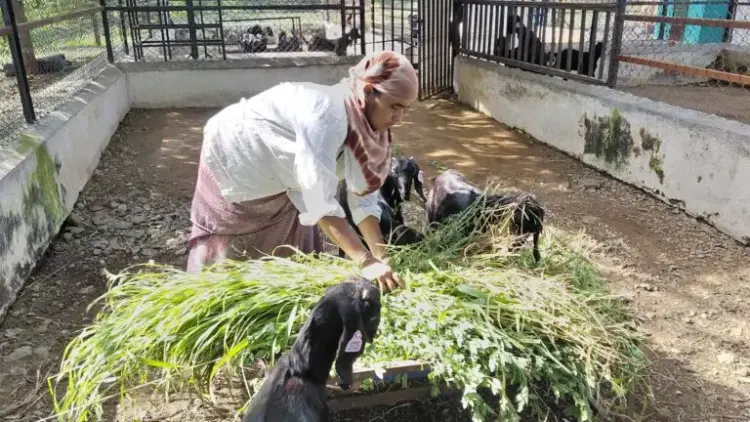
For goat farmers, the results were transformative. Osmanabadi goats fed from the multi-tier and silvipasture systems showed a 94% higher weight gain compared to those on conventional diets. Blood health indicators, including hemoglobin levels, also showed marked improvement. Researchers estimate that a small 1,000-square-meter fodder bank can fully support a unit of seven goats throughout the year.
Official Responses: A Multidisciplinary Approach
The leadership at ICAR-NIASM emphasizes that fodder security is a pillar of "abiotic stress management"—the science of helping agriculture survive environmental extremes.
Dr. K.S. Reddy, Director of ICAR-NIASM, noted that the project provides a crucial buffer against climate variability. "By providing leadership in research and innovation, we aim to ensure that farmers have the tools to manage the stresses of drought and land degradation," he stated.

S.B. Chavan, Senior Scientist and Principal Investigator, highlighted the land-use efficiency of the model. "The question is no longer simply how to produce more fodder, but how to ensure reliable, nutritious feed when water is scarce. We have demonstrated that fodder does not always need prime agricultural land. By treating degraded patches and boundaries as assets, we conserve the best land for food and cash crops."
Institutional support from NABARD has been pivotal in bridging the gap between research and field application. The collaboration ensures that the technology is not just scientifically sound but also "bankable," providing a model that financial institutions can support through micro-loans for establishment costs, which range from ₹15,000 to ₹25,000 per plot.
Implications: Beyond the Feed Trough
The implications of the CHARA Bank extend far beyond animal nutrition, touching upon social equity, environmental restoration, and economic resilience.
1. Women’s Empowerment and Labor Reduction:
In rural Maharashtra, the burden of fodder collection falls disproportionately on women. Farmers like Lata Gawade and Sadhana Khomane have reported that having a dedicated fodder source close to the homestead significantly reduces the "drudgery" of their daily routine. This time-saving allows women to focus on other income-generating activities or family welfare, effectively making fodder security a gender-equity issue.

2. Environmental Restoration:
The use of perennial species offers ecological benefits that seasonal crops cannot. Deep-rooted fodder trees access moisture from deeper soil strata, making them more resilient to surface droughts. Furthermore, nitrogen-fixing legumes like Desmanthus naturally improve soil fertility, reducing the need for chemical fertilizers and helping to restore degraded "murrum" soils.
3. Economic Stability in a Changing Climate:
As climate change makes monsoon patterns more erratic, the traditional reliance on seasonal rainfed fodder becomes a high-risk strategy. The CHARA Bank acts as a "biological insurance policy." By diversifying fodder sources and reducing the out-of-pocket expenditure on commercial feed (which currently accounts for 40-50% of rearing costs), farmers are better equipped to survive periods of economic and environmental shock.
4. The Path to Scalability:
While the results in Baramati are promising, the next challenge is scaling. This will require a robust network for planting materials and seeds, as well as continued extension support. The team at ICAR-NIASM is calling for "institutional convergence"—a unified effort between state departments, Krishi Vigyan Kendras (KVKs), and Farmer Producer Organizations (FPOs)—to integrate CHARA Bank models into regional agricultural policies.
Conclusion
The fields of Baramati are proving that fodder security does not require vast new tracts of land or massive irrigation projects. Instead, it requires a smarter, more integrated approach to the land already available. As the "CHARA Bank" continues to grow from a pilot project into a regional movement, it offers a hopeful vision for the future of Indian livestock farming: one where resilience is grown on the very edges of the field.