

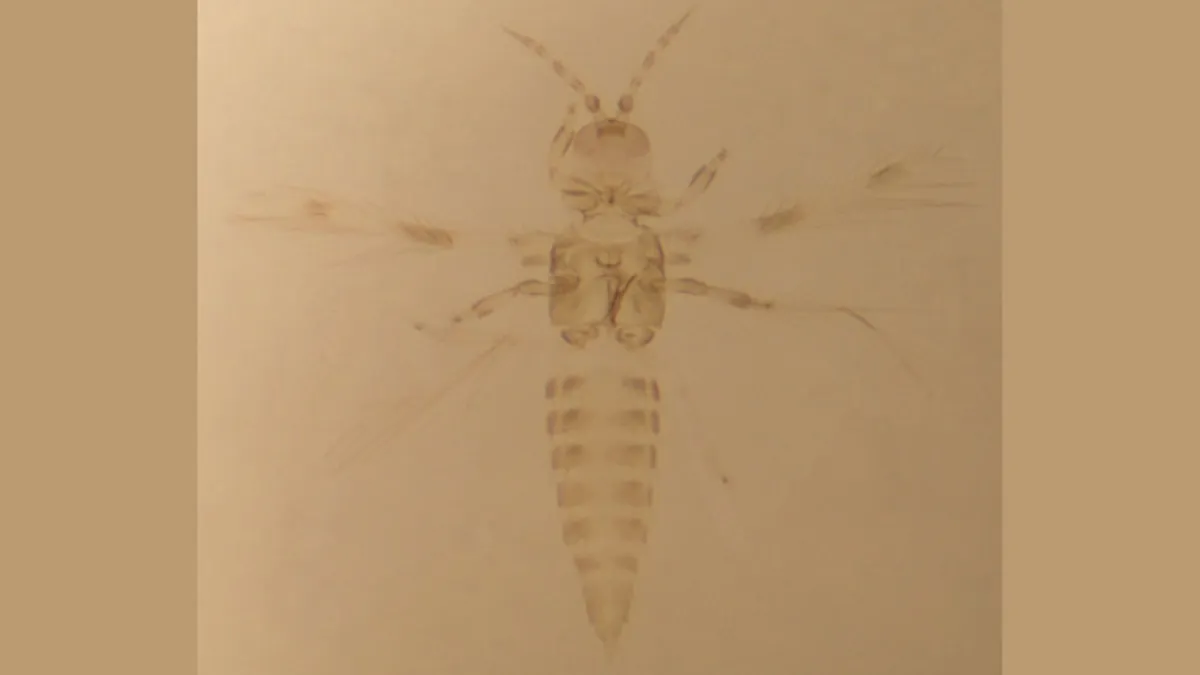
DAKSHINA KANNADA — In a significant contribution to the burgeoning catalog of India’s biological heritage, researchers have announced the discovery of a previously unknown species of thrips within the dense, humid corridors of the Western Ghats. The discovery, made in the Pilikula Nisargadhama nature reserve of Dakshina Kannada, highlights the intricate and often invisible layers of life that inhabit one of the world’s most critical biodiversity hotspots.
The new species, scientifically christened Trachynotothrips vyaghravahini, was found nestled within the vibrant blossoms of the Lagerstroemia tree, commonly known as the Crape Myrtle. This find, a collaborative effort between the Keladi Shivappa Nayaka University of Agricultural and Horticultural Sciences (KSNUAHS) and the National Bureau of Agricultural Insect Resources (NBAIR), underscores the importance of continued exploratory surveys in regions where the flora and fauna remain partially shrouded in mystery.
Main Facts: The ‘Tiger River’ Thrips
The discovery of Trachynotothrips vyaghravahini is more than just the addition of a name to a taxonomic list; it is a testament to the specialized niches occupied by microscopic organisms. Thrips, belonging to the order Thysanoptera, are minute, slender insects known for their fringed wings and unique asymmetrical mouthparts. While often dismissed as mere agricultural pests, many thrips species play vital roles in pollination and the maintaining of ecological balances within specific micro-habitats.
The specific epithet, vyaghravahini, is a linguistic bridge between modern science and ancient local history. Derived from the Sanskrit words vyaghra (tiger) and vahini (river or flowing), the name pays homage to the historical identity of the collection site. Pilikula, in the local Tulu language, translates to "Tiger Lake" or "Tiger Pond," referring to a time when wild tigers frequented the local water bodies to drink. By naming the insect after this heritage, the researchers have anchored a microscopic biological discovery to the macroscopic history of the Karnataka landscape.
The discovery was not an isolated event but part of a broader survey aimed at documenting the entomological diversity of the Western Ghats—a mountain range older than the Himalayas and recognized by UNESCO as a site of global importance for biodiversity conservation.

Chronology of the Discovery
The journey to identifying Trachynotothrips vyaghravahini began during a routine but intensive exploratory survey of the Dakshina Kannada district. The research team, comprising entomologists and taxonomists, focused their efforts on the Pilikula Nisargadhama, a multipurpose eco-park and biological forest located near Vamanjoor.
Phase 1: Field Collection
During the survey, researchers targeted flowering plants that serve as primary hosts for Thysanoptera. The Lagerstroemia tree, known for its prolific and colorful blooms, was identified as a potential site for high insect activity. Using specialized collection techniques—including the beating of flowers over white collection trays and the use of fine brushes—the team gathered several specimens of minute insects that were barely visible to the naked eye.
Phase 2: Preservation and Laboratory Preparation
Given that thrips typically measure between 0.5 mm and 2 mm in length, field identification is impossible. The collected specimens were preserved in a solution of 70% ethanol and transported to the laboratory. To facilitate high-resolution microscopic study, the insects underwent a rigorous "clearing" process to remove internal tissues while preserving the exoskeleton, followed by mounting on glass slides using Canada balsam.
Phase 3: Taxonomic Verification
Once mounted, the specimens were subjected to comparative morphological analysis. Researchers compared the physical characteristics of the Pilikula specimens with known species within the Trachynotothrips genus. It soon became evident that the specimens from Dakshina Kannada did not match any existing records in the global database of Thysanoptera.
Phase 4: Formal Description and Publication
Following the confirmation of its status as a new species, the researchers documented the unique traits of T. vyaghravahini. The findings were then peer-reviewed and published, officially entering the species into the scientific record. Alongside this discovery, the team also identified another species of thrips previously recorded only in Japan and China, marking its first documented appearance in India.

Supporting Data: Morphological Distinctions
Taxonomy is a science of minutiae, and the identification of Trachynotothrips vyaghravahini rested on several specific physical characteristics that differentiate it from its closest relatives, such as Trachynotothrips galloisi.
The researchers utilized high-powered light microscopy and scanning electron imagery to map the insect’s anatomy. The following data points were crucial in establishing the new species:
- Coloration of the Pterothorax: Unlike many of its cousins that feature dark or brownish stripes across their midsection, T. vyaghravahini possesses a uniformly pale, almost translucent pterothorax. This lack of pigmentation in the midsection is a primary diagnostic feature.
- Hind Leg Pigmentation: The study noted that the hind legs of the new species are entirely pale. In contrast, related species often show distinct bicolorous patterns or darker shading on the femora or tibiae.
- Abdominal Chaetotaxy: One of the most significant differences lies in the "hairs" or bristles (setae) found on the insect’s body. T. vyaghravahini lacks the prominent, spine-like lateral setae on its abdominal segments that are characteristic of other members of the genus.
- Sternal Marginal Setae: The arrangement and length of the microscopic bristles on the lower side of the abdomen (the sternites) were found to be unique, providing a "fingerprint" that separates this species from the East Asian varieties.
These subtle morphological shifts suggest a long period of evolutionary isolation within the Western Ghats, allowing the species to adapt specifically to the local flora of Karnataka.
Official Responses and Academic Perspectives
The discovery has been met with enthusiasm from the Indian scientific community, highlighting the role of state agricultural universities in fundamental research.
In a statement regarding the discovery, representatives from the Keladi Shivappa Nayaka University of Agricultural and Horticultural Sciences emphasized that such finds are critical for agricultural security. "While this specific species was found in a nature reserve, understanding the full spectrum of thrips diversity is essential. Thrips can be significant vectors for plant viruses. Knowing which species are native and which are invasive—like the Japanese species found during this survey—allows us to better protect our crops and natural ecosystems."

Taxonomists at the National Bureau of Agricultural Insect Resources (NBAIR) noted that the discovery of a Japanese/Chinese species alongside the new ‘Tiger River’ thrips indicates that the Western Ghats may be more interconnected with global insect migration patterns than previously thought, or that certain species have remained undetected in India for decades due to a lack of specialized taxonomic surveys.
"The Western Ghats are often called the ‘Great Escarpment of India,’ and they harbor thousands of species found nowhere else on Earth," said one lead researcher. "However, our knowledge is heavily biased toward ‘charismatic megafauna’ like tigers and elephants. This discovery proves that the ‘micro-fauna’ of the Ghats is just as rich and requires equal protection."
Implications: Ecology and the Taxonomic Impediment
The discovery of Trachynotothrips vyaghravahini carries several weightier implications for the fields of ecology, conservation, and agriculture.
The Taxonomic Impediment
Scientists often refer to the "taxonomic impediment"—the gap between the number of species that exist and the number of experts available to identify them. With millions of insect species still unnamed, discoveries like this one in Dakshina Kannada help close that gap. By documenting these species, researchers provide the baseline data necessary to monitor the impacts of climate change and habitat loss.
Indicators of Ecosystem Health
Insects like thrips are highly sensitive to environmental changes. The presence of a specialized species on the Lagerstroemia tree suggests a stable, healthy micro-ecosystem within Pilikula Nisargadhama. If these insects were to disappear, it could signal a decline in the health of the host plants or a disruption in the local food web, as thrips are a food source for various predatory insects and birds.

Global Connectivity
The secondary discovery—finding a thrips species previously thought to be exclusive to Japan and China—raises intriguing questions about insect distribution. It remains unclear whether this species is a natural resident of the Western Ghats that has simply gone unnoticed, or if it has been introduced through international trade and travel. This finding underscores the need for rigorous biosecurity and monitoring of "hitchhiker" insects that move across borders.
Conservation of the Western Ghats
As a "Hottest Hotspot," the Western Ghats face constant pressure from human encroachment, deforestation, and climate-induced shifts in rainfall. The discovery of T. vyaghravahini serves as a reminder that every acre of forest lost could result in the extinction of species we have yet to even name.
Conclusion
The ‘Tiger River’ thrips, Trachynotothrips vyaghravahini, stands as a symbol of the hidden wonders of the Western Ghats. Though it measures no more than a speck of dust, its discovery reflects the vastness of India’s biological diversity and the dedication of the scientists working to map it. As researchers continue to peer through their microscopes at the life forms inhabiting the flowers of Karnataka, it is certain that more secrets of the "Tiger River" and the surrounding mountains are waiting to be brought to light. This discovery is a call to action for the continued preservation of the Western Ghats, ensuring that the "flowing rivers" of life, both large and small, continue to thrive for generations to come.
