

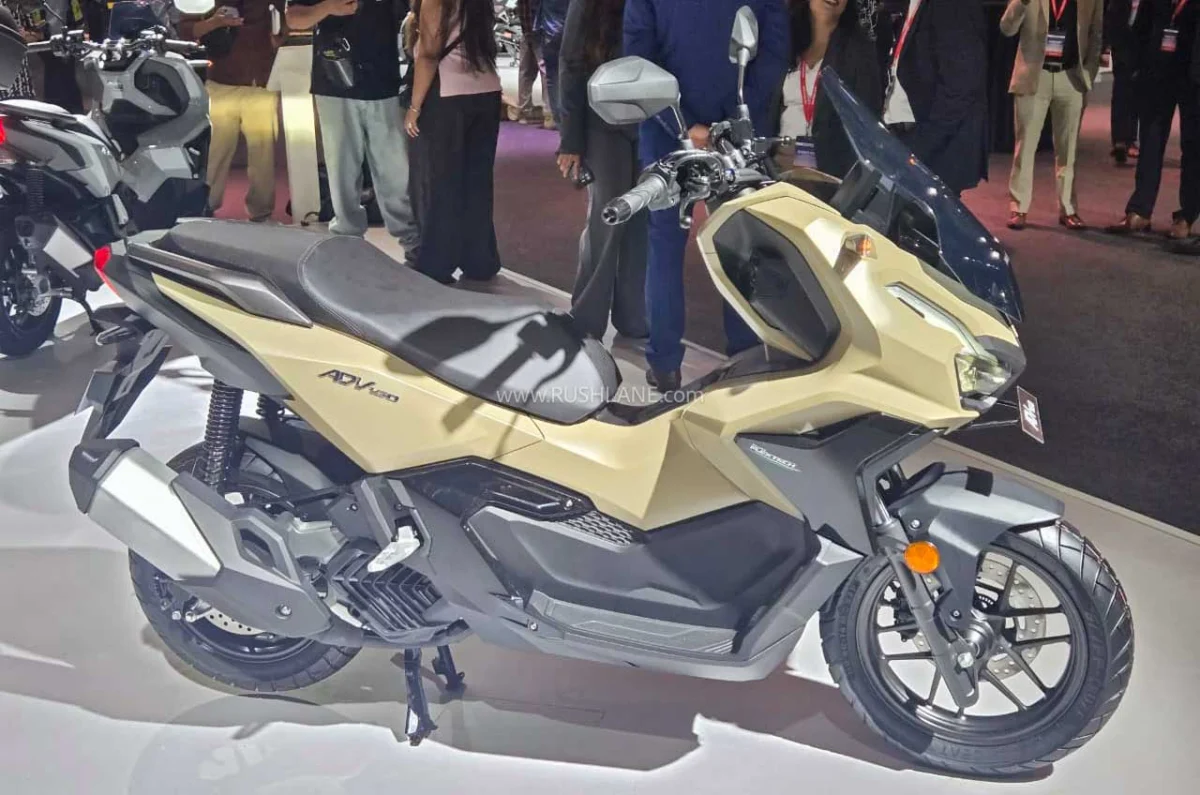
The Indian two-wheeler market, particularly the burgeoning premium scooter segment, has been abuzz with anticipation since the official launch of the Honda ADV160. Positioned as a rugged, tech-laden, and environmentally conscious alternative to traditional maxi-scooters, the ADV160 was poised to be a major disruptor. However, recent updates from Honda Motorcycle and Scooter India (HMSI) have cast a shadow over the immediate plans of many enthusiasts.
In a move that has surprised the industry and disappointed prospective owners, Honda has officially pushed back the delivery timeline for the ADV160. Originally slated to reach customers in mid-October 2026—perfectly timed for the Indian festive season—the delivery window has now been moved to "after New Year 2027." This shift represents a significant delay of at least three months, leaving many to wonder about the underlying causes and the impact on Honda’s market momentum.
Main Facts: A Shift in the Delivery Horizon
The Honda ADV160 was launched on August 25, 2026, with an ex-showroom price of ₹1.70 lakh. At the time of the announcement, the Japanese manufacturer opened bookings with a token amount of ₹5,000, promising that the first batch of units would be handed over to customers by mid-October 2026. This timeline was strategically chosen to capitalize on the high-demand period of Navratri and Diwali, during which vehicle sales in India typically see a massive surge.
However, the official HMSI website now carries a revised disclaimer. The updated text states: "Detailed configurations, and complete specifications will be unlocked closer to deliveries. Deliveries will commence after the New Year 2027."
This revision is notable for several reasons:
- Indefinite Window: By stating "after New Year 2027," Honda has avoided committing to a specific date in January, leaving the possibility of further delays into the first quarter of 2027.
- Information Gap: The statement suggests that final specifications are not yet fully "unlocked," implying that there may be minor tweaks or regulatory hurdles still being cleared for the Indian-spec model.
- Pricing Stability: As of now, there is no mention of a price hike despite the delay, though inflation and supply chain costs often fluctuate over such periods.
Chronology: From Launch Excitement to Delivery Delays
To understand the current situation, one must look at the timeline of the ADV160’s journey in the Indian market:
- August 25, 2026: Honda officially launches the ADV160 in India. The scooter is hailed as India’s first adventure-style scooter with E85 flex-fuel compatibility. Bookings commence immediately through the HMSI website and BigWing/Red Wing dealerships.
- Late August to Mid-September 2026: Marketing campaigns ramp up, focusing on the scooter’s rugged "Urban Explorer" persona and its advanced technological suite, including the Honda Selectable Torque Control (HSTC).
- Late September 2026: Without a formal press release, the official website updates its delivery disclaimer. The mid-October 2026 target is removed and replaced with the "after New Year 2027" timeline.
- October 2026 (Projected): Original delivery window missed. Customers who booked early expecting a festive season delivery are left without their vehicles.
- January 2027 (Expected): The new earliest possible window for the commencement of customer handovers.
Supporting Data: Specifications and Market Positioning
The Honda ADV160 is not just another scooter; it represents a niche but growing "Adventure Scooter" segment that blends the convenience of a twist-and-go automatic with the ruggedness of an adventure bike.

Technical Prowess and Flex-Fuel Innovation
The heart of the ADV160 is a 156.9cc, liquid-cooled, four-valve, eSP+ (enhanced Smart Power Plus) engine. While exact Indian power figures are awaiting final "unlocking," the global version produces approximately 16 PS of power and 14.7 Nm of torque.
The standout feature for the Indian market is its E85 compatibility. As India moves aggressively toward higher ethanol blending in fuel to reduce oil imports and carbon emissions, the ADV160 is a forward-thinking product. It is designed to run on fuel containing up to 85% ethanol, making it one of the most "future-proof" internal combustion engine (ICE) vehicles currently available in the country.
Premium Features
Honda has equipped the ADV160 with several high-end features to justify its ₹1.70 lakh price tag:
- Honda Selectable Torque Control (HSTC): Commonly known as traction control, this system senses a difference between front and rear wheel speeds and reduces engine torque to prevent rear-wheel slip on slippery surfaces.
- Honda RoadSync: A sophisticated smartphone connectivity suite that allows riders to access navigation, calls, and music via the TFT instrument cluster.
- Suspension and Braking: The scooter features long-travel suspension (31mm telescopic front forks and twin Showa rear shocks with sub-tanks) to handle broken Indian roads. It also includes disc brakes at both ends with single-channel ABS.
- Design: Inspired by its larger sibling, the X-ADV, it features an adjustable windscreen, all-LED lighting, and a massive 30-liter under-seat storage compartment.
Official Responses and Industry Speculation
As of this writing, Honda Motorcycle and Scooter India has not issued a detailed statement explaining the cause of the three-month delay. In the absence of an official reason, industry analysts point toward three likely scenarios:
- Supply Chain Bottlenecks: The ADV160 relies on several sophisticated components, including the E85-compliant fuel system and the TFT display modules. Global supply chain fluctuations in the semiconductor and specialized automotive parts sectors could be hindering the ramp-up of local assembly.
- Regulatory Fine-Tuning: Since the ADV160 is a pioneer in the E85 flex-fuel category for scooters in India, there may be ongoing final-stage testing or certification requirements from the Automotive Research Association of India (ARAI) to ensure the vehicle meets all durability standards for the varied Indian climate and fuel quality.
- Strategic Inventory Management: Honda might be ensuring a more robust service and spare parts network is in place before the first unit hits the road. Given that this is a premium product, a "zero-error" launch is critical for brand reputation.
While the website disclaimer is the only "official" communication, dealers have reportedly been instructed to inform customers of the revised timeline, offering them the choice to maintain their booking or seek a refund.
Implications: Market Impact and Competitive Landscape
The delay of the ADV160 has broader implications for both Honda and the Indian scooter market at large.
Missing the Festive Boom
In India, the period between October and November is the "golden quarter" for automotive sales. Missing this window means Honda is forfeiting a period where consumer sentiment is at its peak. Many buyers who were looking for a premium upgrade during Diwali may now turn their attention to available competitors rather than waiting until the following year.

The Competitive Response
The ADV160 sits in a high-performance bracket that is currently dominated by the Yamaha Aerox 155. The Aerox has built a cult following due to its R15-derived engine and sporty dynamics. By delaying the ADV160, Honda gives Yamaha more time to consolidate its hold on the segment.
Furthermore, Hero MotoCorp is preparing to launch the Xoom 160, another adventure-styled scooter. If Hero manages to bring the Xoom 160 to showrooms before January 2027, they could potentially poach customers who are tired of waiting for the Honda.
Impact on Flex-Fuel Adoption
The ADV160 was meant to be the poster child for India’s flex-fuel transition in the two-wheeler space. A delay in its delivery might slightly dampen the momentum of the government’s E20 and E85 initiatives, as it pushes back the real-world data collection and consumer feedback on how these high-ethanol engines perform in daily Indian usage.
Conclusion: Is the Wait Worth It?
For the enthusiast, the Honda ADV160 remains a unique proposition. No other scooter in India currently offers the blend of rugged "go-anywhere" styling, high-tech features like traction control, and the environmental credentials of E85 compatibility.
While a three-month delay is a significant setback—especially for those who planned their purchase around the 2026 festive season—the ADV160’s specifications suggest it will still be a highly relevant and class-leading product when it eventually arrives in early 2027.
However, the burden is now on Honda to ensure that no further delays occur. In a market as fast-paced and competitive as India, even a giant like Honda cannot afford to let its "Urban Explorer" stay in the garage for too long while its rivals continue to race ahead. For now, the Indian consumer must wait until the New Year to see if the ADV160 lives up to its significant promise.
