


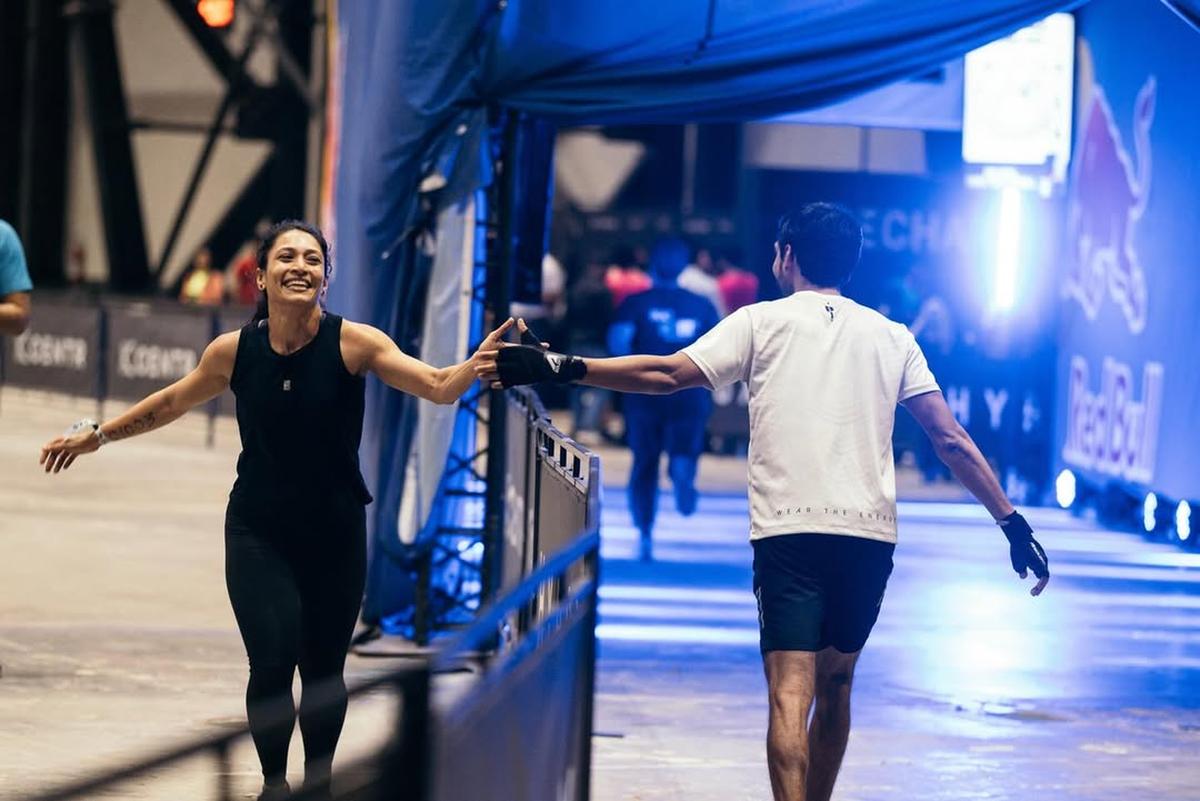
The world of fitness is abuzz with the rapid expansion of Hyrox, a unique global fitness racing series that seamlessly blends running with functional strength exercises. As the Ultrahuman Hyrox Bengaluru race kicks off this weekend, drawing an unprecedented 8,200 participants, it marks a significant milestone in India’s burgeoning fitness landscape. This surge in participation, evident from previous events in Mumbai and Delhi, underscores Hyrox’s growing appeal and its potential to redefine competitive fitness in the country.
The Genesis and Global Reach of Hyrox
Originating in Germany in 2017, conceptualized by race organizer Christian Toetzke and Olympian Moritz Fürste, Hyrox has evolved from a nascent concept into a formidable global brand. Its core philosophy centers on athletic performance fundamentals, designed to be accessible to a wide spectrum of age groups and fitness levels. This inclusivity is a key driver of its success, manifested through various competition formats: singles, doubles, and relays. Today, Hyrox boasts over 80 events across 25 countries, attracting more than 250,000 participants annually.

India officially joined this global circuit on October 17, 2024, becoming the seventh Asia-Pacific market to host the event. The inaugural Indian race was held in Mumbai in May of last year, followed by the current Bengaluru event. Future races are scheduled for Delhi in July and another in Mumbai in September, with registrations for the Delhi leg already open. This strategic rollout indicates a clear intent to establish a strong presence across major Indian metros.
Deepak Raj, founder and CEO of Yoska and country head for Hyrox and Ironman India, articulated the sport’s unique selling proposition in an earlier interview with The Hindu. "Gym-goers don’t have a race – this fills the gap," he stated. "Hyrox’s USP is that it’s accessible, and can be held any time of the year because it is an indoor event. Hyrox is for everybody; for all forms, and builds endurance and strength. You can do the doubles or a relay that has four participants." This emphasis on accessibility and holistic fitness development has clearly resonated with the Indian fitness community.

The Allure of Hyrox: A Test of Endurance and Strength
The appeal of Hyrox lies in its meticulously crafted race structure, which challenges participants with a demanding blend of endurance and strength. Raj Ganpath, a fitness and nutrition coach and co-founder of The Quad fitness centre in Chennai, admitted to a touch of nervousness as he gears up for his first Hyrox event in Bengaluru. "That nervous energy comes from the fact that this will be my first Hyrox event," he shared. Ganpath, competing in the Pro Doubles category, has dedicated over three months to rigorous preparation, focusing on race simulations that replicate the one-kilometer run interspersed with functional workout stations. This rigorous training regimen highlights the sport’s demanding nature and the commitment required from its athletes.
The training often involves adapting existing gym facilities, as specialized Hyrox setups are still emerging in cities like Chennai. Ganpath’s preparation, for instance, involved sessions at Momentum Studio in MRC Nagar, Chennai, where the focus was on mirroring race conditions as closely as possible.

As the Bengaluru event approaches, Ganpath’s training has shifted to a tapering phase. "You want to taper down and make sure you show up on race day feeling fresh and recovered," he explained. This strategic approach emphasizes the importance of rest and recovery in optimizing performance, a crucial aspect of any competitive endurance event. He further elaborated on the delicate balance required: "The idea is not to overdo things at this stage; you don’t want to drain yourself. You also don’t want to take the entire week off, because then you risk feeling deconditioned." The focus is on maintaining activity without overexertion, ensuring the body remains primed and the central nervous system engaged.
For many, like Ganpath, the benefits extend beyond the race day itself. "To be very honest, for me, Hyrox is already done; I’ve gotten everything I needed out of the training," he expressed. "My endurance has improved, my strength has improved, and my nutrition has become more streamlined." This sentiment underscores the transformative power of dedicated training, highlighting how Hyrox serves as a catalyst for significant personal fitness gains.

The Ecosystem Surrounding Hyrox: Growth and Affiliation
The burgeoning popularity of Hyrox in India mirrors trends observed in earlier adopter markets like Singapore. Kunal Rajput, a Mumbai-based Nike Training coach, notes the widespread excitement within the global fitness community. "In places like Singapore and other parts of the world, the fitness community was really excited, and it became a thing because everybody wanted to participate," he remarked. These markets have been hosting multi-day Hyrox events for several years, demonstrating a mature and well-established ecosystem.
This growth is also reflected in the development of a structured training ecosystem around the sport. Rajput points out that gyms and training centers looking to align with Hyrox, either through affiliation or specialized programming, pay annual fees ranging from ₹50,000 to ₹60,000. "You pay a fee and you’re sorted," he stated, indicating a growing network of Hyrox-certified facilities and coaches.

Rajput also draws a distinction between participation and competition within the Hyrox community. "There’s a massive pool of people who are participating, but only a certain pool who are actually competing," he observed. For many, the primary draw is the experience itself, the opportunity to participate with partners, friends, or even strangers, fostering a sense of camaraderie. "People are signing up to try it out, to do it with their partners, with a group of friends, even for the social aspect of it," he added, acknowledging the role of social visibility and "social clout" in its appeal.
This sense of shared effort is a powerful bonding agent. Rajput recounts his own experience participating in the Bangkok Hyrox with his sister, his sixth race. He emphasized how the format naturally brings people together, irrespective of their relationship. "Whether it’s friends, family members, or even complete strangers on the same course, there is a shared rhythm to the experience," he said. "It’s a lovely event in that sense – people come together, push through it side by side, and that makes the whole thing far more enjoyable."

The Critical Role of Nutrition and Recovery
Beyond the physical exertion, Shwetambari Shetty, a Bengaluru-based fitness trainer, highlights the paramount importance of nutrition and recovery in optimizing performance at Hyrox events. Shetty, who competed in the Women’s Pro Doubles at the inaugural Mumbai event and secured a podium finish, qualifying for the World Championships in Sweden, emphasizes that endurance events demand a distinct fuelling strategy compared to strength-focused disciplines like powerlifting.
"If training builds the base, she stresses that nutrition and recovery determine how well that training translates on race day," she explained. Central to this strategy is carbohydrate loading, a critical practice for maximizing glycogen stores, the primary fuel source for prolonged physical activity. Shetty advises consuming approximately five grams of carbohydrates per kilogram of body weight early in the week, increasing this to seven to eight grams per kilogram in the two days leading up to the race.

Race-day fuelling also requires meticulous planning. Shetty recommends practicing with energy gels during training to determine individual tolerance and timing. Typically, consuming one gel 15 to 20 minutes before the race, followed by smaller doses every 20 to 30 minutes, is a common approach.
Beyond immediate energy provision, managing fatigue-related issues like cramping is also crucial. Common strategies in endurance sports, such as using salt tablets, electrolyte mixes, or pickle juice-based solutions, can help mitigate these challenges.

Shetty also points out that preparation extends beyond diet and training to practical considerations like clothing. "If you’re carrying gels or snacks, you need functional clothing with pockets," she advised, recalling instances where participants faced discomfort and even injury due to ill-fitting storage solutions.
Footwear Innovation for a Hybrid Sport
The unique demands of Hyrox, bridging running and functional strength, have spurred innovation in athletic footwear. Shreya Sachdev, Puma India’s Head of Marketing and Strategic Initiatives, Footwear, explains that traditional training or running shoes are not fully optimized for this hybrid discipline. "There is running, but there’s also multiple forms of functional fitness," she noted. "So regular training shoes don’t work, and typical running shoes aren’t fully optimized either."

In response, Puma, in partnership with Hyrox, has developed a specialized iteration within its Nitro line. This footwear is designed to offer the necessary stability and grip for functional movements like wall balls, sled pushes, and sled pulls, while still providing adequate cushioning for the running intervals. "The key difference is stability and grip," Sachdev emphasized. "When you’re doing movements like wall balls, sled pushes or sled pulls, you need a grounded, stable base. You also need traction."
These Hyrox-adapted Nitro models strike a balance between cushioning for running and lateral stability and enhanced outsole grip for strength exercises. This ensures athletes can transition seamlessly between disciplines without compromising performance. The current drop, in a distinctive pink colorway, is the official Hyrox edition for the season and is expected to make its debut at the Bengaluru race. The Puma x Hyrox footwear range is priced between ₹12,999 and ₹21,999.
Hyrox’s Commitment to Inclusivity: The Adaptive Category
A cornerstone of Hyrox’s philosophy is its commitment to inclusivity, exemplified by its Adaptive category. Veenita Johnson, a performance coach from Pune and a Hyrox-certified trainer, is a testament to this. Living with bilateral peroneal neuropathy (foot drop) since 2020, she is set to compete in the Adaptive category at the Bengaluru race, having previously participated in the doubles category.
The Adaptive category is designed to accommodate athletes with a range of physical conditions, allowing for modifications to standard race protocols. Veenita, for instance, will complete the full one-kilometer runs but may opt for reduced distances in strength stations like the sled push or pull, or utilize a plyometric box for added stability during movements like wall balls. "You can choose whether to take that support or not – it’s flexible depending on your condition," she explained.

Crucially, Hyrox provides the flexibility within the adaptive category to participate for the experience even if significant modifications are required. Veenita’s training regimen is exceptionally rigorous, incorporating additional mobility work, physiotherapy-led exercises, and focused strengthening to compensate for muscle groups with reduced functionality. She recently completed a 10-kilometer run as part of her preparation, demonstrating the intense dedication required.
The growing appeal of Hyrox has also attracted brands seeking to engage with its community-driven audience. The League, a members-only dating app, will host an activation at the Bengaluru edition, featuring a "Hyrox Cam" to capture athletes in action and reframe traits like consistency and resilience as desirable qualities. This initiative aims to foster connections within the high-energy environment and extend them digitally.

Navigating the Pricing Debate
The pricing of Hyrox events has been a point of discussion, with registration fees ranging from ₹7,500 to upwards of ₹10,000, depending on the category. Raj Ganpath acknowledges that this can appear expensive when compared to traditional road races like 10Ks or half marathons. However, he quickly contextualizes this by highlighting the significant operational costs associated with an indoor, controlled environment.
"Here, you’re dealing with an indoor, controlled environment – air-conditioning, specialised equipment like sleds and ski ergs, plus judges and timing systems," he explained. "Naturally, the cost of putting something like this together is much higher." Spectator passes, priced between ₹500 and ₹1,500, also contribute to the event’s revenue stream.
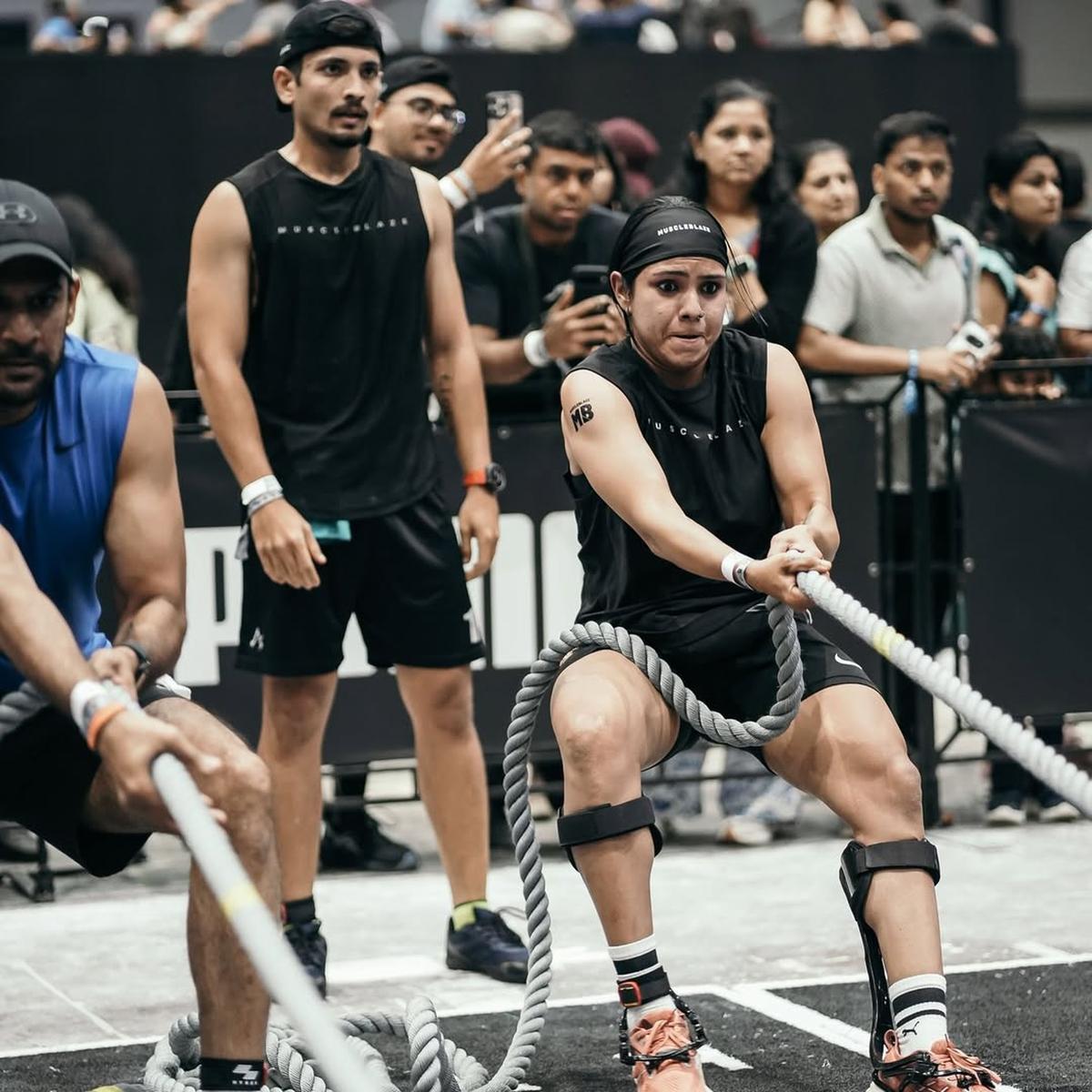
Ganpath views India as being in an early phase of adoption for Hyrox. "We’re still at that stage where people are trying it out," he stated. "And like anything new, the first set of participants are usually the ones willing to pay that premium." As the sport matures and its infrastructure develops further in India, it is plausible that pricing structures may evolve, potentially making participation more accessible to a broader demographic.
The rapid ascent of Hyrox in India signifies more than just a new fitness trend; it represents a paradigm shift in how athletic challenges are perceived and pursued. With its blend of accessibility, intensity, and a strong sense of community, Hyrox is poised to leave an indelible mark on the Indian fitness landscape for years to come.
