

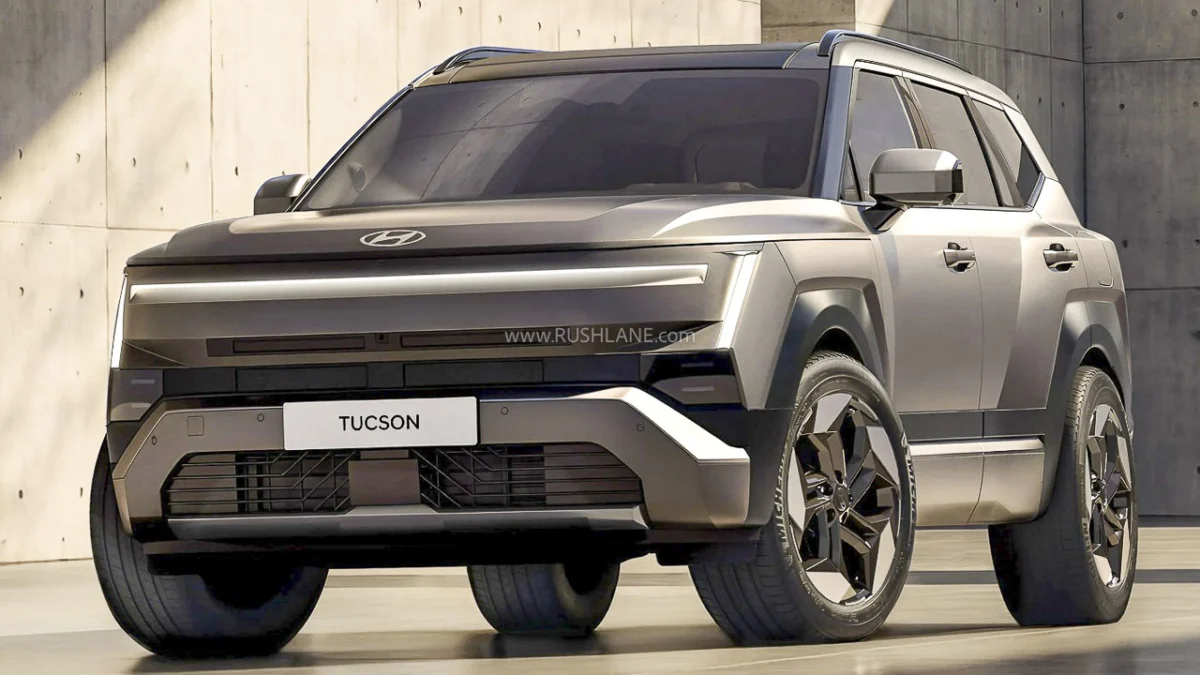
SEOUL, SOUTH KOREA – Hyundai Motor Company has officially pulled the wraps off the fifth-generation Tucson, signaling a radical departure from the design language that defined its predecessor. Unveiled in its home market of South Korea, the 2027 Hyundai Tucson trades the fluid, sharp-edged "Parametric Dynamics" of the current model for a sophisticated, boxy, and upright silhouette. This transformation is not merely cosmetic; the all-new Tucson boasts increased dimensions, a complete interior digital overhaul, and a renewed focus on rugged utility, positioning itself to challenge the dominance of the Toyota RAV4 and Honda CR-V in the global mid-size SUV segment.
Main Facts: A Bold Pivot in Design and Dimension
The fifth-generation Tucson represents the latest execution of Hyundai’s "Art of Steel" design philosophy. While the fourth-generation model was celebrated for its avant-garde, jewel-like grille and hidden lighting, the 2027 iteration moves toward a more "monolithic" and "architectural" presence.

Key Specifications at a Glance:
- Length: 4,700 mm (+60 mm over predecessor)
- Wheelbase: 2,785 mm (+30 mm)
- Width: 1,905 mm (+40 mm)
- Height: 1,685 mm
- Infotainment: Portrait-oriented central touchscreen with "Pleos" UI
- Design Theme: "Art of Steel" – Boxy, upright, and rugged.
The most striking change is the vehicle’s stance. By adopting a flatter bonnet and nearly vertical front and rear fascias, Hyundai has given the Tucson a "big SUV" feel that mirrors the recently redesigned Santa Fe. This shift suggests that Hyundai is leaning into the current consumer preference for "outdoor-ready" aesthetics, even in urban-focused crossovers.
Chronology: From Concept to the 2027 Global Rollout
The evolution of the Tucson has been one of the most rapid in the automotive industry. Since its inception, the nameplate has transitioned from a budget-friendly compact to a style-leader.

- Late 2023 – Early 2024: Rumors began circulating regarding a "radical" fifth generation as Hyundai designers sought to align the Tucson with the boxy language seen in the new Santa Fe and the IONIQ 5.
- August 2026: Official unveiling in Seoul, South Korea. Hyundai confirms the vehicle will be marketed globally as a 2027 model year vehicle.
- Late 2026: Production is expected to commence at Hyundai’s Ulsan plant for domestic and European markets.
- Early 2027: Anticipated launch in North America and other major global markets, including potential discussions for an Indian debut to follow later in the year.
This timeline places Hyundai in a strategic position to capture buyers looking for the "next big thing" in a segment where competitors are currently mid-cycle.
Supporting Data: Engineering a Larger, More Accessible Cabin
The increase in physical dimensions is a calculated move by Hyundai engineers to address one of the few criticisms of the previous model: rear-seat ingress and interior "airiness."

Dimensional Analysis and Passenger Comfort
The 60mm increase in length and 30mm stretch in the wheelbase are not just for show. According to Hyundai’s technical data, these changes have direct benefits for passenger ergonomics:
- Second-Row Headroom: Increased by 29 mm, a result of the flatter, more horizontal roofline compared to the previous sloping coupe-like silhouette.
- Rear Door Aperture: In a significant engineering feat, the rear doors now open to an angle of 83 degrees, up from 73 degrees in the fourth generation. This makes the installation of child seats and entry/exit for elderly passengers substantially easier.
- Luggage Capacity: While exact liter-counts are pending final SAE certification, the squared-off rear section is expected to offer a more "usable" cargo area, allowing for taller items to be loaded without interfering with the rear glass.
The Digital Cockpit
Inside, the Tucson abandons the traditional integrated dual-screen horizontal dash. Instead, it features a portrait-oriented central touchscreen that flows into a floating center console. This setup runs the Pleos infotainment interface, Hyundai’s next-generation software designed for faster processing and more intuitive smartphone-like gestures. A secondary slim digital display acts as the instrument cluster, positioned high to remain within the driver’s line of sight without requiring a traditional cowl.

The XRT Variant: Ruggedness as a Sub-Brand
Recognizing the growing "overlanding" trend, Hyundai simultaneously debuted the Tucson XRT. This is no longer just an appearance package but a distinct trim aimed at lifestyle enthusiasts.
XRT-Specific Enhancements:

- Grille: A unique rectangular-pattern mesh that emphasizes width.
- Protection: Heavy-duty black cladding around wheel arches and deeper, silver-finished skid plates.
- Utility Lighting: In a first for the segment, the XRT features touch-sensitive LED lighting integrated into the inner tailgate. This provides downward-facing illumination for camping or loading gear at night.
- Interior: Patterned, easy-clean upholstery and all-weather "XRT" branded floor mats come as standard.
Powertrain Expectations: Electrification at the Core
While Hyundai has remained tight-lipped about the specific horsepower figures for every market, the platform is confirmed to support a diverse array of drivetrains.
- 1.6L Turbo-Hybrid (HEV): Expected to be the volume seller, featuring an updated electric motor and battery chemistry for better thermal management and stop-start smoothness.
- Plug-in Hybrid (PHEV): Targeted at European and North American markets, aiming for an all-electric range exceeding 50 miles (80 km) to meet tightening emissions regulations.
- Internal Combustion (ICE): Standard 2.5L or 2.0L naturally aspirated engines may continue in specific markets like India or Southeast Asia, where charging infrastructure and hybrid costs remain barriers.
Official Responses and Philosophy
During the reveal, Hyundai’s design leadership emphasized that the Tucson is the "heart of the brand." A spokesperson for Hyundai Global Design noted:

"With the fifth-generation Tucson, we wanted to move beyond mere ‘styling’ and enter the realm of ‘character.’ The ‘Art of Steel’ philosophy is about celebrating the strength of the material. By moving to a more upright, boxy form, we provide the customer with a sense of security and maximum space efficiency without sacrificing the futuristic LED signatures that define a Hyundai."
Industry analysts suggest that this design pivot is a response to the "softening" of SUV designs by competitors. By going "tough," Hyundai creates a visual USP (Unique Selling Proposition) that stands out in a crowded parking lot.

Implications: What This Means for the Global Market and India
The arrival of the 2027 Tucson has ripple effects across the entire automotive landscape, particularly for Hyundai’s smaller, high-volume models.
1. The "Creta" Connection
In markets like India, the Tucson serves as a "halo" SUV. However, the design cues seen here—the vertical lighting, the boxy wheel arches, and the horizontal LED bars—are highly likely to trickle down to the next-generation Hyundai Creta, expected in early 2027. If the Tucson is any indication, the next Creta will move away from its current "curvy" look toward a "Mini-Palisade" or "Mini-Tucson" aesthetic, further solidifying Hyundai’s rugged SUV identity.

2. Market Positioning
By increasing the Tucson’s size, Hyundai is narrowing the gap between the Tucson and the three-row Santa Fe. This allows the Tucson to compete more effectively in the "Large-Compact" sub-segment, appealing to families who need the space of a mid-size SUV but prefer the maneuverability of a five-seater.
3. Technological Benchmarking
The introduction of the Pleos interface and the portrait screen marks a shift in how Hyundai views the "Mobile Living Space." The inclusion of dual wireless charging and a floating console suggests that Hyundai is prioritizing cabin storage and connectivity over traditional mechanical layouts.

Conclusion
The fifth-generation 2027 Hyundai Tucson is a bold statement of intent. It rejects the industry trend of "safe" evolutionary design in favor of a revolutionary, boxy aesthetic that prioritizes presence and practicality. With its increased dimensions, sophisticated interior technology, and the rugged appeal of the XRT variant, the Tucson is well-equipped to maintain its status as a global bestseller. As it begins its journey from South Korean showrooms to the rest of the world, it sets a new bar for what a modern, multi-purpose SUV should be—proving once again that in the "Art of Steel," Hyundai is currently holding the brush.
