

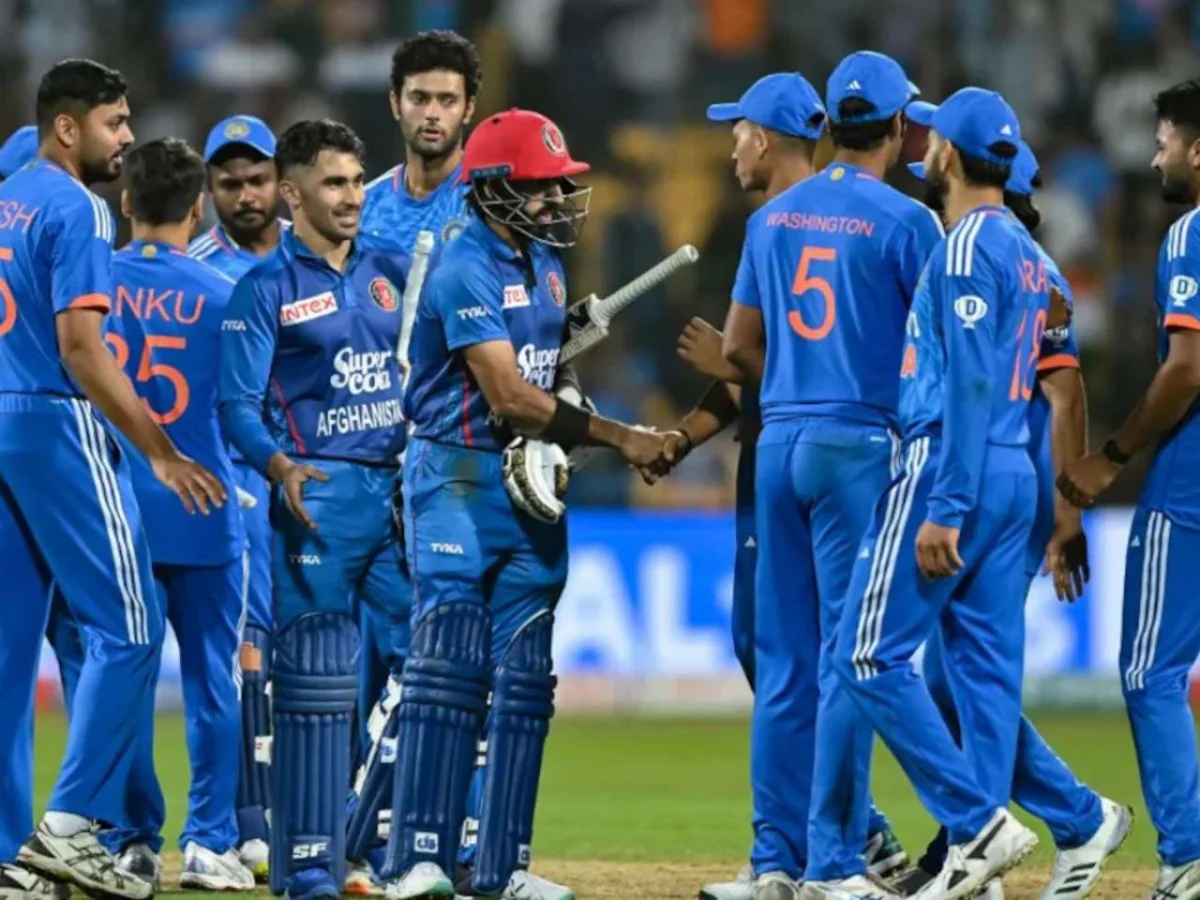
New Delhi, India – After a brief period of intense speculation and logistical concerns, the highly anticipated first Twenty20 International (T20I) between India and Afghanistan is now confirmed to proceed as scheduled on Sunday, September 13. The Arun Jaitley Stadium in New Delhi will host the opener of this historic bilateral series, despite an earlier request from Delhi Police to reschedule the fixture due to the ongoing BRICS Summit in the national capital. The Delhi & District Cricket Association (DDCA) has officially allayed fears of a postponement, assuring cricket fans that all necessary arrangements are in place.
The confirmation comes as a relief to cricket enthusiasts and both cricketing boards, ensuring that the much-awaited clash between the cricketing giants and the rapidly rising Afghan side will unfold as planned. The series holds particular significance as it marks Afghanistan’s first-ever ‘home’ bilateral series against India across any format, albeit played on Indian soil due to prevailing security concerns in Afghanistan.
The Schedule Standoff: Delhi Police vs. DDCA
The uncertainty surrounding the fixture emerged earlier in the day when the Delhi Police formally communicated their apprehensions to the DDCA. Their primary concern revolved around the immense logistical challenge of simultaneously managing the security and traffic demands of two major events: the BRICS Summit, involving a significant presence of international VIPs, and a high-profile international cricket match expected to draw close to 30,000 spectators.
Initial Concerns Emerge
The request from Delhi Police was rooted in a practical assessment of the city’s capacity to handle dual high-security events. The BRICS Summit, a gathering of leaders from Brazil, Russia, India, China, and South Africa, necessitates extensive security protocols, traffic diversions, and VIP movement management across the city. The Bharat Mandapam, the primary venue for the summit, is located less than five kilometres from the Arun Jaitley Stadium, creating a geographical overlap that amplified the police’s concerns.
)
Sources within the Delhi Police indicated that the deployment of personnel and resources for the BRICS Summit was already at its peak, stretching the force’s capabilities. Introducing an event of the magnitude of an India-Afghanistan T20I, with its associated crowd control, security checks, and traffic management requirements, posed an additional strain that they felt might compromise overall safety and efficiency. The letter sent to the DDCA highlighted the potential for significant traffic disruptions, public inconvenience, and an overstretched security apparatus if both events proceeded concurrently in such close proximity.
DDCA’s Swift Confirmation
Responding promptly to the Delhi Police’s concerns, the DDCA engaged in a series of urgent consultations, culminating in a decisive meeting with the Delhi Traffic Police. The outcome of this meeting was positive, leading to the DDCA’s unequivocal announcement that the match would proceed as originally scheduled.

In a statement released on their official X (formerly Twitter) handle, the DDCA confirmed: "India–Afghanistan 1st T20I on 13 September at Arun Jaitley Stadium will go ahead as scheduled. Following a meeting with Delhi Traffic Police, DDCA has been assured of all necessary support and arrangements. No postponement." This brief yet firm statement put an end to the speculation, reassuring fans and stakeholders alike.
The DDCA’s ability to secure assurances from the Delhi Traffic Police underscores the collaborative spirit often seen in managing major events in the capital. It suggests that comprehensive contingency plans, enhanced coordination, and potentially adjusted logistical strategies have been agreed upon to ensure both the BRICS Summit and the cricket match can run smoothly without compromising public safety or the convenience of attendees. This swift resolution highlights the flexibility and preparedness of sports administrators and law enforcement agencies when faced with unforeseen challenges.
)
A Closer Look at the Logistical Labyrinth
The initial request for rescheduling by the Delhi Police was not made lightly. It stemmed from a thorough understanding of the intricate logistics involved in managing large-scale events, especially when they converge in a densely populated metropolitan area like Delhi. The confluence of a high-stakes international summit and a popular sporting fixture within a few kilometres presented a unique set of challenges.
The BRICS Summit Conundrum
The BRICS Summit is a significant international event that brings together heads of state and senior diplomatic delegations. The security arrangements for such a gathering are elaborate, involving multiple layers of protection, dedicated motorcades, secure routes, and heightened surveillance across vast areas of the city. Roads leading to and from the Bharat Mandapam, as well as routes used by VIPs, are often subject to temporary closures, diversions, and stringent access controls.
)
The sheer volume of security personnel, emergency services, and logistical support required for the summit would naturally draw heavily on the city’s resources. Deploying additional personnel for stadium security, crowd management, and traffic control around the Arun Jaitley Stadium, while the BRICS Summit was in full swing, presented a considerable strain on the available manpower and infrastructure. The police’s concern was primarily about resource allocation and preventing any potential security vulnerabilities or public order issues that might arise from an overstretched force.
Navigating Delhi’s Traffic and Security
Delhi’s notorious traffic is a constant challenge, even on regular days. Adding the movement of thousands of cricket fans, many of whom would use private vehicles or public transport, to the already complex traffic management plan for the BRICS Summit was a major headache. The police would have to devise strategies to segregate traffic flows, manage parking for cricket attendees, and ensure that VIP routes for the summit remained clear and secure.
)
Furthermore, the Arun Jaitley Stadium, located in the heart of Old Delhi, is surrounded by busy commercial areas and residential zones. Ensuring smooth ingress and egress for nearly 30,000 spectators, coupled with stringent security checks at the stadium gates, requires meticulous planning and a substantial police presence. The proximity to the summit venue meant that any incident, however minor, at the stadium could have broader implications for the city’s overall security posture during the BRICS event. The DDCA’s confirmation implies that a robust plan has been hammered out, likely involving enhanced coordination between stadium security, local police, and traffic authorities, potentially with specific timings or routes designated to minimise overlap and disruption.
Afghanistan’s Unique "Home" Series in India
This T20I series carries a special resonance, particularly for the Afghanistan Cricket Board (ACB). While India is providing the venues, Afghanistan is technically the host, a recurring arrangement for the war-torn nation due to persistent security challenges at home.
)
A Historic Bilateral Encounter
The fact that this marks Afghanistan’s first "home" bilateral series against India in any format underscores the growing stature of Afghan cricket and the strong bond between the two cricketing nations. India has consistently supported Afghanistan’s cricketing journey, providing training facilities, playing opportunities, and even a temporary home ground in the past. This series is a testament to that enduring relationship and a significant milestone for Afghanistan as they continue to establish themselves on the international stage.
Playing a ‘home’ series against a cricketing powerhouse like India, even on neutral territory, offers invaluable experience and exposure for the Afghan team. It provides them with an opportunity to test their mettle against top-tier opposition in familiar conditions, albeit away from their actual home fans. The series also serves as a crucial platform for the ACB to fulfill its commitments to international cricket and continue developing its talent pool.
)
The Significance for Afghan Cricket
For Afghanistan, hosting a series, even in India, is a powerful statement about their progress and determination. It allows them to control aspects of the series’ branding, sponsorships, and logistics, fostering a sense of ownership that is vital for a developing cricketing nation. The financial implications of hosting, even if revenues are shared, are also significant, providing funds that can be reinvested into grassroots development and infrastructure.
Moreover, the series offers a chance for Afghan players to perform on a grand stage against some of the world’s best. Many Afghan cricketers have gained fame through global T20 leagues, but a bilateral series against India provides a different kind of challenge and recognition. It’s an opportunity for their stars to shine and for emerging talents to make a name for themselves, further inspiring a new generation of cricketers back home, despite the geographical distance. The continued support from India, by hosting such series, is instrumental in Afghanistan’s journey towards becoming a fully self-reliant cricketing nation capable of hosting matches on its own soil in the future.
)
Series Overview and Future Engagements
Beyond the opening fixture, the entire three-match T20I series is slated to take place in New Delhi, offering a concentrated dose of high-octane cricket. The scheduling also provides a vital preparatory window for both teams ahead of a significant multi-sport event.
The Full T20I Fixture List
Following the inaugural match on September 13, the action will continue with the second T20I scheduled for September 15, and the third and final match on September 17. All three encounters will be held at the Arun Jaitley Stadium, allowing both teams to acclimatize to the conditions and offering fans a consistent venue for the series. This compact schedule, with minimal travel, is beneficial for player recovery and tactical adjustments between matches.
)
The series is expected to draw considerable attention, not only for the cricketing rivalry but also for the narrative of Afghanistan’s growth. Each match will be crucial for both sides, as they look to build momentum and fine-tune their strategies. For India, it’s an opportunity to test their bench strength and solidify their T20 combination, while for Afghanistan, it’s a chance to prove their mettle against one of the world’s top teams.
Pre-Asian Games Showdown
Immediately after the conclusion of the T20I series, both the Indian and Afghan squads will embark on a journey to Japan for the 2026 Asian Games. This makes the bilateral series a critical warm-up for the multi-sport event, allowing players to get into match rhythm and adapt to competitive pressure.
)
India, by virtue of its strong cricketing standing, will directly enter the quarter-finals of the Asian Games cricket tournament. This bye into the latter stages reduces their workload and allows them to focus on peaking at the right time. For Afghanistan, the path is more challenging as they begin their campaign in Group A alongside Nepal and the host nation, Japan. The T20I series against India will serve as invaluable preparation for their Asian Games campaign, providing them with high-quality match practice against a formidable opponent before they face other Asian teams. The experience gained from facing a full-strength Indian side will undoubtedly benefit their tactical approach and confidence in Japan.
Squad Dynamics: India’s Full Might vs. Afghanistan’s Strategic Rotation
The selection strategies adopted by both India and Afghanistan for this series present a fascinating contrast, reflecting their differing priorities and long-term objectives.
)
India’s Unchanged Roster
India has opted for continuity and strength, fielding what is largely considered their first-choice squad. Shreyas Iyer will lead the same 15 players who are also slated to represent India at the upcoming Asian Games. This decision signals India’s intent to treat this series with utmost seriousness, using it as a vital preparation ground for the Asian Games and potentially for future T20 World Cup cycles.
The presence of a full-strength squad allows the team management to experiment with combinations, fine-tune strategies, and ensure key players are in prime form. It also provides an opportunity for players to solidify their places in the squad and build camaraderie ahead of the multi-sport event. For captain Shreyas Iyer, leading a strong unit against a spirited Afghan side will be a valuable experience, allowing him to further develop his leadership skills and tactical acumen. The decision to maintain a consistent squad across both the bilateral series and the Asian Games underscores India’s commitment to excellence and their desire to achieve success on both fronts.
)
Afghanistan’s Youthful Charge
In stark contrast, Afghanistan has taken a strategic approach, opting to rest several of their key senior players. Captain Rashid Khan, Mohammad Nabi, Rahmanullah Gurbaz, and Azmatullah Omarzai, all stalwarts of the Afghan team and prominent figures in global T20 leagues, will not feature in this series. Instead, the captaincy baton has been handed to Darwish Rasooli, indicating a clear intention to blood new talent and test their bench strength.
This decision, while potentially impacting the immediate competitiveness of the side, is a shrewd long-term strategy. It allows the Afghan management to manage the workload of their star players, who are often in high demand across various T20 leagues worldwide. More importantly, it provides invaluable exposure to emerging cricketers, giving them a chance to play against a top international side and gain experience under pressure. This rotation strategy helps broaden Afghanistan’s talent pool, ensuring that they have a strong contingent of players ready to step up when needed. For Darwish Rasooli, leading the national side against India is a significant honour and a tremendous opportunity to demonstrate his leadership qualities and cricketing prowess. This youthful charge could bring an unpredictable and exciting dynamic to the series, as fresh faces strive to make a mark on the international stage.
)
Beyond the Boundary: The Broader Impact
The confirmation of the India-Afghanistan T20I going ahead as planned is more than just a logistical triumph; it carries broader implications for sports administration, international relations, and the fan experience.
Ensuring Fan Experience and Safety
For the thousands of fans who had already purchased tickets and made travel plans, the confirmation is a massive relief. The DDCA’s proactive engagement with the Delhi Police ensures that these fans will not be disappointed and can look forward to a seamless match-day experience. Maintaining public safety and order during large gatherings is paramount, and the collaborative effort to address initial concerns highlights a commitment to prioritising the well-being of spectators. Successful management of such events reinforces public trust in the organisers and local authorities, encouraging greater participation in future sporting spectacles. It also sets a precedent for how major cities can effectively host multiple significant events concurrently with proper planning and coordination.
)
The Diplomatic and Sporting Confluence
The situation also underscores the delicate balance required when sports and high-level international diplomacy intersect. The BRICS Summit is a crucial platform for geopolitical discussions and economic cooperation, demanding an uncompromised security environment. The ability of the DDCA and Delhi Police to find a viable solution that allows both the summit and the cricket match to proceed demonstrates effective governance and a pragmatic approach to managing complex urban challenges.
Moreover, cricket, like other sports, often serves as a powerful tool for diplomacy and cultural exchange. The India-Afghanistan series, a symbol of camaraderie and support, would have lost some of its sheen if logistical issues had forced a postponement. By ensuring the match proceeds, authorities have reaffirmed the importance of sporting engagements in fostering international goodwill, even amidst the demands of high-stakes diplomatic events. This successful navigation of potential conflict points reinforces the idea that with meticulous planning and effective communication, major events from different spheres can coexist and thrive, showcasing a city’s capability to host diverse global gatherings.
)
Conclusion
The first T20I between India and Afghanistan is officially on for September 13 at the Arun Jaitley Stadium, marking a triumph of coordinated planning over logistical complexities. What initially appeared to be a significant scheduling hurdle, prompted by the co-occurrence of the high-profile BRICS Summit, has been adeptly resolved through collaborative efforts between the Delhi & District Cricket Association and the Delhi Traffic Police.
This series is not merely a set of cricket matches; it’s a testament to the strong cricketing ties between India and Afghanistan, offering the latter a crucial ‘home’ platform and valuable preparation for the upcoming Asian Games. With India fielding a full-strength squad and Afghanistan opting for strategic rotation and youthful leadership, the series promises compelling contests and a glimpse into the future of both teams. As Delhi prepares to host both international diplomacy and thrilling cricket, the stage is set for an engaging and memorable sporting spectacle.
