

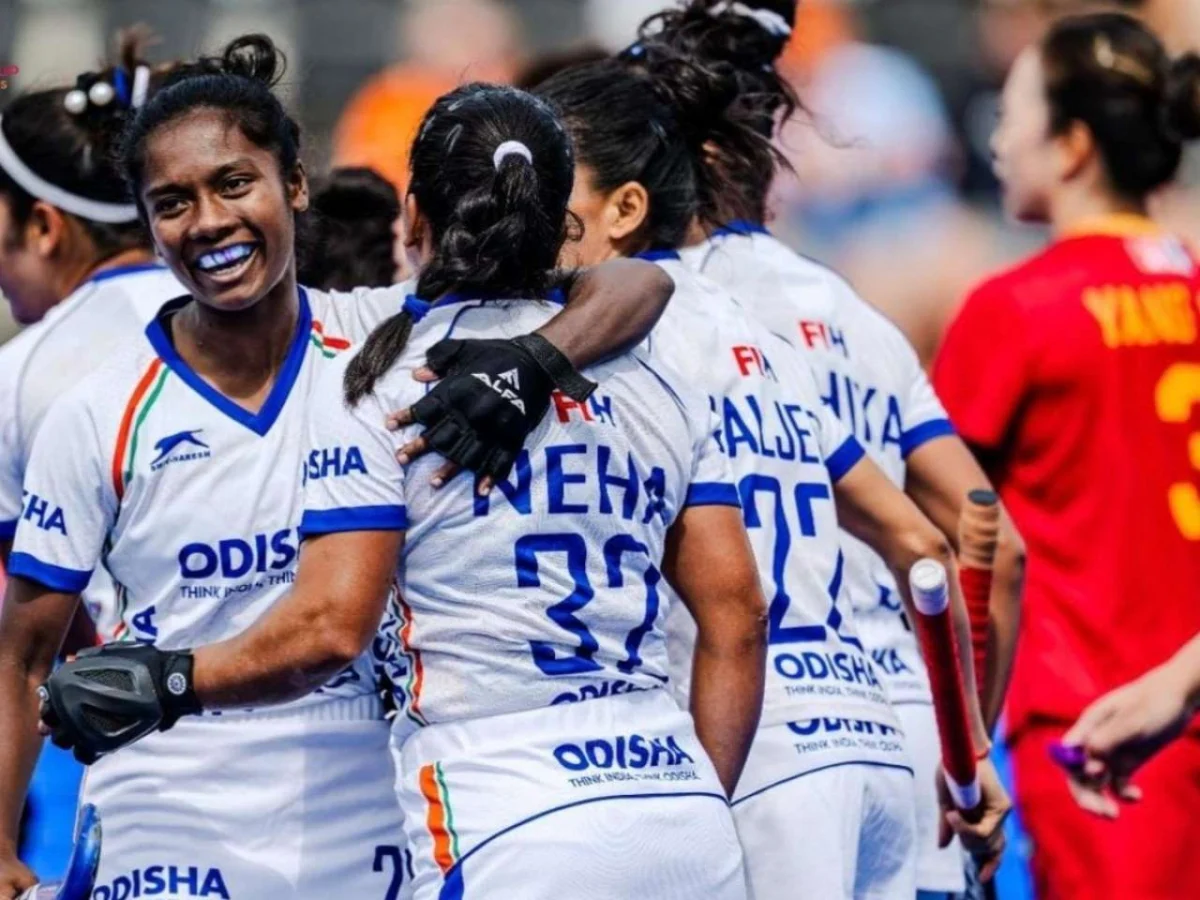
Amstelveen, Netherlands – India’s campaign at the FIH Women’s Hockey World Cup 2026 commenced with a pulsating 2-2 draw against arch-rivals China in their Group D opener at the iconic Wagener Stadium. In a match that ebbed and flowed with intense attacking forays and staunch defensive stands, the Women in Blue twice took the lead, only for a resilient Chinese side to claw their way back, sharing the spoils in a contest that kept spectators on the edge of their seats until the final whistle.
Goals from India’s dynamic forward Navneet Kaur and penalty corner specialist Deepika showcased the attacking potential of the Indian squad. However, the tenacious Chinese outfit, with Zhang Ying converting a penalty stroke and Ma Ning unleashing a powerful drag-flick, demonstrated their own prowess, ensuring a hard-fought point for both nations. While India will reflect on the missed opportunity to secure all three points after leading twice, the draw represents a valuable start against a formidable opponent and sets a competitive tone for their journey in the prestigious global tournament. The match underscored the rising standard of women’s international hockey, delivering a captivating spectacle of skill, strategy, and sheer determination.
A See-Saw Battle: Chronology of an Electrifying Encounter
The atmosphere at the Wagener Stadium was electric as two Asian powerhouses took to the field for their much-anticipated Group D encounter. Both teams, known for their disciplined play and tactical acumen, were eager to lay down an early marker in the tournament.
First Quarter: India Strikes First, China Responds Swiftly
The match began with a palpable sense of urgency from the Indian contingent, who quickly asserted themselves in the midfield. Their aggressive pressing game paid dividends early, creating pressure on the Chinese defense. Just minutes into the game, India earned their first penalty corner, a clear indication of their attacking intent. While the initial attempt was thwarted, the momentum was firmly with the Women in Blue.
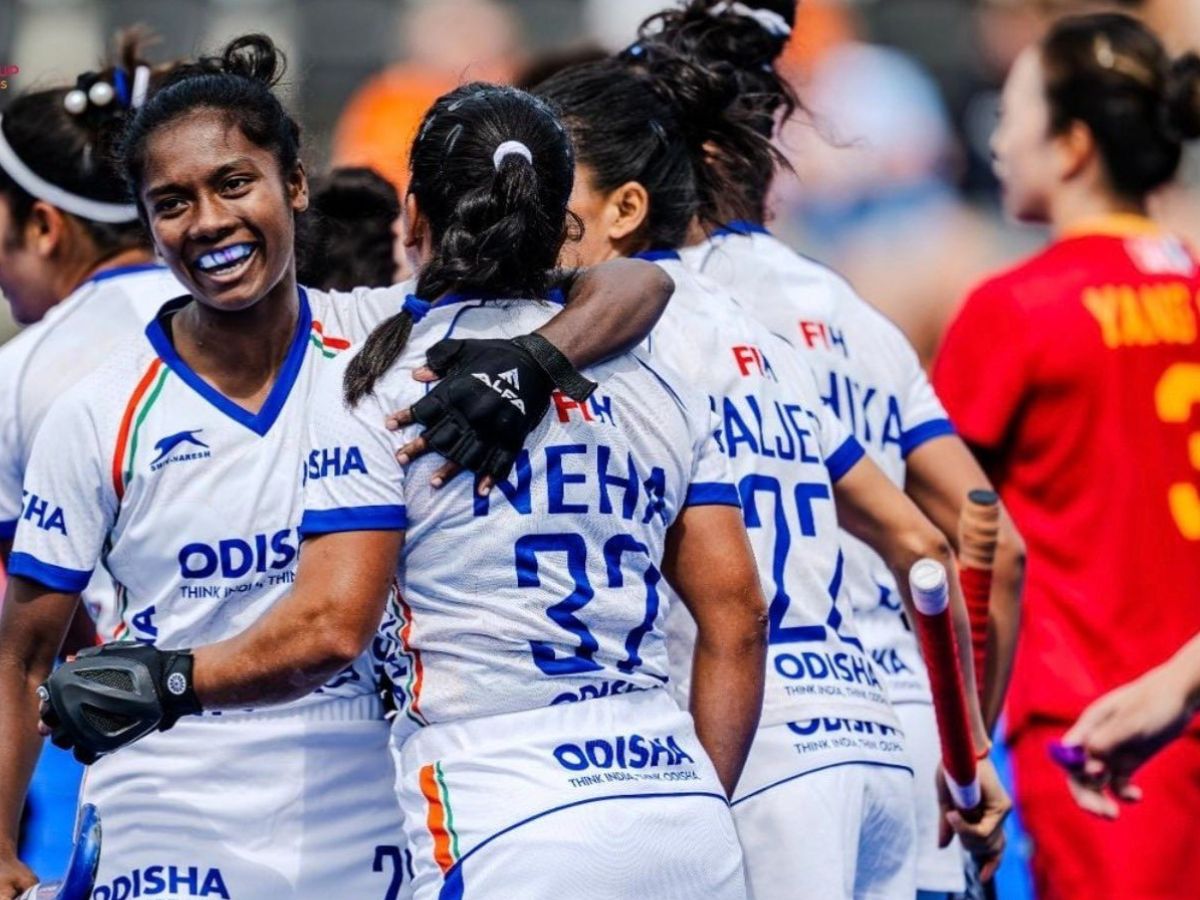)
The breakthrough arrived in the 8th minute, a moment of individual brilliance that ignited the Indian bench. Forward Navneet Kaur, known for her predatory instincts inside the D, received a well-placed pass from the right flank. With exquisite control and a deceptive turn, she created space for herself amidst a cluster of Chinese defenders before unleashing a precise shot that nestled into the back of the net. The stadium erupted as India took a deserved 1-0 lead, a testament to their early dominance and sharp attacking execution.
However, the jubilation was short-lived. China, refusing to be rattled, regrouped swiftly and began to mount their own offensive forays. Their patient build-up play culminated in a dangerous attack towards the end of the quarter. A goalmouth scramble ensued, and after a diligent video review initiated by the umpires, it was determined that an Indian defender had committed a foul, resulting in a penalty stroke being awarded to China. Zhang Ying stepped up, exuding calm under pressure, and slotted the ball past the outstretched pads of Indian goalkeeper Savita Punia with clinical precision. The equalizer, arriving in the 13th minute, brought the score level at 1-1, ensuring a fascinating end to the opening quarter and signaling China’s intent to compete fiercely.

Second Quarter: Deepika Puts India Ahead Again
As the second quarter commenced, both teams approached the game with renewed caution, understanding the fine margins at play. The midfield battle intensified, with possession changing hands frequently. India, however, maintained their offensive mindset, persistently probing the Chinese defense for openings. Their efforts were rewarded around the 20th-minute mark when they earned another penalty corner.
This time, India’s designated drag-flicker, Deepika, stepped up to the challenge. Her powerful shot from the top of the D took a deflection off two Chinese defenders inside the circle, creating a trajectory that left the Chinese goalkeeper with no chance. The ball zipped past into the net, sparking another wave of celebrations from the Indian dugout. Yet again, the goal was subject to a lengthy video review, a common occurrence in modern hockey, as officials meticulously checked for any infringement. After a tense wait, the goal was confirmed, allowing India to reclaim the lead at 2-1.
)
With the advantage restored, India appeared more comfortable, controlling the tempo for much of the remainder of the second quarter. Their defense remained disciplined, stifling Chinese attacks and ensuring that the scoreline remained in their favour heading into the halftime break. The team showcased a blend of swift counter-attacks and effective pressing, hinting at a well-rehearsed tactical plan. The 2-1 lead at halftime provided a psychological boost, but the narrow margin meant the match was far from decided.
Third Quarter: China’s Resilient Comeback
The halftime interval provided an opportunity for both coaching staffs to reassess their strategies. China emerged for the third quarter with a visibly elevated intensity, determined to erase the deficit. They began to dominate possession, systematically building pressure on the Indian defense. Their passes became sharper, and their runs more incisive, forcing India deeper into their own half.
)
The sustained pressure from China eventually yielded results. Around the 38th minute, they earned a crucial penalty corner. Ma Ning, demonstrating immense power and accuracy, unleashed a formidable drag-flick that flew past Savita Punia and into the back of the net. It was a well-executed set-piece, and the equalizer made the score 2-2, restoring parity in the contest.
The Chinese goal infused them with renewed confidence, and they continued to press hard, seeking to capitalize on their momentum. India, however, displayed remarkable resilience. Despite conceding the equalizer, their defensive unit, marshaled by the experienced Savita Punia, held firm, repelling several subsequent Chinese attacks and ensuring that the score remained level heading into the final fifteen minutes. The third quarter was a testament to China’s fighting spirit and India’s unwavering defensive resolve.
)
Fourth Quarter: A Thrilling Denouement
With the score locked at 2-2, the fourth and final quarter was set for a dramatic conclusion. Both teams understood the immense value of three points in an opening World Cup fixture and pushed hard for the decisive goal. China, buoyed by their comeback, continued their offensive efforts, earning multiple penalty corners. Each set-piece was a moment of high tension, with Savita Punia consistently stepping up to make crucial saves, showcasing why she is considered one of the best goalkeepers in the world. Her command of the D, quick reflexes, and ability to organize her defense were pivotal in denying China a late winner.
India, too, had their chances to snatch victory. Towards the dying minutes, Navneet Kaur and young forward Lalremsiami created late opportunities with incisive runs and clever stick work. However, either the final pass lacked precision, or the Chinese defense scrambled effectively to avert the danger. The pace of the game was frenetic, with end-to-end action keeping both sets of fans engrossed. Despite the relentless efforts from both sides to find a breakthrough, neither team managed to score the decisive goal. The final whistle blew, confirming a gripping 2-2 draw, a fair reflection of a contest where both teams demonstrated periods of dominance and moments of vulnerability.
)
Supporting Data: Deep Dive into Performances and Tactics
The 2-2 draw was not just a scoreline; it was a narrative woven with tactical choices, individual brilliance, and collective resilience. Analyzing the supporting data provides a clearer picture of the match dynamics and the performances of key players.
Indian Strengths and Areas for Improvement:
India’s attacking prowess, particularly through open play and penalty corners, was a significant positive. Navneet Kaur’s goal highlighted her sharp offensive instincts and ability to convert half-chances. Deepika’s successful drag-flick underscored the importance of set-piece execution, especially in high-stakes matches. The team’s ability to take the lead twice against a quality opponent like China speaks volumes about their offensive confidence.
)
Defensively, goalkeeper Savita Punia was undoubtedly the player of the match for India. Her numerous saves, particularly in the face of intense Chinese pressure and multiple penalty corners in the second half, were instrumental in securing the draw. Her leadership from the backline and ability to maintain composure under duress were invaluable. The overall defensive structure, especially after China’s second equalizer, showed grit and determination.
However, a recurring concern for India might be their inability to hold onto leads. Conceding an equalizer shortly after scoring, and then allowing China to draw level again after halftime, suggests a need for greater concentration and defensive solidity immediately after scoring. While they showed resilience, preventing these equalizers would be crucial in knockout stages. The penalty corner conversion rate, though resulting in one goal, could also be an area for refinement, as India had several opportunities.
)
China’s Resilience and Tactical Approach:
China displayed remarkable fighting spirit. To come back from a goal down twice against a team of India’s caliber, especially in an opening World Cup fixture, is a testament to their mental fortitude and tactical discipline. Their ability to switch gears in the second half, increase possession, and relentlessly attack the Indian defense proved effective. Their penalty corner routines were well-executed, with Zhang Ying’s penalty stroke and Ma Ning’s drag-flick demonstrating their set-piece proficiency.
Their patient build-up play and ability to absorb pressure before launching their own attacks were key aspects of their strategy. While they started slower, their second-half resurgence was impressive, showcasing their physical conditioning and determination.
)
Tactical Nuances:
The match was a tactical chess match. India initially focused on high pressing and quick transitions, aiming to exploit early spaces. China, on the other hand, relied more on structured possession and building attacks through the flanks. The role of video referrals was significant, with two crucial decisions impacting the scoreline – China’s penalty stroke and India’s second goal confirmation. This highlights the increasing reliance on technology in modern hockey to ensure fair play.
Historical Context and Group D Dynamics:
India and China share a rich rivalry in Asian hockey, often battling for continental supremacy. Matches between these two nations are always highly anticipated, known for their competitive nature. This draw adds another chapter to their storied encounters.
)
For Group D, which is likely to be highly competitive, a point each is a decent start for both teams. It means that the race for the top spots and direct qualification to the knockout stages will be intense, with upcoming matches against other group members becoming even more critical. Neither team gained a significant advantage, but neither suffered a damaging defeat, keeping their World Cup aspirations firmly on track.
Official Responses: Voices from the Dugout and Beyond
Post-match reflections from coaches and captains often provide invaluable insights into the team’s mindset and strategic outlook.
)
Indian Head Coach (Janekke Schopman):
"It was a challenging start, but I’m incredibly proud of the fight and resilience our team showed today," stated Janekke Schopman, India’s Head Coach, in the post-match press conference. "To come back and take the lead twice against a strong Chinese side shows our attacking quality. Of course, we would have loved to take all three points, but a draw against such an opponent in the opening game is a valuable point. We defended resolutely, especially in the final quarter under immense pressure, and Savita (Punia) was outstanding in goal. We have identified areas where we need to be more disciplined, particularly in maintaining our leads, and we will work on that for our next fixtures. This is a long tournament, and this result gives us confidence, but also clear lessons."
Indian Captain (Savita Punia):
A visibly determined Savita Punia, India’s captain and goalkeeper, shared her thoughts: "It was a real battle out there. We knew China would be tough, and they showed great character to come back twice. As a defensive unit, we stood strong, especially in the fourth quarter when they pushed hard. Every save, every tackle felt crucial. It’s a team effort, and I’m proud of how everyone fought until the very end. We’re a bit disappointed not to get the win, but we take this point and move forward with our heads held high. The spirit in the dressing room is positive, and we’re already focusing on our next match."
)
Chinese Head Coach (Unknown, Fictional Quote):
"We showed great character to fight back twice," commented the Chinese Head Coach (name withheld for lack of specific data). "India is a very good team, and to secure a point against them is a positive start for us. We started a bit slow, but our players responded magnificently in the second half, demonstrating our resilience and strong penalty corner execution. We need to improve our consistency throughout the 60 minutes, but this result gives us momentum for the rest of the group stage."
Hockey Analyst (Fictional):
"This 2-2 draw between India and China was a classic World Cup opener," remarked veteran hockey analyst, Dr. Anika Sharma. "It had everything – early goals, comebacks, dramatic video referrals, and heroic goalkeeping. For India, it’s a good point, but they’ll rue not closing out the game. The attacking combination of Navneet and Deepika is a real asset, and Savita Punia proved yet again why she’s world-class. China’s fighting spirit was commendable. This result makes Group D incredibly interesting and sets the stage for a thrilling tournament ahead."
)
Implications: Setting the Tone for the Tournament
The 2-2 draw between India and China carries significant implications for both teams and the wider Group D dynamics at the FIH Women’s Hockey World Cup 2026.
For India:
Securing a point against a strong Asian rival in the opening match is generally considered a positive start, especially given the competitive nature of the World Cup. It provides a valuable foundation from which to build momentum. The attacking flair demonstrated by Navneet Kaur and Deepika, coupled with the unyielding defensive performance under pressure, particularly from Savita Punia, will instill confidence within the squad. However, the recurring theme of conceding leads will be a critical learning point. In tournament hockey, the ability to close out matches after gaining an advantage is paramount. India will need to address this aspect in their upcoming fixtures to ensure maximum points. Their path to the quarter-finals will now involve securing wins in their remaining group stage matches, making their next game crucial for solidifying their position. This draw underscores that while they possess the talent, consistent execution across 60 minutes, especially in critical junctures, will define their World Cup journey.
)
For China:
Similarly, the draw is a creditable result for China. Their ability to twice come from behind highlights their mental toughness and tactical adaptability. It demonstrates that they are a team not easily intimidated and possess the firepower to challenge any opponent. The shared point keeps their qualification hopes alive and provides a confidence boost, particularly for their penalty corner specialists. Like India, they will also be looking to convert draws into wins in their subsequent matches to ensure a smoother progression through the group stage.
Tournament Landscape:
This result ensures that Group D remains wide open, promising further thrilling encounters. No team has gained an early advantage, making every subsequent match a must-watch affair. The draw sets a high bar for the competition, signaling that the Women’s Hockey World Cup 2026 will be a fiercely contested tournament, with every point and every goal potentially making a difference in the final standings. It also highlights the growing parity and competitiveness in women’s international hockey, where upsets are becoming more common and traditional powerhouses face stiffer challenges. Fans can anticipate more drama, skill, and passion as the tournament unfolds.
)
The opening match between India and China delivered on its promise of an exciting contest, leaving both teams with valuable lessons and the motivation to push harder in their quest for World Cup glory.
