

Simultaneously, the formidable Indian Women’s team delivered a commanding performance, sweeping Germany 3.5-0.5. This dominant display not only solidified their top-tier standing but also capitalized on a drawn tie between co-leaders China and Kazakhstan, propelling India within a single match point of the summit in the women’s section.
Main Facts: India’s Resurgent Performance
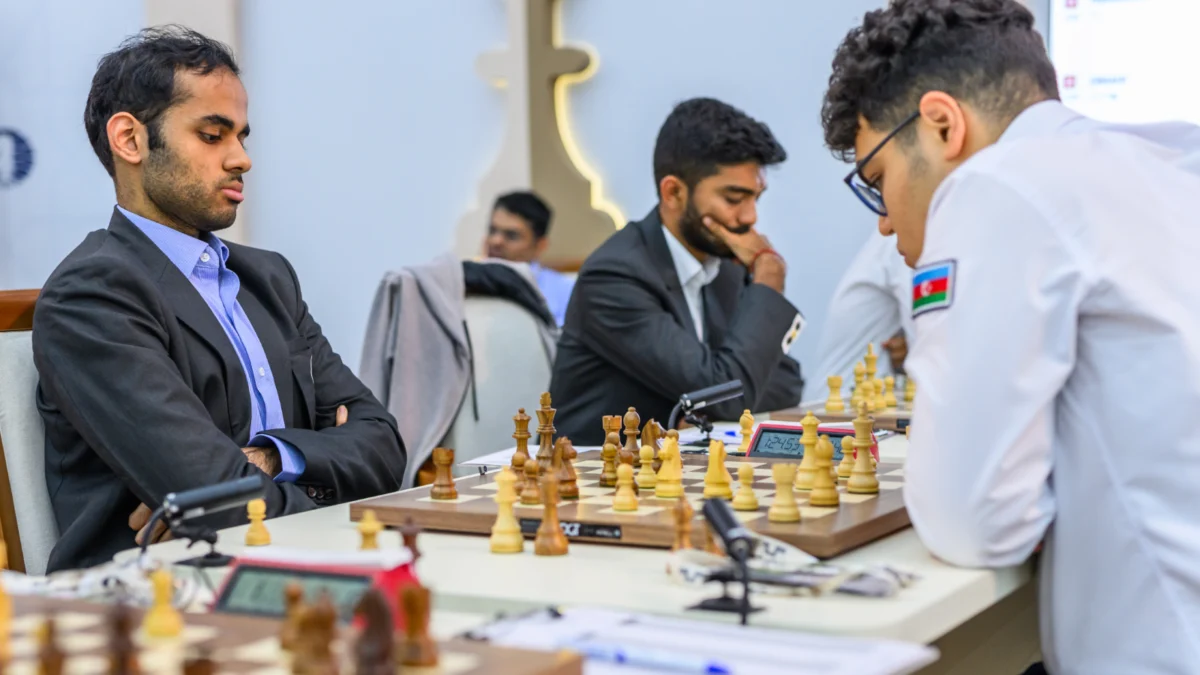
The seventh round of the 2026 Chess Olympiad witnessed a pivotal turnaround for the Indian contingent. For the Open team, the 2.5-1.5 triumph against England was more than just a win; it was a statement of resilience following their painful 1.5-2.5 loss to Uzbekistan in Round 6. The victory was engineered by individual wins from R Praggnanandhaa on Board 1 and D Gukesh, the reigning World Champion, on Board 4. Arjun Erigaisi secured a vital draw on Board 2, while Nihal Sarin, despite a spirited effort, suffered his second consecutive defeat on Board 3.
In the women’s section, the Indian team demonstrated exceptional prowess, dismantling a strong German squad with a resounding 3.5-0.5 score. This comprehensive victory was built on wins by Koneru Humpy on Board 1, Divya Deshmukh on Board 3, and the tournament sensation Savitha Shri B on Board 4. R Vaishali contributed a hard-fought draw on Board 2, ensuring Germany’s sole point. This commanding performance has significantly bolstered India’s medal aspirations, particularly as it coincided with a draw between their closest rivals.
Chronology: From Setback to Strategic Comeback
The atmosphere in Samarkand’s Congress Center on Wednesday was palpable, still tinged with the aftertaste of Tuesday’s upset. The Open team, considered strong contenders for the gold, had been dealt a significant blow in Round 6 by the young and formidable Uzbek team, specifically due to a critical blunder by Nihal Sarin against Nodirbek Yakubboev. That loss had not only cost India the match but also raised questions about the team’s mental fortitude and tactical consistency.
Open Section: A Captain’s Faith Rewarded
Captain Srinath Narayanan, a figure known for his calm demeanor and astute strategic insights, chose to keep faith in Nihal Sarin for the England match, a decision that underscored his belief in the young Grandmaster’s ability to bounce back. Nihal, manning Board 3 with the black pieces against England’s seasoned Luke McShane, certainly came out fighting. The early stages of the game saw Nihal exert considerable pressure, employing an aggressive opening that aimed to disrupt McShane’s comfortable play. For a significant portion of the contest, Nihal appeared to dictate terms, his pieces active and his intentions clear.
However, McShane, a player renowned for his defensive tenacity and endgame precision, proved unyielding. He absorbed Nihal’s sustained pressure, navigating the complexities with remarkable sangfroid. The game entered a critical phase just before the first time control, a period infamous for its chaotic nature where players, under immense clock pressure, often commit errors. McShane, however, demonstrated exceptional nerve, not only weathering the storm but also subtly turning the tables. As the endgame unfolded, the Englishman meticulously exploited a positional advantage, gradually blunting Nihal’s resistance and ultimately securing the full point. It was a bitter pill for Nihal, marking his second straight defeat, but by then, India’s collective victory was already sealed elsewhere.
The blueprint for India’s triumph mirrored their Round 5 success against the Netherlands, a strategy that relies on decisive strikes from the top and bottom boards. R Praggnanandhaa, playing on the formidable top board with the black pieces, opened India’s account in a clinical fashion. Facing the experienced Nikita Vitiugov, Pragg showcased his exceptional tactical vision and cool temperament, meticulously dismantling his opponent’s defenses to log his second individual win of the tournament. His victory provided an early psychological boost, setting a positive tone for the rest of the team.
Barely a minute after Pragg’s triumph, a handshake on Board 2 between Arjun Erigaisi and England’s talismanic Michael Adams signaled a peaceful conclusion to their encounter. After 40 moves of intricate play, the Grandmasters agreed to a draw, a result that, while not a win, was strategically valuable, preventing any potential upset from Adams and ensuring the team maintained its lead.
The stage was then set for D Gukesh on Board 4. The reigning World Champion, facing Daniel Howard Fernandez, found himself in a complex middlegame that transitioned into a tense endgame. The pivotal moment arrived on the 40th move, right amidst the notorious time scramble, when Fernandez committed a crucial slip. Gukesh, with his unparalleled ability to capitalize on even the slightest error, pounced immediately. With an additional 30 minutes added to his clock after the first time control, Gukesh methodically tightened the screws, converting his advantage with relentless precision. His victory, secured through sheer willpower and tactical acumen, locked up the match for India, completing the much-needed comeback.
Women’s Section: Unstoppable Momentum
The Indian Women’s team, widely considered the strongest in the tournament, entered their Round 7 clash against Germany with an air of quiet confidence. While Germany was tipped by some pundits to test the defending champions, the Indian women delivered a performance that can only be described as a ruthless sweep, dismantling any hopes of an upset.
Leading from the front, Koneru Humpy snapped a streak of three consecutive draws, showcasing her immense class. Outplaying IM Dinara Wagner on the top board, Humpy’s victory was a masterclass in positional chess, signaling her return to winning form and reinforcing her role as the team’s anchor.
The tournament’s breakout star, teenage debutant Savitha Shri B, continued her fairytale run. Playing on Board 4, she delivered another dazzling performance, outclassing FM Lara Schulze to pick up her sixth consecutive win. Her astonishing 6.0/6 clean sheet in her maiden Olympiad campaign is a testament to her prodigious talent and unwavering focus.
On Board 3, Divya Deshmukh, who was strategically slotted into the lineup in place of the in-form Vantika Agrawal, made her inclusion count with a comfortable and convincing win over Hanna Marie Klek. This demonstrated the depth of talent within the Indian women’s squad, where every player is capable of stepping up when called upon.
The only board where Germany managed to get on the scoresheet was Board 2, where R Vaishali engaged in a hard-fought draw against the German stalwart Elisabeth Paehtz. Vaishali’s resilience ensured that even in a drawn game, India’s dominance was never truly threatened, and the team secured an emphatic 3.5-0.5 victory.
Supporting Data: The Architects of Victory
The individual performances in Round 7 highlight the depth and strategic adaptability of the Indian teams.
R Praggnanandhaa (Open, Board 1): At just 21 years old, Pragg continues to impress on the global stage. His clinical win against Nikita Vitiugov (Elo 2700+) with black pieces demonstrates his growing maturity and tactical prowess. Vitiugov, known for his solid and often aggressive style, found himself outmaneuvered in a complex middlegame. Pragg’s ability to convert a slight positional advantage into a decisive attack underscores his elite status. This was his second win, complementing three draws and one loss, placing him in good form for the crucial final rounds.
D Gukesh (Open, Board 4): The reigning World Champion, Gukesh (Elo 2780+), is a player of extraordinary composure and calculation. His ability to capitalize on Daniel Howard Fernandez’s (Elo 2600+) 40th-move slip amidst time pressure is a hallmark of a true champion. Gukesh’s methodical "tightening of the screws" in the endgame, transforming a subtle advantage into a full point, is a skill that few possess. His consistent performance, often delivering the decisive blow, makes him an invaluable asset to the team.
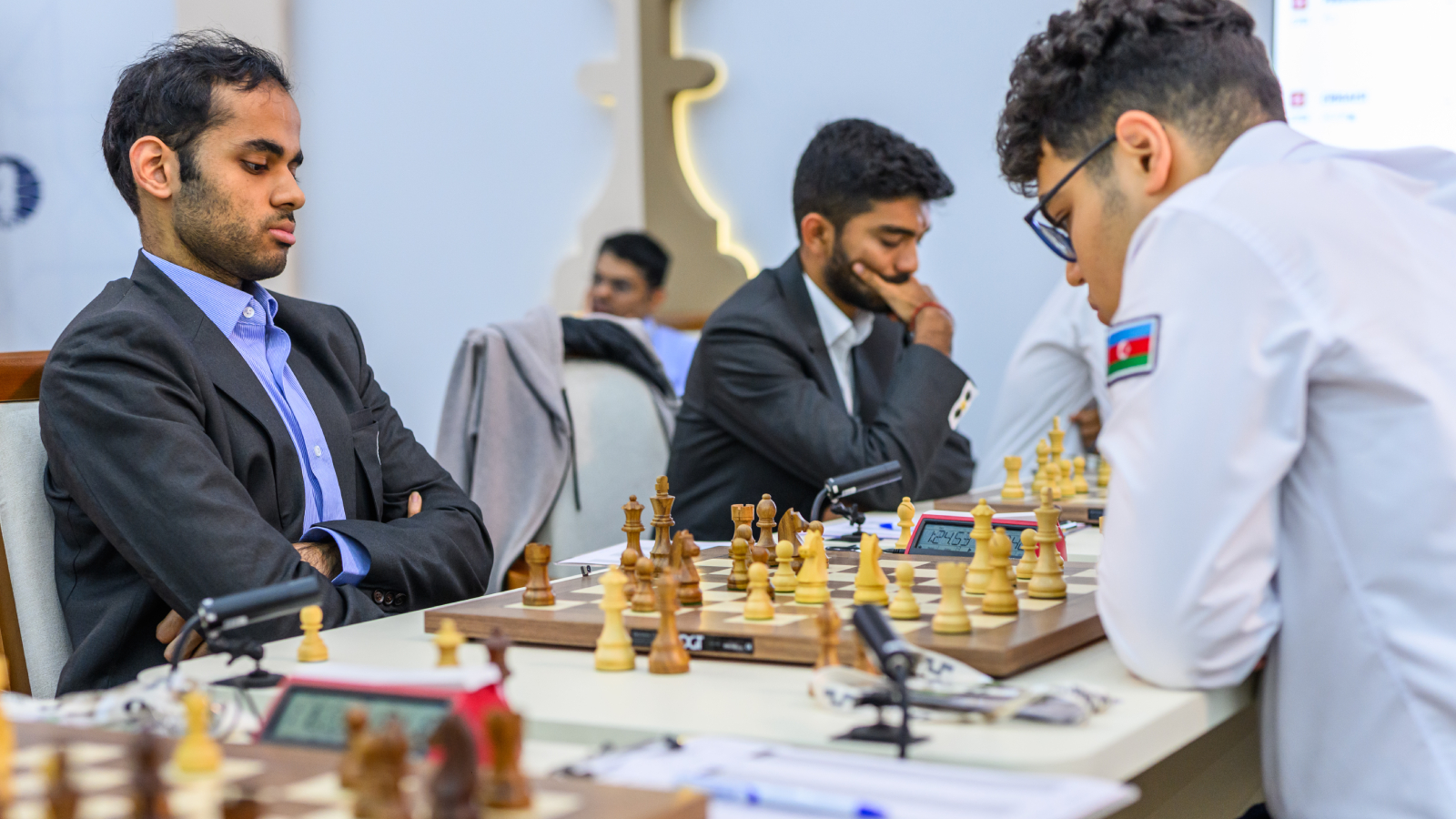
Nihal Sarin (Open, Board 3): While his two consecutive losses are a concern, it’s important to contextualize them. Nihal (Elo 2680+), at 22, is still developing, and facing seasoned players like Luke McShane (Elo 2660+) and Nodirbek Yakubboev (Elo 2660+) on a high board is a stern test. His initial aggressive play against McShane showed promise, but the ability to convert pressure into a win, especially against tenacious defenders, is a learning curve. Captain Narayanan’s decision to keep him in the lineup signals a long-term investment in his talent.
Koneru Humpy (Women, Board 1): Humpy (Elo 2550+), a veteran and former World Championship challenger, breaking her draw streak is a significant psychological boost. Her outplaying of IM Dinara Wagner (Elo 2460+) on the top board reaffirms her leadership and strength. Humpy’s ability to find winning chances even in seemingly balanced positions is a testament to her experience and deep understanding of the game.
Savitha Shri B (Women, Board 4): The undisputed revelation of the tournament, Savitha Shri B (Elo 2380+), a 17-year-old debutant, has achieved a perfect 6.0/6 score. Her clean sweep against formidable opponents, including FM Lara Schulze (Elo 2300+), is unprecedented for a first-time Olympiad participant. Her aggressive yet precise style and remarkable consistency mark her as a future superstar in women’s chess. Her performance is not just a statistical anomaly but a profound indicator of her potential.
Divya Deshmukh (Women, Board 3): Divya (Elo 2440+) stepping in and securing a comfortable win against Hanna Marie Klek (Elo 2370+) highlights the bench strength of the Indian women’s team. Her performance ensures that the team can rotate players without any drop in quality, a critical advantage in a long tournament like the Olympiad.
Official Responses: Voices from the Camp
Following the critical victories, the mood in the Indian camp was one of cautious optimism and renewed determination. Captain Srinath Narayanan, though relieved, emphasized the road ahead.
"This was a very important round for us, especially for the Open team," Captain Narayanan stated in a post-match briefing. "The loss to Uzbekistan was tough, but I saw the resilience in the boys. My decision to play Nihal again was based on my belief in him. He fought incredibly hard today, and while the result wasn’t what he wanted, his commitment was evident. He’s a crucial part of this team, and he will learn from these experiences."
He continued, reflecting on the Open team’s performance, "Pragg and Gukesh were outstanding. Pragg’s win with black was clinical, setting the tone. And Gukesh, as expected, delivered the decisive blow when it mattered most. That’s what champions do. Arjun’s draw was also very solid against a tough opponent like Adams. We needed this bounce back, and the team delivered."
Regarding the women’s team, Narayanan was effusive in his praise. "The women’s team has been simply phenomenal. A 3.5-0.5 sweep against a strong German team speaks volumes. Humpy breaking her drawing streak is excellent, and Savitha Shri… what can I say? 6.0/6 in her debut Olympiad is truly extraordinary. Divya stepped in beautifully, and Vaishali fought hard for her draw. They are playing with incredible synergy and confidence."
He concluded with a forward-looking statement: "We are back in the hunt. The standings are tight, and every round from now on is a final. We will continue to prepare meticulously, one game at a time. The spirit is high, and we are determined to fight for the medals."
Sources close to the team indicated that the players held a brief, but intense, debriefing session after the Uzbekistan loss, where focus was placed on mental resilience and learning from mistakes rather than dwelling on the setback. This strategic approach by Captain Narayanan and the coaching staff appears to have paid dividends.
Implications: Shifting Dynamics and Medal Hopes
The results of Round 7 have significantly altered the landscape of the 2026 Chess Olympiad, particularly for the Indian contingents.
Open Section: A Renewed Pursuit of Gold
For the Open team, the victory over England is nothing short of a lifeline. The psychological impact of bouncing back immediately after a painful defeat cannot be overstated. It demonstrates the team’s mental toughness and their ability to perform under pressure, a crucial attribute for any gold-medal contender. While the loss to Uzbekistan temporarily knocked them off the top spots, this win ensures they remain within striking distance of the leaders. The consistent performance of Pragg and Gukesh, who are increasingly becoming the twin pillars of the team, bodes well for the crucial rounds ahead.
The standings in the Open section remain incredibly tight, with several powerhouses vying for the top positions. India’s return to winning ways puts them back among the top five teams, ready to pounce on any slips by the current leaders. The upcoming rounds will likely feature clashes against other strong contenders, and India’s ability to maintain this newfound momentum will be critical. The experience of the Olympiad, particularly the highs and lows, will be invaluable for young players like Nihal Sarin, shaping them for future challenges. The team’s overall strategic flexibility, evidenced by the consistent "Pragg-Gukesh template," suggests a well-coached and adaptable squad.
Women’s Section: Clear Gold Medal Path
The Indian Women’s team, by contrast, seems to be on a clear path towards defending their gold medal. Their ruthless 3.5-0.5 sweep of Germany, combined with the drawn tie between co-leaders China and Kazakhstan, has propelled them to an enviable position. They now sit within a single match point of the summit, holding a commanding position as the tournament progresses.
The implications of Savitha Shri B’s sensational performance are far-reaching. Her perfect score not only contributes significantly to the team’s points but also inspires her teammates and creates an aura of invincibility around the squad. Her emergence adds another layer of formidable talent to an already strong lineup featuring Humpy, Vaishali, and Divya. The team’s depth, allowing for strategic rotations without loss of strength, is a significant advantage in a nine-round event.
With China and Kazakhstan having shared points, India has seized a golden opportunity to close the gap and potentially leapfrog into the lead in the very near future. The women’s team has consistently demonstrated a blend of experience and youthful exuberance, making them incredibly difficult to beat. Their collective focus and individual brilliance suggest that they are firmly on track for another memorable Olympiad performance.
The 2026 Chess Olympiad is entering its most critical phase. For India, Round 7 served as a powerful reminder of their capabilities and their unyielding spirit. With both teams now firmly back in medal contention, the chess world will be watching closely to see if India can convert this renewed momentum into a triumphant finish in Samarkand. The strategic decisions, individual brilliance, and collective resilience displayed in Round 7 have set the stage for a thrilling conclusion to this prestigious tournament.
