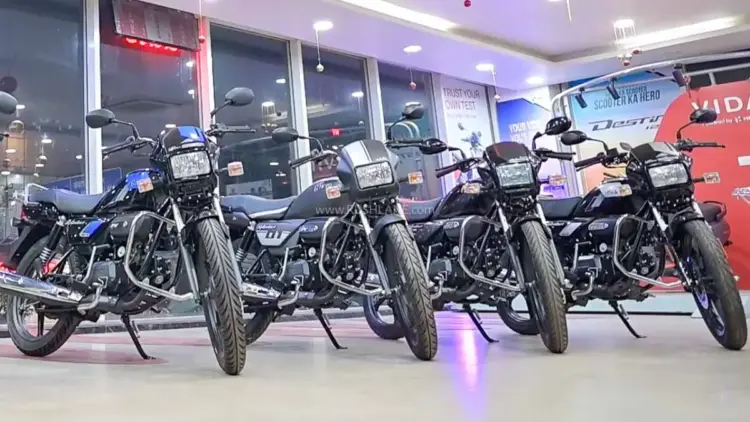
New Delhi, October 2026 – The Indian two-wheeler industry has demonstrated a robust performance in the first half of the fiscal year 2027 (H1 FY2027), reporting a significant surge in both domestic sales and international shipments. According to the latest industry data, the combined factory dispatches for motorcycles, scooters, and mopeds crossed the 1.52 crore unit mark during the April–September 2026 period. This represents a substantial 20.35% year-on-year growth compared to the same period in the previous fiscal year.
The figures underscore a pivotal moment for the world’s largest two-wheeler market. While domestic demand remains the primary engine of growth, a resurgent export market has provided a secondary boost, signaling a recovery in global demand and the increasing competitiveness of Indian-made motorcycles and scooters on the world stage.
Main Facts: A Dual-Engine Growth Story
The industry’s performance in H1 FY2027 is characterized by two distinct but complementary trends: a steady, high-volume domestic market and an aggressively expanding export sector.
Total domestic sales for the period reached 1,20,86,812 units, marking a 17.63% increase from the 1,02,75,298 units recorded in H1 FY2026. On the other hand, exports grew at a much faster clip, expanding by 31.86% to reach 32,07,357 units, up from 24,32,412 units in the previous year.
When broken down by vehicle type, motorcycles remain the dominant force in terms of sheer volume, contributing 96,93,362 units to the total. However, the scooter segment emerged as the growth leader, crossing the 53-lakh unit threshold and posting a growth rate of 29.82%. Mopeds, a niche but stable segment, added 3,00,252 units to the overall tally.

Chronology of Performance: April to September 2026
The first half of FY2027 began with cautious optimism as manufacturers navigated fluctuating raw material costs and evolving emission norms. However, as the months progressed, several factors converged to drive numbers upward:
- Q1 FY2027 (April–June): Early momentum was driven by a strong marriage season and the initial rollout of new electric vehicle (EV) models. Rural demand showed signs of a "green shoot" recovery, benefiting entry-level commuters.
- Q2 FY2027 (July–September): The lead-up to the festive season saw aggressive inventory building by dealers. Manufacturers ramped up production to meet the anticipated surge in Dussehra and Diwali demand. Simultaneously, export orders from African and Latin American markets saw a sharp uptick, particularly for rugged commuter motorcycles.
By the end of September, the industry had successfully bypassed the 1.5 crore unit milestone, setting a high benchmark for the remainder of the fiscal year.
Supporting Data: The Winners and Losers
Domestic Dominance: Splendor and Activa
In the domestic arena, the "Big Two"—the Hero Splendor and the Honda Activa—continue to exert an almost gravitational pull on the market. Together, these two models account for nearly 30% of all two-wheelers sold in India.
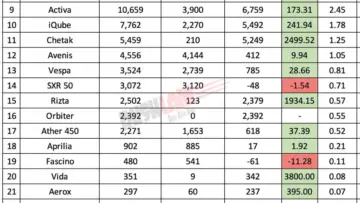
- Hero Splendor: Retained its crown as India’s favorite two-wheeler with 21,30,637 units sold, a growth of 19.69%. This model alone added over 3.5 lakh units in absolute volume year-on-year, the highest gain for any single product.
- Honda Activa: Secured the second spot with 14,82,917 units, growing by 15.12%. As the undisputed leader in the scooter segment, the Activa continues to benefit from the increasing "scooterization" of urban and semi-urban India.
However, the domestic market was not without its challenges. The Bajaj Pulsar family, while still a top-five player, saw volumes dip by 6.86% to 6,33,015 units. Similarly, the Hero HF Deluxe recorded a double-digit decline of 16.38%, falling to 4,42,827 units, suggesting a shift in consumer preference toward 125cc motorcycles or premium scooters.
The Rise of the Electric Guard
One of the most striking aspects of the H1 FY2027 data is the explosive growth of electric scooters. No longer a niche curiosity, EVs are now major contributors to incremental domestic growth.

- TVS iQube: Sales surged by 85.63%, reaching 2,74,304 units.
- Bajaj Chetak: More than doubled its footprint, recording 2,54,882 units.
- Hero Vida & Ather Rizta: Both brands saw triple-digit or high double-digit growth, with the Vida growing 117.89% and the Rizta rising 59.91%.
Export Anchors: Boxer and Star City
While the domestic market thrives on fuel efficiency and brand legacy, the export market is driven by utility and ruggedness.
- Bajaj Boxer: The undisputed king of exports, the Boxer saw a staggering 90.56% growth, jumping from 3.5 lakh units to 6,68,804 units.
- TVS Star City: Followed closely with 6,01,720 units, up 46.06%.
These two models combined accounted for approximately 65.5% of the net increase in total two-wheeler exports, proving that Indian manufacturers have successfully captured the "workhorse" segment in developing economies.
Industry Perspectives and Official Responses
While specific executive quotes were not released alongside the raw data, industry analysts and bodies like the Society of Indian Automobile Manufacturers (SIAM) have pointed to several underlying factors for this performance.
Supply Chain Stabilization: Manufacturers have largely overcome the semiconductor shortages and logistical bottlenecks that plagued previous years. This has allowed for smoother production cycles and faster "factory-to-showroom" timelines.
The "Premiumization" Trend: Industry experts note that even within the motorcycle segment, there is a clear shift toward the 125cc–160cc categories. The growth of the TVS Apache (up 22.90%) and the Royal Enfield Classic 350 (up 29.61%) indicates that Indian consumers are increasingly willing to spend more for performance and lifestyle branding.

Government Policy: The continued support through the PLI (Production Linked Incentive) scheme for Advanced Chemistry Cell (ACC) and electric vehicle manufacturing has emboldened brands like TVS, Bajaj, and Hero to scale their EV production rapidly, which is reflected in the H1 sales numbers.
Implications: What This Means for the Future
The H1 FY2027 results carry several long-term implications for the Indian automotive landscape:
1. The Scooterization of India
Scooters expanded at 29.38% domestically, nearly triple the growth rate of motorcycles (10.44%). This suggests that as urban congestion increases and more women enter the workforce, the convenience of automatic transmissions and under-seat storage is outweighing the traditional appeal of commuter motorcycles. Scooters now contribute 40.25% of total domestic volumes and were responsible for 61% of the industry’s additional sales this year.
2. Contrasting Market Realities
The data reveals a fascinating divergence between what India rides and what India sells to the world. The Hero Splendor, a titan at home, ranks only 23rd in exports. Conversely, the Bajaj Boxer, which is not a primary focus for the Indian domestic consumer, is a global powerhouse. This "dual-track" manufacturing strategy allows Indian OEMs to hedge against domestic downturns by tapping into international demand.
3. The EV Tipping Point
The massive growth percentages for the iQube, Chetak, and Vida suggest that the "early adopter" phase of electric two-wheelers is over. We are now entering the "mass-market integration" phase. With electric scooters now appearing in the top ten lists for domestic sales, the pressure on traditional internal combustion engine (ICE) models in the 100cc-110cc segment will only intensify.

4. Rural Recovery Remains Fragmented
While the Splendor grew, the decline of the Hero HF Deluxe and the Bajaj Platina suggests that the lowest rung of the economic ladder—the entry-level rural commuter—is still experiencing financial stress or is perhaps migrating toward used vehicles or higher-displacement models.
Conclusion
The first half of FY2027 has set a blistering pace for the Indian two-wheeler industry. With over 1.52 crore units dispatched, the sector is on track for a record-breaking year. The synergy between a maturing domestic market—increasingly leaning toward scooters and EVs—and a high-growth export market for rugged motorcycles has created a resilient ecosystem.
As the industry enters the second half of the fiscal year, all eyes will be on the festive season performance and the continued trajectory of the EV segment. If the current momentum holds, FY2027 could go down in history as the year the Indian two-wheeler industry finally transcended its post-pandemic recovery and entered a new era of global dominance.