

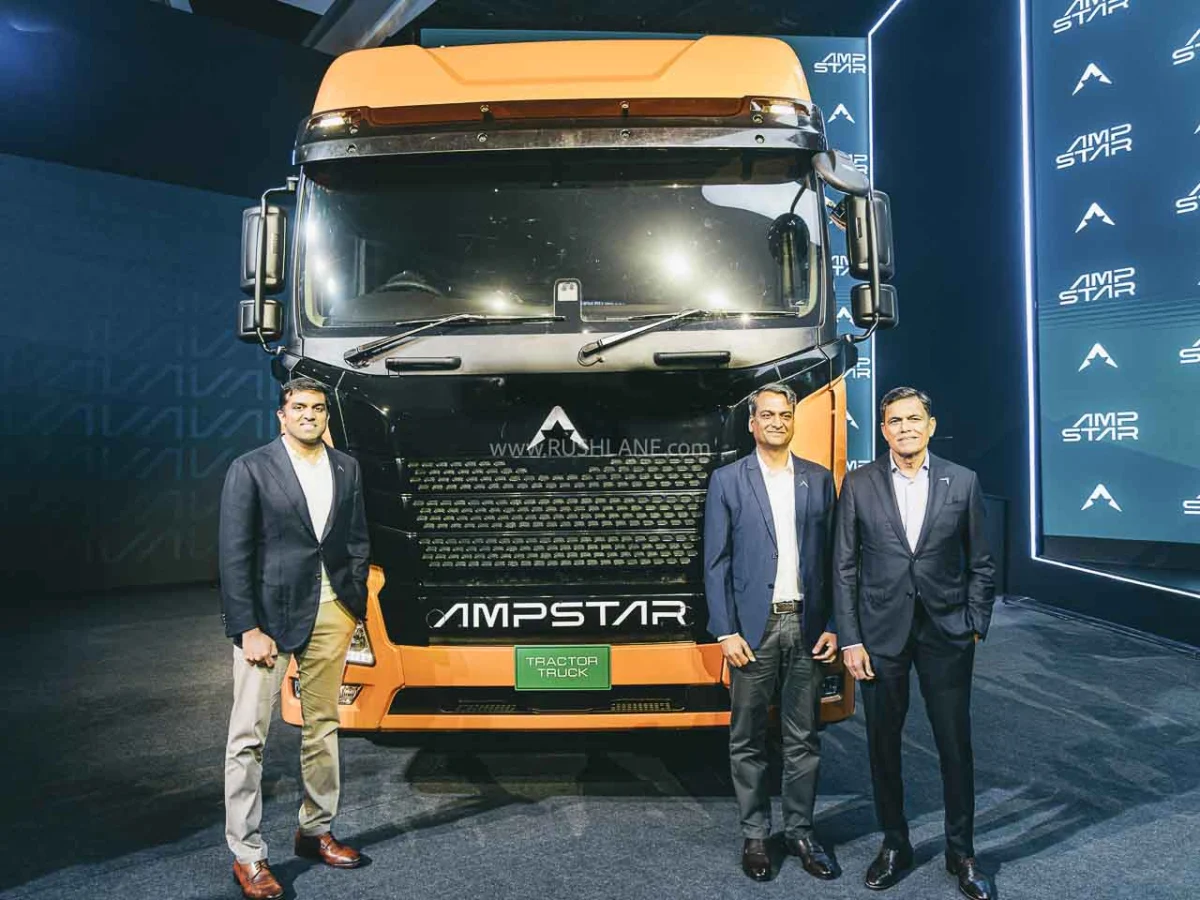
CHHATRAPATI SAMBHAJINAGAR – In a move that signals a tectonic shift in India’s heavy-duty transportation landscape, the JSW Group has officially inaugurated its entry into the electric commercial vehicle (ECV) sector. Under the aegis of JSW Greentech Limited, the conglomerate has unveiled "AMPSTAR," a dedicated brand poised to manufacture and deploy a comprehensive range of electric buses and trucks. With an initial investment of approximately ₹2,500 crore and a state-of-the-art manufacturing hub in Maharashtra, JSW is not merely entering a market; it is attempting to build an entire ecosystem for green logistics.
Main Facts: The AMPSTAR Vision and Infrastructure
The launch of AMPSTAR represents JSW Group’s strategic pivot toward the decarbonization of industrial and public transport. The brand’s operations are centered at a newly commissioned 90-acre facility located within the Aurangabad Industrial City (AURIC) in Chhatrapati Sambhajinagar, Maharashtra. This facility is engineered to be a cornerstone of India’s "Make in India" initiative, featuring high levels of automation and integrated production lines.
The AMPSTAR portfolio is remarkably diverse for a market entrant. It encompasses electric buses ranging from 7 meters to 18 meters in length, catering to a wide spectrum of applications including city transit, intercity travel, corporate staff transport, and school mobility. On the freight side, the brand has debuted a 55-tonne electric tractor-trailer, with plans to rapidly expand into the production of electric tippers and fixed-body dumpers for the mining and construction sectors.
Key to JSW’s strategy is the "ecosystem" approach. Rather than operating as a traditional Original Equipment Manufacturer (OEM), AMPSTAR is positioning itself as a comprehensive mobility provider. This includes the provision of charging infrastructure, specialized financing, and a suite of operating solutions designed to lower the barrier to entry for fleet operators.
Chronology: From Blueprint to First Delivery
The journey of JSW Greentech and the AMPSTAR brand has moved at a rapid pace, reflecting the group’s urgency in meeting India’s Net Zero commitments.
- Phase 1: Conceptualization and Investment: Following the JSW Group’s broader commitment to green energy, JSW Greentech was formed to address the specific needs of the commercial vehicle sector. The group committed an initial ₹2,500 crore to establish the AURIC facility, focusing on indigenous R&D and localized manufacturing.
- Phase 2: Manufacturing Setup: Over the past 24 months, the 90-acre site at Chhatrapati Sambhajinagar was developed. It was equipped with advanced manufacturing technologies, including a specialized pre-treatment and electro-deposition (PT-ED) process for bus body longevity and an automated cabin line for trucks.
- Phase 3: Brand Launch and First Deployment: In September 2026, the AMPSTAR brand was officially launched by JSW Group Chairman Sajjan Jindal, alongside Parth Jindal and JSW Greentech CEO Sumit Mittal.
- Phase 4: Immediate Operationalization: Breaking from the tradition of long lead times between launch and delivery, JSW confirmed that the first 100 electric buses have already been delivered to JSW Steel’s Dolvi operations. These vehicles are currently being used for employee transportation, serving as a real-world proof-of-concept for the brand’s reliability.
Supporting Data: Technical Specifications and Financial Targets
The scale of AMPSTAR’s ambition is best illustrated through the technical and financial metrics released during the launch event.

Technical Prowess
- Power Output: AMPSTAR vehicles feature high-performance electric drivetrains with power configurations ranging from 150 kW to 500 kW, ensuring they can handle the heavy payloads and varied terrains of the Indian subcontinent.
- Battery Technology: The vehicles utilize a proprietary double-cooling battery system, specifically engineered to maintain thermal stability in India’s extreme heat.
- Chassis Design: A high-strength monocoque chassis has been adopted for the bus range to improve safety and reduce weight, thereby enhancing range efficiency.
- In-house Software: JSW has developed the base logic, software, and control algorithms for the electric drivetrain in-house, allowing for bespoke vehicle configurations based on client needs.
Production and Revenue Projections
- Initial Capacity: 15,000 units per annum (comprising 10,000 buses and 5,000 trucks).
- FY28 Target: The company aims to produce at least 10,000 vehicles in the 2027-28 fiscal year, representing a 67-68% capacity utilization rate.
- Expansion Potential: An additional investment of ₹1,500 crore to ₹2,000 crore is earmarked to double capacity to 30,000 units per year should demand meet expectations.
- Financial Outlook: With an average selling price (ASP) of approximately ₹80 lakh across the portfolio, JSW projects a revenue potential of ₹12,000 crore at full utilization of the initial 15,000-unit capacity.
Official Responses: Leadership Perspectives
During the brand unveiling, the leadership team emphasized that AMPSTAR is a mission-driven enterprise.
Sajjan Jindal, Chairman of JSW Group, noted that the entry into ECVs is a natural extension of JSW’s commitment to sustainability. He highlighted that the group’s existing footprint in steel and energy provides a unique advantage in understanding the rigors of heavy-duty operations.
Parth Jindal elaborated on the production strategy in an interview with NDTV Profit. "We are targeting a production of 15,000 EVs annually at our Maharashtra facility. The integration of our own battery systems and the PTD process ensures that we maintain high quality while controlling costs. The response from the market has been so strong that our production for the next year could already be considered sold out based on current inquiries."
Sumit Mittal, CEO of JSW Greentech Limited, focused on the technological independence of the brand. "By developing our own software and algorithms, we aren’t just assembling parts; we are creating a vehicle that is optimized for the Indian environment. Our double-cooling systems and monocoque designs are a direct response to the specific challenges faced by fleet operators in this region."
The Business Model: BaaS and Captive Demand
One of the most compelling aspects of the AMPSTAR launch is the business model designed to circumvent the high upfront costs typically associated with electric vehicles.
Battery-as-a-Service (BaaS) and Leasing
AMPSTAR is introducing a "Battery-as-a-Service" (BaaS) model, allowing customers to purchase the vehicle shell while "subscribing" to the battery. This significantly reduces the initial capital expenditure, making electric trucks and buses price-competitive with internal combustion engine (ICE) alternatives from day one. Additionally, JSW will offer flexible leasing options to cater to state transport undertakings (STUs) and private logistics firms.
The Power of Captive Demand
Unlike other startups, JSW Greentech enters the market with a massive internal customer base. The JSW Group’s own operations in steel, cement, and paints require a vast fleet of buses for employees and heavy trucks for raw material movement.

- JSW Steel & Cement: 100 electric trucks are slated for delivery to these divisions immediately.
- Internal Synergy: This captive demand provides a "safety net" for the production ramp-up, allowing the factory to stabilize and achieve economies of scale before competing aggressively in the open market.
Implications for the Indian Automotive Landscape
The arrival of AMPSTAR is set to trigger several long-term implications for the Indian automotive and logistics sectors:
1. Intensified Competition:
Established players like Tata Motors, Ashok Leyland, and Olectra Greentech now face a formidable competitor with deep pockets and an integrated supply chain. JSW’s ability to leverage its own steel for chassis and its own energy for charging networks could create a cost advantage that is difficult to replicate.
2. Acceleration of Green Corridors:
By focusing on 55-tonne tractor-trailers, AMPSTAR is targeting the "hard-to-abate" sector of long-haul freight. If successful, this could accelerate the development of "Green Corridors" across Indian highways, supported by the charging infrastructure JSW plans to install.
3. Urban Transformation:
With a bus range extending up to 18-meter articulated units, AMPSTAR is well-positioned to participate in large-scale government tenders under schemes like PM-eBus Sewa. This will likely accelerate the retirement of aging diesel fleets in Tier-1 and Tier-2 cities.
4. Localized Innovation:
The emphasis on in-house software and "double-cooling" systems suggests a shift away from "kit-assembly" toward genuine domestic engineering. This strengthens India’s position as a global hub for EV R&D, specifically for tropical climates.
Conclusion: A New Chapter in Indian Mobility
The launch of AMPSTAR by JSW Greentech is more than a product release; it is a statement of intent from one of India’s largest industrial houses. By combining massive manufacturing scale, innovative financial models like BaaS, and a ready-made internal market, JSW has created a blueprint that could fundamentally alter how goods and people move across the country. As the AURIC plant begins its climb toward a 30,000-unit annual capacity, the Indian commercial vehicle market stands on the precipice of a silent, electric revolution.
