

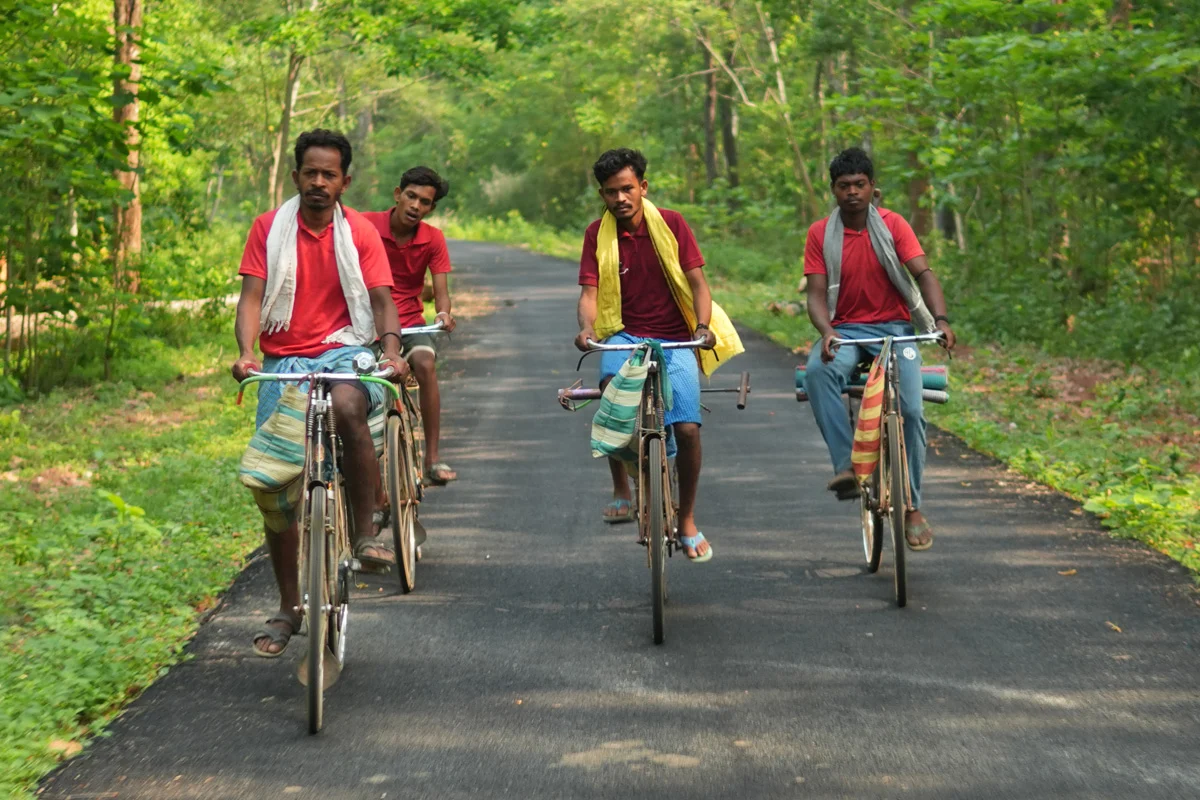
In the heart of the Bastar district in Chhattisgarh, the transition from spring to summer is traditionally marked by a rising sense of anxiety. As the mercury climbs and the lush greenery of the deciduous forests turns to a brittle tinderbox of dry leaves and parched timber, the threat of wildfire looms large. However, in the village of Tiriya, the narrative of seasonal destruction is being rewritten. Here, the sound of bicycle chains and the quiet murmurs of patrolling villagers have replaced the crackle of uncontrolled flames.
Tiriya has emerged as a vanguard of community-led conservation, demonstrating that the most effective way to protect India’s dwindling forest cover is to empower the people who live within it. By leveraging legal rights granted under national legislation, the residents of Tiriya have moved from being passive observers of state-led forest management to the primary architects of their own ecological destiny.
Main Facts: A Paradigm Shift in Forest Governance
The transformation in Tiriya is rooted in a fundamental shift in land tenure and management authority. For decades, forest management in India followed a colonial-era "command and control" model, where the State Forest Department held absolute authority, often viewing local tribal communities as encroachers or threats to biodiversity. This dynamic changed for Tiriya between 2022 and 2023, when the village’s Gram Sabha (village assembly) was formally granted Community Forest Resource (CFR) rights.
Under the Scheduled Tribes and Other Traditional Forest Dwellers (Recognition of Forest Rights) Act, 2006—commonly known as the Forest Rights Act (FRA)—the community was handed the legal mandate to protect, regenerate, and manage over 3,000 hectares of forest land. This area, roughly equivalent to 7,400 acres, is now under the direct stewardship of the Tiriya Gram Sabha and its dedicated Community Forest Resource Management Committee (CFRMC).
The results of this empowerment have been quantifiable and immediate. The village has implemented a rigorous, multi-tiered fire management strategy that includes:
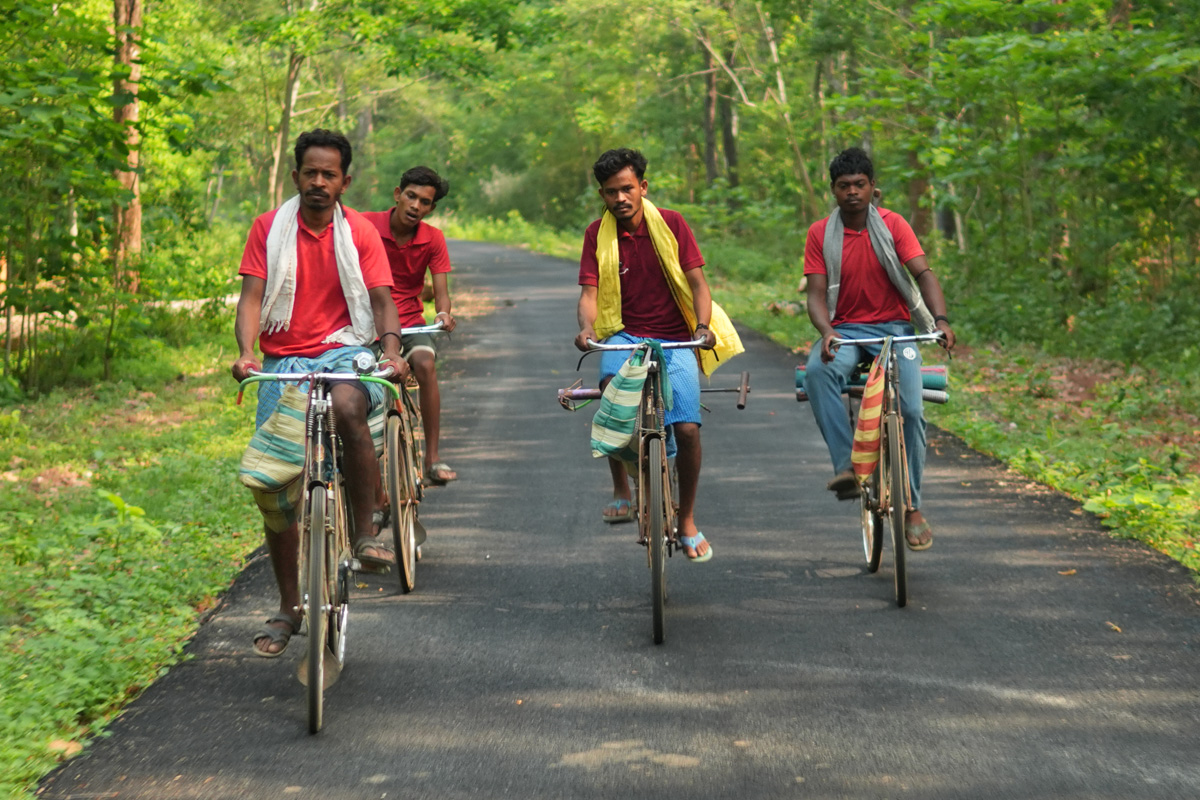
- Bicycle Patrols: Squads of villagers who monitor the 3,000-hectare perimeter for signs of smoke.
- Fireline Maintenance: The strategic clearing of vegetation strips to prevent the spread of ground fires.
- Controlled Burning: A shift from haphazard clearing to scientifically monitored, "planned" fires that facilitate the collection of forest produce without endangering the canopy.
- Collaborative Governance: A new model of cooperation where the Forest Department acts as a technical advisor rather than a distant enforcer.
Chronology: From Vulnerability to Stewardship
The journey of Tiriya’s forest management can be divided into three distinct phases: the era of state-dependence, the transition of legal empowerment, and the current era of proactive management.
The Pre-2022 Era: Fragmented Management
Before 2022, the forests surrounding Tiriya were managed primarily by the Chhattisgarh Forest Department. While the department had the mandate, it often lacked the boots on the ground to monitor the vast, rugged terrain of Bastar effectively. During the summer months, fires were frequent. Some were natural, but many were anthropogenic—started by collectors of Mahua flowers who burned the leaf litter to make the fallen flowers easier to spot. Without a sense of ownership, these fires often spiraled out of control, leaping from the forest floor to the crowns of trees, destroying timber and biodiversity alike.
2022-2023: The Legal Turning Point
The catalyst for change was the formal recognition of CFR rights. While the FRA was passed in 2006, the implementation of community rights has been slow across India. In 2022, following sustained advocacy and administrative processing, Tiriya became one of the few villages in the region to receive its title. This legal document was more than just paper; it was a psychological shift. The forest was no longer "government property"; it was "community property."
2024-2026: Implementation and Refinement
Armed with legal authority, the Gram Sabha formed the CFRMC. Loknath Nag, a prominent member of the committee, notes that the first priority was addressing the fire crisis. In 2024, the community formalized the bicycle patrol system. Villagers began working in organized shifts, ensuring that at any given hour during the high-risk season, eyes were on the forest. By 2025, the system had been refined to include rapid-response protocols, where patrol members would use mobile phones to alert the village and the Forest Department the moment a "hot spot" was identified.
Supporting Data: Measuring the Impact of Community Vigilance
The success of the Tiriya model is not merely anecdotal; it is backed by empirical evidence gathered by both the Gram Sabha and the local Forest Department. The decline in fire incidents provides a stark contrast to the regional trends where climate change has generally increased fire frequency.
| Year | Recorded Fire Incidents | Management Status |
|---|---|---|
| 2022 | 19 | State-led Management (Pre-CFR) |
| 2023 | 11 | Transition Period |
| 2024 | 6 | Early Community Patrols |
| 2025 | 3 | Full CFR Management |
| 2026 (by May) | 1 | Mature Patrol & Fireline System |
This data represents an 84% reduction in fire incidents within three years of community empowerment. Furthermore, the "burn severity" of the recorded fires has decreased. Most fires in 2025 and 2026 were contained within small patches of leaf litter and suppressed before they could damage the standing crop of Sal (Shorea robusta) or Mahua (Madhuca longifolia) trees.
The economic data also supports the community’s efforts. The Dhurwa tribe, which inhabits Tiriya, relies heavily on Non-Timber Forest Products (NTFPs). By preventing high-intensity fires, the community has preserved the delicate "leaf litter" ecosystem. This layer of organic matter is essential for the growth of wild mushrooms, a high-value seasonal food and commodity. When uncontrolled fires sweep through, they sterilize the soil and destroy the fungal spores, leading to a direct loss of income for the villagers.
Official Responses: A New Synergy
The success in Tiriya has necessitated a change in how government officials interact with tribal communities. Historically, the relationship was fraught with mistrust. However, the Forest Department’s response to the Tiriya model has been increasingly positive, recognizing that the Gram Sabha provides a level of granular monitoring that the state cannot replicate.
Local forest officials have noted that the "Tiriya Model" reduces the department’s operational burden. Instead of deploying expensive firefighting equipment and large teams after a fire has already become a disaster, the department now focuses on providing technical support, such as GPS mapping for firelines and providing basic firefighting gear to the village volunteers.
"Now, the villagers have reduced burning and monitor planned fires closely," says Loknath Nag. This statement highlights a critical nuance: the goal is not the total elimination of fire—which is a natural part of the deciduous ecosystem—but the management of it. By "planning" the fires used for Mahua collection and ensuring they are extinguished before the wind picks up, the community has balanced traditional livelihoods with modern conservation needs.
Implications: A Blueprint for the Future of Conservation
The Tiriya story has implications that resonate far beyond the borders of Bastar. It serves as a potent case study for several critical issues in global and national environmental policy.
1. Climate Resilience through Decentralization
As global temperatures rise, forest fires are becoming more frequent and intense. The Tiriya experience suggests that decentralized, community-led management is more resilient than centralized systems. Local residents have a vested interest in the forest’s survival because their food security and culture are tied to it. Their "early warning system"—bicycles and local knowledge—is often faster and more effective than satellite monitoring, which can have significant time lags.
2. The Link Between Rights and Responsibility
The Tiriya case settles a long-standing debate in conservation circles: whether granting rights to forest dwellers leads to degradation or protection. In Tiriya, the grant of rights directly led to an increase in responsibility. When the community felt they "owned" the resource, they invested their own time and labor into protecting it. This "stewardship effect" is a powerful tool for achieving India’s goals under the Paris Agreement, particularly in increasing carbon sinks through forest protection.
3. Cultural Preservation as Conservation
For the Dhurwa community, the forest is not just a collection of trees; it is a spiritual and cultural landscape. The protection of Sal and Mahua trees is synonymous with the protection of their identity. By integrating traditional knowledge—such as understanding the specific blooming cycles of trees and the growth patterns of mushrooms—into the fire management plan, Tiriya has shown that cultural preservation and ecological conservation are two sides of the same coin.
4. Scalability in the "Red Corridor"
Bastar has long been associated with civil unrest and the Naxalite insurgency. The success of the CFR model in Tiriya offers a path toward peace and stability. By empowering local Gram Sabhas and recognizing their legal rights, the state can foster a sense of inclusion and agency among tribal populations. If the Tiriya model were scaled across the forested districts of Chhattisgarh, Jharkhand, and Odisha, it could transform the socio-political landscape of Central India.
Conclusion: "Before The Fire"
The short film Before The Fire, produced under the Mongabay-India and ALT EFF Video Reporting Opportunity, captures the quiet heroism of the Tiriya patrols. It shows men and women on bicycles, navigating the dusty trails of Bastar, not as victims of environmental change, but as its masters.
As the sun sets over the 3,000 hectares of Tiriya’s forest, the lack of smoke on the horizon is a testament to a simple truth: when those who live closest to the land are given the right to protect it, the land thrives. Tiriya has shown that the best way to stop a forest fire is to prevent it from starting, and the best people to prevent it are those who call the forest home. The challenge now lies in ensuring that the lessons of Tiriya are heard in the halls of power, ensuring that more communities are given the keys—and the bicycles—to protect India’s green heritage.
