

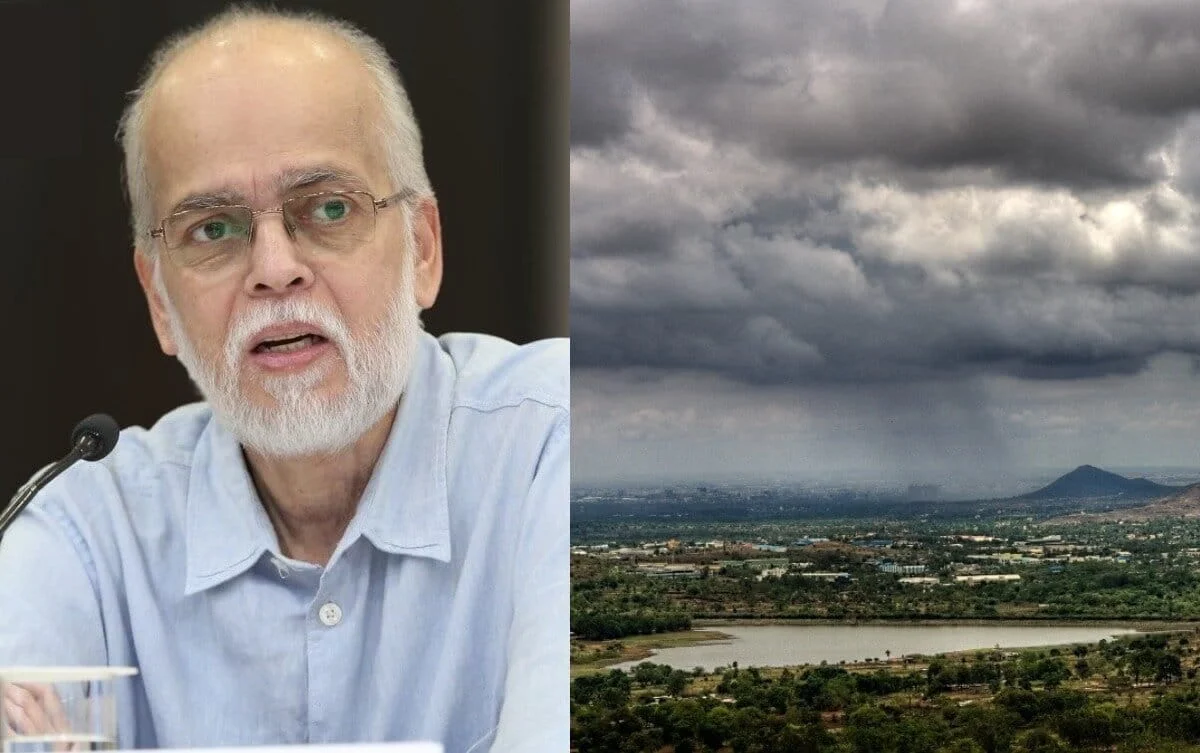
The global climate science community is mourning the loss of one of its most distinguished voices. Professor Krishna AchutaRao, a seminal figure in atmospheric sciences and a cornerstone of the Indian Institute of Technology (IIT) Delhi, passed away on September 4, 2024, at the age of 62. His death marks the end of a prolific career dedicated to unraveling the complexities of human influence on the Earth’s climate system—a field known as "attribution science."
Prof. AchutaRao’s work was instrumental in shifting the narrative of climate change from abstract global averages to tangible regional impacts. Through his rigorous research and institutional leadership, he provided the scientific scaffolding that allowed policymakers to understand exactly how much of a specific heatwave, flood, or monsoon failure could be traced back to human activity.
Main Facts: A Life Defined by Scientific Precision
Krishna AchutaRao was a Professor at the Centre for Atmospheric Sciences (CAS) at IIT Delhi, an institution he served for nearly two decades. His expertise lay in the detection and attribution of climate change, a specialized branch of science that seeks to identify the "fingerprints" of anthropogenic (human-caused) forces in observed weather patterns.
Beyond the laboratory, AchutaRao was a key figure in the Intergovernmental Panel on Climate Change (IPCC), the United Nations body responsible for assessing the science related to climate change. His contributions to the Fifth and Sixth Assessment Reports (AR5 and AR6) helped solidify the global consensus on the urgency of the climate crisis.
At IIT Delhi, his influence was both academic and administrative. Having served as the Head of the Centre for Atmospheric Sciences and as the Dean (Faculty), he was a pillar of the university’s governance. Perhaps his most enduring institutional legacy is the establishment of the Centre of Excellence for Climate Change Adaptation, which focuses on the hyper-local risks faced by India’s most vulnerable populations.
Chronology: From Engineering to the Global Climate Stage
The trajectory of Prof. AchutaRao’s career reflects a journey of interdisciplinary excellence, beginning with a foundation in core engineering and mathematics.
Early Education and International Exposure (1982–2006)
In 1986, AchutaRao graduated from the prestigious Birla Institute of Technology and Science (BITS), Pilani, with a dual degree—a Bachelor’s in Mechanical Engineering and a Master’s in Mathematics. This rigorous quantitative background would later become the hallmark of his climate modeling work.
Seeking to expand his horizons, he moved to the United States, where he earned a second Master’s degree and a PhD in Engineering from Tulane University in New Orleans. His time in the U.S. culminated in a significant tenure at the Lawrence Livermore National Laboratory (LLNL) in California. It was here, within one of the world’s premier research facilities, that AchutaRao began refining the computational models used to simulate atmospheric behavior.
The Return to India and the Rise of CAS (2007–2024)
In 2007, at a time when climate science was gaining unprecedented urgency in the Global South, AchutaRao returned to India to join the Centre for Atmospheric Sciences at IIT Delhi. Over the next 17 years, he would transform the department into a hub for regional climate research.
He rose through the ranks of the IPCC, beginning his association in 2001. By the time of the Sixth Assessment Report, he was a contributing author to chapters that provided the definitive proof that human influence has warmed the atmosphere, ocean, and land at a rate that is unprecedented in at least the last 2,000 years.
Supporting Data: The Science of Attribution and Adaptation
To understand the magnitude of Prof. AchutaRao’s contribution, one must look at the specific scientific domains he championed.
The Power of Climate Attribution
Before the maturation of attribution science, many viewed extreme weather events as "acts of God" or natural variability. AchutaRao was at the forefront of using "fingerprinting" techniques to distinguish between natural fluctuations and human-induced trends.
His research often focused on the Indian Summer Monsoon—the lifeblood of India’s agrarian economy. By analyzing decades of data, he helped demonstrate how rising greenhouse gas emissions and aerosol concentrations were altering the frequency and intensity of monsoon rains. This data was crucial for India’s long-term food security planning.
The Centre of Excellence for Climate Change Adaptation
Under his leadership, the Centre of Excellence for Climate Change Adaptation at IIT Delhi became a vital resource for the Indian government. The Centre’s work focused on three critical areas:
![Krishna AchutaRao, climate scientist who pioneered attribution research in India, dies at 62 [Obituary]](https://imgs.mongabay.com/wp-content/uploads/sites/30/2026/09/10155254/krishna-achutarao-collage-1200x753.jpg)
- Heat Extremes: Developing models to predict "wet-bulb" temperatures that pose a survival risk to outdoor workers.
- Monsoon Variability: Creating high-resolution forecasts to help farmers adapt to "break" periods in rainfall.
- Hazard Mapping: Identifying districts most at risk from flooding and drought to prioritize infrastructure spending.
Bridging the "Emissions Gap"
AchutaRao was a vocal proponent of the "Developing Nation Paradox." He frequently pointed out that while India needs to develop rapidly to lift millions out of poverty, it must do so without repeating the carbon-intensive mistakes of the West. His 2020 interview with IIT students highlighted this philosophy: “We are a developing country poised to take off… how are we going to make sure we don’t make the same high emission mistakes the rest of the developed world has made?”
Official Responses: A Community in Mourning
The news of his passing triggered a wave of tributes from the academic and scientific community, both in India and abroad.
IIT Delhi’s Statement
In an official communique, IIT Delhi expressed profound grief:
"IIT Delhi is deeply saddened by the demise of Prof. Krishna AchutaRao. Prof. AchutaRao served at the Institute for about two decades and held various positions of responsibility, including Dean (Faculty) and Head, CAS. His contributions to the field of climate science and his dedication to the Institute will be remembered for years to come."
Colleagues and Peers
Dr. Roxy Mathew Koll, a leading climate scientist at the Indian Institute of Tropical Meteorology (IITM) and a frequent collaborator, shared a poignant tribute on social media. He highlighted that AchutaRao was not just a brilliant mind, but a man of character.
"What brought me closer to him was his keen scientific temper, his extraordinary attention to detail, and above all, his sense of humour. We will miss him deeply," Koll wrote.
Other colleagues noted his "unflappable" nature during intense IPCC drafting sessions, where his ability to translate complex data into clear, policy-relevant language was highly valued.
Implications: The Legacy and the Future of Indian Climate Science
The passing of Prof. AchutaRao leaves a significant void in the leadership of Indian climate science, but his work provides a roadmap for the future.
1. Strengthening the Voice of the Global South
AchutaRao was a staunch advocate for ensuring that the impacts of climate change on developing nations were not sidelined in international discourse. He argued that since the developing world bears the brunt of a crisis it did not create, its scientific institutions must be world-class to negotiate effectively on the global stage. His legacy ensures that IIT Delhi remains a center for this "climate diplomacy."
2. Education and Mentorship
Perhaps his most lasting impact will be the generation of climate scientists he mentored. At CAS, he was known for encouraging students to look beyond the numbers and see the human faces behind the data. By training young researchers in the nuances of climate modeling and attribution, he has ensured that the "IIT Delhi school of thought" will continue to influence Indian policy for decades.
3. The Urgency of Adaptation
AchutaRao’s later work focused heavily on adaptation. He recognized that even if the world reaches "Net Zero," a certain amount of warming is already "baked in." His push for better risk assessments for heatwaves and floods has become the foundation for State Climate Change Action Plans (SCCAPs) across India.
4. A Call to Action for Scientists
In his public engagements, AchutaRao often reminded his peers that science does not exist in a vacuum. He believed scientists have a moral obligation to communicate their findings to the public and the press. His frequent media appearances were aimed at demystifying climate science, making it accessible to the common citizen who might be wondering why their city is flooding more often or why the summers are becoming unbearable.
Conclusion
Professor Krishna AchutaRao was more than a researcher; he was a bridge between the rigorous world of mathematical modeling and the urgent reality of a changing planet. At 62, he was at the height of his intellectual powers, continuing to push the boundaries of what we know about our atmosphere.
As India grapples with the escalating impacts of climate change—from the receding glaciers of the Himalayas to the warming waters of the Indian Ocean—the scientific foundations laid by AchutaRao will serve as a critical guide. He taught us that while the climate is changing, our ability to understand, attribute, and adapt to that change is our greatest strength. His death is a profound loss, but his life’s work remains an enduring beacon for a sustainable future.
