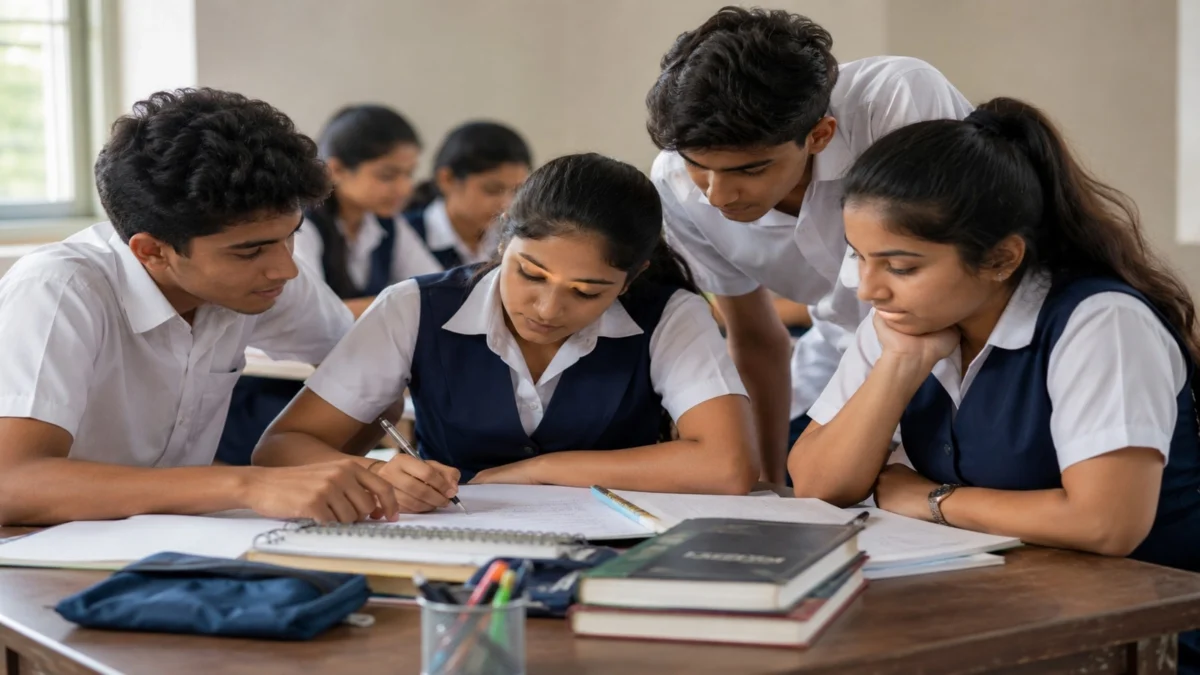
New Delhi, June 1, 2026 – The Directorate of Higher Secondary Education (DHSE) Kerala has officially opened the registration window for the highly anticipated Kerala Plus Two SAY (Save A Year) and Improvement examinations, commencing today, June 1, 2026. This crucial opportunity is designed to provide students who narrowly missed achieving the minimum D+ qualifying grade in one or more subjects during the March examinations with a pathway to secure their academic progression. The application process will remain open until June 3, urging students to act swiftly to avoid any last-minute complications.
This initiative underscores DHSE Kerala’s commitment to student success, recognizing that a single examination can significantly impact a student’s future academic and career trajectory. The SAY and Improvement exams offer a vital second chance, allowing students to rectify their performance and move forward without significant academic setbacks. Alongside the registration for these examinations, the board has also concurrently initiated the process for re-evaluation and scrutiny of answer sheets, catering to a broader spectrum of student needs and concerns.
The SAY examinations are scheduled to be conducted from June 29 to July 3, 2026, with results anticipated in mid-July. This compressed timeline allows for a swift resolution for students seeking to qualify for higher education or professional courses that have specific academic prerequisites. The Improvement examinations, on the other hand, offer students the chance to enhance their scores in subjects they have already passed, potentially improving their overall academic profile for competitive admissions.
Understanding the SAY and Improvement Examinations
The SAY (Save A Year) examination is a lifeline for students who have failed to secure the minimum qualifying grade (D+) in one or more subjects in the main Plus Two examinations held in March. The intention behind this examination is to prevent students from having to repeat the entire academic year, thereby saving them valuable time and mitigating the emotional and financial burden associated with academic failure. By successfully clearing the SAY examination in the failed subjects, students can still be deemed as having passed the Plus Two examinations.
The Improvement Examination, conversely, is for students who have already passed the Plus Two examinations but wish to improve their scores in specific subjects. This is particularly beneficial for students aiming for admission to highly competitive courses or universities that consider subject-wise scores and overall academic merit for selection. A higher score in a particular subject can significantly boost a student’s chances of securing a seat in their desired field of study.
A Swift Application Process: Key Dates and Procedures
The registration period for both SAY and Improvement examinations is exceptionally brief, emphasizing the urgency for eligible students to complete their applications.
Key Dates:
- Registration Opens: June 1, 2026
- Last Date for Application: June 3, 2026
- SAY Examination Dates: June 29, 2026 – July 3, 2026
- SAY Examination Results: Mid-July 2026
Students are strongly advised to initiate the application process immediately upon the opening of the registration window. Delays could lead to missed deadlines, technical issues with online portals (if applicable), or difficulties in obtaining necessary documentation. The application process is designed to be straightforward, but promptness is key.
Step-by-Step Guide to Applying for Kerala Plus Two SAY/Improvement Registration 2026
The Directorate of Higher Secondary Education (DHSE) Kerala has outlined a clear procedure for students to apply for the SAY and Improvement examinations. The process involves obtaining and submitting an application form through the student’s respective school.
Follow these detailed steps:
- Obtain the Application Form: Students must visit their respective higher secondary schools to collect the official SAY/Improvement examination application form. It is crucial to ensure that the form obtained is the most current and officially sanctioned version.
- Complete Personal Information: Carefully fill in all the required personal details on the application form. This typically includes the student’s name, parent’s name, date of birth, and contact information. Ensure accuracy to prevent any discrepancies later on.
- Provide Registration Number: A mandatory field on the form will require the student’s registration number from the March examination. This number is critical for linking the application to the student’s previous academic record.
- Specify Subject Codes: For improvement subjects or subjects in which the SAY examination is to be taken, students must accurately enter the corresponding subject codes. These codes are usually available in the examination prospectus or can be obtained from the school authorities.
- Attach Photograph: A recent passport-sized photograph of the student must be affixed to the designated section of the application form. Ensure the photograph meets the specified requirements regarding size, background, and clarity.
- Pay Application Fee: A non-refundable application fee is stipulated for these examinations. Students are required to pay this fee as per the official guidelines provided by DHSE Kerala. Proof of payment (e.g., challan receipt) will likely need to be attached to the application.
- Submit the Completed Form: Once all the sections are accurately filled and necessary attachments are made, the completed application form, along with the fee payment receipt, must be submitted to the school principal. This submission must be done on or before the stipulated deadline of June 3, 2026.
It is advisable for students to retain a photocopy of the submitted application form and the fee receipt for their records.
Re-evaluation and Scrutiny: Addressing Concerns Beyond SAY Exams
In tandem with the SAY and Improvement examination registrations, DHSE Kerala has also opened the process for re-evaluation and scrutiny of answer sheets. This provision caters to students who may have concerns about the marking of their papers from the March examinations, even if they do not fall into the SAY category.
Scrutiny: This process involves a careful verification of the answer script to ensure that all answers have been evaluated and that there are no totalling errors. It is a more preliminary review.
Re-evaluation: This is a more in-depth process where the answer script is re-examined by a different examiner. If the marks are revised, the student’s result will be updated accordingly.
Students who wish to apply for scrutiny or re-evaluation should follow the procedures and timelines communicated by DHSE Kerala, which are usually detailed on the official website and through school notifications. These processes offer an additional layer of fairness and transparency in the examination system.
DHSE Kerala Plus Two 2026 Examination Highlights and Performance Analysis
The recent declaration of the DHSE Kerala Plus Two results for the March 2026 examinations revealed a commendable overall pass percentage of 77.97%. This represents a marginal increase of 0.16% compared to the previous year, indicating a steady academic performance across the state.
Key Statistics from the March 2026 Examinations:
- Total Students Appeared: 3,72,423
- Total Students Qualified: 2,90,398
- Overall Pass Percentage: 77.97%
- Students Securing A+ Grades: 30,561 (This signifies a high level of academic achievement, with students excelling across all subjects.)
- Perfect Scores: A remarkable 60 students achieved a perfect score of 1200/1200, showcasing exceptional academic prowess.
Gender-wise Performance Analysis:
A significant trend observed in the results is the consistent outperformance of girls over boys.
- Girls’ Pass Percentage: 86.69%
- Boys’ Pass Percentage: 68.41%
This disparity highlights the academic dedication and success rates of female students in Kerala’s higher secondary education system. While the overall pass percentage is encouraging, the gap between male and female performance warrants continued attention and potential targeted interventions to support male students’ academic outcomes.
Implications for Students and the Education Landscape
The opening of the SAY and Improvement examination registrations carries significant implications for students, their families, and the broader educational ecosystem in Kerala.
For Students:
- Academic Progression: The most immediate implication is the opportunity for students to rectify academic shortcomings and qualify for higher education. This is particularly critical for students aspiring to join professional courses like engineering, medicine, or other specialized fields that often have stringent eligibility criteria.
- Reduced Stress and Anxiety: The availability of these examinations can alleviate the immense stress and anxiety associated with failing or underperforming in a crucial examination. It provides a structured and recognized pathway to overcome academic hurdles.
- Enhanced Opportunities: For students aiming to improve their scores, the improvement examinations can open doors to better college admissions, scholarships, and future career prospects. A strong academic record is often a prerequisite for competitive opportunities.
- Financial and Time Savings: By allowing students to save a year, the SAY examinations prevent the need for them to re-enroll in the entire academic year, thereby saving both time and the associated financial costs of repeated schooling.
For the Education System:
- Flexibility and Inclusivity: The provision of SAY and Improvement examinations demonstrates the flexibility and inclusive nature of Kerala’s education system, which strives to accommodate students with diverse academic needs and challenges.
- Quality Assurance: By allowing for re-evaluation and scrutiny, the system reinforces its commitment to fairness and accuracy in its assessment processes.
- Data-Driven Improvement: The performance data from the main examinations and the outcomes of the SAY/Improvement exams can provide valuable insights for educational policymakers and institutions to identify areas requiring improvement in curriculum, teaching methodologies, or support systems.
- Maintaining Standards: While providing second chances, the examinations also serve to uphold the academic standards of the Plus Two certification, ensuring that those who qualify meet a defined level of competency.
In conclusion, the opening of registrations for the Kerala Plus Two SAY and Improvement examinations by DHSE Kerala is a critical step in supporting student aspirations and ensuring a robust educational pathway. The swift registration window and the clear procedural guidelines are designed to facilitate timely access to these vital opportunities. As students gear up to register, the focus remains on their academic success and their ability to seamlessly transition into the next phase of their educational journeys. The commitment to providing avenues for academic redressal underscores Kerala’s dedication to fostering a supportive and progressive learning environment for all its students.