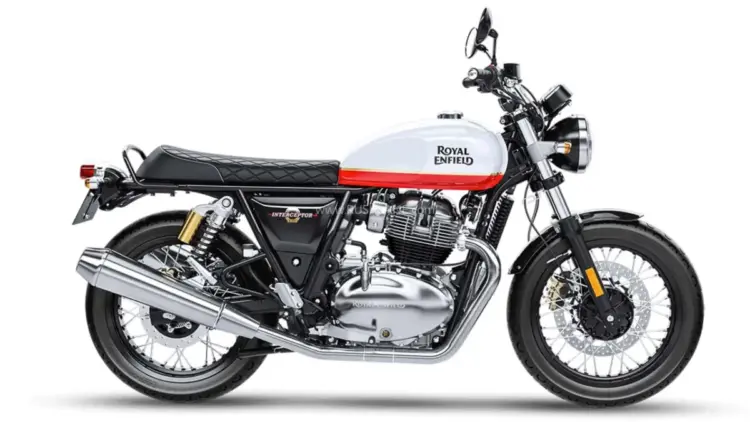
In a significant ruling that underscores the accountability of original equipment manufacturers (OEMs) and their authorized service networks, the South Delhi District Consumer Disputes Redressal Commission has ruled in favor of a Royal Enfield Interceptor 650 owner. The commission directed Eicher Motors Ltd (the parent company of Royal Enfield) and its Noida-based dealer, Shree Mahadev Motors, to pay a sum of ₹1 lakh in compensation.
The case, which centered on a harrowing experience at an altitude of nearly 16,000 feet, highlights a critical technical failure and a subsequent lapse in service transparency that left a rider stranded in one of the most inhospitable terrains on the planet.
1. The Core Dispute: Technical Negligence at 15,912 Feet
The crux of the legal battle lies in a known technical vulnerability of the early Royal Enfield 650 Twins (the Interceptor and the Continental GT). These motorcycles, while celebrated for their 648cc parallel-twin engines, were reported by several early adopters to suffer from "altitude sickness"—a condition where the Electronic Control Unit (ECU) fails to properly adjust the air-fuel mixture in the thin air of the Himalayas, leading to engine stalling and power loss.
The complainant, Hasan Murtaza, an owner of a 2019 Interceptor 650, alleged that despite specifically requesting a software patch to mitigate this issue before a planned expedition to Leh, Ladakh, the service center failed to perform the update while falsely claiming the vehicle was "trip-ready."
The resulting failure at 15,912 feet above sea level forced the rider to manually maneuver a 202-kilogram machine downhill in a desperate bid to bump-start the engine, leading to significant physical strain and respiratory distress.
2. Chronology of Events: From Preparation to Peril
To understand the weight of the commission’s decision, one must look at the timeline of events that led to the legal confrontation.
The Purchase and Early Ownership
Hasan Murtaza purchased his Royal Enfield Interceptor 650 from Ess Aar Motors on April 13, 2019. For the first two years, the motorcycle served as a premium commuter and touring machine. However, the true test of the "Go Anywhere" marketing associated with the brand was scheduled for late 2021.
The Pre-Trip Service (June 2021)
Aware of the widely documented reports regarding the Interceptor’s performance issues at high altitudes, Murtaza took his motorcycle to Shree Mahadev Motors in Noida in June 2021. His primary request was an ECU update—a software fix released by Royal Enfield specifically to address oxygen-sensor mapping at high altitudes. The service center assured him the update was successfully installed.
The Himalayan Crisis (September 2021)
In September 2021, Murtaza commenced his journey toward Leh. The nightmare began at an elevation of approximately 15,912 feet. The motorcycle began losing power and eventually stalled. In the oxygen-depleted air of the high passes, Murtaza was forced to drag the heavy motorcycle downhill to gain enough momentum to restart it.
Upon reaching Leh on September 21, 2021, he immediately sought assistance at a local authorized Royal Enfield service center. It was here that the deception was uncovered: a technician informed him that the ECU had never been updated. Furthermore, the Leh workshop claimed they lacked the necessary equipment to perform the specialized software flash.
The Legal Recourse (2022–2026)
Fearing for his safety, Murtaza abandoned the remainder of his planned trip, leaving the bike at a hotel and eventually riding it back to Noida under suboptimal conditions. After a legal notice sent in January 2022 went unheeded in terms of adequate compensation, Murtaza approached the Consumer Commission, seeking ₹1 crore for physical agony, mental distress, and the endangerment of his life.
3. Supporting Evidence and Technical Data
The commission’s decision was not based on hearsay but on a combination of digital footprints and documented technical history.
The "High Altitude Update" Precedent
The commission took note of various technical reports and articles—including those published by automotive journals like Rushlane—which confirmed that Royal Enfield had indeed acknowledged a software glitch in the 650 Twins. The update was designed to recalibrate the fuel injection system to handle the lower oxygen density found in regions like Ladakh.

The Paper Trail (or Lack Thereof)
A pivotal point in the case was the absence of a "job card" from the Noida service center proving the ECU update was performed. While the defense argued that the complainant lacked certain physical service records, the commission relied on the extensive email correspondence between Murtaza and Royal Enfield’s customer support. These emails established:
- The date and location of the Leh service visit.
- The technician’s admission in Leh that the software was outdated.
- The rider’s immediate reporting of the distress.
Medical Documentation
The complainant provided medical records indicating he suffered from breathlessness and wheezing following the incident. While the defense attempted to suggest these were pre-existing conditions (such as asthma), the commission noted that the records specifically tied the symptoms to "exertion" at high altitude, directly linking the physical toll to the act of dragging the stalled 200kg motorcycle.
4. Official Responses and Defense Arguments
The legal proceedings saw varying degrees of participation from the opposite parties.
Eicher Motors’ Defense
Eicher Motors (Royal Enfield) attempted to distance itself from the negligence of the dealer. Their legal counsel argued that the relationship between the manufacturer and the dealer is on a "principal-to-principal" basis. Essentially, they contended that Eicher Motors provides the product, but the quality of service and individual maintenance tasks are the independent responsibility of the authorized workshop (Shree Mahadev Motors).
Shree Mahadev Motors’ Silence
In a move that likely weakened the defense’s position, Noida-based Shree Mahadev Motors failed to appear before the commission or file a formal reply despite being served notice. In consumer law, such an absence often leads the court to accept the complainant’s version of facts as "unrebutted."
The Commission’s Verdict
The South Delhi District Consumer Disputes Redressal Commission, presided over by its members, rejected the "independent business" argument. It ruled that since the service center is an authorized representative of the brand, the manufacturer cannot entirely absolve itself of the failures of its network, especially regarding a known technical update.
On November 4, 2026, the commission ordered Eicher Motors and Shree Mahadev Motors to:
- Jointly pay ₹1,00,000 to the complainant.
- The payment must be made within three months.
- Failure to pay within the stipulated time will incur an interest rate of 6% per annum from the date of the order until the realization of the amount.
5. Industry Implications: A Warning to Manufacturers
This ruling serves as a landmark for several reasons and carries heavy implications for the Indian automotive industry.
Accountability for "Authorized" Networks
The "principal-to-principal" defense is a common tactic used by OEMs to avoid liability for dealer-level negligence. By holding Eicher Motors "jointly and severally" liable, the commission has sent a clear message: Manufacturers must ensure that their authorized service centers are not only equipped with the necessary tools but are also acting with integrity. If a dealer claims to have performed a safety-critical software update and fails to do so, the brand name on the storefront shares the blame.
The Criticality of Software in Modern Biking
As motorcycles transition into "computers on wheels," software updates (ECU maps, ABS calibrations, etc.) are as vital as oil changes. This case highlights that a failure to update software is a "service deficiency" equivalent to a mechanical failure. For adventure-touring brands like Royal Enfield, whose marketing relies on the "Himalayan" pedigree, ensuring bikes can actually survive the Himalayas is a legal necessity, not just a marketing slogan.
Consumer Awareness and Documentation
For consumers, this case is a lesson in the importance of digital documentation. Hasan Murtaza’s victory was largely secured through his persistence in emailing customer support and keeping a record of his interactions. When a physical job card is denied or "lost" by a service center, a contemporaneous email or a video recording can serve as vital evidence in a consumer court.
Re-evaluating Compensation
While the complainant sought ₹1 crore, the award of ₹1 lakh reflects the commission’s balanced approach—compensating for documented distress and service deficiency without moving into the realm of "punitive damages" often seen in Western courts. However, for a manufacturer, the reputational damage and the legal precedent set by this ₹1 lakh fine far outweigh the monetary value of the payout.
Conclusion
The case of Hasan Murtaza vs. Eicher Motors is more than just a dispute over a stalled engine; it is a testament to the evolving landscape of consumer rights in India. As enthusiasts continue to push the boundaries of travel on two wheels, the safety nets provided by law are becoming as essential as the helmets they wear. For Royal Enfield, a brand synonymous with the ride to Leh, this verdict serves as a stark reminder that "Made Like a Gun" must also mean "Serviced with Integrity."