Introduction
In an era defined by rapid urbanization and an urgent pivot toward sustainable transportation, Hero MotoCorp’s electric vehicle subsidiary, Vida, is positioning itself as a pioneer of diverse mobility solutions. While the brand initially made waves with its V1 electric scooter series, its vision for the future is significantly more expansive. Recently, the Indian automotive landscape was stirred by the news that Hero Vida has officially filed a design patent for the NEX 3—an ultra-compact, two-seater micro-electric car.
This move signals a strategic departure from traditional two-wheeler manufacturing, as Hero MotoCorp seeks to capture a burgeoning niche in the urban mobility sector. The NEX 3, categorized as a "micro-SUV" by the brand, aims to bridge the gap between the maneuverability of a scooter and the safety and comfort of a traditional passenger car. With traffic congestion reaching critical levels in Indian metros, the patenting of the NEX 3 suggests that the world’s largest two-wheeler manufacturer is ready to redefine the "second car" concept for the modern Indian family.
Main Facts: The Architecture of a Micro-Mobility Revolution
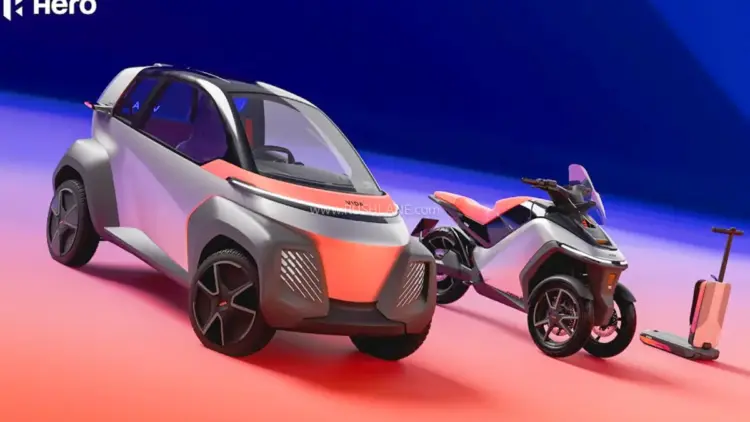
The Hero Vida NEX 3 is the flagship of the "Vida Novus" range, a conceptual family of vehicles designed to tackle the complexities of 21st-century city living. The Novus lineup consists of three distinct pillars: the NEX 1, the NEX 2 (a self-balancing three-wheeled trike), and the NEX 3 (the micro-EV).
The design patent reveals a vehicle that is unapologetically futuristic yet deeply rooted in practical urban utility. Key features of the NEX 3 include:

- Wing-Style Vertical Doors: Perhaps the most striking feature of the NEX 3 is its single, large wing-style door that opens upward. Beyond the aesthetic "wow" factor, this serves a critical functional purpose. In the cramped parking lots of cities like Mumbai or Delhi, traditional doors often lack the clearance to open fully. The upward-swinging mechanism allows for easy ingress and egress in tight spaces.
- Compact SUV Styling: Despite its diminutive footprint, Hero has infused the NEX 3 with "SUV-lite" design cues. This includes flared wheel arches, a prominent front bumper, and a V-shaped grille structure. The vehicle sits on aero-optimized alloy wheels wrapped in low-profile tires, suggesting a focus on efficiency and range maximization.
- Two-Seater Configuration: The cabin is designed for two occupants, likely in a tandem or slightly offset side-by-side arrangement. This focus on a minimal occupant count allows the vehicle to remain narrow enough to lane-split or navigate alleyways where a standard hatchback would struggle.
- Minimalist High-Tech Interior: The patent drawings showcase a clutter-free dashboard dominated by a hexagonal steering wheel and dual circular instrument dials. The brand has hinted at high levels of customization, allowing users to tailor the interior aesthetics and functional modules to their liking.
Chronology: From Concept to Patent
The journey of the NEX 3 from a design study to a potential production reality has been swift, reflecting the accelerated pace of the global EV transition.
- November 2023: Hero MotoCorp showcases the Vida Novus concept range at the EICMA motor show in Milan, Italy. The NEX 3 draws significant international attention for its bold styling and "micro-SUV" branding.
- Early 2024: Hero begins focusing on the regulatory framework for "quadricycles" and micro-mobility in India, assessing the market potential for vehicles that sit between the Ather/Ola scooters and the MG Comet EV.
- June 2024: Hero files a design patent for the NEX 2, the self-balancing electric trike. This signals that the "Novus" range is not just a collection of show cars but a serious product roadmap.
- November 2024: The design patent for the NEX 3 is officially filed and spotted in Indian regulatory databases. The patent images closely mirror the concept shown at EICMA, suggesting that the design has matured to a near-production-ready stage.
Supporting Data: The Rise of the Micro-EV Segment
The decision to patent the NEX 3 is backed by shifting consumer data and global automotive trends. In Europe, the "quadricycle" segment—led by the Citroen Ami and the Renault Twizy—has seen a resurgence as city centers impose strict emissions zones and parking fees.
In India, the micro-EV market is currently in its infancy but shows immense promise. The MG Comet EV, currently the most prominent micro-car in India, has demonstrated that there is a dedicated consumer base for "city-only" vehicles. According to industry analysts, nearly 70% of urban car trips in India involve only one or two occupants and cover distances of less than 30 kilometers.
Comparative Specs (Projected):
While Hero has not officially released the spec sheet for the NEX 3, industry benchmarks for this class of vehicle suggest the following:
- Battery Capacity: Estimated 10–15 kWh Lithium-ion pack.
- Range: Targeted 120–150 km on a single charge, ideal for 2–3 days of urban commuting.
- Top Speed: Likely capped at 60–80 km/h to optimize battery life and meet safety regulations for micro-vehicles.
- Charging: Support for standard 15A home sockets, with potential for DC fast charging to reach 80% in under an hour.
The NEX 3 also addresses the "Running Cost" data point. While a traditional petrol hatchback may cost ₹7–10 per kilometer to operate, a micro-EV like the NEX 3 is expected to bring that cost down to less than ₹1 per kilometer, making it an attractive proposition for both budget-conscious private buyers and commercial fleet operators (such as last-mile delivery or "follow-me" airport vehicles).
Official Responses and Brand Philosophy
While Hero MotoCorp executives have remained tight-lipped about the specific launch date of the NEX 3, the brand’s overarching philosophy through Vida is clear. During the EICMA reveal, Hero representatives emphasized that the Novus range represents "the democratization of future mobility."

Dr. Pawan Munjal, Chairman of Hero MotoCorp, has frequently spoken about the need for "modular and flexible" transport. The NEX 3 embodies this by offering a customizable interior. The brand’s strategy appears to be one of "ecosystem building"—where a customer might own a Vida V1 scooter for quick errands and a Vida NEX 3 for commutes that require weather protection and additional safety.
By filing the patent in India, Hero is securing its Intellectual Property (IP) against competitors who are also eyeing this space, including startup players and established giants like Bajaj Auto (who already produce the Qute quadricycle).
Implications: How the NEX 3 Could Change Indian Streets
The introduction of the Vida NEX 3 carries profound implications for the Indian automotive market, urban planning, and environmental goals.
1. Mitigation of Urban Congestion:
The NEX 3’s compact footprint means it occupies roughly 40% less road space than a standard compact SUV. If adopted widely, such vehicles could significantly reduce the physical "load" on city infrastructure. Its ability to park in half-spaces could also alleviate the chronic parking shortages in residential colonies.
2. The "Safety Up" Factor for Two-Wheeler Riders:
India has one of the highest rates of two-wheeler accidents globally. The NEX 3 offers a "safety step-up" for scooter riders. With a roll-cage structure, seatbelts, and a roof, it provides a level of passive safety and weather protection that a motorcycle cannot match, potentially attracting young professionals and small families who are wary of the risks associated with two-wheelers.
3. Commercial and Last-Mile Potential:
Beyond private ownership, the NEX 3 is a prime candidate for the "Gig Economy." E-commerce platforms and food delivery services are under pressure to electrify their fleets. A micro-car like the NEX 3 offers more cargo security than a bike and better efficiency than a full-sized electric van.

4. Environmental Impact:
As India strives toward its Net Zero goals, the electrification of the "second car" is vital. Most Indian households that own two cars use the larger vehicle for highway trips and the smaller one for city chores. By replacing the small petrol "city car" with an ultra-efficient EV like the NEX 3, the carbon footprint of urban households could drop drastically.
Conclusion: The Road Ahead
The patenting of the Hero Vida NEX 3 is more than just a legal formality; it is a statement of intent. It showcases a future where Hero MotoCorp is no longer tethered to the handlebars of a motorcycle but is steering the conversation on comprehensive urban mobility.
Challenges remain, of course. The success of the NEX 3 will depend heavily on its pricing—likely needing to sit in the ₹4 lakh to ₹6 lakh bracket to be competitive—and the development of a robust charging infrastructure. Furthermore, Hero will need to navigate the regulatory landscape regarding quadricycle safety standards and licensing.
However, as the design patent proves, the blueprint is ready. The Vida NEX 3 represents a bold bet on a smaller, cleaner, and more efficient future. If Hero can translate this patent into a production reality that resonates with the Indian consumer’s penchant for value and style, the NEX 3 could very well become the "People’s EV" for the congested cities of tomorrow.