

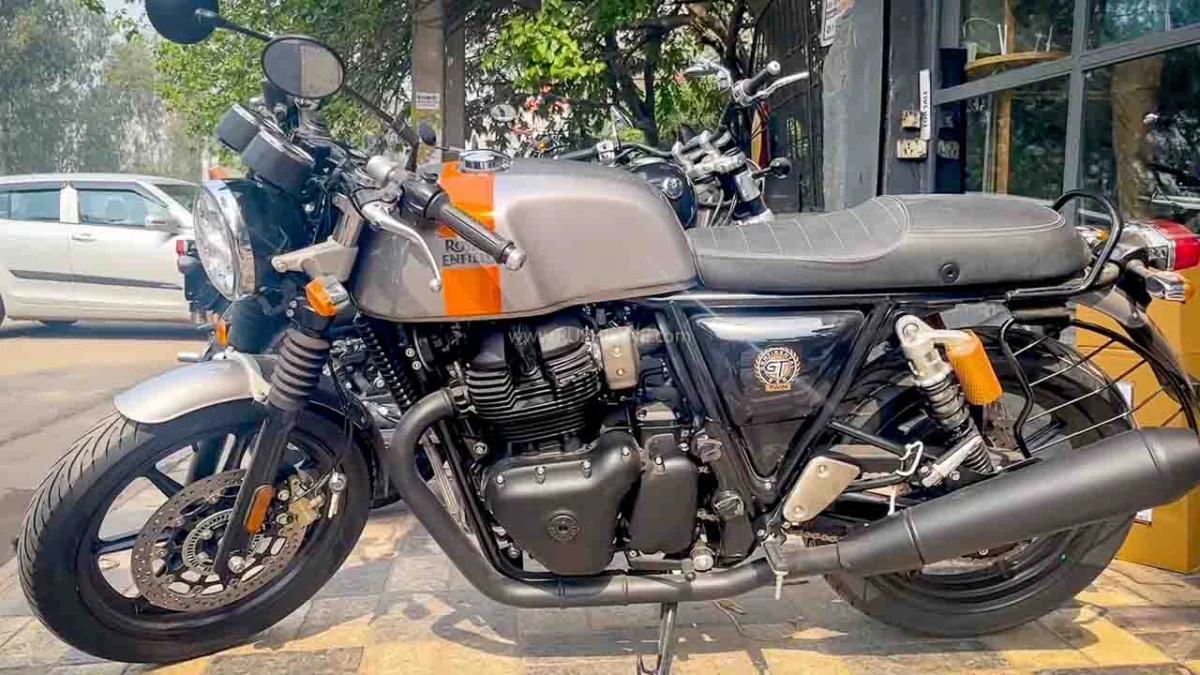
In a landmark judgment that underscores the growing accountability of premium automobile manufacturers in India, the District Consumer Disputes Redressal Commission in Coimbatore has directed the iconic motorcycle manufacturer, Royal Enfield, and its authorized dealer, Bharat Automotives, to pay a substantial compensation of ₹5.1 lakh to a customer. The ruling follows a protracted legal battle initiated by a consumer who faced persistent mechanical and electrical failures with his flagship motorcycle, leading to what the commission termed a "deficiency in service."
The case highlights the plight of premium motorcycle owners who, despite investing significant capital into high-end machinery, often find themselves entangled in a cycle of repetitive repairs and administrative negligence.
Main Facts: The "Lemon" Experience of a Flagship Cafe Racer
The dispute centers around a Royal Enfield Continental GT 650, the brand’s flagship parallel-twin cafe racer, known for its retro aesthetics and 648cc engine. The complainant, Adv. Uthresh Gobu, a Coimbatore-based legal professional, purchased the motorcycle in May 2022 from Bharat Automotives.
What was intended to be a premium ownership experience quickly devolved into a logistical nightmare. Shortly after delivery, the motorcycle began exhibiting a series of technical glitches that were neither minor nor isolated. According to the legal filings, the vehicle suffered from a "cascading failure" of components, ranging from critical engine sensors to basic electrical wiring and structural assemblies.
The sheer volume of repairs is what caught the Commission’s attention. During the ownership period, the motorcycle spent a staggering 294 days inside various workshops. For a vehicle that was less than two years old at the time of the peak of the dispute, this meant the owner was deprived of his vehicle for nearly ten months, significantly impacting his professional mobility and mental peace.
Chronology of a Failed Ownership: From Showroom to Courtroom
The timeline of Adv. Uthresh Gobu’s ordeal provides a clear picture of the persistent nature of the defects:
- May 2022: The motorcycle is purchased from Bharat Automotives, Coimbatore. The owner pays the premium price for the Continental GT 650, expecting the reliability associated with Royal Enfield’s modern 650cc platform.
- Early Post-Purchase Phase: Within weeks of delivery, the first signs of trouble emerge. The instrument cluster—the rider’s primary source of information—begins to malfunction.
- The Repair Cycle (2022–2023): The motorcycle enters a repetitive cycle of "fix and fail." As the owner travels across India for professional and personal commitments, the bike breaks down in various jurisdictions. Repairs are carried out at authorized service centers in Coimbatore, Pune, Mumbai, Navi Mumbai, Noida, New Delhi, and even as far north as Kullu.
- Administrative Friction: Concurrent with the mechanical issues, the owner discovers discrepancies in the paperwork. The dealer reportedly overcharged on insurance premiums and made clerical errors in the owner’s name, leading to an incorrect Registration Certificate (RC), which is a legal document required for road legality.
- Legal Filing: Exhausted by the recurring failures and the lack of a permanent resolution, Adv. Gobu, represented by Adv. R Sivakumar, files a complaint with the District Consumer Disputes Redressal Commission, Coimbatore.
- May 2024: The Commission delivers its verdict, finding the manufacturer and the dealer guilty of providing substandard service and selling a product with inherent flaws.
Supporting Data: A Litany of Component Failures
The evidence presented before the Commission was backed by a comprehensive paper trail, including service records, invoices, job cards, and email correspondence. The data revealed an alarming frequency of part replacements that suggested either a "lemon" unit (a vehicle with manufacturing defects) or a broader failure in quality control.
The Replacement Log:
- Instrument Cluster: Replaced six times. This component is vital for monitoring speed, fuel levels, and engine warnings. Six failures in two years indicate a deep-seated electrical grounding or software issue.
- Keyset/Ignition System: Replaced three times. Frequent failures here suggest issues with the security immobilization system or physical wear-of-material defects.
- Suspension Assembly: Replaced under warranty due to performance issues, affecting the bike’s handling and safety.
- Throttle Body and Sensors: Critical for the fuel-injection system, failures here lead to engine stalling and poor power delivery.
- Exhaust and Silencer Pipes: Reported issues with the exhaust system, which on a 650cc twin, are essential for thermal management and emissions compliance.
- Electrical Wiring: Entire looms were scrutinized and repaired due to intermittent short circuits.
The cumulative downtime of 294 days served as the strongest data point for the complainant. In the eyes of the law, a consumer buys a vehicle for the "utility of transport." If the vehicle is unavailable for nearly 40% of the ownership period, the fundamental contract of sale is considered breached.
Administrative and Financial Discrepancies
The case against Royal Enfield and Bharat Automotives was not limited to mechanical failure. The Commission also looked into the "unfair trade practices" regarding the sale process.
The complainant alleged that the dealer, Bharat Automotives, charged a higher insurance premium than what was originally quoted in the proforma invoice. Furthermore, the negligence in documenting the owner’s name on the RC caused significant legal hurdles. In India, an incorrect RC can lead to issues with insurance claims, resale, and police verification. The refusal or delay in correcting these "minor" clerical errors was viewed by the Commission as part of a larger pattern of "deficiency in service."
Official Response and the Commission’s Ruling
The District Consumer Disputes Redressal Commission, Coimbatore, led by President P Dakshanamoorthy and Member G Suguna, took a stern view of the evidence.
The Verdict:
The Commission ruled that the repeated failures and the extensive time spent in workshops constituted a clear "deficiency in service" under the Consumer Protection Act. The judgment emphasized that a consumer who pays for a premium product is entitled to a product of merchantable quality and a service standard that matches the brand’s reputation.
The Financial Mandate:
- Compensation for Mental Agony: ₹5,00,000 (Five Lakh Rupees). This amount was awarded to cover the hardship, professional loss, and mental distress caused by the 294-day downtime and the cross-country repair saga.
- Litigation Costs: ₹10,000 (Ten Thousand Rupees).
- Total Award: ₹5,10,000.
- Penalty for Delay: The commission ordered that the amount be paid within two months. If the parties fail to comply within this window, an interest rate of 12% per annum will be applied until the date of realization.
While Royal Enfield and the dealer have the right to appeal this order in the State Commission, the current ruling stands as a significant victory for consumer rights in the automotive sector.
Implications for the Automotive Industry and Consumers
This judgment carries several heavyweight implications for the Indian automotive landscape, particularly in the growing mid-capacity (350cc–750cc) motorcycle segment.
1. The End of "Trial and Error" Servicing
For too long, authorized service centers have relied on a "part-replacement" strategy rather than root-cause analysis. Replacing an instrument cluster six times is an admission of failure to diagnose the underlying electrical fault. This ruling signals to manufacturers that they cannot simply hide behind warranty replacements; they must provide a permanent fix or face heavy penalties.
2. Accountability for Flagship Products
The Continental GT 650 is a global product, exported to Europe and North America. This case brings into question whether the quality control standards for domestic units match those of export units. As Indian manufacturers pivot toward premiumization, the legal system is making it clear that "premium" must apply to the service and reliability, not just the price tag.
3. Strengthening "Lemon Law" Equivalents in India
While India does not have a specific "Lemon Law" (which in the US allows for automatic vehicle replacement after a certain number of failed repair attempts), the Consumer Protection Act is increasingly being used to achieve similar results. A ₹5.1 lakh penalty on a bike that costs approximately ₹4 lakh (on-road) effectively forces the manufacturer to "buy back" the trouble they caused, plus interest.
4. Dealer vs. Manufacturer Liability
The Commission held both Royal Enfield (the manufacturer) and Bharat Automotives (the dealer) "jointly and severally" liable. This prevents the "blame game" where manufacturers blame the dealer’s service quality and the dealer blames manufacturing defects. Both are now equally responsible for the customer’s journey.
5. Impact on Brand Reputation
Royal Enfield has spent the last decade shedding its image of "unreliable old-school thumpers" in favor of modern, reliable engineering. Cases like this, involving the highly-acclaimed 650 twins, can damage brand equity if not handled with proactive customer care. The fact that the customer had to visit workshops in seven different cities suggests a systemic failure in the brand’s ability to support a "touring" motorcycle.
Conclusion
The Coimbatore Consumer Commission’s decision is a wake-up call for the Indian auto industry. For Adv. Uthresh Gobu, the ₹5.1 lakh award is a hard-won compensation for nearly a year of lost riding time and professional disruption. For Royal Enfield, it is a reminder that in the age of informed consumers and strict regulatory oversight, the "legendary" status of a brand cannot shield it from the consequences of a defective product and poor service.
As the detailed copy of the order is awaited, the industry will be watching closely to see if this sets a precedent for more aggressive consumer litigation in cases of "lemon" vehicles. For now, the message is clear: if a bike spends 294 days in the shop, the manufacturer should be prepared to pay the price.
