

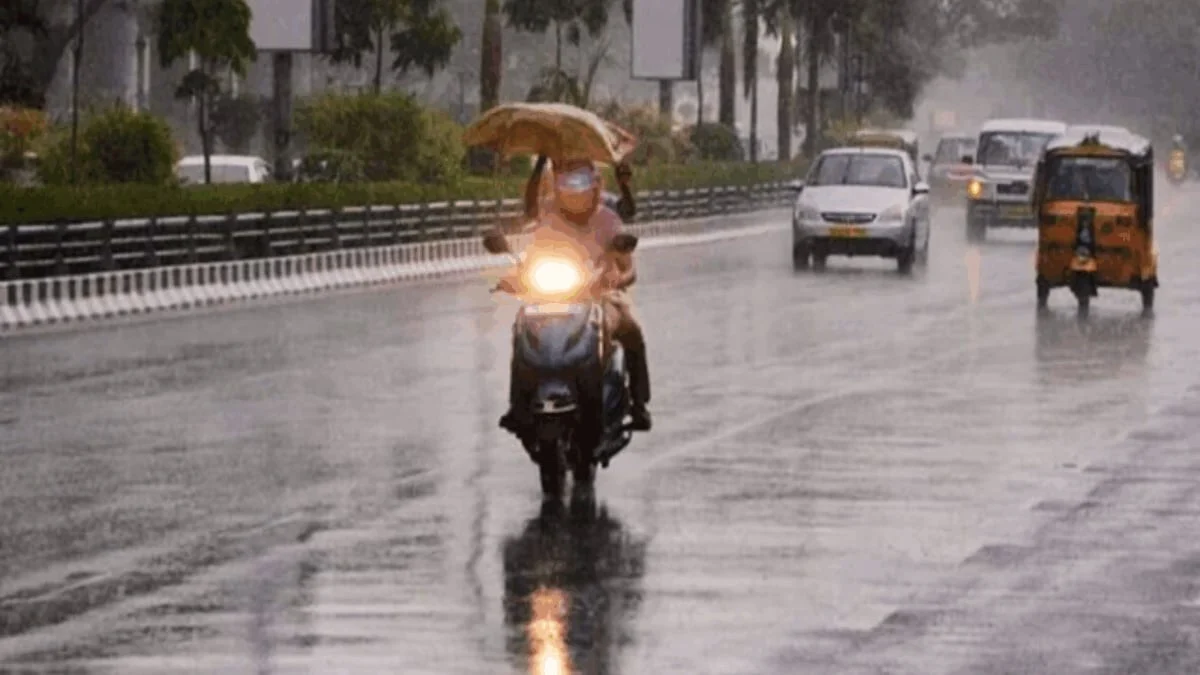
MUMBAI – On Friday, May 22, 2026, the financial capital of India experienced its first brush with the upcoming monsoon season. While the arrival of pre-monsoon showers in the eastern suburbs offered a brief respite from the oppressive May heat, the joy was short-lived for thousands of commuters. A significant technical disruption on the newly operational Metro 3 (Aqua Line) during peak morning hours turned the daily commute into a harrowing ordeal, reigniting fierce debates regarding the city’s infrastructure resilience and its preparedness for the heavy rains ahead.
Main Facts: A Tale of Two Cities
The events of May 22 highlighted the perennial dichotomy of Mumbai life: the aesthetic beauty of the first rains versus the brutal reality of a strained urban infrastructure.
Early on Friday morning, the weather shifted dramatically in the eastern suburbs, specifically in Mulund, Bhandup, and parts of Ghatkopar. Residents reported heavy cloud cover followed by gusty winds and moderate thundershowers. According to meteorological data, these pre-monsoon showers resulted in a temperature drop of approximately 3 to 4 degrees Celsius in the affected pockets. However, the relief was localized, as high humidity levels continued to plague the island city and western suburbs, creating a "sauna-like" effect for those not caught in the downpour.
Simultaneously, a crisis was unfolding underground. The Mumbai Metro Aqua Line 3, a flagship project designed to alleviate the city’s transport woes by connecting the northern suburbs to the southern business districts, suffered a catastrophic technical failure. Between 8:30 AM and 9:45 AM—the literal heartbeat of Mumbai’s commercial clock—train services were halted on both the "upline" and "downline" tracks. This left thousands of office-goers stranded at various underground stations, including key hubs like BKC, Cuffe Parade, and Worli.
Chronology of the Morning Disruption
To understand the scale of the frustration felt by Mumbaikars, one must look at the timeline of how the morning unfolded:
- 06:30 AM – 07:30 AM: The India Meteorological Department (IMD) observers note a formation of convective clouds over the Thane-Belapur belt moving toward Mumbai’s eastern suburbs.
- 07:45 AM: Light to moderate rain begins in Mulund and Bhandup. Social media is flooded with videos of the "first rain," with many celebrating the end of the heatwave.
- 08:15 AM: Humidity levels across the city spike to 85%, while temperatures in the eastern suburbs dip to 29°C.
- 08:32 AM: The first reports of a "technical snag" on Metro Line 3 emerge. A train heading toward SEEPZ stalls near the Kalina-Santacruz stretch.
- 08:45 AM: The disruption cascades. Due to the integrated signaling system, trains across the entire Aqua Line are ordered to halt at the nearest stations for "safety protocols."
- 09:00 AM: Peak hour chaos ensues. Stations like BKC (Bandra Kurla Complex) see a massive influx of passengers who are unable to exit or board. Digital display boards offer vague "delayed" messages, leading to confusion.
- 09:30 AM: Frustration boils over on social media. Commuters report a lack of official announcements and "suffocating" conditions in crowded underground concourses.
- 09:48 AM: Metro 3 authorities issue their first official communication, acknowledging a "technical fault" and stating that engineers are on-site.
- 10:15 AM: Limited service resumes, but with significant residual delays.
- 11:00 AM: Full operations are restored, though the backlog of passengers takes another hour to clear.
Supporting Data: Weather Patterns and Transit Reliance
The impact of Friday’s events is rooted in the shifting weather patterns of Maharashtra and the increasing reliance on the Metro network.
Meteorological Context
Historically, Mumbai’s monsoon officially arrives around June 10-11. However, the period between May 20 and June 5 is typically characterized by pre-monsoon "mango showers." In 2026, the intensity of these showers has been slightly higher than the five-year average, attributed by climatologists to warmer sea surface temperatures in the Arabian Sea. While Mulund recorded nearly 12mm of rain in just one hour on Friday, the western suburbs remained largely dry, illustrating the erratic nature of pre-monsoon convection.
The Criticality of Metro 3
The Aqua Line (Metro 3) has become the backbone of Mumbai’s north-south transit since its full commissioning. Carrying an estimated 400,000 to 600,000 passengers daily, any disruption on this line has a "multiplier effect" on the city’s economy. Unlike the suburban railway (locals), which are surface-level and prone to flooding, the underground Metro was marketed as an "all-weather" solution. Friday’s failure, triggered by a technical fault coincident with the first rains, has raised uncomfortable questions about whether the system’s electrical and signaling components are adequately shielded from the humidity and moisture surges that accompany the rains.
Official Responses and Technical Explanations
In the aftermath of the disruption, the Mumbai Metro Rail Corporation (MMRC) and other civic bodies were forced to address the public outcry.
Metro 3 Statement
A spokesperson for Metro 3 released a formal statement later in the afternoon: "We regret the inconvenience caused to our commuters this morning. A technical fault occurred in the signaling system near the Sahar section, which necessitated a temporary halt of services for safety reasons. Our technical teams responded immediately, and the fault was rectified within 60 minutes. We are conducting a thorough root-cause analysis to ensure such incidents do not recur as we enter the monsoon season."
IMD Outlook
The IMD’s Mumbai center issued a cautious forecast following the showers. "The current rainfall is the result of local instability and moisture incursion from the Arabian Sea. While it brings relief from the heat, we expect isolated thundershowers to continue over Thane, Palghar, and Mumbai for the next 48 hours. We advise authorities to remain vigilant regarding lightning and gusty winds."
Civic Preparedness (BMC)
The Brihanmumbai Municipal Corporation (BMC) also used the occasion to reiterate their monsoon readiness. Officials claimed that 95% of desilting work in major drains (nullahs) has been completed. However, the flooding of roads near Metro construction sites remains a point of contention between the BMC and Metro authorities.
Implications: A City on the Edge
The events of May 22 serve as a "stress test" for Mumbai, and the results are concerning for many urban planners and citizens. There are three primary implications of Friday’s chaos:
1. The Vulnerability of "All-Weather" Infrastructure
The primary selling point of the underground Metro was its immunity to Mumbai’s notorious monsoon flooding. If a relatively minor pre-monsoon event can cause a system-wide hour-long delay, there are grave concerns about how the system will perform during a 200mm rainfall day in July. Engineers suggest that the "technical fault" may be linked to voltage fluctuations or moisture affecting the overhead catenary system (OCS) or the signaling sensors—issues that must be ironed out before the heavy rains arrive.
2. Communication Breakdown
A recurring complaint from Friday was the lack of real-time information. In a digital age, commuters expect instant updates via apps and station P.A. systems. The "information vacuum" during the first 30 minutes of the Metro delay led to overcrowding and panic. This highlights a need for better crisis communication protocols within the Mumbai Metro operations.
3. The Economic Cost of Transit Failure
Mumbai’s economy is sensitive to time. An hour’s delay on a major transit artery like Metro 3 results in thousands of lost man-hours, missed meetings, and delayed logistics. As the city shifts more of its daily commute from the "Locals" to the "Metro," the reliability of the latter becomes a matter of economic security.
Conclusion: The Road Ahead
As the dark clouds gather more frequently over the Arabian Sea, Mumbai stands at a crossroads. The pre-monsoon showers of May 22 were a welcome relief for a city parched by a brutal summer, but they also acted as a warning shot. The Metro 3 disruption has exposed cracks in the city’s newest and most advanced transit system.
For the authorities, the next two weeks are critical. They must move beyond "regretting the inconvenience" and ensure that the technical glitches of Friday do not become the daily reality of June and July. For the citizens of Mumbai, the message is clear: while the city may be getting a brand-new look with its shiny Metro lines and coastal roads, the age-old struggle against the elements remains as challenging as ever. The "Mumbai Spirit" is resilient, but as Friday’s fuming commuters proved, that resilience has its limits when faced with systemic failure.
