NEW DELHI – In the landscape of modern nutrition, the pomegranate stands as a paradox. Celebrated by ancient civilizations as a symbol of fertility and eternal life, and by modern science as a "superfood" dense with antioxidants, it remains one of the most under-consumed fruits in the average household. The reason is rarely a lack of appreciation for its tart-sweet flavor; rather, it is the "friction" of preparation. The pomegranate’s complex internal architecture, filled with hundreds of arils (juice-filled seeds) encased in a bitter white pith, often deters even the most health-conscious consumers.
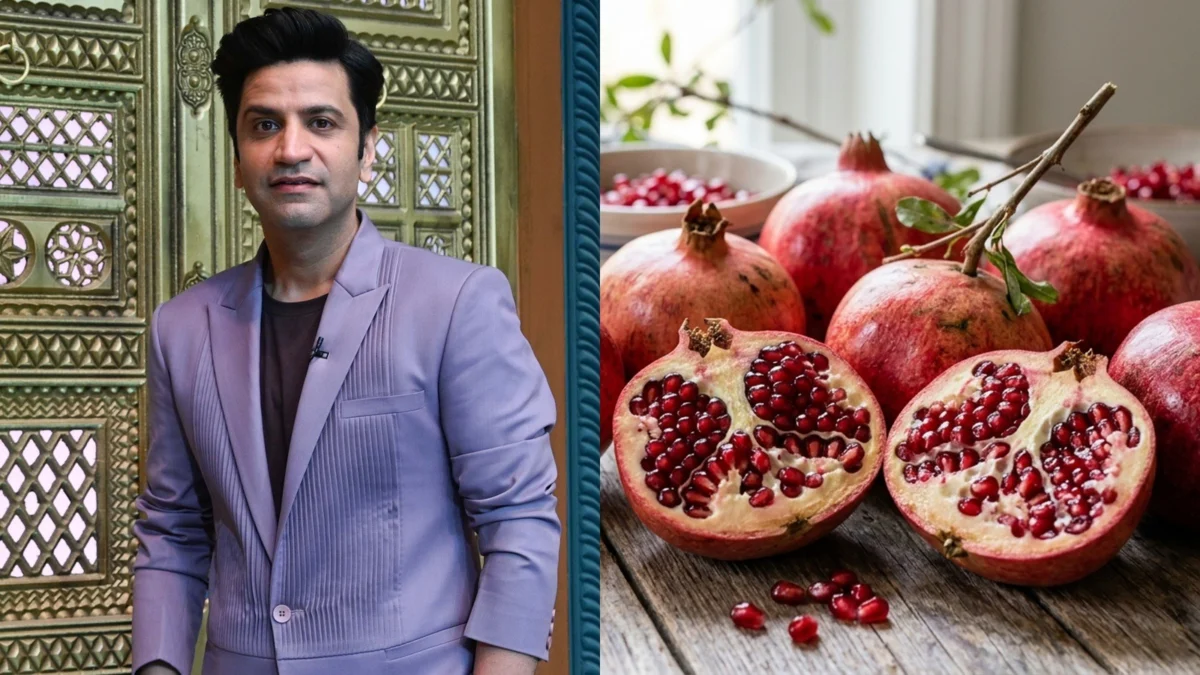
Recognizing this barrier, celebrity chef Kunal Kapur recently took to social media to demystify the fruit, sparking a broader conversation among nutritionists and behavioral scientists about how kitchen techniques influence public health. His demonstration, which leverages the fruit’s natural geometry, aims to transform the pomegranate from a "laborious chore" into a "summer staple."
Main Facts: The "Fan" Technique and the Viral Intervention
Chef Kunal Kapur, a household name in Indian gastronomy, released a comprehensive guide on Instagram designed to combat the summer heat through the consumption of fresh pomegranate. His method moves away from the traditional, often messy approach of hacking the fruit in half, which frequently results in bruised arils and stained clothing.
The Kapur Method follows a specific structural logic:
- The Crown Removal: Slicing off the top "crown" to reveal the internal segments.
- The Slit: Identifying the natural ridges or membranes that divide the fruit into chambers and lightly scoring the skin along these lines.
- The Fan Opening: Gently prying the sections apart, allowing the fruit to open like a flower or a fan without damaging the seeds.
- The Water Submersion: Placing the separated sections in a bowl of cold water. In this environment, the heavy, juice-laden arils sink to the bottom, while the light, bitter white pith floats to the surface for easy removal.
The objective of the demonstration was two-fold: to provide a culinary "hack" for efficiency and to encourage the consumption of home-prepared juices over processed, sugar-laden alternatives found in retail stores.
Chronology: From Culinary Hack to Nutritional Debate
The release of Kapur’s video in early June 2026 coincided with a period of record-breaking temperatures across the Indian subcontinent. As the heat intensified, the demand for hydrating, nutrient-dense foods spiked. Within days of the video’s release, it garnered significant traction, prompting health experts to weigh in on the implications of the "water-bowl method" and the trend of home-juicing.
By mid-June, the conversation shifted from "how to cut" to "how to consume." Clinical nutritionists and diabetes educators began analyzing Kapur’s suggestions, particularly his advice on blending and straining the seeds. This sparked a professional dialogue regarding the preservation of micronutrients and the role of dietary fiber in blood sugar management.
Supporting Data: The Nutritional Profile of the Pomegranate
To understand why a chef’s cutting technique matters, one must look at the data surrounding the pomegranate (Punica granatum). Pomegranates are uniquely rich in several bioactive compounds that are difficult to find in such high concentrations elsewhere:
- Punicalagins: These are extremely potent antioxidants found in pomegranate juice and peel. Research indicates they have three times the antioxidant activity of red wine and green tea.
- Punicic Acid: Found in the seed oil, this is a type of conjugated linoleic acid with potent biological effects, often linked to heart health and anti-inflammatory responses.
- Vitamin C and K: A single pomegranate provides approximately 40% of the daily requirement for Vitamin C and 30% for Vitamin K.
However, data from food science suggests that these nutrients are volatile. Vitamin C, in particular, is highly sensitive to heat and oxidation. When a fruit is cut and left exposed to air, or subjected to the high-speed blades of a blender, the surface area increases, accelerating the degradation of these vital compounds.
Furthermore, the "straining" process mentioned in culinary circles has a significant impact on the fruit’s Glycemic Index (GI). Whole pomegranate arils have a low GI due to their high fiber content. When the pulp is strained away to create a clear juice, the liquid becomes a concentrated source of natural sugars (fructose and glucose) without the fiber "buffer," leading to a more rapid spike in blood glucose levels.
Official Responses: Expert Insights on Preparation and Health
Kanikka Malhotra, a prominent consultant dietician and diabetes educator, provided a clinical perspective on the trend. While she applauded the effort to make healthy fruit more accessible, she issued a nuanced set of recommendations for consumers.
"Preparation method does matter, but it must be done thoughtfully," Malhotra stated. She confirmed that Kapur’s "water-bowl method" is largely harmless from a nutritional standpoint. "Brief soaking in water to separate arils is effective. Minimal nutrients leach out in such short durations, provided the water is cold and the seeds are not left submerged for hours."
However, Malhotra raised concerns about the transition from fruit to juice. "From a clinical standpoint, eating whole arils remains optimal. When you strain the juice, you remove the beneficial dietary fiber found in the seed pulp. This fiber is crucial—it supports gut health, feeds the microbiome, and, most importantly, slows the absorption of sugar into the bloodstream."
Her professional advice to the public was clear: "Eat the fruit often and drink the juice occasionally. If you must juice it, consume it immediately to limit oxidative losses. Consistency, not perfection, is what drives long-term health outcomes."
Other experts in the field of behavioral economics have noted that Kapur’s video addresses a concept known as "Choice Architecture." By simplifying a difficult task, the chef is effectively "nudging" the population toward a healthier choice. Studies in the Journal of Consumer Research suggest that when the perceived effort of preparing a healthy snack exceeds five minutes, consumers are 60% more likely to opt for a processed, ready-to-eat alternative.
Implications: Convenience as a Public Health Strategy
The intersection of Chef Kapur’s culinary expertise and Malhotra’s nutritional science highlights a growing realization in public health: knowledge is not enough. Most people are aware that pomegranates are healthy; the barrier is the labor.
1. The "Friction" Reduction Movement
The implications of this viral hack extend beyond the pomegranate. It underscores a shift in how health experts are communicating with the public. There is a growing movement to prioritize "convenience-based nutrition." If a superfood is too hard to peel, it won’t be eaten. Therefore, teaching "food prep literacy" is becoming as important as teaching caloric counts.
2. The Rise of the "Home-Pro" Consumer
As celebrity chefs like Kapur provide professional-grade techniques to the masses, the reliance on pre-packaged, preservative-filled "convenience foods" may decrease. The ability to produce a "perfectly chilled, tasty juice" at home in minutes empowers the consumer to control their sugar intake and avoid the additives found in commercial "100% juice" cartons, which are often pasteurized at high heats that destroy delicate antioxidants.
3. Impact on Local Agriculture
India is one of the world’s largest producers of pomegranates, particularly the "Bhagwa" variety known for its deep red color and soft seeds. Increased consumer confidence in handling the fruit could provide a significant boost to local farmers and domestic markets. By making the fruit "user-friendly," the domestic demand can be stabilized throughout the peak summer and monsoon seasons.
4. The Fiber Deficit Crisis
The expert response from Kanikka Malhotra highlights a critical public health issue: the global fiber deficit. As juicing becomes more popular through social media trends, nutritionists are increasingly worried that people are "drinking their calories" and missing out on the structural benefits of whole foods. The implication for the future is a need for "whole-food juicing"—techniques that utilize the entire fruit, including the pulp, to ensure that the nutritional integrity of the "superfood" remains intact.
Conclusion: A Holistic Approach to Summer Nutrition
The pomegranate serves as a microcosm of the modern diet. It is a fruit of immense potential, locked behind a shell of inconvenience. Chef Kunal Kapur’s intervention is more than a simple kitchen tip; it is a practical solution to a behavioral problem. By aligning the natural structure of the fruit with human ergonomics, he has lowered the barrier to entry for one of nature’s most potent medicines.
However, as the nutritional community suggests, the "how" of preparation must be balanced with the "how" of consumption. The most effective health strategy for the scorching summer of 2026 is one that combines Kapur’s efficiency with Malhotra’s nutritional caution: use the "fan" method to access the seeds, soak them briefly for cleanliness, and whenever possible, eat the arils whole to maximize the benefits of fiber and antioxidants.
In the end, the pomegranate remains a "nutritional powerhouse," but its true power can only be harnessed when the effort to consume it matches the fast-paced reality of modern life. Through the marriage of culinary art and clinical science, a once-intimidating fruit is now a practical tool for daily wellness.